600-Year-Old Lost Village Echene Unearthed Beneath German Field for Wind Turbine
Archaeologists uncover medieval town Echene, a settlement recorded since 944 that disappeared 600 years ago, revealing its long‑lost ruins.
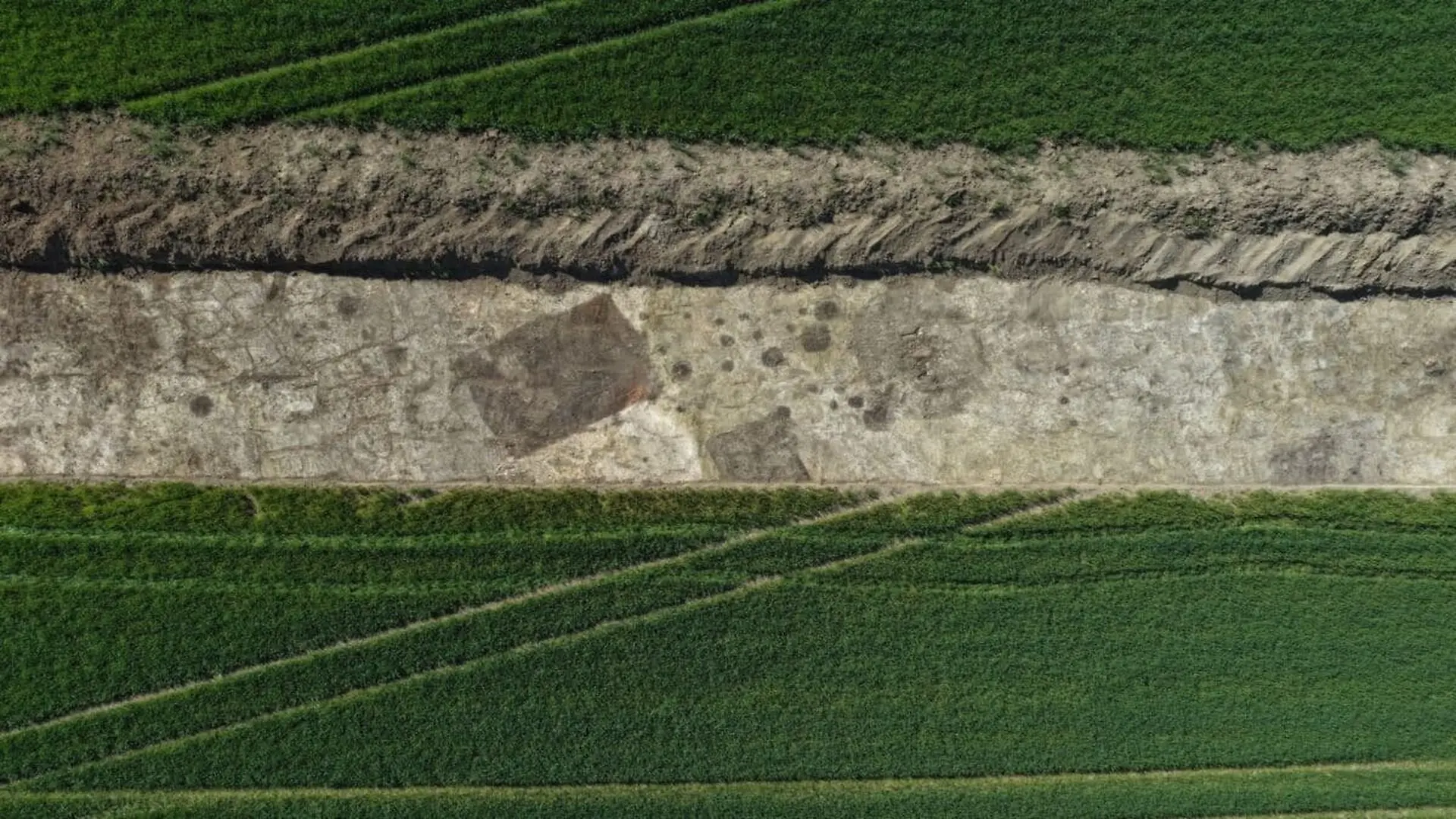
Documentary evidence first mentions the village of Echene in 944, and the name recurs in medieval chronicles until the 1400s, after which it vanishes from the written record.
During a pre‑construction survey for a new wind‑turbine power line, archaeologists uncovered the long‑lost site in a field near Borgentreich, Germany, providing the first tangible proof of Echene’s existence and location.
From Manuscripts to a Field That Held the Secret
For centuries the settlement survived only in texts. According to Popular Mechanics, the name appears in records beginning in 944 and persists throughout the Middle Ages before disappearing from the archives in the 15th century.
“After that, the settlement fell into oblivion,” Sven Spiong, head of the Regional Association of Westphalia‑Lippe (LWL) Archaeology, explained in a translated statement.
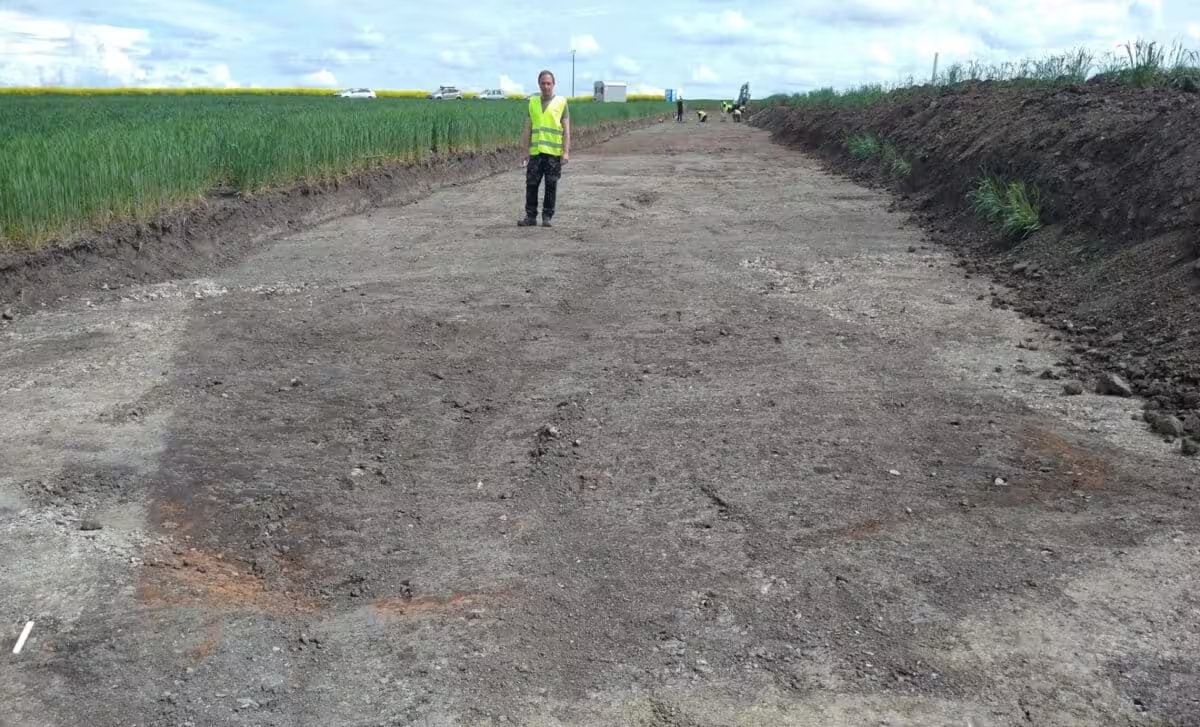
A field called Echelen near Borgentreich hinted at a possible connection to the vanished village, but archaeologists lacked any material proof until the recent digs.
Excavations in a stream valley southwest of Borgentreich have now uncovered 10th‑ and 11th‑century pottery shards, remnants of timber structures, and a sizable stone cellar, confirming the settlement’s physical footprint.
Timber Houses and a Stone Cellar Come to Light
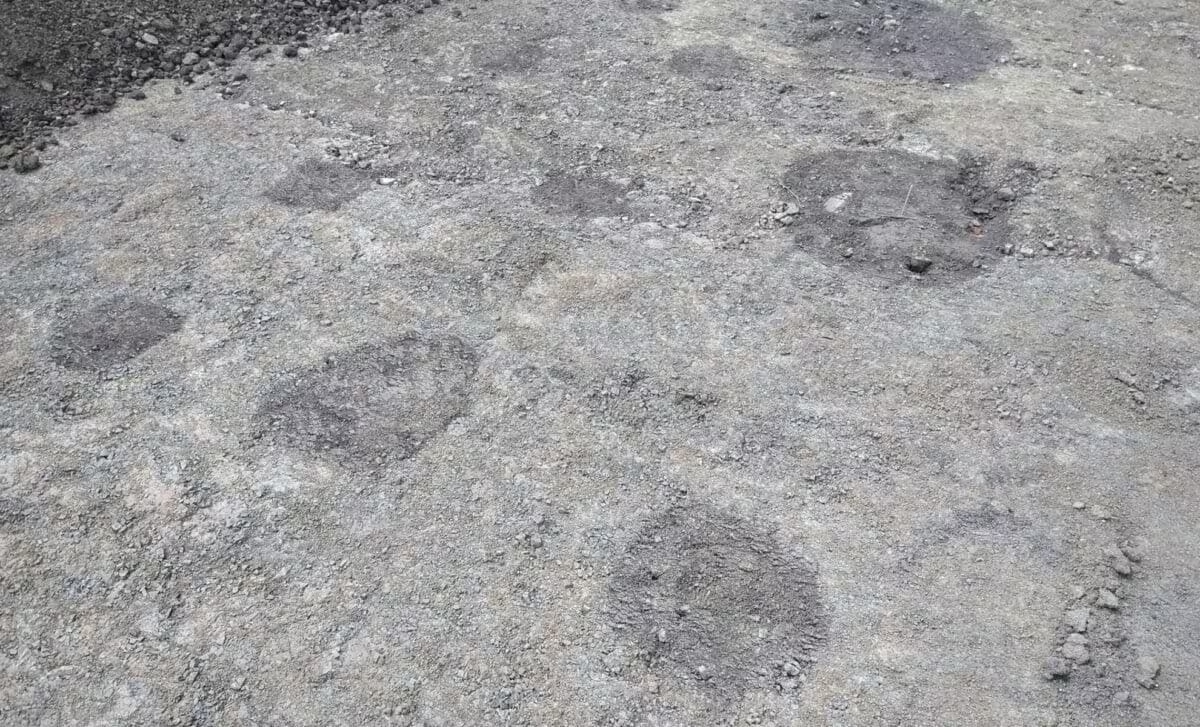
Surveyors identified a series of postholes that once supported wooden buildings, including the largest frames that likely belonged to long houses up to 65 feet in length.
Smaller ancillary structures, some measuring roughly 10 by 13 feet, were also detected, suggesting a cluster of timber‑framed dwellings that emerged from the late 11th century onward.
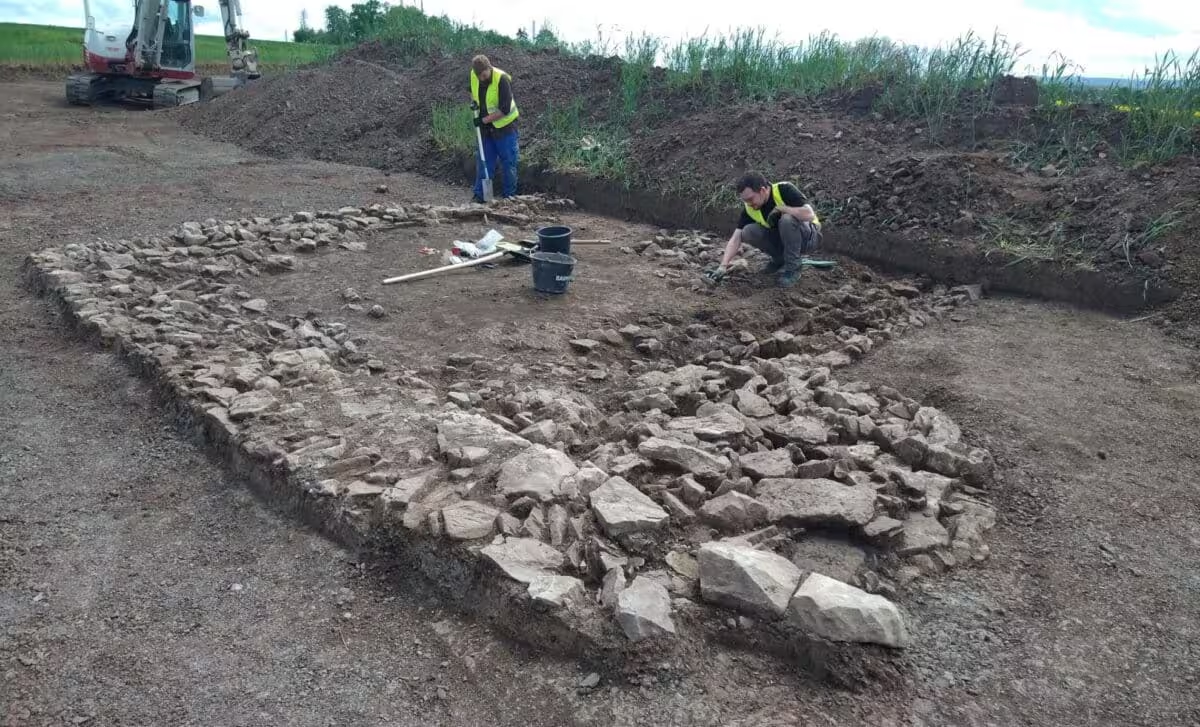
Archaeologist Normen Posselt documented a stone‑walled cellar with a north‑facing doorway, highlighting a shift from exclusively timber construction to more durable stone architecture within the community.
“The excavation provides us with a clear glimpse into the daily lives of people in a rural settlement—including all the developments it underwent over the centuries,” Spiong said.
Waterways and Neighboring Villages Shaped the Landscape
The find also clarifies the broader medieval environment around Borgentreich, which was founded as a fortified town in the 1280s and likely coexisted with Echene.
Spiong pointed out that another abandoned medieval site lies less than a mile south of the new discovery. Excavations there in the 1980s revealed artifacts linked to Broktrup, a settlement occupied from the ninth to the fourteenth century, making it a contemporary of Echene.
According to Spiong, by the 10th century the region was dotted with numerous small farms, typically settled near streams or spring hollows.
“By the 10th century at the latest, the landscape was characterized by an abundance of such small settlements, which—remarkably—were invariably situated in close proximity to streams or within the vicinity of a spring hollow,” he said. “The water essential for both humans and livestock, along with the adjacent fertile arable land, were the factors that determined where people established their farmsteads in those days.”
Historical sources suggest Echene may have spanned both banks of the nearby stream; only one side has been excavated so far, and researchers anticipate further remains on the opposite bank.
“The discovery of this medieval settlement demonstrates once again just how much history still lies hidden beneath our feet,” Borgentreich mayor Nicolas Aisch said. “Finds such as this are of immense significance not only for archaeology but also for the identity of our region and its people.”
The team will now catalogue the recovered pottery, refine dating of postholes and pits, and work toward a comprehensive reconstruction of the village’s development. As Spiong emphasized:
“Only then will we gain meaningful insights into the lives of the people who built their homes here centuries ago,” and “only then can we save the settlement community of Echene from falling into oblivion once again.”
This article has been fact checked for accuracy, with information verified against reputable sources. Learn more about us and our editorial process.
Last reviewed on .
Article history
- Latest version
Reference(s)
- Newcomb, Tim. “Archaeologists Were Digging in a Field—and Found a Town That’s Been Lost for 600 Years.”, June 8, 2026 Popular Mechanics <https://www.popularmechanics.com/science/archaeology/a71472203/lost-medieval-settlement/>.
- <https://independent.academia.edu/SpiongSven>.
- “Pressemitteilungen.” <https://www2.lwl.org/de/LWL/portal/presse/pressemitteilungen/mitteilung/63853/?fbclid=IwY2xjawSL0GBleHRuA2FlbQIxMABicmlkETF3QnNsbnpYNUlHbjloSHRHc3J0YwZhcHBfaWQQMjIyMDM5MTc4ODIwMDg5MgABHqPvSG_Vk4Q6ZXV9saBwriqdQ3xzh9sJF9qsdxDddDeLoJkSiYKD9rKNMCS5_aem_Agz0_8aD_YTYkD8X8Lmuzw>.
- <https://da-lsa.academia.edu/NormenPosselt>.
Cite this page:
- Posted by Zara Tariq