A 2,000-Year-Old Stone Block Found in Egypt Shows a Roman Emperor Dressed as a Pharaoh in the Presence of Ancient Gods
Discover how a carved stone at Karnak reshapes our view of Rome’s emperor in an unexpected ancient role
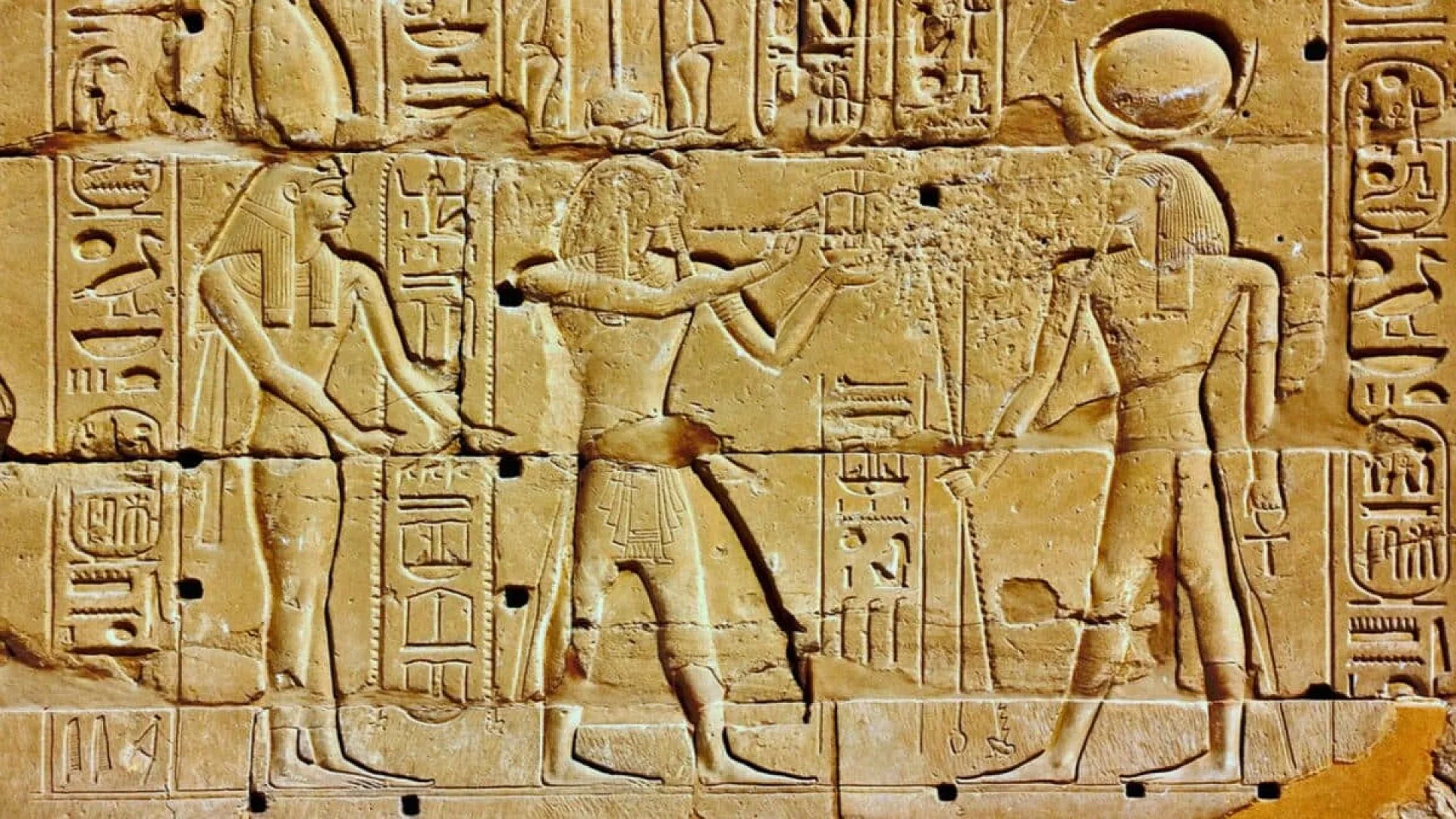
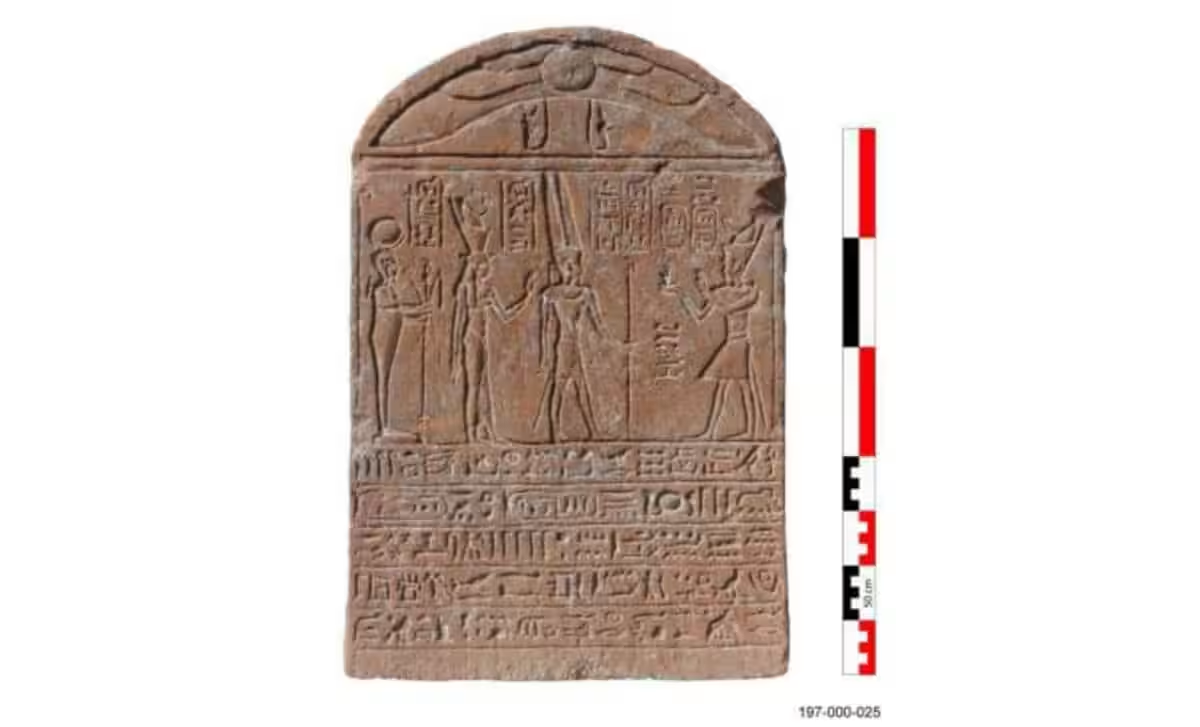
A roughly two‑millennium‑old sandstone slab recovered from the Karnak temple precinct in Luxor depicts the Roman emperor Tiberius not in Roman attire but crowned with the double diadem of Egypt, standing among the deities of the Theban Triad. The carving records Tiberius performing rites to sustain Ma’at, the ancient Egyptian principle of cosmic balance, and illustrates a visual tradition that foreign sovereigns upheld long after Egypt’s native dynasties ended.
The find was announced by Egypt’s Ministry of Tourism and Antiquities and reported by the Franco‑Egyptian Center for the Study of the Temples of Karnak. The archaeological mission operated in partnership with the Supreme Council of Antiquities and France’s National Center for Scientific Research.
Emperor Tiberius Amidst Amun‑Ra, Mut and Khonsu
Measuring about 60 × 40 × 10 cm, the stela portrays Tiberius—who ruled the Roman Empire from AD 14 to 37—wearing the double crown that signified the unification of Upper and Lower Egypt. He is positioned before three gods central to Karnak’s worship: Amun‑Ra, the supreme deity; Mut, the mother goddess; and their son Khonsu, together forming the Theban Triad.
Beneath the central image, five lines of hieroglyphic text document renovation work on the Temple of Amun‑Ra’s wall, echoing the physical repairs recorded by the excavation team.
Depicting Tiberius as a pharaoh served to present the Roman ruler as a guardian of Egyptian religious rites, even though Rome had already annexed the region. Such temple scenes were stylised representations of idealised ceremonies, often featuring statues or stand‑ins for the king and the deities. Comparable depictions of Tiberius in Egyptian royal garb appear at Dendera and Philae, where he is shown offering to native gods rather than to the Roman pantheon.
Discovery Amidst Mud‑Brick Remains
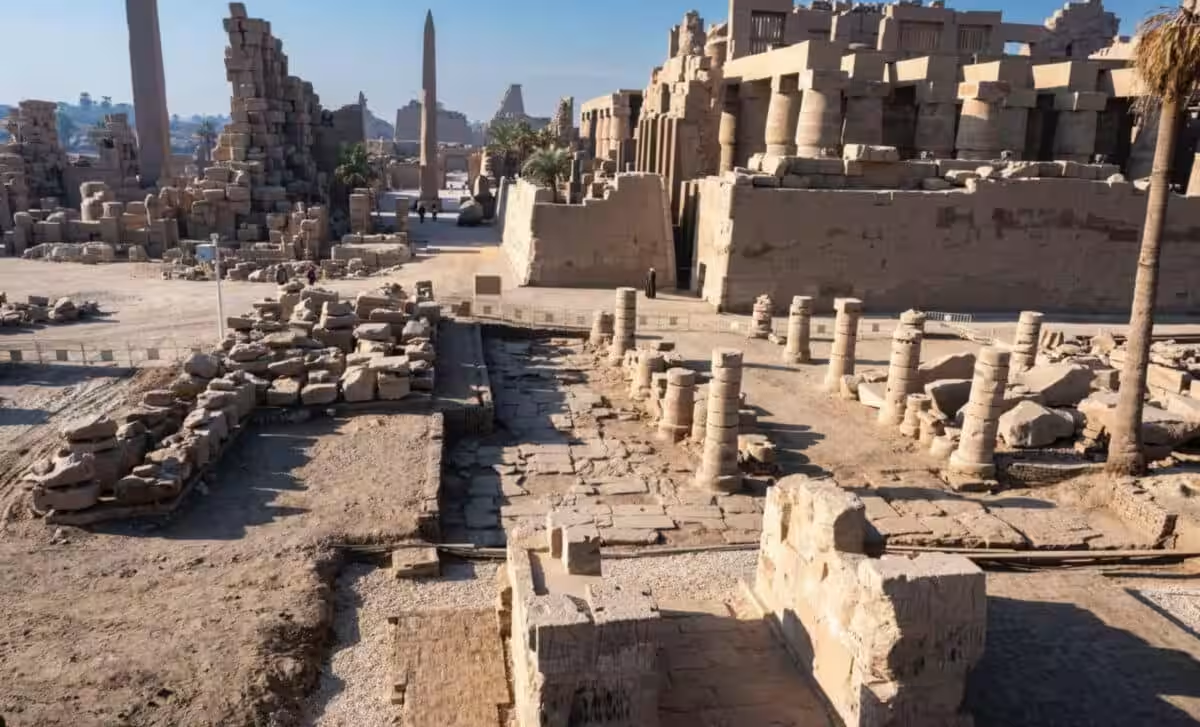
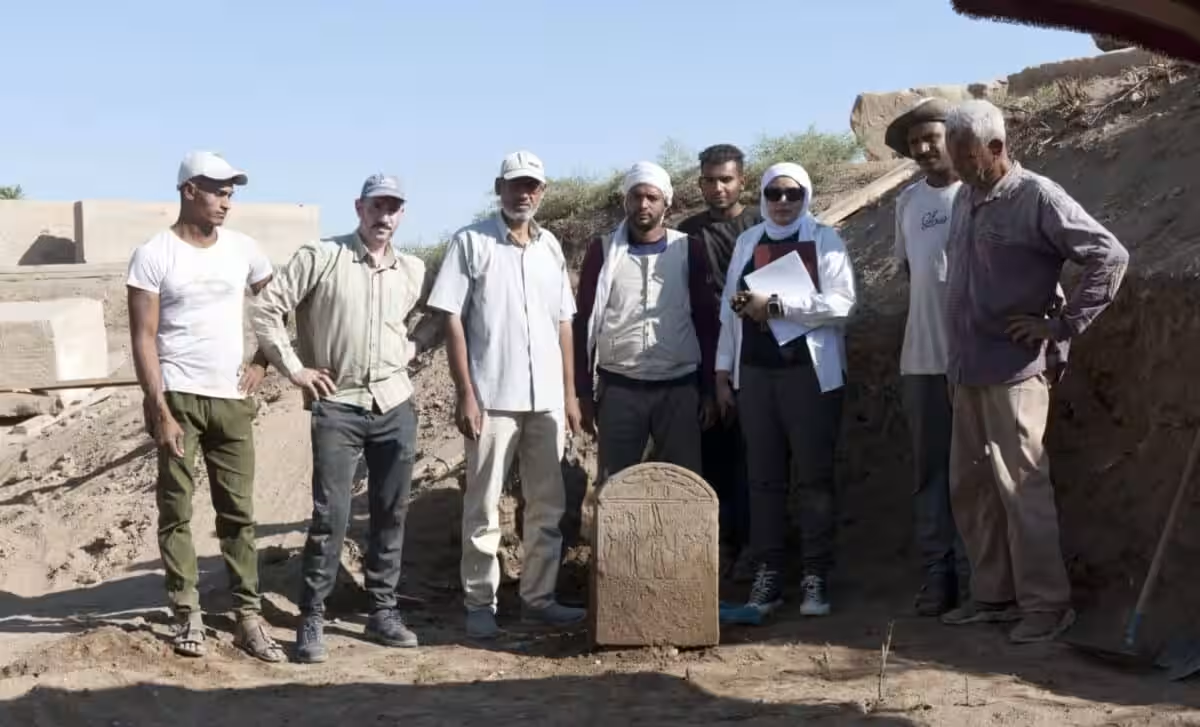
The slab was uncovered not in a pristine sanctuary chamber but among collapsed mud‑brick dwellings dating to the late Roman and Byzantine eras, just northwest of the Ramesses III gateway. The layered context underscores Karnak’s complex history, where successive cultures built upon, repurposed, and borrowed from earlier structures.
Since 2022, a team has been conserving and reassembling the Ramesses III gateway—a northern entrance originally constructed in the 20th Dynasty. The project required dismantling the whole portal, cataloguing each stone, and re‑erecting it with contemporary techniques.
During the gateway’s reconstruction, researchers identified several decorative blocks that had been recycled from the reign of Amenhotep III—roughly two centuries before Ramesses III—indicating that the portal’s initial phase dates to the 18th Dynasty and was later modified. The investigation ultimately revealed multiple construction stages spanning the New Kingdom through the Greek and Roman periods.
The team also rediscovered a paved avenue first noted in the early 20th century, linking the Ramesses III gate to the Third Pylon Square. This passage had been lost to institutional memory for over a hundred years.
Continuity of the Foreign Pharaoh Iconography
From the Ptolemaic era onward, any ruler who held sway over Egypt was expected to assume the visual role of pharaoh in stone and paint, regardless of origin or faith. This convention reinforced the perception that the sovereign was the rightful heir to millennia of pharaonic tradition and responsible for preserving divine order.
Roman emperors appeared on Egyptian coinage, their names were rendered in hieroglyphs inside the same oval cartouches used for native pharaohs, and their likenesses adorned active temple walls. For example, Emperor Claudius is shown on the Temple of Isis at Shanhur raising a shrine for the fertility god Min, while Trajan is depicted in a sandstone relief at Esna’s Temple of Khnum striking down his foes.
These artistic choices were more than decorative; they expressed a political and religious logic that required the Egyptian ruler—whoever that may have been—to be seen as the legitimate continuation of pharaonic governance.
Ma’at, the Emperor, and the Cosmic Order
The Karnak slab portrays Tiberius upholding Ma’at, the ancient Egyptian principle of truth, balance, and order. The hieroglyphic sign for Ma’at is a feather, and the concept was personified as a goddess bearing that feather on her head.
From the earliest dynasties, a king’s principal duty was to sustain Ma’at throughout the realm. Artistic scenes of a monarch confronting enemies often symbolised this responsibility rather than documenting literal battles. Temple walls frequently displayed the ruler presenting Ma’at to the gods, reinforcing the idea that the temple itself embodied cosmic order.
By the Ptolemaic period, Ma’at was understood as a divine gift descending from the heavens, maintained by the king, and returned to the gods in a favourable state. Because the monarch upheld Ma’at, the interval after his death was considered precarious; a swift succession was essential to prevent chaos from taking hold.
This article has been fact checked for accuracy, with information verified against reputable sources. Learn more about us and our editorial process.
Last reviewed on .
Article history
- Latest version
Cite this page:
- Posted by Zara Tariq