Curiosity Rover Finds First Direct Evidence of an Ancient Martian Sandstorm Locked in Rock
NASA’s Curiosity rover uncovers ancient Martian rocks, revealing a powerful event that scarred the planet billions of years ago.
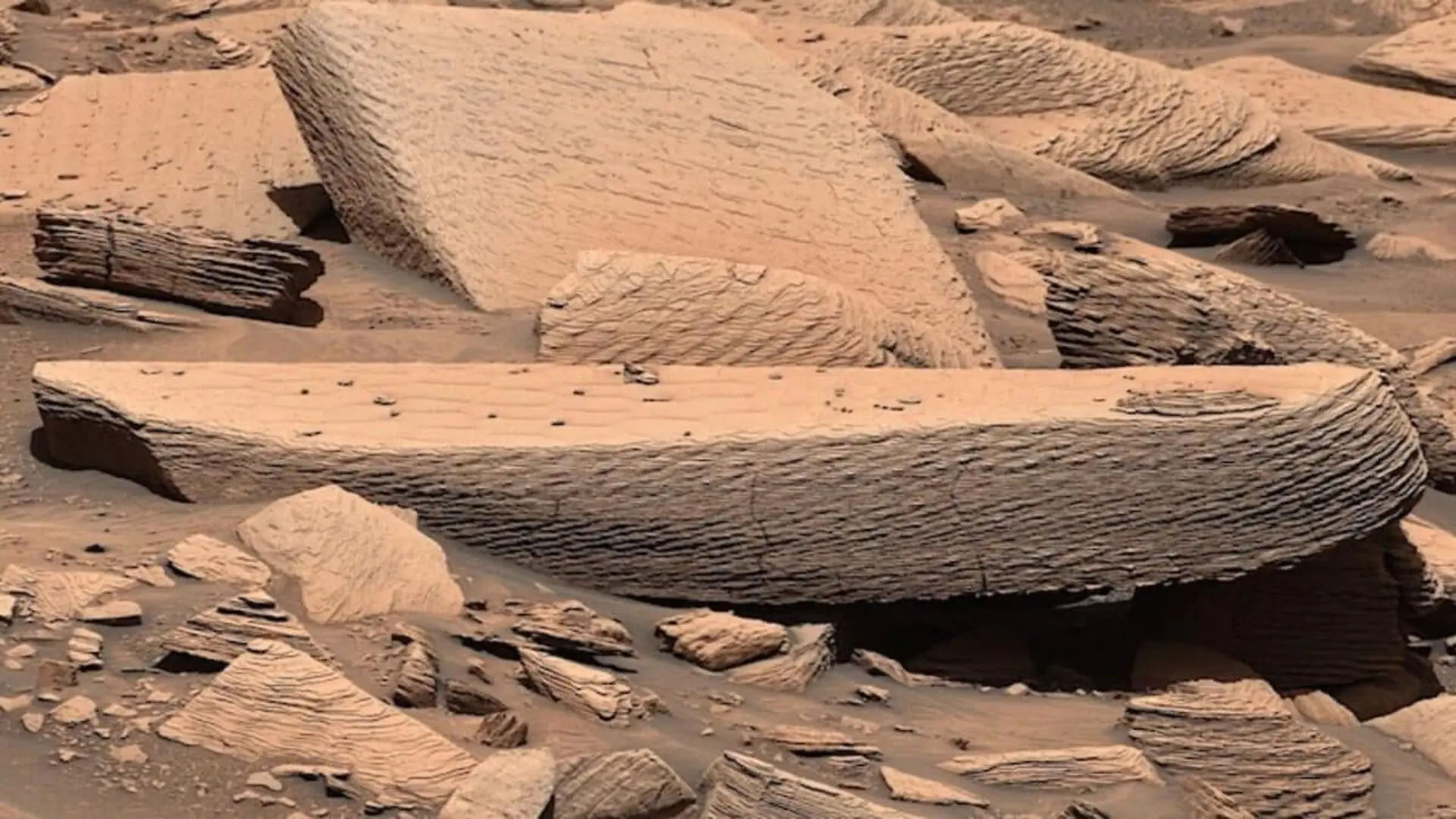
NASA’s Curiosity rover has uncovered the first unequivocal trace of a massive sandstorm that swept across Mars billions of years ago. The record, encased within layered rocks in Gale crater, captures a fleeting yet intense wind event that left a distinctive geological imprint of ancient Martian weather.
The discovery occurred at Jawbone Canyon, a locale examined by Curiosity while probing the Mirador formation on the slopes of Mount Sharp. On Dec. 12, 2024, during the rover’s 4,391st Martian sol, the instrument photographed a set of unusual rocks, later identified as the key to the storm evidence.
The findings were detailed in a paper published in Geology on July 1, 2026. Researchers described the features as the inaugural examples of supercritical climbing wind ripple strata on Mars, offering a fresh perspective on how vigorous winds sculpted the planet’s surface in its early history.
New Insight into Ancient Martian Sandstorms
Mars displays abundant signs of historic wind activity, ranging from dunes to extensive sediment deposits. While most of these formations record gradual sand transport, the outcrop at Jawbone Canyon preserves a much shorter, high‑energy episode.
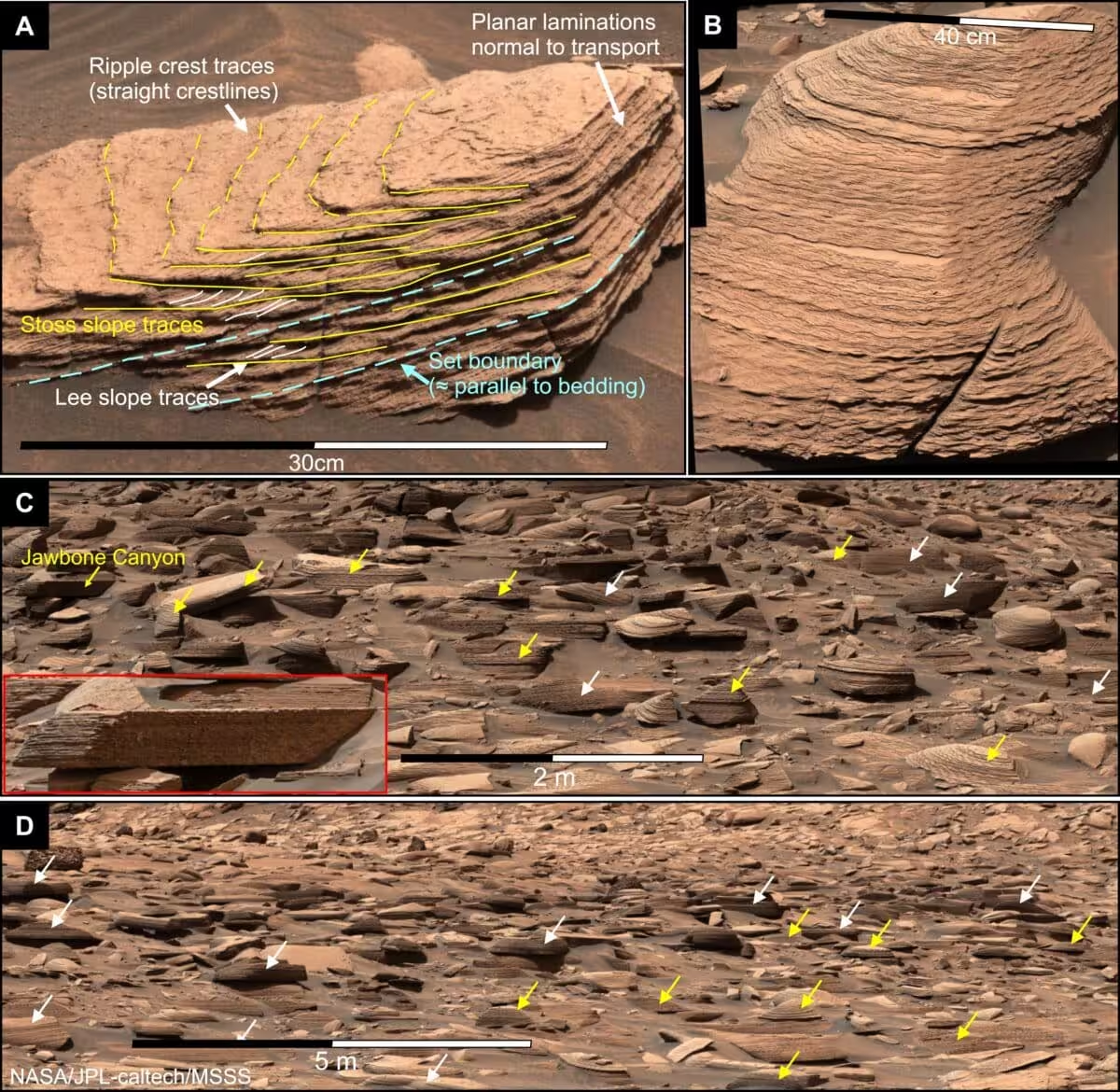
The rock exposure contains two distinct ripple styles: ordinary planar ripples and climbing ripples. In the latter, sand accumulated on moving ripples faster than it could spread, producing stacked, curved layers that record rapid sediment influx.
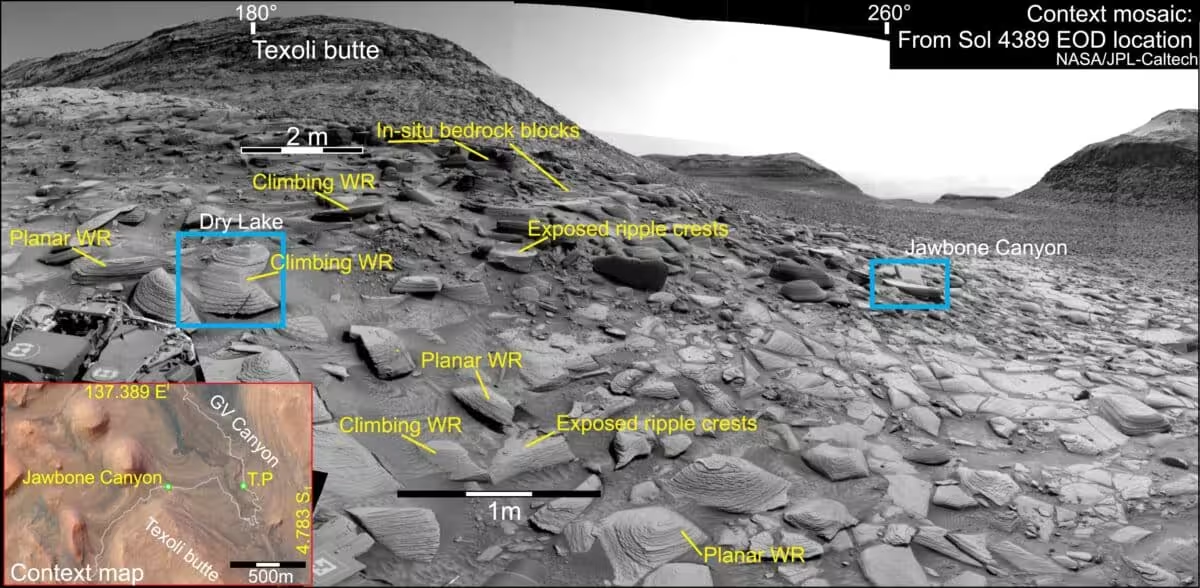
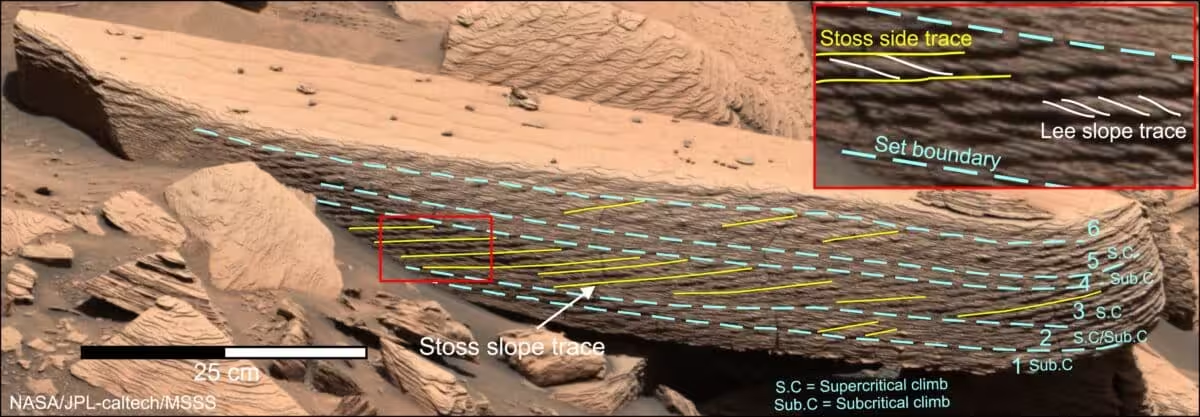
Six distinct packages of ripple layers were identified within the outcrop. Some packages consist of flat, regular laminations, while others exhibit pronounced curvature and stacking, indicating that large sediment volumes were deposited in a brief interval.
The study explains that these formations arose when wind speed fluctuated and airflow was disturbed near a slope, prompting sand to fall from the moving air and accumulate rapidly on the surface.
The principal rock slab at Jawbone Canyon measures roughly 1 meter in width and 0.2 meter in height. Comparable climbing ripple structures have also been observed at Dry Lake and several sites near Texoli butte.
Layered Ripple Structures Reveal Storm Dynamics
The preserved ripple geometries enable scientists to infer wind direction and intensity. The orientation of the layers points to sand transport toward the north, implying winds originated from the south.
Climbing ripple strata dip between 10 and 18 degrees, a geometry that signals sediment deposition outpacing ripple migration. Such a pattern requires both strong winds and an abundant sand supply.
“These climbing ripple sets occur in a thin succession, which suggests that they record a broader sustained event, such as a sandstorm or gale, lasting several hours or more. This is the first direct physical evidence of such an event on Mars,” the authors stated.
The researchers propose that the rapid deposition occurred near the margin of a large ancient dune or within a shallow wind‑carved depression, features that could have altered local airflow and fostered quick sand accumulation.
Timing estimates indicate that a single 50‑millimeter layer could form in as little as 6 to 20 minutes. The full succession of layers points to a storm‑like event that persisted for several hours.
Implications for Mars’ Climate Evolution
This discovery adds a new piece to the puzzle of Mars’ transition from a once‑active environment to the cold, arid world observed today.
The Mirador formation, rich in ancient wind‑related signatures, continues to illuminate interactions between the early Martian atmosphere and surface. The newly identified ripple structures demonstrate that even brief weather episodes could leave lasting imprints in the planet’s rock record.
The authors note that these wind‑shaped layers underscore the similarity of geological processes on Mars and Earth, despite vastly different environments. According to the team, the climbing ripple strata represent the briefest wind‑related fluctuations identified in ancient Martian rocks to date.
This article has been fact checked for accuracy, with information verified against reputable sources. Learn more about us and our editorial process.
Last reviewed on .
Article history
- Latest version
Cite this page:
- Posted by Vikram Desai