Rare Iron Shackles Reveal Possible Celtic Slave Trade at 2,300-Year-Old French Site
Rare iron artifacts discovered at an ancient French site spark fresh questions about the culture and technology of its early inhabitants.
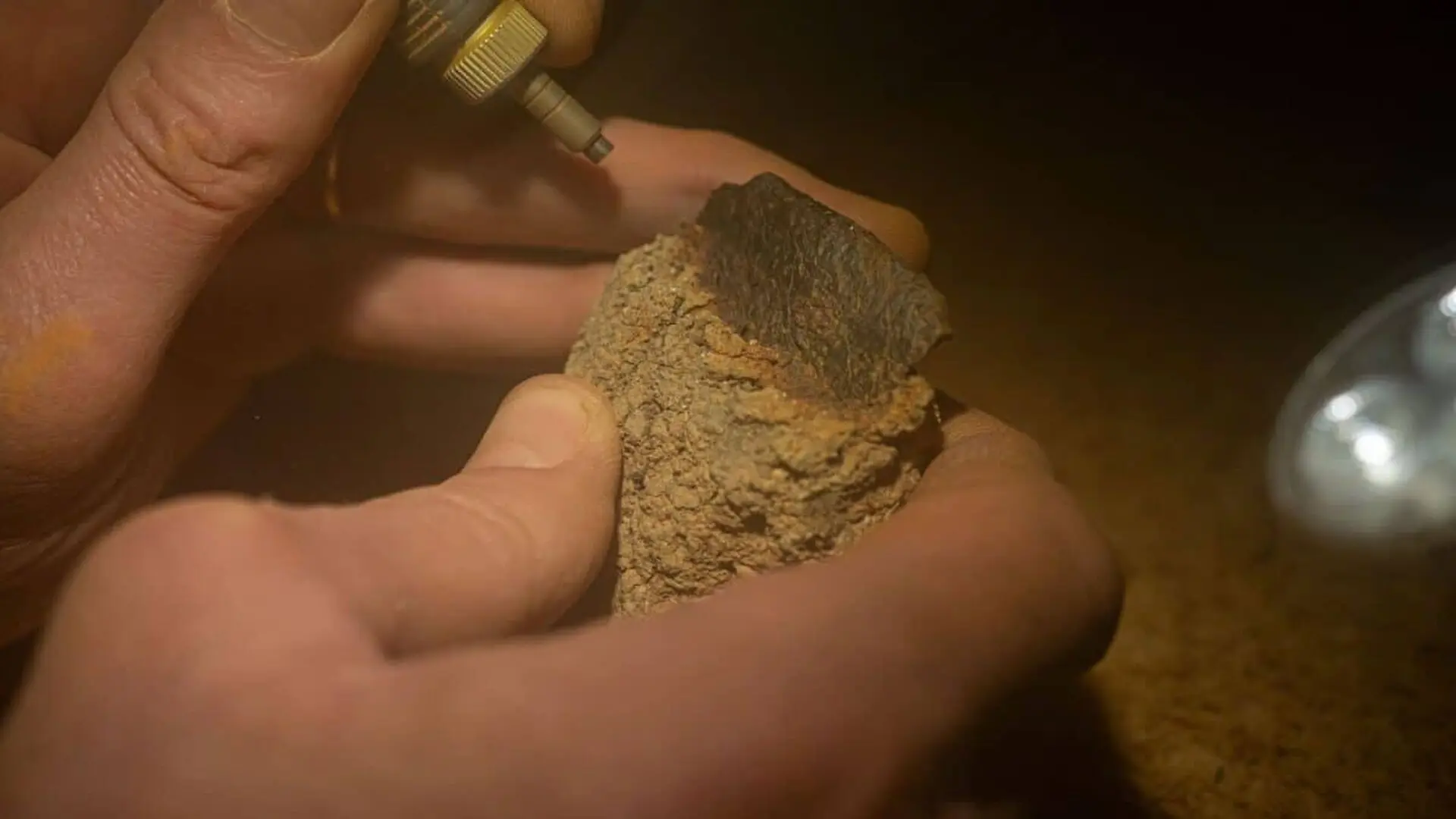
Archaeologists have identified five iron shackles among the artefacts recovered from a 2,300‑year‑old Celtic settlement in Allonnes, western France. The restraints, found together with weapons, ritual items and a large hoard of coins, are considered exceptionally uncommon for the Late Iron Age and may indicate that the community participated in the slave trade.
The objects were uncovered during a two‑year investigation of a site dating to the third century B.C., situated next to a sanctuary in the Loire Valley. While the dig yielded abundant evidence of advanced metalworking, the iron shackles emerged as one of the most surprising discoveries.
According to the French National Institute for Preventive Archaeological Research (INRAP), the Allonnes settlement combined specialist craftsmen, religious activity and, potentially, the commerce of enslaved individuals.
Metalworking Hub Yields Rare Iron Restraints
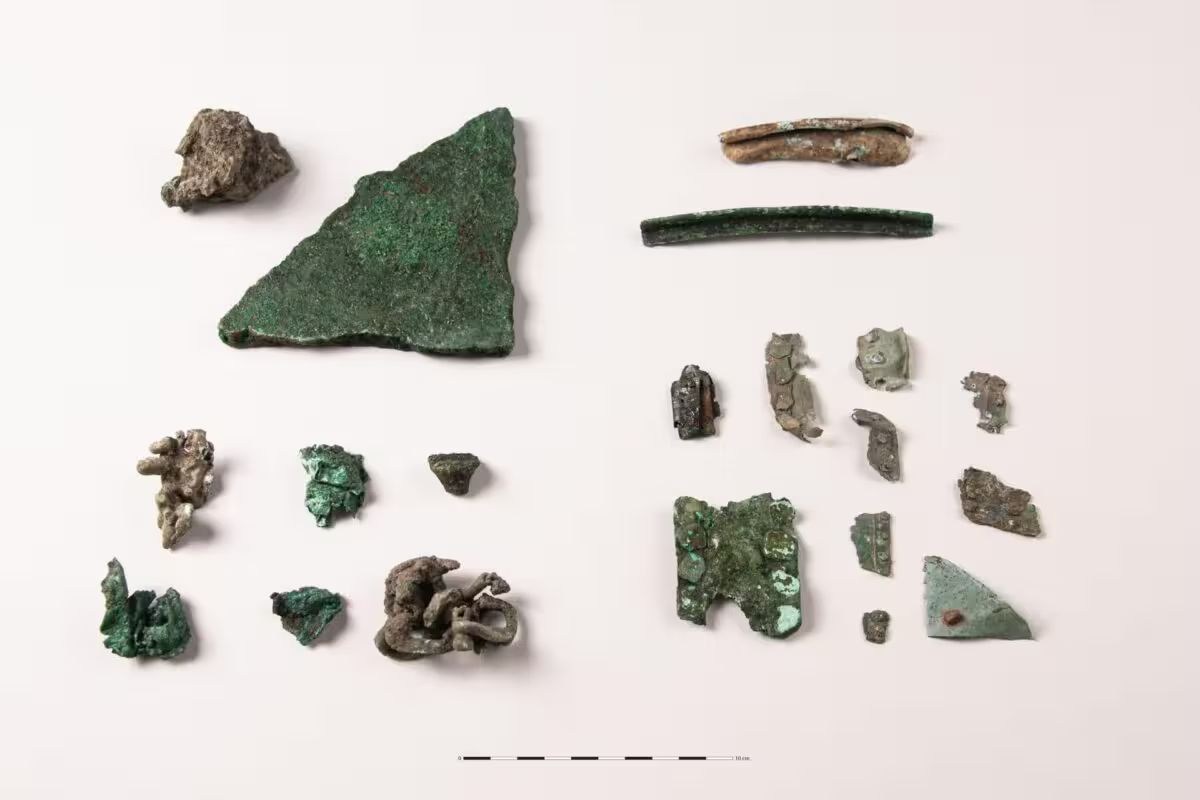
Excavators recovered a diverse assemblage of high‑quality metal objects, such as swords, spearheads, keys and fittings for horse harnesses. The presence of blacksmiths, coppersmiths, bronze workers and sheet‑metal artisans points to metalworking as a core economic activity.
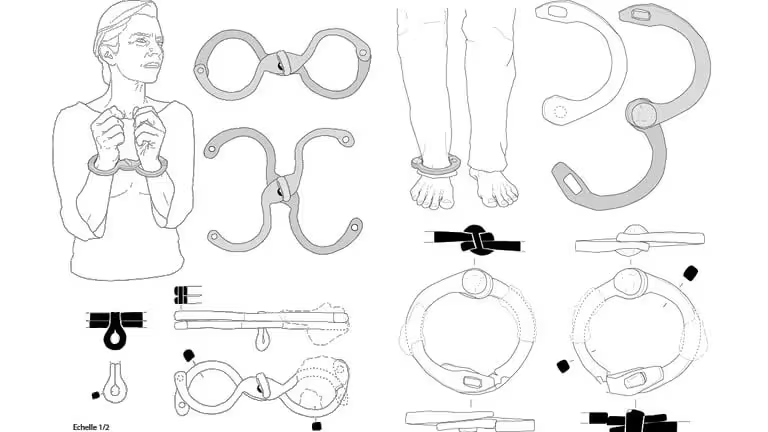
Among the finds were five iron restraints: a double wrist shackle, an ankle shackle and three fragments of additional devices. INRAP describes these items as “extremely rare” for the Late Iron Age, making them a standout element of the excavation.
The settlement, founded in the third century B.C. beside a religious complex, was expected to reveal evidence of craft production and ritual practice. The discovery of restraints, however, adds a starkly different dimension to our understanding of life at the site.
Shackles Suggest a Role in the Iron‑Age Slave Economy
Researchers now propose that Allonnes may have been linked to the slave trade that operated across the Late Iron Age, a period spanning roughly 450 to 50 B.C. Celtic metalwork specialist Thierry Lejars, speaking to INRAP, explained:
“The identification of restraints and weapons suggests a hierarchical social organization composed of dominant and subordinate groups — prisoners or slaves.”
The Gauls—a loose confederation of Celtic tribes—historically enslaved war captives, convicted offenders and debtors. Enslaved individuals, regardless of age or gender, were stripped of rights, could be bought or sold, and were often compelled to work in agricultural settings.
One notable detail is the wrist shackle’s modest 6 centimetre (2.4 inch) diameter, hinting that it may have been intended for a woman or a child. In contrast, the ankle restraint exceeds 1 kilogram (2.2 pounds) in weight, underscoring the physical burden placed on those forced to wear it.
Ritual Deposits Offer Insight into Belief Systems
Beyond everyday artefacts, the dig uncovered a sanctuary containing clothing, rings, amulets and other personal items offered as votive gifts. INRAP notes that many of these objects had been deliberately bent or broken before deposition, a practice likely intended to transform ordinary belongings into sacred offerings.
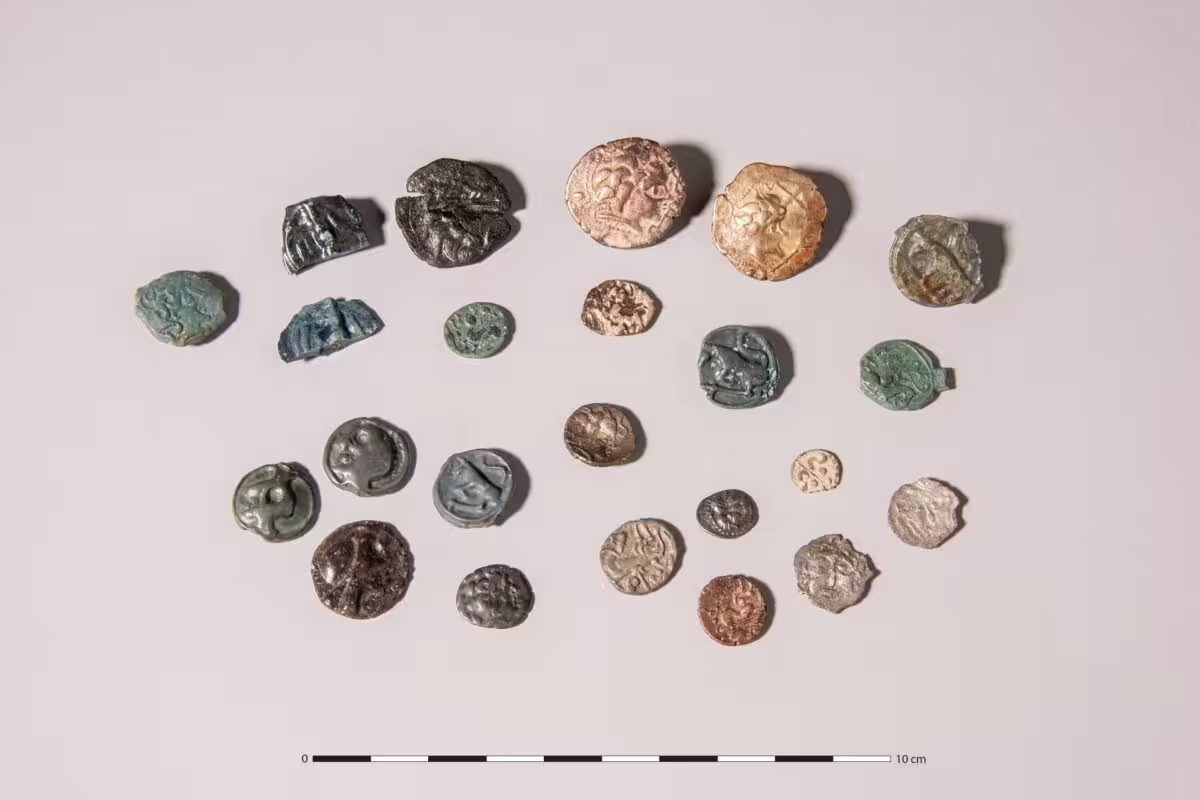
The team also recovered hundreds of coins spanning more than five centuries. Ancient‑coin specialist Isabelle Bollard‑Raineau explained that roughly one‑third of the specimens had been filed, sheared or chiseled, a treatment that signaled a ritual purpose:
“These mutilations reveal a ritual intention: the removal of the coin’s commercial function in order to dedicate the object to the sacred, thereby ensuring the permanence of the offering.”
This article has been fact checked for accuracy, with information verified against reputable sources. Learn more about us and our editorial process.
Last reviewed on .
Article history
- Latest version
Reference(s)
- “Actualité | Le riche mobilier métallique d’Allonnes la Gauloise (Maine-et-Loire).”, July 9, 2026 Inrap <https://inrap.fr/le-riche-mobilier-metallique-d-allonnes-la-gauloise-maine-et-loire-20820?__cf_chl_rt_tk=XrQ1RrC4c0CC3obC1tYVofind5eupegghQ4XNM_Mhl8-1784069660-1.0.1.1-zCKZ9aD6ktX1CtYv7Tf8aZJ8UIibfhzhM5Y26_pyujo>.
- <https://www.researchgate.net/profile/Thierry-Lejars>.
- “Bollard-Raineau Isabelle.”, June 15, 2023 Institut national du patrimoine <https://www.inp.fr/annuaire/bollard-raineau-isabelle>.
Cite this page:
- Posted by Vikram Desai