Colombia Retrieves First Treasure From 300‑Year‑Old $20 Billion San José Shipwreck
First treasures from a $20 billion shipwreck emerge, sparking a global clash over gold, history and legal ownership.
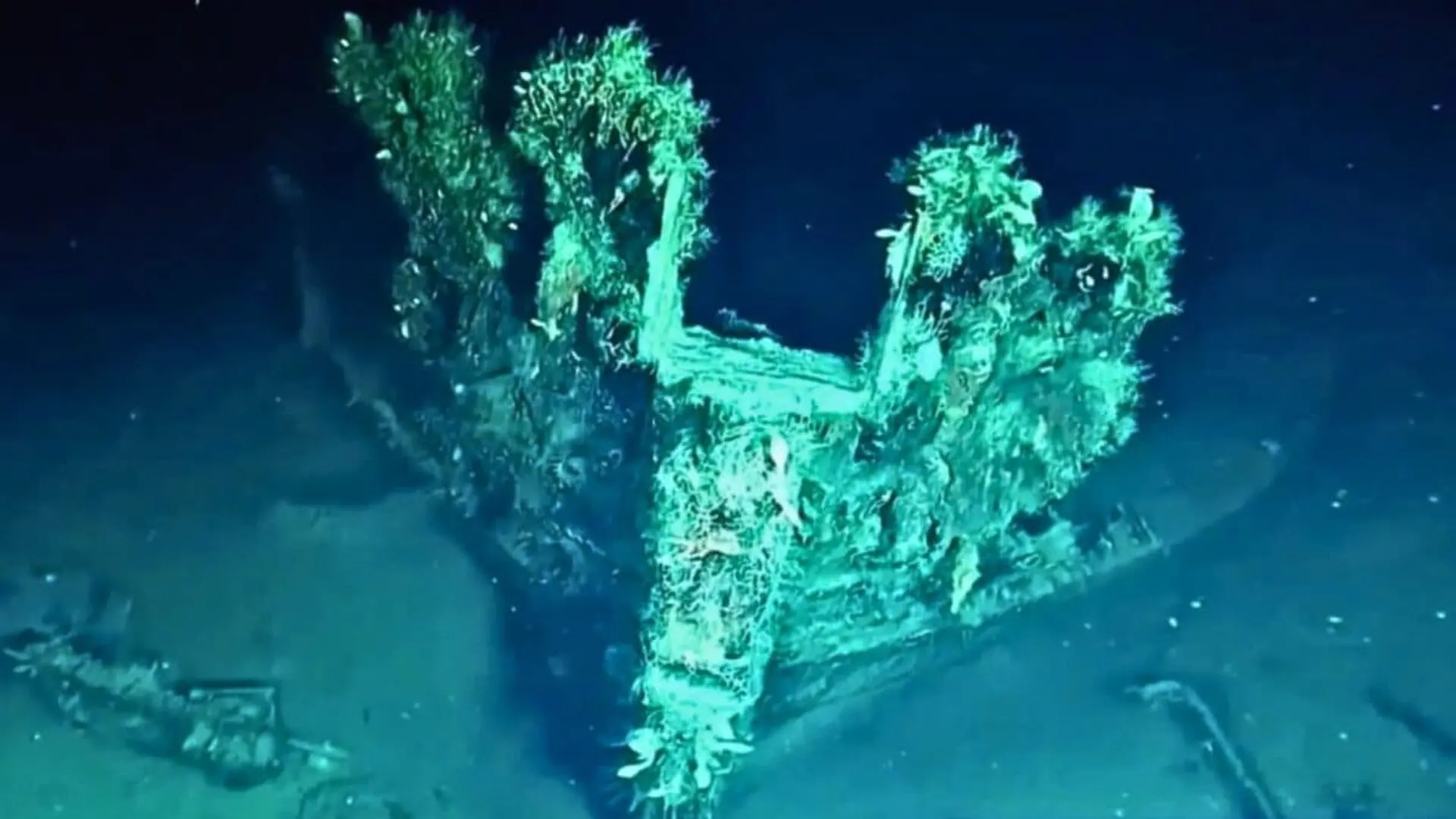
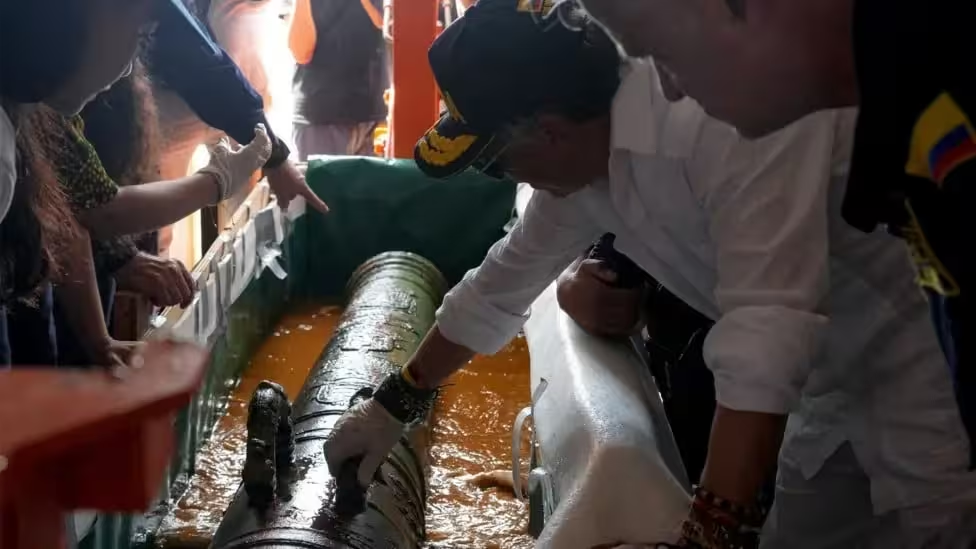
Three centuries after the San José vanished beneath the Caribbean, a Colombian-led team succeeded in raising its first tangible relics. Between November 16 and 18 2025, autonomous submersibles retrieved a bronze cannon marked “Sevilla,” a porcelain cup, three hand‑crafted gold macuquinas, and additional ceramic fragments from a depth of roughly 2,000 feet off Cartagena.
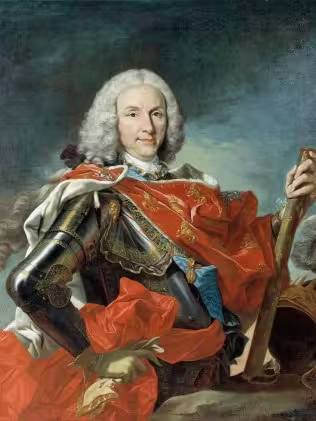
The wreck, long hailed as the richest sunken treasure ever discovered, sank in 1708 while transporting gold, silver and emeralds from Spanish colonies to the royal court of Philip V. Contemporary estimates value the cargo at about $20 billion, turning the centuries‑old disaster into a focal point for governments, commercial salvagers and international tribunals.
A War‑Era Fleet Overturned
Archival documents place the San José within the Flota de Tierra Firme, a convoy that set sail from Peru in 1707 bearing royal reserves. The vessel never completed its journey; British warships intercepted it near Cartagena the following year, sinking the galleon along with an estimated 11 million gold and silver coins and a cache of emeralds destined for the Spanish throne.
The Colombian Navy, in partnership with the Woods Hole Oceanographic Institution (WHOI), pinpointed the wreck in November 2015, a finding announced by the president the following month. WHOI later confirmed the identity of the ship using the distinctive design of its cannon. After declaring the site a protected archaeological zone, Colombia unveiled formal recovery plans in March 2024.
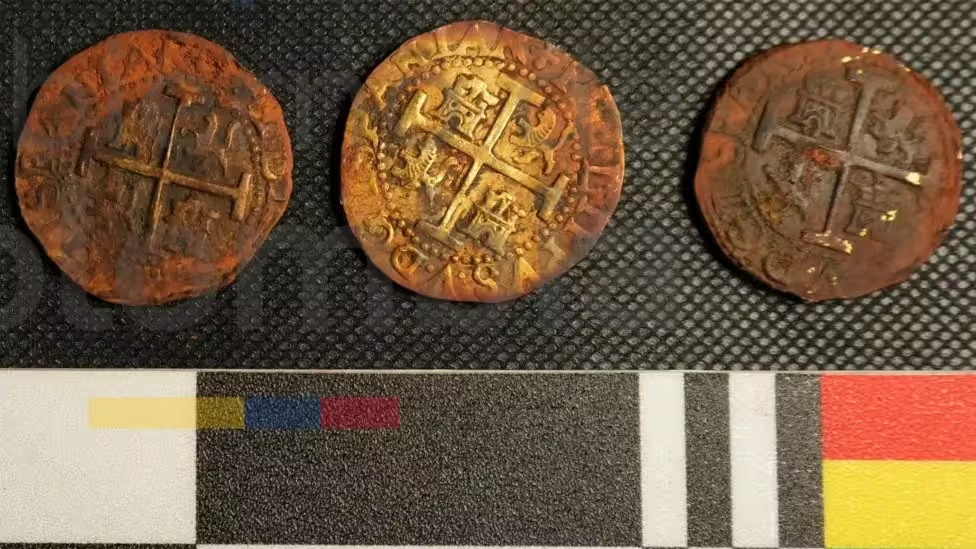
A 2025 study published in Antiquity employed photogrammetric techniques to render three‑dimensional models of in‑situ coins. The analysis identified a Jerusalem cross, heraldic emblems of Castile and León, and mint marks indicating production in Lima, Peru, in 1707, reinforcing the ship’s chronology.
First Artifacts Unearthed
The initial haul includes the “Sevilla” cannon, a porcelain cup, three gold macuquinas and two shards of pottery. The retrieval was a joint effort by the Colombian Navy, the Ministry of Culture, the Institute of Anthropology and History (ICANH), and the Maritime Directorate (DIMAR). On November 19 2025, the items were displayed in Cartagena, signalling the start of the project’s second phase, dubbed “Towards the Heart of the San José Galleon.”
Culture Minister Yannai Kadamani Fonrodona hailed the find as a historic milestone that showcases Colombia’s ability to safeguard its submerged heritage. ICANH director Alhena Caicedo Fernández noted that the objects provide a tangible entry point for the public to connect with the galleon’s story, while conservation work proceeds.
Earlier remote‑operated vehicle surveys in 2024 charted additional debris—anchors, glass bottles, ceramic jars and scattered gold artifacts—across the wreck site. Colombian officials have proposed a dedicated shipwreck museum in Cartagena to exhibit future finds. President Petro’s administration consistently frames the venture as scientific research rather than commercial salvage.
The $10 Billion Arbitration Battle
The recovery unfolds amid a high‑stakes legal dispute. U.S. firm Sea Search Armada (SSA), formerly Glocca Morra, claims to have located the wreck as early as 1982 and is seeking roughly $10 billion—about half the treasure’s estimated worth—through the Permanent Court of Arbitration in The Hague. Arbitration proceedings began in December 2022 and remain unresolved.
Colombia has not ratified UNESCO’s 2001 Convention on the Protection of Underwater Cultural Heritage, a framework that could have shifted the dispute toward shared stewardship rather than monetary compensation. Consequently, the arbitration panel’s interpretation of the bilateral trade pact will set a precedent for future claims over historic shipwrecks.
Heritage Claims and National Identity
Spain has periodically expressed interest in the San José, given the vessel’s flag and its cargo destined for the Spanish crown. Colombia emphasizes that the treasure originated from Latin American colonies, framing the recovery as a reclamation of regional history rather than a transfer of assets to Europe.
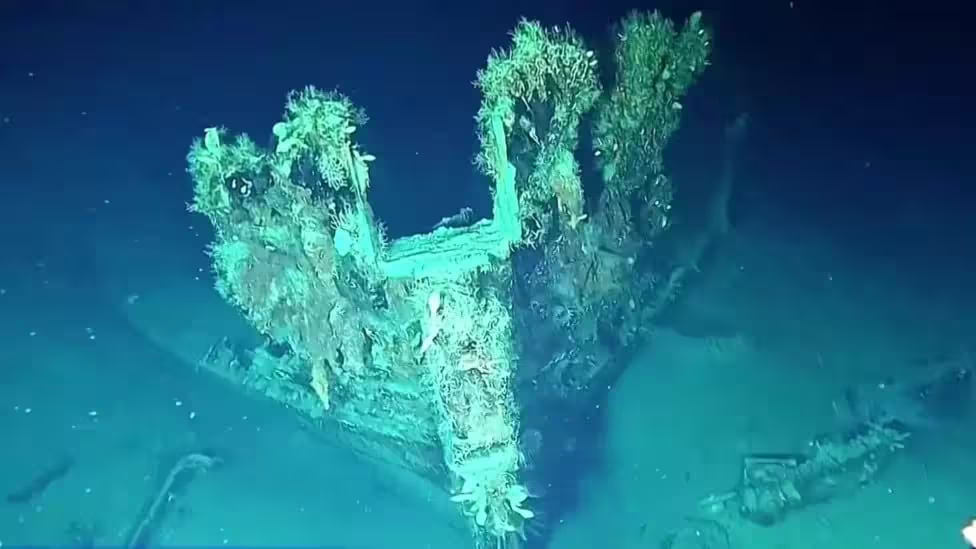
ICANH researcher Daniela Vargas Ariza, who led the coin‑imaging project, highlighted that the Tierra Firme fleet held an exclusive monopoly on transporting royal riches between South America and Spain. The recovered macuquinas—hand‑struck gold pieces used as primary currency across the Americas for two centuries—provide physical evidence that complements prior imaging surveys.
The objects now in Colombian custody represent only a fraction of the presumed remaining wealth. Ongoing phases of the research initiative will depend on the final ruling of the Permanent Court of Arbitration.
This article has been fact checked for accuracy, with information verified against reputable sources. Learn more about us and our editorial process.
Last reviewed on .
Article history
- Latest version
Reference(s)
- Rios, Michael. “Colombia recovers first treasures from 300-year-old ‘holy grail of shipwrecks’.”, November 20, 2025 CNN <https://edition.cnn.com/2025/11/20/americas/colombia-holy-grail-shipwreck-san-jose-treasures-latam-intl>.
- <https://pca-cpa.org/cn/cases/300/>.
Cite this page:
- Posted by Vikram Desai