Ancient Teeth Reveal Plague Killing Humans 5,500 Years Ago in Siberian Communities
New genetic analysis of ancient teeth and burials suggests the plague may have originated elsewhere, challenging traditional historical narratives.

New genetic analysis pushes the origins of plague deep into the Bronze Age, revealing that the deadly bacterium Yersinia pestis was already affecting humans roughly 5,500 years ago.
Scientists examined skeletal remains from four remote burial grounds near Lake Baikal in eastern Siberia, sites that belonged to mobile hunter‑gatherer groups long before agriculture or urban centers appeared. By extracting DNA preserved inside teeth, they identified Y. pestis genetic material in 18 of the 46 individuals studied.
Tooth‑Based Genomes Trace Early Plague Lineages
The researchers focused on dental samples because enamel can safeguard traces of bloodstream infections for millennia. From these specimens they reconstructed several early plague genomes that sit at the base of the pathogen’s evolutionary tree, confirming that these strains represent some of the most ancient branches known.
Lead author Ruairidh Macleod explained that integrating genetic data with archaeological context and radiocarbon dates allowed the team to piece together a detailed picture of the outbreaks.
“Based on the plague DNA, the genetic relationships between the victims, the archaeological analysis and the radiocarbon dating, we’ve built a really clear, complete picture of what happened during these outbreaks,” he said.
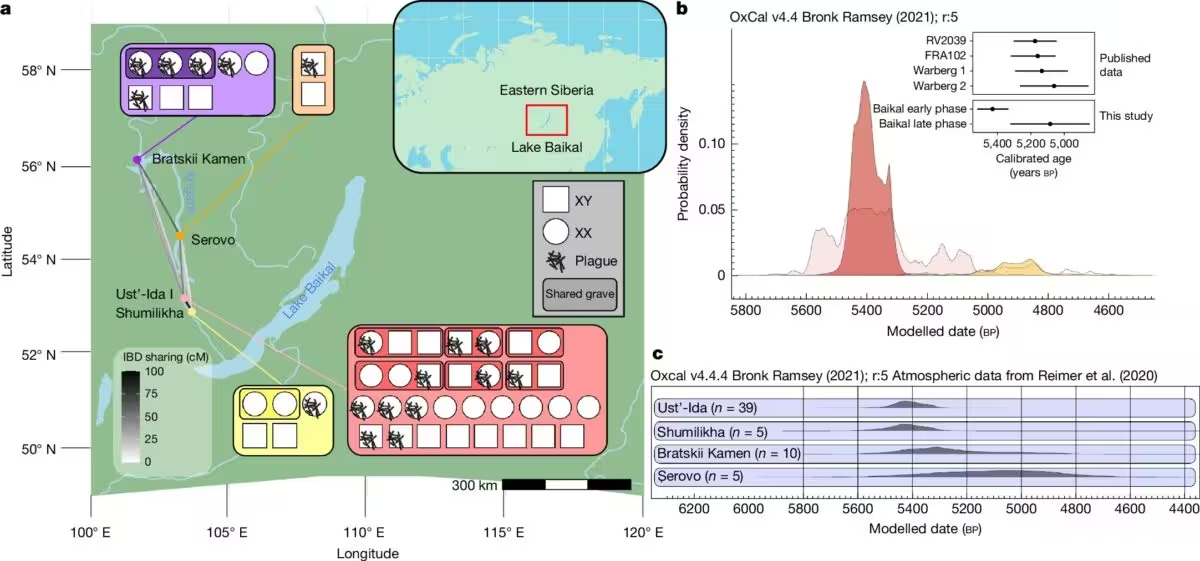
The high infection rate—about 40 percent of the sampled individuals—matches or exceeds levels observed at some documented medieval plague sites, suggesting that the disease could cause rapid, community‑wide mortality even in small, nomadic groups.
Burial Evidence Points to Sudden Mortality Spikes
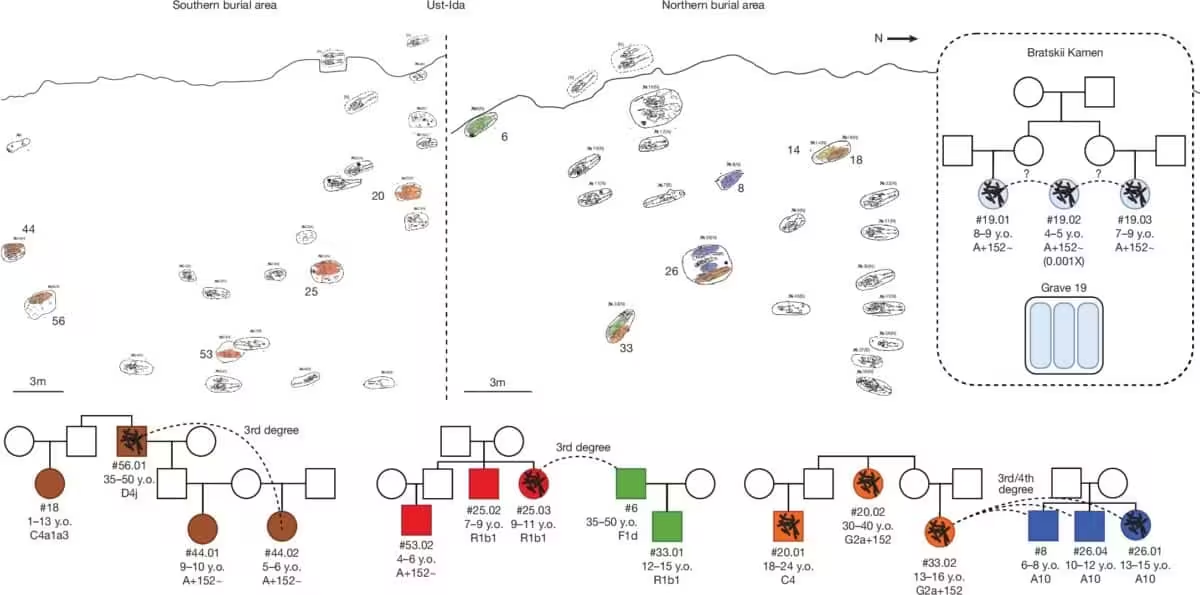
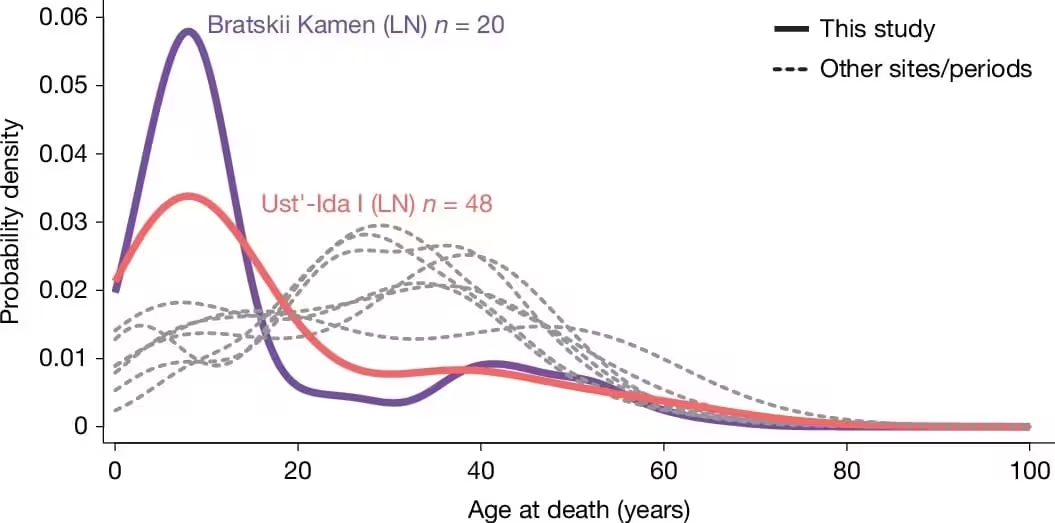
Archaeologists noted an unusually large proportion of children and teenagers among the dead, a pattern that had long puzzled researchers. Radiocarbon dating shows that many interments occurred within a narrow time window, indicating that the deaths were clustered rather than spread over many years.
In several cases, genetically related individuals—siblings or parent‑child pairs—appear to have perished almost simultaneously and were buried together, reinforcing the idea of abrupt epidemic events.
“The unusually high number of children and the short timespan was a real puzzle that we’ve been trying to solve since the 1990s. Finding out that plague was the cause is extraordinary, but it makes so much sense.”
These findings also hint that the early pathogen may have spread without the classic flea vector that later facilitated plague transmission.
A Lost Superantigen May Have Boosted Early Virulence
Genomic analysis uncovered a superantigen toxin gene present in the ancient strains but absent from later historical variants of Y. pestis. Superantigens can provoke overwhelming immune reactions, leading to severe inflammation and rapid decline in infected individuals.
Eske Willerslev, senior author and Cambridge professor, said the combination of this toxin with other virulence factors could have rendered the disease especially lethal for prehistoric peoples.
Implications for the Geographic Origin of Plague
The authors argue that the Lake Baikal region, where hunter‑gatherers frequently encountered marmots—rodents that still carry Y. pestis today—served as a likely hotspot for early zoonotic spillover. This supports a Central or Northeast Asian source for the pathogen, predating the development of permanent settlements and long‑distance trade routes.
The study, published in Nature, reshapes our understanding of how and when plague entered human populations, showing that even small, mobile groups were vulnerable to devastating epidemics long before the medieval Black Death.
This article has been fact checked for accuracy, with information verified against reputable sources. Learn more about us and our editorial process.
Last reviewed on .
Article history
- Latest version
Reference(s)
- “Dr Ruairidh Macleod | All Souls College.” <https://www.asc.ox.ac.uk/person/dr-ruairidh-macleod>.
- “Eske Willerslev | School of the Biological Sciences.” <https://www.bio.cam.ac.uk/people/eske-willerslev>.
- Macleod, Ruairidh. “Lethal plague outbreaks in Lake Baikal hunter-gatherers 5,500 years ago - Nature.”, vol. 654, no. 8119, pp. 697-705. Nature, doi: 10.1038/s41586-026-10540-5. <https://www.nature.com/articles/s41586-026-10540-5>.
Cite this page:
- Posted by Vikram Desai