Perseverance Becomes First Rover to Run a Marathon on Mars, Nears Record
NASA’s Perseverance rover completes a marathon‑length trek on Mars, highlighting the rise of autonomous exploration in planetary science.
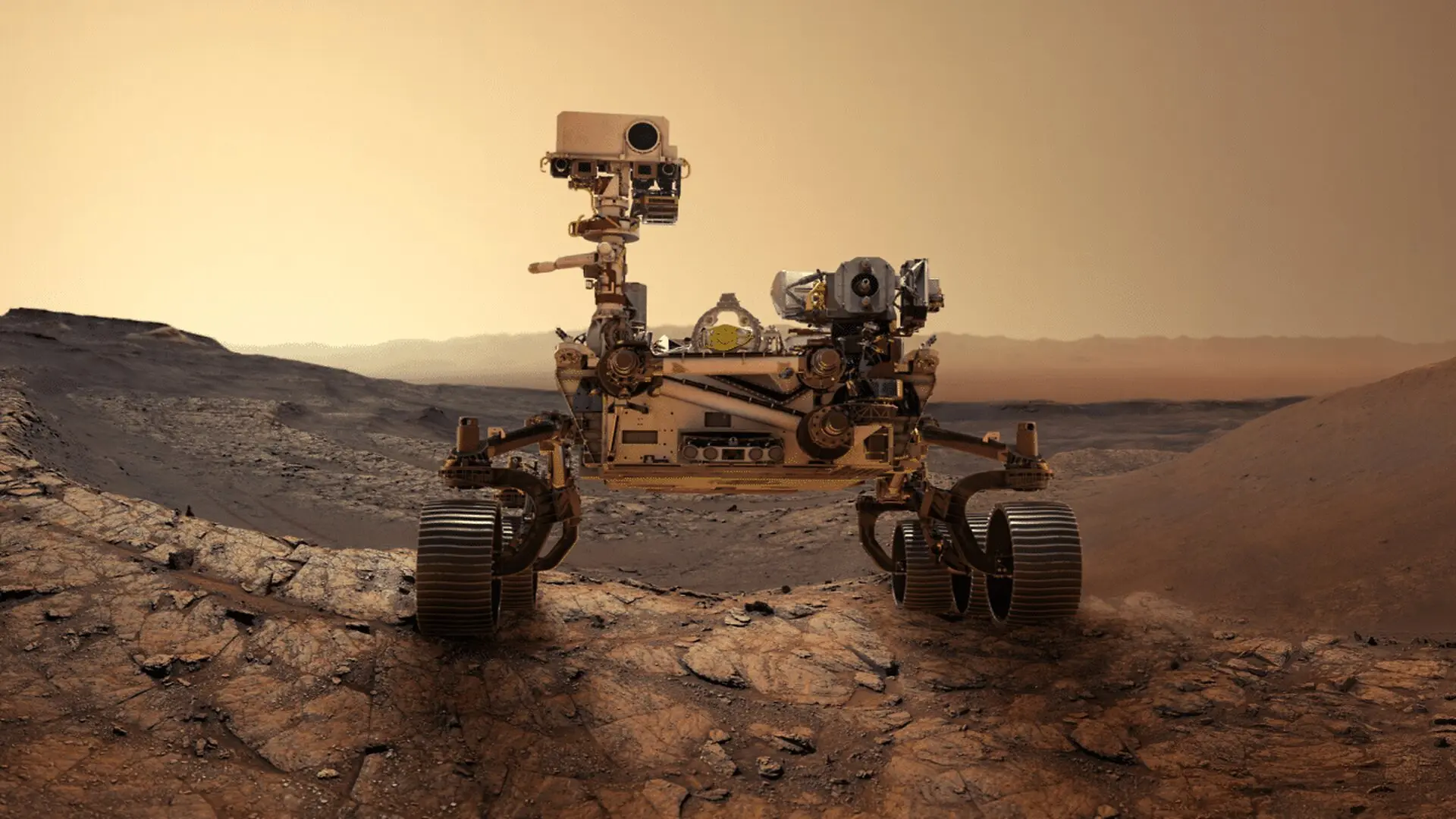
NASA’s Perseverance rover has now covered a distance equal to a full marathon on the Martian surface, marking a significant milestone in the mission’s five‑year exploration of the Red Planet. The rover’s progress underscores both its durability and the sophisticated mobility systems that enable modern robotic explorers to traverse alien terrain.
Marathon‑scale distance logged in Jezero Crater
After more than five years since its touchdown, Perseverance has accumulated over 26.2 miles (42.195 kilometers) of travel, joining a very small group of ground vehicles to achieve a marathon‑length journey beyond Earth. This accomplishment was reached in less than half the time it took the earlier Opportunity rover to travel a comparable distance.
The record‑setting trek took place while the rover was conducting science operations in the western part of Jezero Crater, a site chosen for its ancient lake‑bed and river‑delta deposits that may preserve evidence of past microbial life.
NASA noted the event with the following statement:
“The rover surpassed a total distance of 26.2 miles (42.195 kilometers) on the Red Planet on June 14, 2026. It crossed the milestone while exploring intriguing, ancient terrain to the west of Jezero Crater, where the robotic geologist discovered the remnants of an ancient lake, and possible signs of ancient life,” NASA wrote.
Each meter covered by Perseverance adds to a growing dataset on Martian geology, climate evolution, and habitability. The rover has been gathering rock samples, characterizing outcrops, and imaging the landscape, work that could eventually help answer whether life ever arose on Mars.
Voir cette publication sur InstagramHow autonomous navigation reshaped rover operations
Perseverance’s ability to log such distances in a relatively short span stems from breakthroughs in on‑board computing and self‑driving software. Earlier rovers required careful, step‑by‑step commands from Earth, with each move limited by terrain hazards and the communication delay between the planets.
The newer system equips the rover with high‑resolution navigation cameras and algorithms that map the surrounding ground in real time, selecting safe paths without waiting for direct input from mission control. Engineers still set broad scientific targets, but the rover autonomously handles the fine‑grained route planning.
This autonomy translates into longer daily traverses and more time allocated to scientific tasks such as sample caching, mineral analysis, and high‑definition imaging, accelerating the overall pace of discovery.
Approaching Opportunity’s distance record
Opportunity, which roamed Mars for nearly fifteen years, holds the current record for total ground covered—approximately 45.16 kilometers (28.06 miles). Perseverance is steadily closing that gap, and its current trajectory suggests the milestone could be overtaken in the coming months, pending mission priorities.
Mission planners often pause long drives to investigate intriguing rock formations, a trade‑off that slows cumulative mileage but maximizes scientific return. Recent campaigns have seen the rover travel several kilometers within weeks, setting new benchmarks for daily travel distances.
Each additional kilometer expands the array of geological contexts available for study, increasing the chances of detecting biosignatures and enriching the sample cache that may one day be returned to Earth.
Also Read26‑Story Apartment Rises in 5 Days: How China’s Steel‑Modular System Built a Tower Overnight
This article has been fact checked for accuracy, with information verified against reputable sources. Learn more about us and our editorial process.
Last reviewed on .
Article history
- Latest version
Cite this page:
- Posted by Vikram Desai