ESA’s Mars Express unveils towering 8‑km dust devils twisting through ancient Mamers Valles
Mars Express captures 30+ giant dust devils in ancient Mamers Valles, shedding new light on the Red Planet’s climate and geological history.
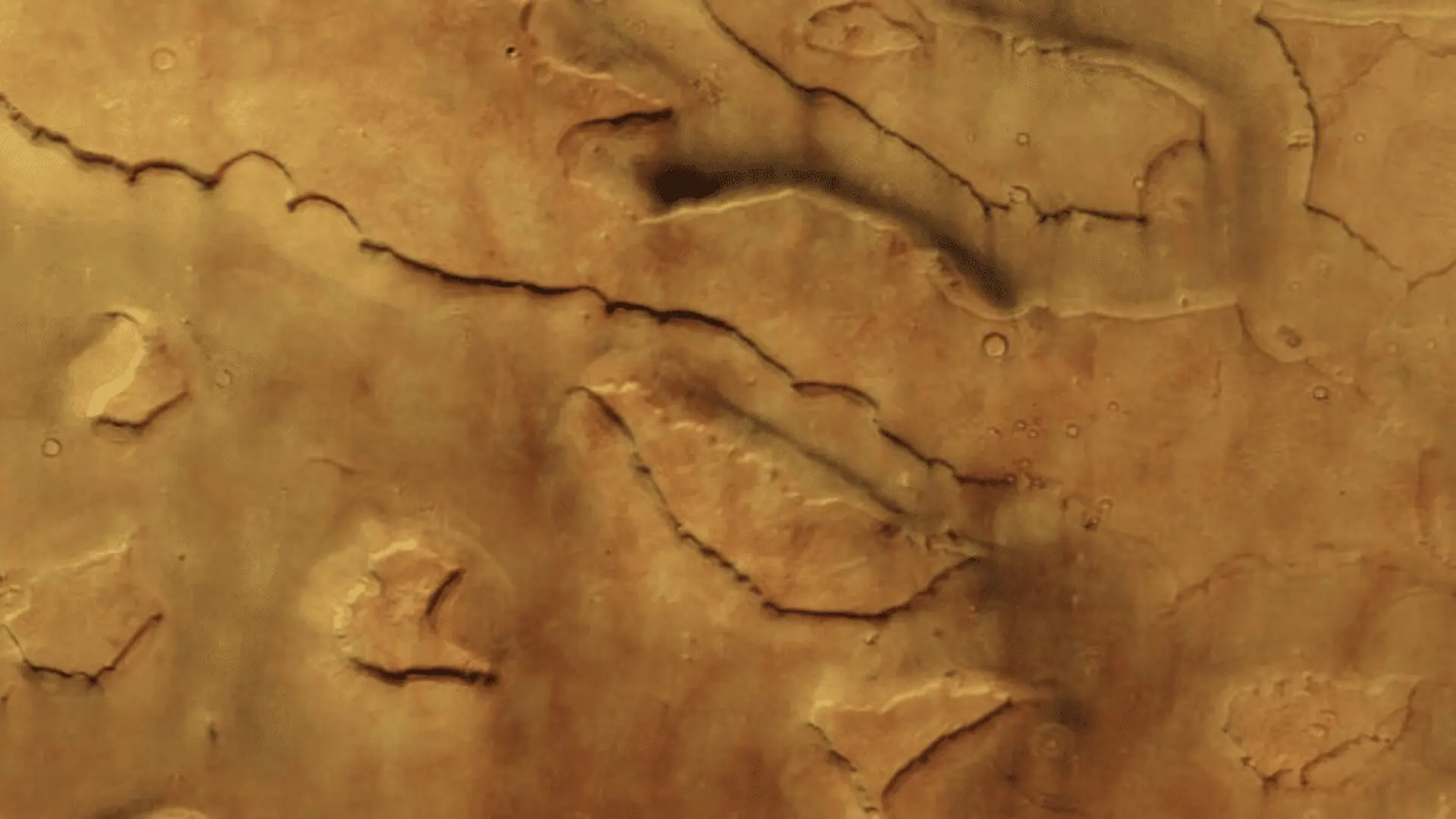
New high‑resolution mosaics from ESA’s Mars Express spacecraft showcase dozens of towering dust devils racing through the ancient channels of Mamers Valles. The images, taken with the orbiter’s High Resolution Stereo Camera, reveal vortexes that can climb up to eight kilometres above the valley floor, offering an unprecedented look at the planet’s turbulent air and dusty surface.
Giant Whirlwinds Stirring the Martian Sky
On Mars, sunlight heats localized patches of ground, causing the thin air above to spin upward and entrain dust into fast‑moving columns. Unlike Earth’s modest desert dust devils, the Martian versions can span several kilometres, reach heights of eight kilometres and gust at around 45 meters per second. Their swirling trails linger long enough to be recorded, and they play a key role in shuffling surface dust, altering local heat budgets, and gradually reshaping the landscape. Studying these phenomena helps researchers understand how winds distribute material across Mars, a factor that could affect future rovers, solar‑powered assets and even crewed habitats.
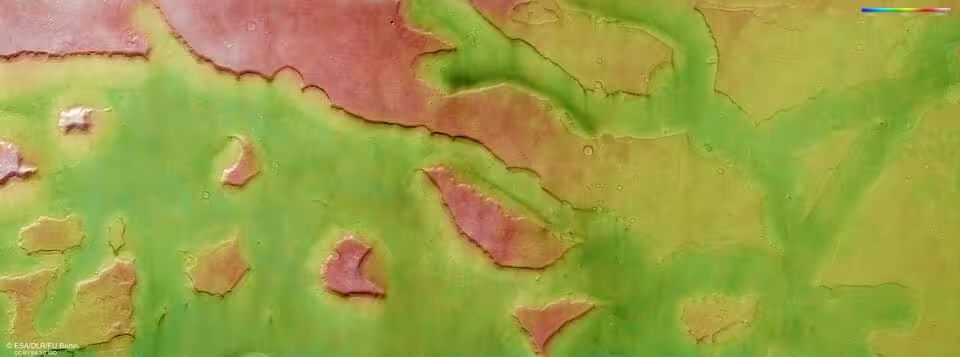
Credit: ESA/DLR/FU Berlin
Capturing Miniature Tornadoes with HRSC
The Mars Express orbiter, launched in 2003, carries the High Resolution Stereo Camera (HRSC), which records simultaneous images from multiple angles and spectral bands. When the terrain stays still, the overlapping frames merge seamlessly; moving features such as dust devils, however, appear as distinct streaks against the background. In the latest dataset, more than 30 vortices are highlighted with yellow outlines and faint pink shadows. By combining HRSC observations with data from ESA’s ExoMars Trace Gas Orbiter, scientists have tracked over 1,000 active dust storms worldwide, refining models of Martian wind circulation and its interaction with valleys, mesas and other surface forms.
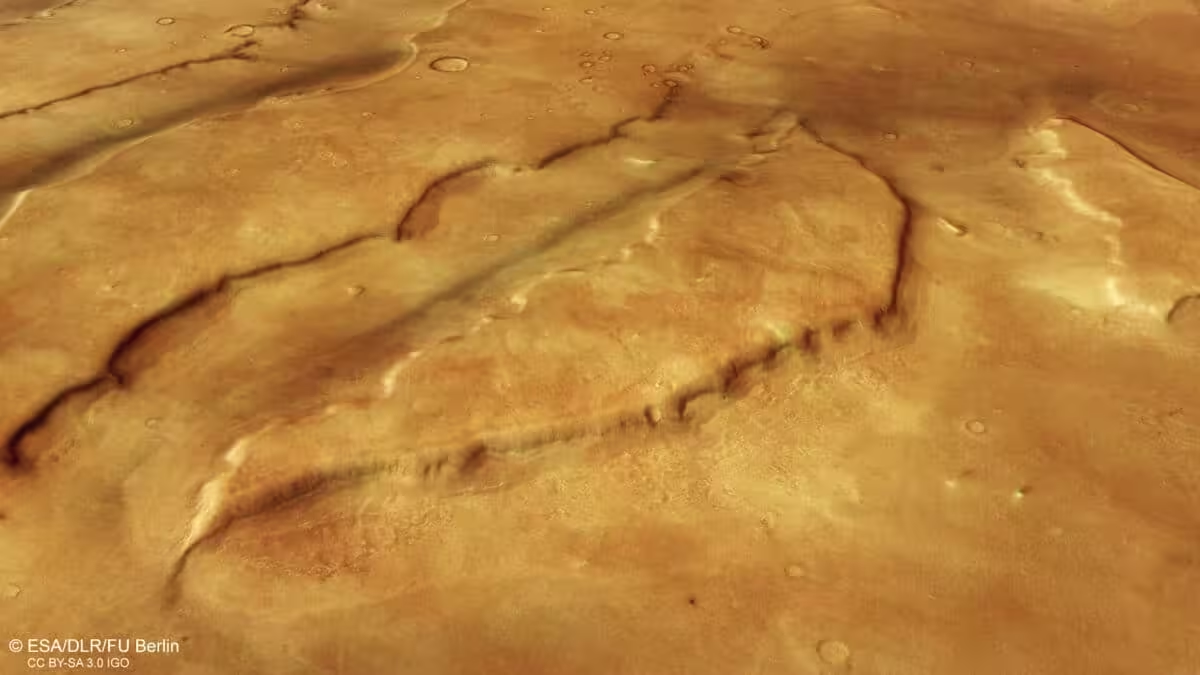
Credit: ESA/DLR/FU Berlin
The Complex Network of Mamers Valles
Mamers Valles stretches for roughly 1,000 kilometres, linking the southern highlands with the northern lowlands. Its channels can be as wide as 25 kilometres and plunge more than a kilometre deep, bounded by sheer cliffs, mesas and debris‑covered ice deposits. The terrain is “fretted,” with broken valleys intersected by flat‑topped hills and ridged surfaces. Long ridges and textured surfaces on the valley floors record glacier‑driven flows that once carried rocks and dust downhill. Dark patches scattered across the valleys likely represent volcanic sands, either emplaced in situ or redistributed by wind. Together these elements illustrate the combined influence of water, lava and ice in sculpting Mars’s surface over billions of years.
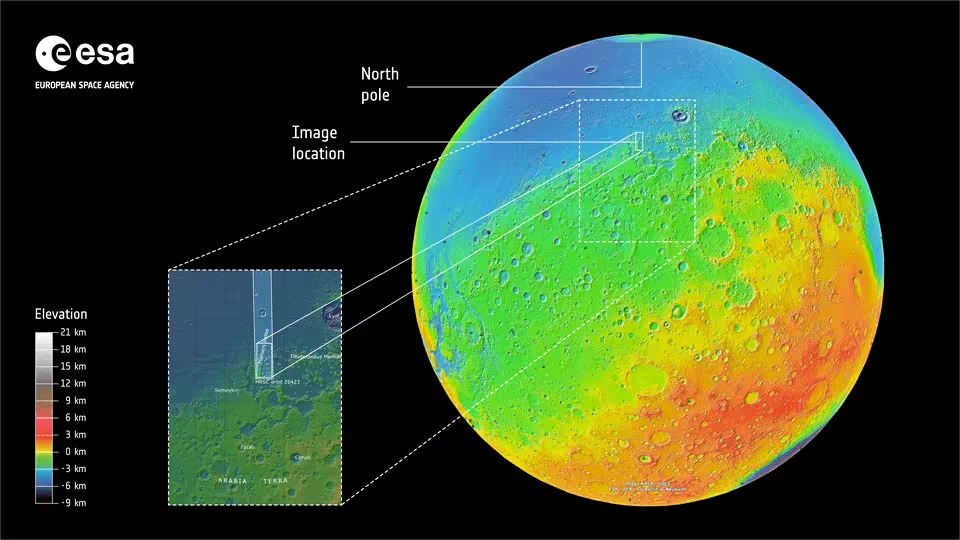
Credit: NASA/USGS; ESA/DLR/FU Berlin
Glacial Relics and the Red Planet’s Watery Past
Beneath layers of rocky debris, glaciers have preserved pockets of water ice for millions of years, insulated by dust and rock blankets. These icy remnants testify to a period when Mars was warmer and capable of sustaining liquid water on its surface. The ridges, grooves and other textures etched into valley floors record the slow advance of ice, carving channels as it moved downhill. Even the steep cliffs and mesas bear marks of ice‑related erosion, underscoring the role of glaciers in shaping the planet’s topography. Although present‑day conditions no longer allow stable surface liquid, these frozen archives provide crucial clues about Mars’s climate evolution and the processes that transformed it into the cold, arid world we see today.
Two Decades of Mars Express Contributions
Since its launch in 2003, Mars Express has reshaped planetary science with its HRSC instrument, built by the German Aerospace Center (DLR). The camera has delivered the most detailed colour and three‑dimensional maps of the Martian surface, revealing features invisible from earlier missions. Teams at the ESA DLR Institute of Space Research in Berlin‑Adlershof and at the Freie Universität Berlin have processed the latest data to produce the striking dust‑devil mosaics over Mamers Valles. Over twenty‑one years, the orbiter has monitored everything from planet‑wide dust storms to seasonal ice migrations, feeding models of Martian climate, geology and atmospheric dynamics that will guide upcoming exploration missions.
This article has been fact checked for accuracy, with information verified against reputable sources. Learn more about us and our editorial process.
Last reviewed on .
Article history
- Latest version
Reference(s)
- “Dozens of dust devils hidden in plain sight.” <https://www.esa.int/Science_Exploration/Space_Science/Mars_Express/Dozens_of_dust_devils_hidden_in_plain_sight>.
Cite this page:
- Posted by Vikram Desai