New 400‑Year Database Maps Rare Milky Seas, Linking Climate Cycles to a Possible Ocean Warning
Satellites and old ship logs map the mysterious milky seas—vast glowing oceans that may signal a hidden environmental threat.
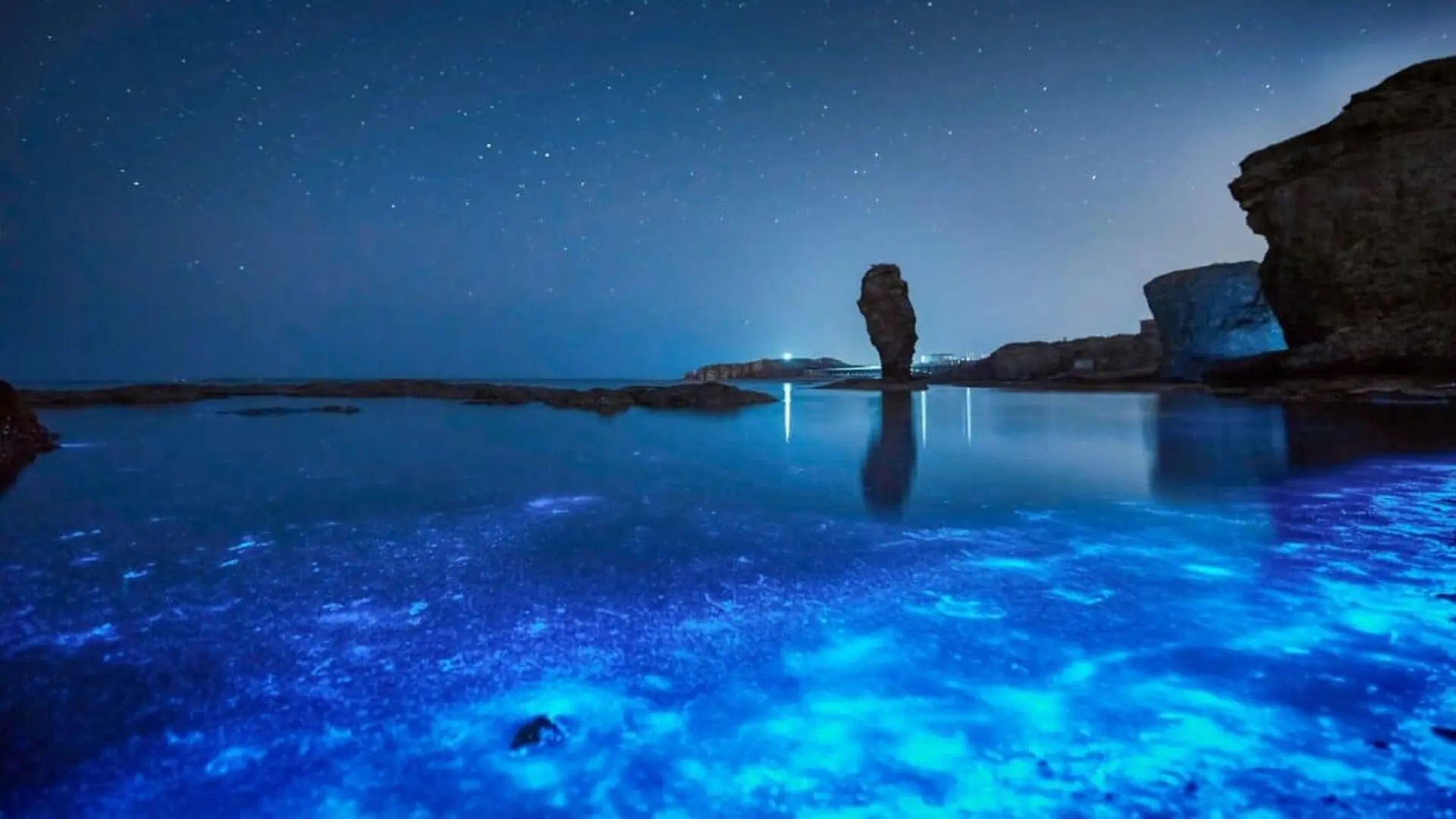
Sailors have long spoken of a nocturnal ocean that turns a luminous cream, bright enough to read by, and stretches to the horizon. This rare event, known as milky seas, now benefits from the most extensive scientific compilation to date, drawn from nearly four centuries of ship logs, eyewitness testimonies, newspaper reports, and satellite observations.
Justin Hudson, a PhD candidate at Colorado State University, and Steven Miller, an atmospheric scientist at the same institution, released the dataset in Earth and Space Science. They note that historically the phenomenon has hovered between folklore and empirical science.
A Sparse Record: Fewer Than Four Hundred Sightings in Four Centuries
Milky seas rank among the least documented bioluminescent displays, where living organisms emit light. The new catalogue lists under 400 confirmed cases spanning 400 years, and only a single verified photograph exists—a private yacht captured the glow south of Indonesia in 2019 after the crew recognized the phenomenon from Miller’s 2021 study in Scientific Reports.
Scientists suspect bacteria, rather than the flashing plankton that cause more familiar marine lights, generate the sustained glow. A 1985 research vessel encountering a milky sea near Socotra in the Arabian Sea retrieved water containing Vibrio harveyi, a bacterium later hypothesized as the source.
Unlike planktonic flashes that appear briefly when disturbed, these bacteria can maintain illumination for days or weeks, producing a uniform radiance. A 1980 U.S. Navy account likened the effect to “glow‑in‑the‑dark plastic stars.” The 1985 sample remains the sole direct scientific collection of the event.
Observers often describe the illumination as capable of lighting the entire sea surface for extended periods, yet it disappears under daylight or moonlight. Many reports also note an uncanny calmness, which researchers link to a mucus‑producing algae found alongside Vibrio harveyi in the 1985 expedition, potentially smoothing the water’s appearance.
Nine‑Month Archival Quest Yields the Database
Hudson spent roughly nine months sifting through maritime narratives, many authored by crews lacking scientific training. Ambiguous terms such as “white water” sometimes obscure the true nature of the sightings.
Plankton ecologist Abigail McQuatters‑Gollop of the University of Plymouth, who was not involved in the study, emphasized the modest size of the dataset but praised its value, stating, “I was just intrigued by the whole thing.”
The rarity of these events makes systematic observation impossible—“you cannot keep a boat stationed there waiting,” Hudson explains—yet historical logs provide a roadmap for future investigations.
Geographic Hotspots: Northwest Indian Ocean and the Maritime Continent
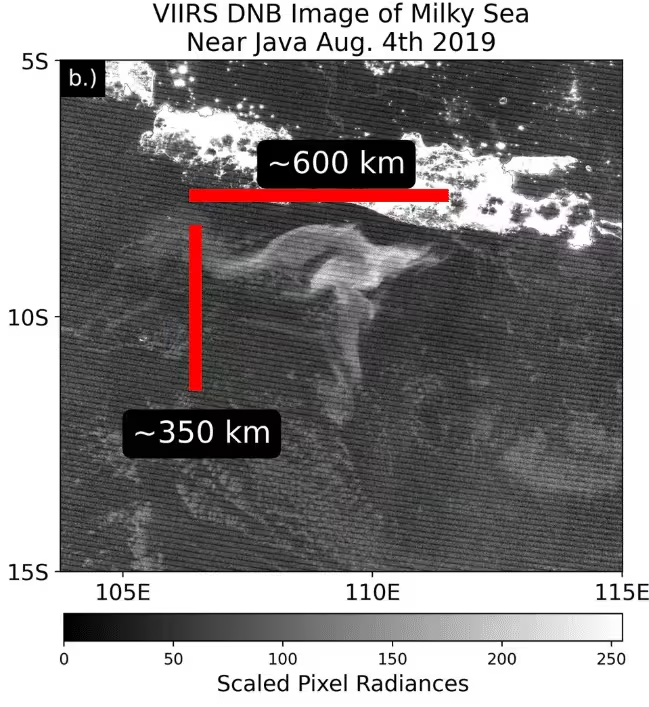
Analysis reveals two primary clusters: the northwest Indian Ocean and the Maritime Continent, the tropical corridor between the Indian and Pacific oceans. This pattern aligns with Miller’s 2021 satellite study using the VIIRS Day/Night Band (DNB) aboard the NOAA‑NASA Suomi NPP platform, which identified 12 confirmed milky sea events from 2012 to 2021. The DNB can detect illumination up to ten million times fainter than daylight.
The most extensive event recorded by Miller’s team occurred south of Java, Indonesia in 2019, covering roughly 100,000 square kilometers—comparable to Iceland—and persisting for at least 45 nights across two moonless intervals. Within the core 500 square‑kilometer zone, the brightness was sufficient to silhouette clouds against the glowing water.
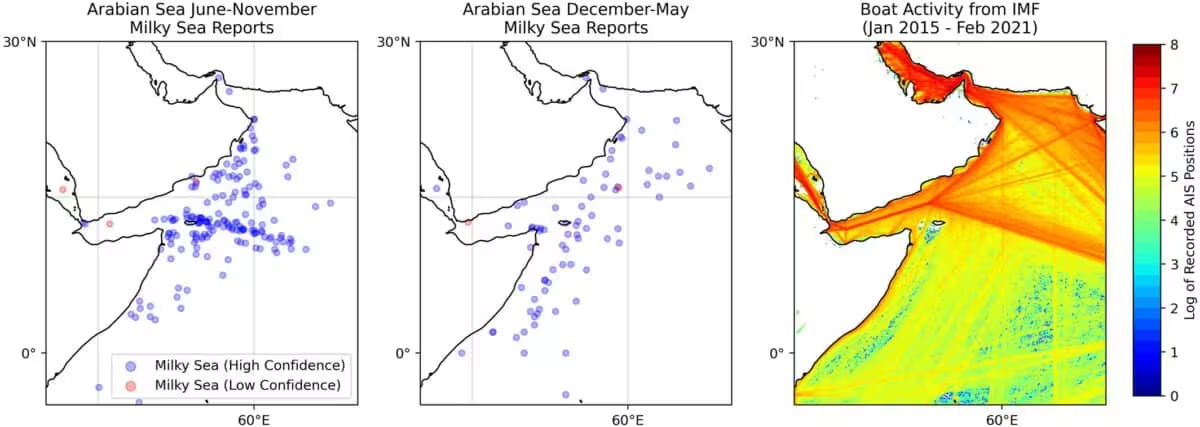
Typical occurrences are considerably smaller; the database suggests an average footprint of around 3,800 square miles, though larger events are more readily detected by both satellites and passing vessels.
Climate Oscillations Influence Occurrence
The compilation points to links with major oceanic and climatic cycles. Summer sightings tend to follow La Niña episodes, while winter events cluster around peaks of a positive Indian Ocean Dipole, a pattern where western Indian Ocean waters become warmer than their eastern counterparts.
Miller’s earlier research connected the 2019 Java event to a strongly positive Indian Ocean Dipole—the most pronounced since 1997‑1998—driving chlorophyll levels 70‑80 % above normal in the eastern Indian Ocean during that fall and potentially priming the region for milky sea activity.
Enhanced monsoonal activity linked to these cycles can trigger upwelling, bringing cold, nutrient‑rich water to the surface and sparking a rapid expansion of the marine food web. Hudson describes this as an “explosion” that may create the bacterial blooms necessary for the luminous phenomenon.
Potential Indicator of Ocean Health?
While the exact role of Vibrio harveyi remains uncertain, Hudson notes the bacterium is a known fish pathogen. If milky seas become more frequent, the glowing waters could signal broader ecological shifts with implications for fisheries and coastal economies—though this hypothesis rests on a single sampling event from 1985.
Miller is developing a rapid‑response framework that leverages the continuous observations from Suomi NPP and NOAA‑20, both equipped with the VIIRS Day/Night Band. In principle, the system could flag a milky sea from orbit and dispatch a research vessel while the event remains active. The longevity of the 2019 Java occurrence, lasting at least 45 nights, demonstrates the feasibility of such a strategy.
“There is still a lot to learn,” Miller says. “We hope that the day‑night band will help guide us toward that knowledge.”
This article has been fact checked for accuracy, with information verified against reputable sources. Learn more about us and our editorial process.
Last reviewed on .
Article history
- Latest version
Reference(s)
- Hudson, J.., et al. “From Sailors to Satellites: A Curated Database of Bioluminescent Milky Seas Spanning 1600‐Present.” Earth and Space Science, vol. 12, no. 4, April 9, 2025 American Geophysical Union (AGU), doi: 10.1029/2024EA004082. <https://agupubs.onlinelibrary.wiley.com/doi/10.1029/2024EA004082>.
- Miller, Steven. “Honing in on bioluminescent milky seas from space - Scientific Reports.”, vol. 11, no. 1, July 29, 2021, pp. 15443 Nature, doi: 10.1038/s41598-021-94823-z. <https://www.nature.com/articles/s41598-021-94823-z>.
Cite this page:
- Posted by Divya Iyer