Scientists Are Using Game Theory to Search for Alien Signals at a Precise Cosmic Meeting Point
Could a shared astronomical alignment help Earth coordinate first contact with distant civilizations? Scientists are now testing this interstellar theory.
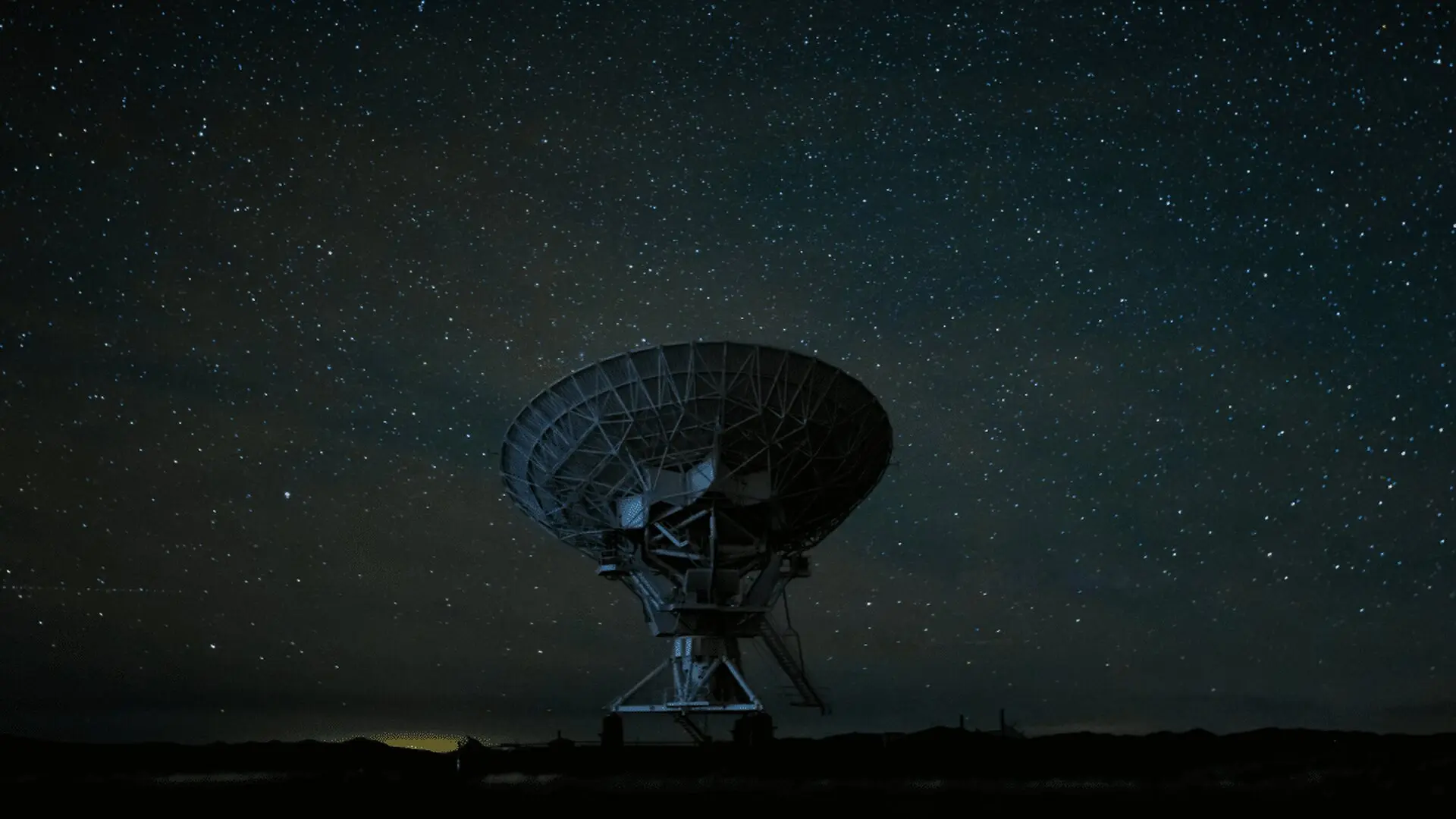
Astronomers are reimagining the search for extraterrestrial intelligence by shifting the focus from static stars to dynamic cosmic geometry. A new research initiative is exploring whether advanced civilizations might broadcast signals at specific, predictable moments, using Earth’s own orbital path as a beacon for contact. By applying principles of game theory, scientists are investigating whether the universe holds natural, shared reference points that could facilitate a handshake between two civilizations.
Establishing a Universal Meeting Point
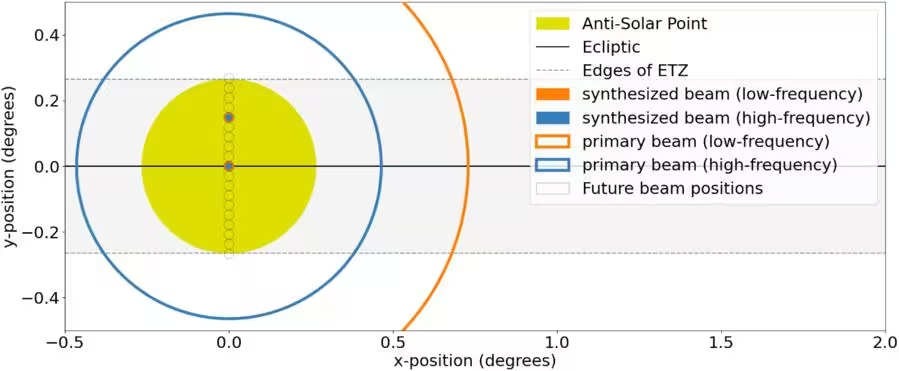
The core challenge of the Search for Extraterrestrial Intelligence (SETI) has long been the problem of coordination. Without prior contact, it is difficult to determine where and when to tune in. To bypass this, researchers have turned to the concept of a Schelling point—a solution that individuals would naturally gravitate toward in the absence of communication. As detailed in The Astronomical Journal, the team is focusing their instruments on the anti-solar point, the position in the sky directly opposite the Sun.
The logic is compelling: if a distant civilization were monitoring our solar system, they would likely observe Earth transiting the Sun. They might conclude that we are most receptive to signals when our planet reaches a specific point in its orbit, choosing to transmit when Earth is aligned with that celestial marker. For us, that transmitter would appear to be located at the anti-solar point. According to Dr. Sofia Sheikh, a research scientist at the SETI Institute and co-lead author of the study, this approach forces scientists to view the search through the lens of a potential sender rather than a passive observer.
Mapping a Moving Target
This ambitious survey is currently underway at the Allen Telescope Array (ATA) in Northern California. Unlike traditional SETI projects that stare at fixed star systems, this campaign must track the anti-solar point as it drifts across the night sky throughout the year. The researchers plan to conduct observations two to three nights per week over a four-year period, effectively creating a systematic sweep of the sky that mirrors Earth’s orbital progression. This strategy is also energy-efficient, as it assumes a civilization might choose to broadcast only when their target planet is in a predictable, high-value position.

Filtering the Cosmic Noise
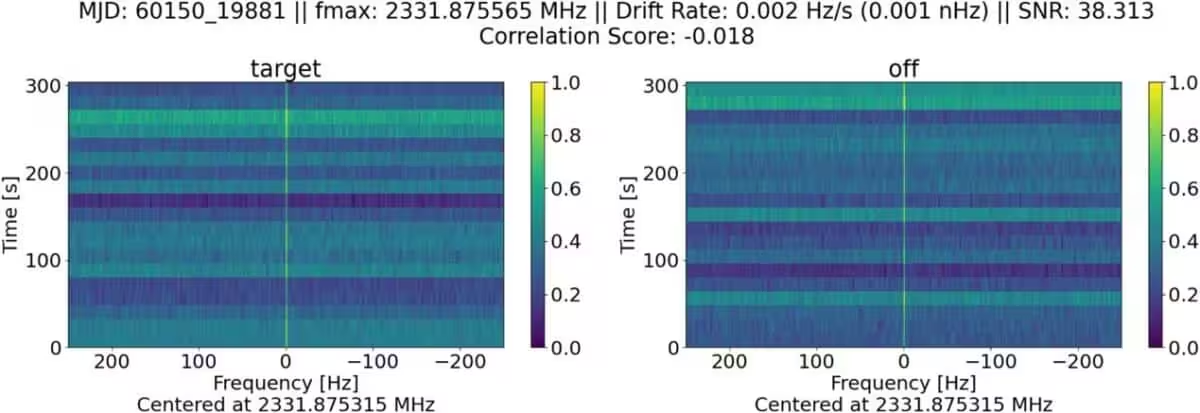
A pilot study conducted in 2023 yielded a massive amount of data—roughly 32 terabytes collected over 17 hours—resulting in 1.9 million signal detections. While the vast majority were identified as human-made radio frequency interference (RFI), the process allowed the team to sharpen their analytical tools. Under current parameters, the survey is sensitive enough to detect a planetary radar system similar to the one formerly at Arecibo from as far as 124 light-years away.
To handle the deluge of data, the team employs the Allen Telescope Survey Agnostic Technosignature (ATSAT) pipeline. This system automates the search for narrowband signals that exhibit the telltale frequency shifts caused by the relative motion of a transmitter and receiver. Furthermore, by utilizing the ATA’s beamforming capabilities, researchers can compare signals from the anti-solar point against other regions of the sky. This comparison is vital, as it allows the team to filter out localized noise from human communication infrastructure. According to Ananya Kalapatapu, a student and volunteer at the SETI Institute, this method allows the team to isolate a small, manageable set of intriguing candidates from the noise, enabling more rigorous investigation.
This article has been fact checked for accuracy, with information verified against reputable sources. Learn more about us and our editorial process.
Last reviewed on .
Article history
- Latest version
Reference(s)
- Sheikh, Sofia Z.., et al. “A Large-scale Technosignature Survey of the Antisolar Point with the Allen Telescope Array: Survey Design and Pilot Results.” The Astronomical Journal, vol. 172, no. 6, November 3, 2026, pp. 288 American Astronomical Society, doi: 10.3847/1538-3881/aeaa59. <https://iopscience.iop.org/article/10.3847/1538-3881/aeaa59>.
- “ATA.” <https://www.seti.org/projects/ata/>.
Cite this page:
- Posted by Aisha Ahmed