New Photonic Chip Can See Through Overlapping Light to Unlock Hidden Data
Stanford engineers have developed a new optical chip that processes light to boost computing speeds and revolutionize satellite communication technology.
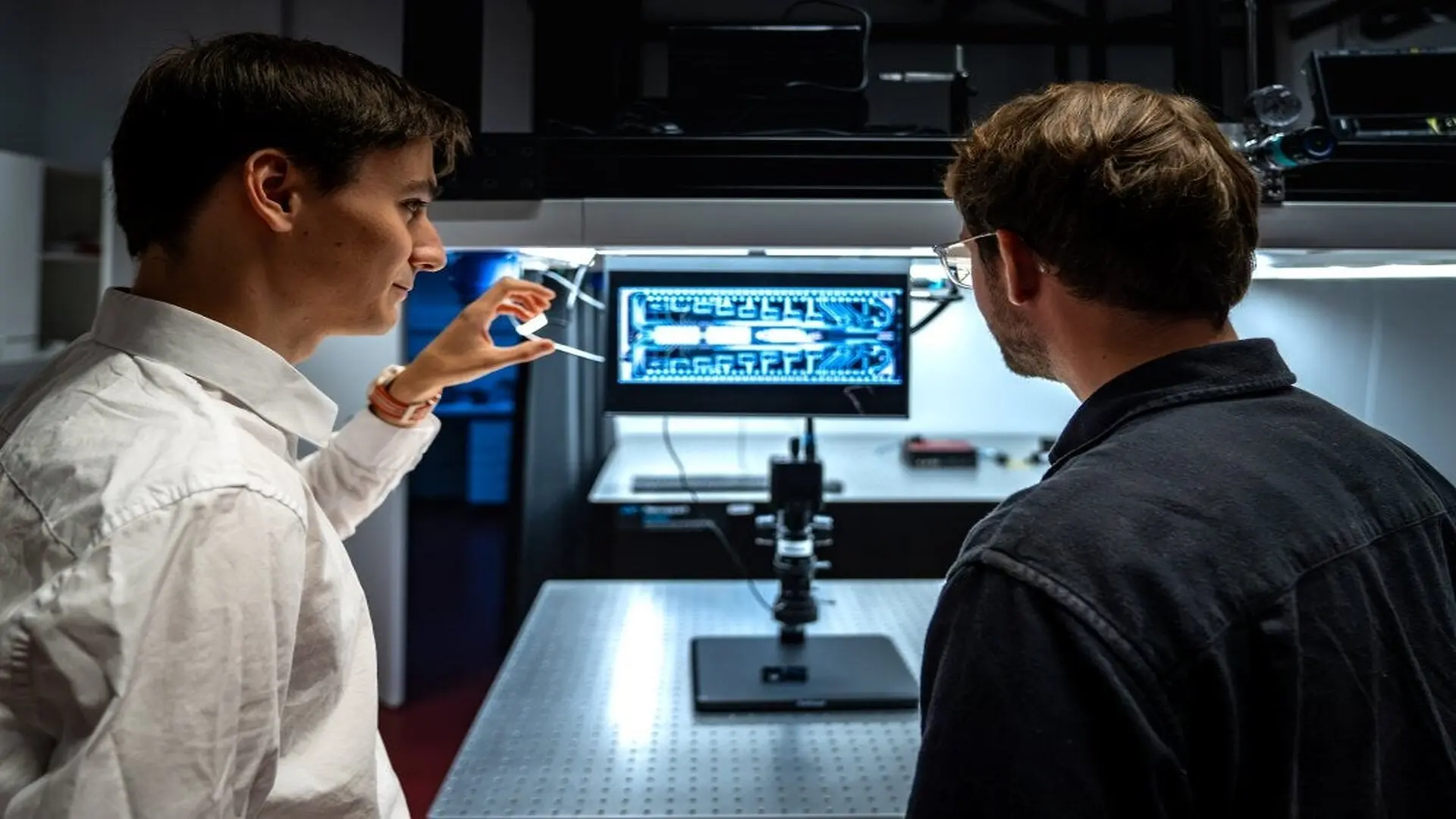
Researchers have unveiled a self-configuring photonic chip capable of disentangling complex light fields, a breakthrough that could transform how we handle optical information. By processing partially coherent light—where waves lack perfect synchronization—the device identifies and separates distinct optical modes that traditional intensity-based sensors would otherwise overlook.
The study, published in Nature Photonics, details a collaboration between scientists at Stanford University and the Institute of Science and Technology Austria (ISTA). The device functions by automatically learning the unique statistical patterns within an incoming light beam, routing them into discrete channels for further use.
Seeing Beyond Brightness
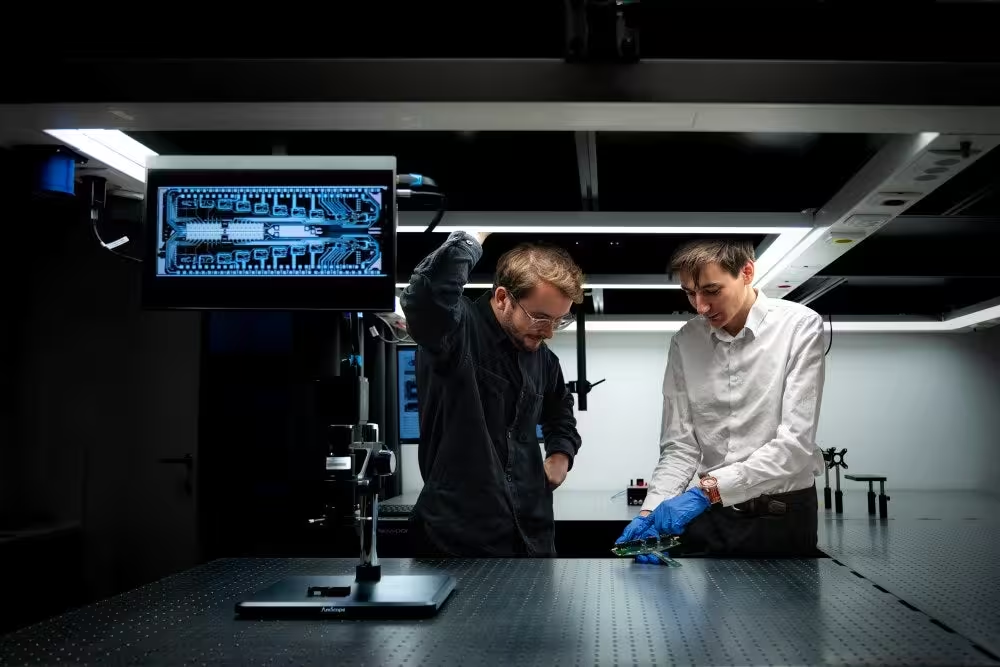
At the core of the challenge is spatial coherence, which refers to the predictable phase relationships between different points across a beam of light. Standard sensors typically measure only intensity, or brightness, which often fails to capture the full picture. When two light fields overlap, they may produce identical intensity patterns even if their internal phase structures are vastly different.
Mathematically, this complex light can be broken down into individual “coherence modes.” The team’s goal was to transition this abstract math into a physical reality, using a silicon photonic circuit to guide these modes into separate physical waveguides. By doing so, they provide a way to “recycle” light that would typically be treated as interference and discarded.
An Autonomous Learning Circuit
The chip utilizes two layers of Mach-Zehnder interferometers, which serve as programmable gates for light. Controlled by an onboard algorithm, the system performs tiny, oscillating adjustments to thermal phase shifters. By monitoring the output power and receiving feedback, the device autonomously optimizes itself to isolate the incoming coherence modes without needing a pre-programmed template of the light field.
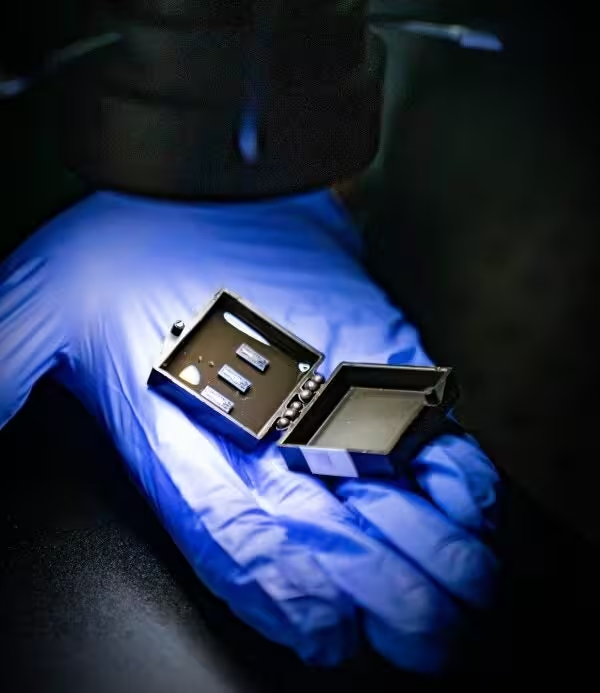
This integration marks a significant departure from bulky, laboratory-scale setups. “Advances in chip manufacturing made it possible to place hundreds of optical elements within a few square millimeters,” explains Charles Roques-Carmes, an assistant professor at ISTA. “An equivalent arrangement of individual mirrors and other components would be far harder to align and stabilize.”
Validating the Hardware
In experimental trials using near-infrared lasers at 1,535 nanometers, the team demonstrated the device’s accuracy. By comparing the chip’s automated configuration to a benchmark reconstruction method, the researchers found the recovered mode patterns achieved fidelities as high as 97.8% to 99.9%. Even when intensity distributions appeared identical, the chip successfully utilized phase information to distinguish between overlapping beams.
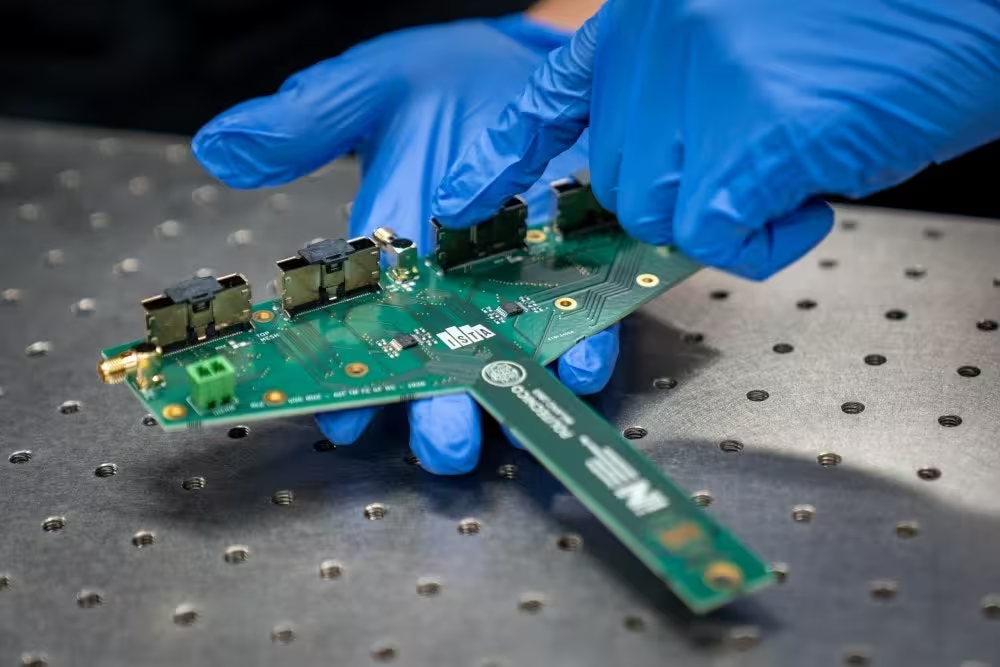
While the device does not necessarily reconstruct the original laser sources intact, it successfully reorganizes the light into independent mathematical patterns. This effectively turns a chaotic input into organized information, paving the way for more robust systems.
Future Frontiers in Imaging and Communication
Looking ahead, the potential applications for this technology are broad. In satellite communications, such a chip could help compensate for atmospheric turbulence that typically degrades laser signals. Similarly, the team is investigating applications in high-resolution microscopy and astronomy, where capturing faint, subtle signals is paramount.
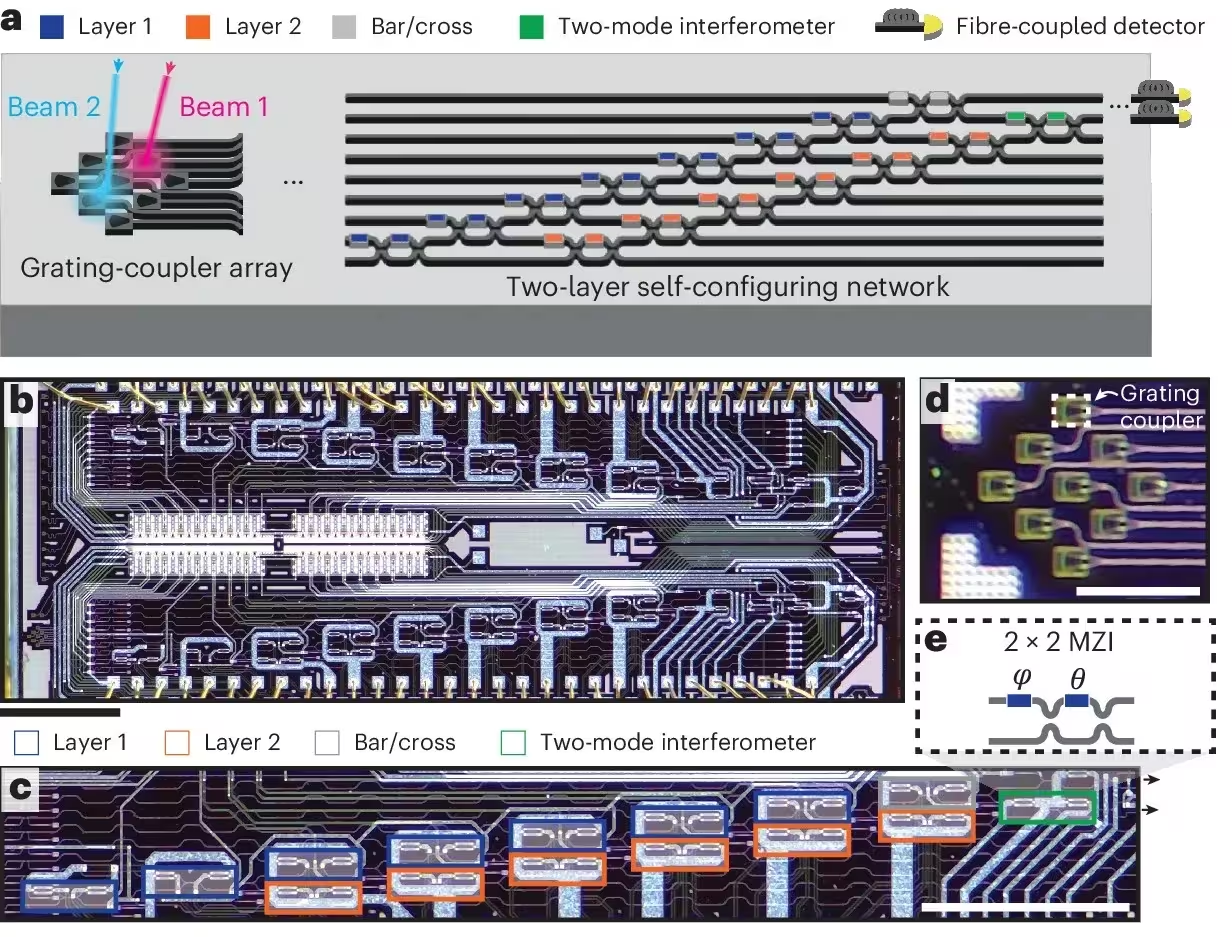
“We want to make our chips as efficient as possible so that every photon counts,” says Roques-Carmes. As the researchers move into the next phase of development, the focus will shift to increasing the speed and scale of the chips, with a particular eye on biological imaging applications. The ultimate goal is to prove that this self-configuring technology can maintain its high-fidelity performance under the real-world conditions of active communication and imaging tasks.
This article has been fact checked for accuracy, with information verified against reputable sources. Learn more about us and our editorial process.
Last reviewed on .
Article history
- Latest version
Reference(s)
- Mor, Paul-Alexis. “Automatic on-chip separation of partially coherent light into its mutually incoherent components - Nature Photonics.”, October 30, 2026, pp. 1-7. Nature, doi: 10.1038/s41566-026-02035-6. <https://www.nature.com/articles/s41566-026-02035-6>.
- “Stanford University.”, November 2, 2026 Stanford University <https://www.stanford.edu/>.
- “ISTA Homepage.” Institute of Science and Technology Austria (ISTA) <https://ista.ac.at/en/home/>.
Cite this page:
- Posted by Aisha Ahmed