Astronomers Have Discovered a Bizarre Exoplanet Orbiting Its Star in the Wrong Direction
Astronomers have discovered a rare exoplanet orbiting in the opposite direction of its host star, challenging everything we know about planetary formation.
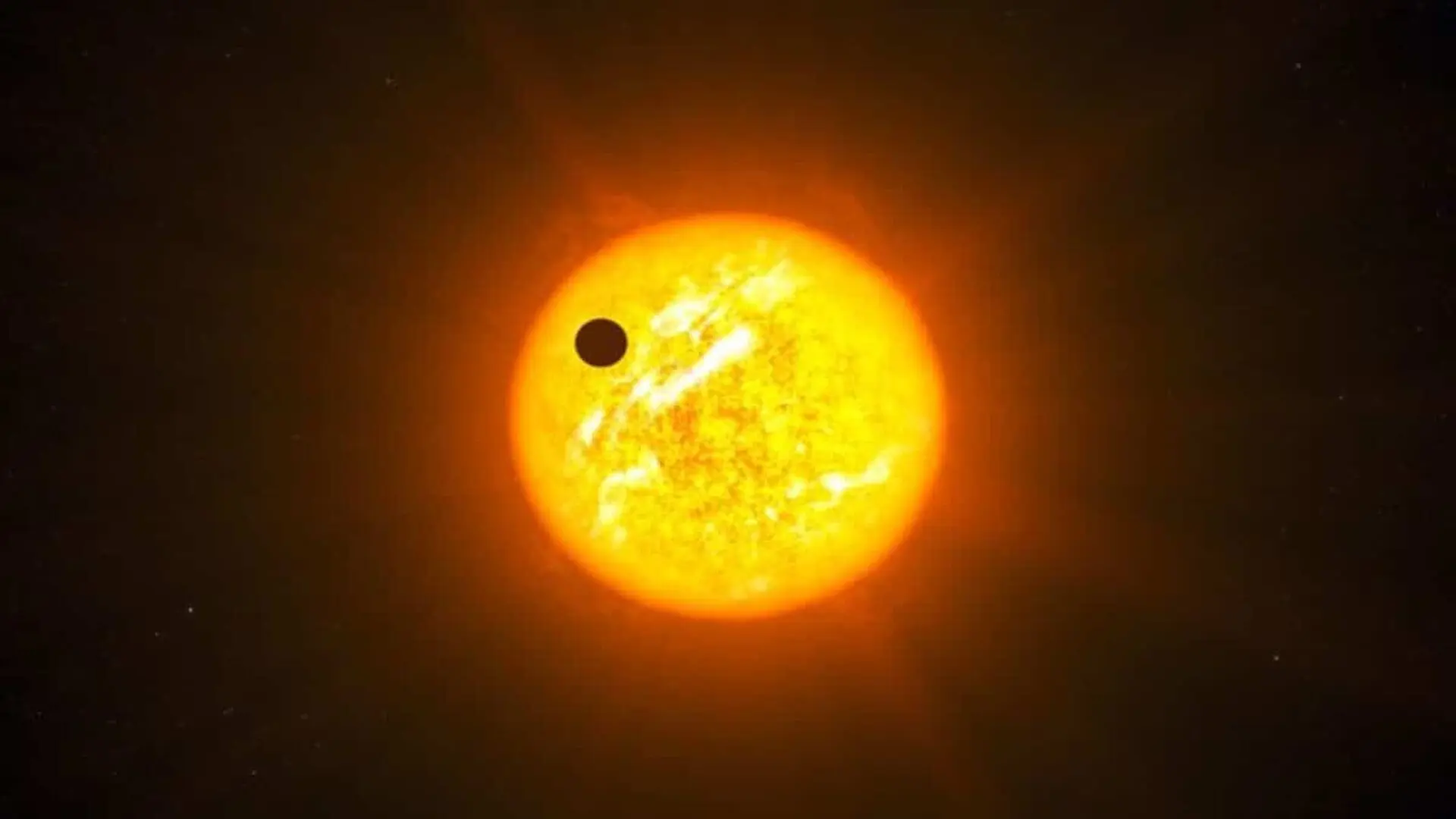
Astronomers have uncovered a celestial oddity that defies the standard models of planetary formation. The exoplanet, designated GJ 3090 b, follows a retrograde orbit, circling its host star in the exact opposite direction of the star’s own rotation. This discovery challenges the fundamental assumption that planets must mirror the spin of the gaseous, protoplanetary disks from which they emerge.
In our own Solar System, the eight planets generally travel in a consistent, prograde motion, largely dictated by the rotational trajectory of the primordial cloud that birthed the Sun. While minor tilts exist—such as Earth’s roughly 7-degree orbital inclination—these variations are relatively subtle. However, GJ 3090 b exists in a different category entirely, suggesting that the chaotic forces governing distant star systems can lead to structural outcomes far more complex than those observed in our cosmic neighborhood.
An Orbital Mismatch Around a Red Dwarf
Detected via NASA’s TESS space telescope, GJ 3090 b is classified as a sub-Neptune—a world roughly 2.2 times the size of Earth with a mass approximately 4.5 times greater. It orbits a cool, dim red dwarf star, providing researchers with a unique opportunity to probe the architecture of systems far different from the Sun.
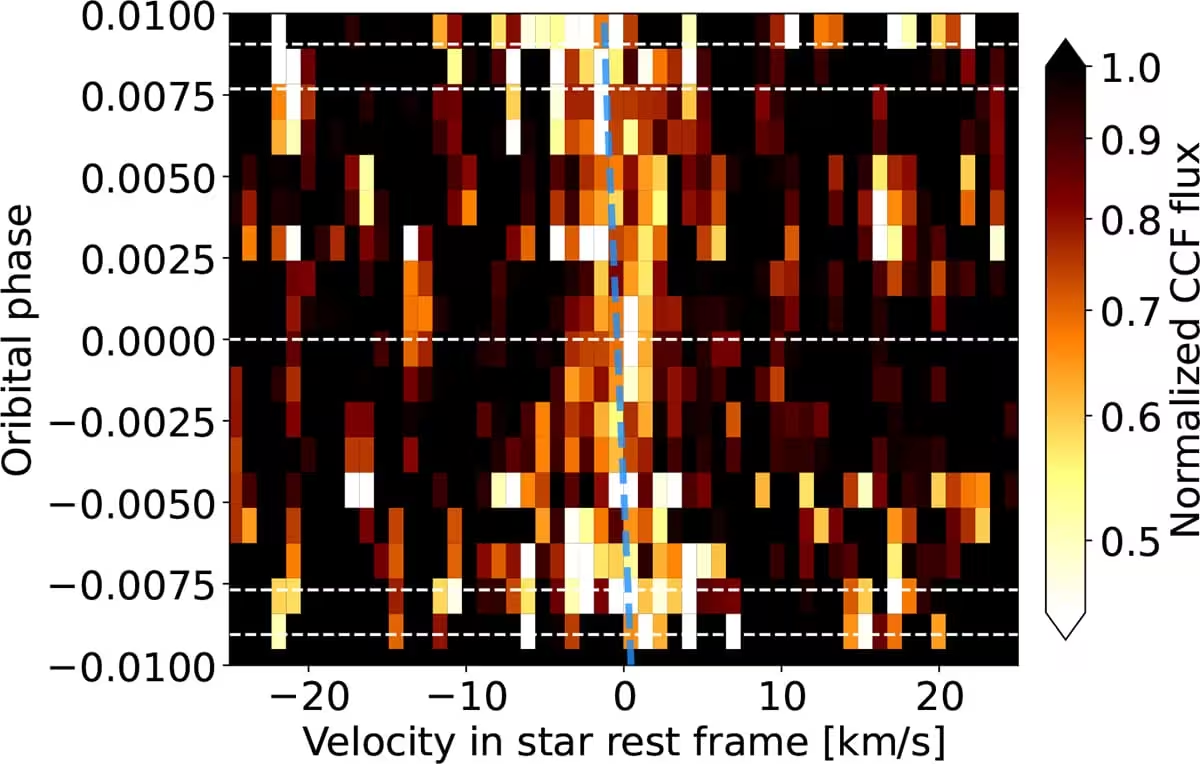
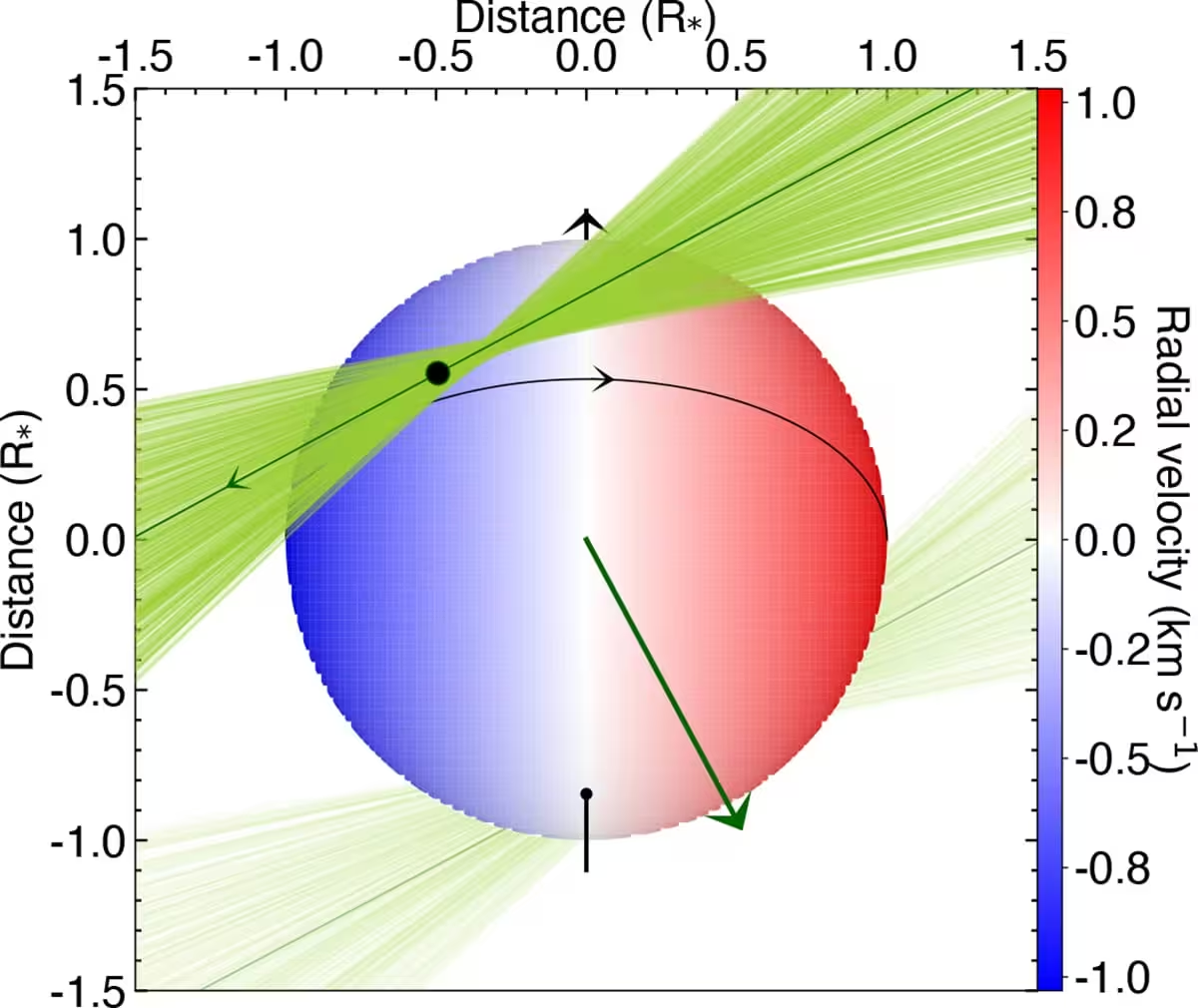
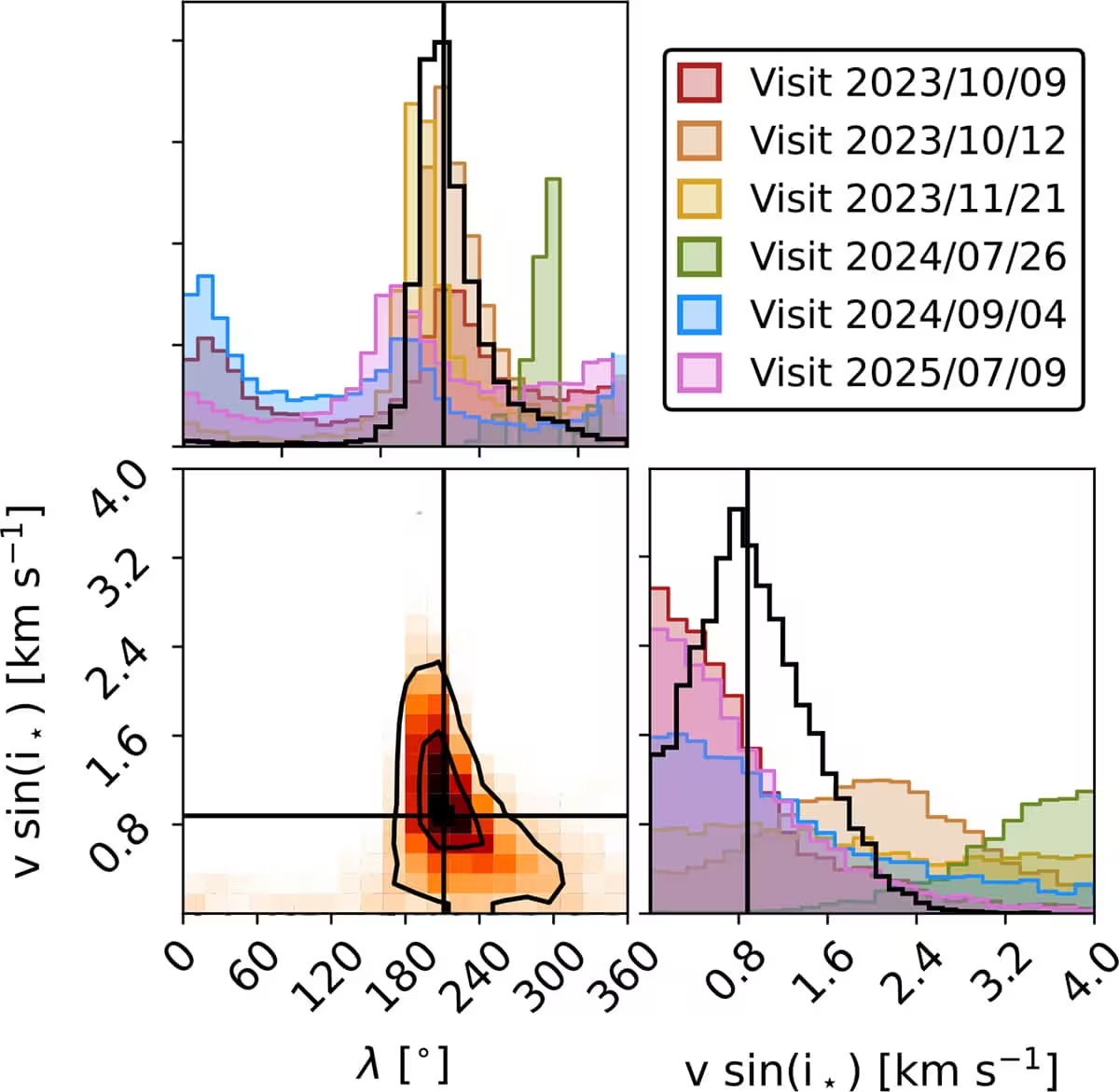
To confirm the planet’s orbital characteristics, an international team utilized NIRPS, an infrared spectrograph located at the La Silla Observatory. By measuring the angle between the planet’s orbital plane and the star’s equator, researchers determined that GJ 3090 b possesses an orbital tilt of roughly 136 degrees. This measurement places the planet firmly in a retrograde configuration.
“It is the performance of NIRPS in the infrared that made it possible to achieve the precision needed to measure the angle between the planet’s orbital plane and the star’s equatorial plane for such a small planet,” noted Léna Parc, a doctoral student at the University of Geneva and coauthor of the study.
Seeking the Origins of a Backward World
The existence of a retrograde planet is exceptionally rare, particularly in a system where no massive, disruptive companions have been identified to date. Typically, a large gravitational anchor, such as a gas giant or a secondary star, is cited as the culprit for nudging a planet into such an extreme orbit. Without such an obvious gravitational influence, the mystery surrounding GJ 3090 b remains open.
According to findings published in Astronomy & Astrophysics, only five other multiplanet systems are documented with orbital misalignments exceeding 70 degrees. This makes the GJ 3090 system a critical outlier in the study of planetary evolution.
“Not only is the planet GJ 3090 b on a highly misaligned orbit, but it also orbits retrogradely, in the opposite direction to the rotation of its star,” explained Yann Carteret, the lead author and doctoral student at the University of Geneva.
One potential theory suggests that the host star may have historically captured a secondary, misaligned disk of gas and dust. If the planet formed within this redirected material, its current retrograde path would be a direct consequence of that violent, early-stage galactic merger.
Challenging Universal Norms
The investigation into GJ 3090 b underscores the limitation of relying solely on the architecture of our own Solar System to predict the behavior of others. As observational technology advances, allowing astronomers to detect the movements of smaller, more distant worlds with unprecedented precision, the diversity of planetary systems is becoming increasingly apparent.
Every discovery of a “backward” world like GJ 3090 b serves as a reminder that the rules of planetary formation are far more flexible—and perhaps more chaotic—than scientists once imagined. As research continues, these anomalies are helping to rewrite our understanding of how planetary systems are built, disrupted, and maintained across the galaxy.
This article has been fact checked for accuracy, with information verified against reputable sources. Learn more about us and our editorial process.
Last reviewed on .
Article history
- Latest version
Reference(s)
- Kazmierczak, Jeanette. “TESS (Transiting Exoplanet Survey Satellite) - NASA Science.”, April 22, 2025 NASA <https://science.nasa.gov/mission/tess/>.
- <https://www.researchgate.net/profile/Lena-Parc>.
- Carteret, Yann., et al. “Upside down: GJ 3090 b the first retrograde exoplanet around an M dwarf detected with NIRPS.” Astronomy & Astrophysics, vol. 713, September 21, 2026, pp. L15 EDP Sciences, doi: 10.1051/0004-6361/202661989. <https://dx.doi.org/10.1051/0004-6361/202661989>.
- “Yann Carteret.” <https://scholar.google.com/citations?user=r1m3kdEAAAAJ&hl=fr>.
Cite this page:
- Posted by Aisha Ahmed