Astronomers Finally Detect a Radio Signal Coming Directly From a Distant Exoplanet
South Africa’s MeerKAT telescope has detected the first radio signals from an exoplanet, offering a groundbreaking method to study alien magnetic fields.

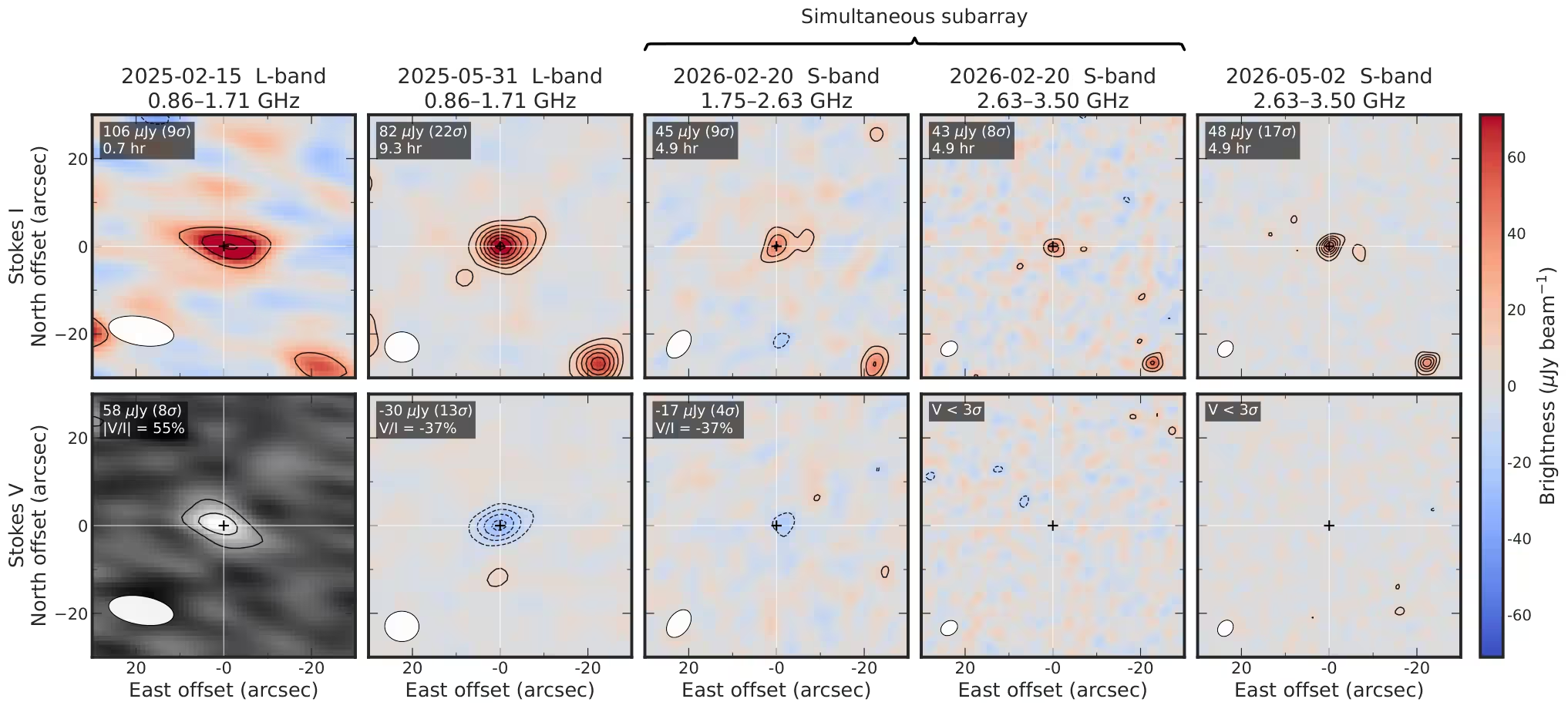
Astronomers have achieved a long-awaited milestone in planetary science by successfully isolating a radio signal originating directly from a confirmed exoplanet. The discovery, centered on the young gas giant Beta Pictoris b, provides the first definitive evidence of planetary-scale radio emissions located outside our own solar system.
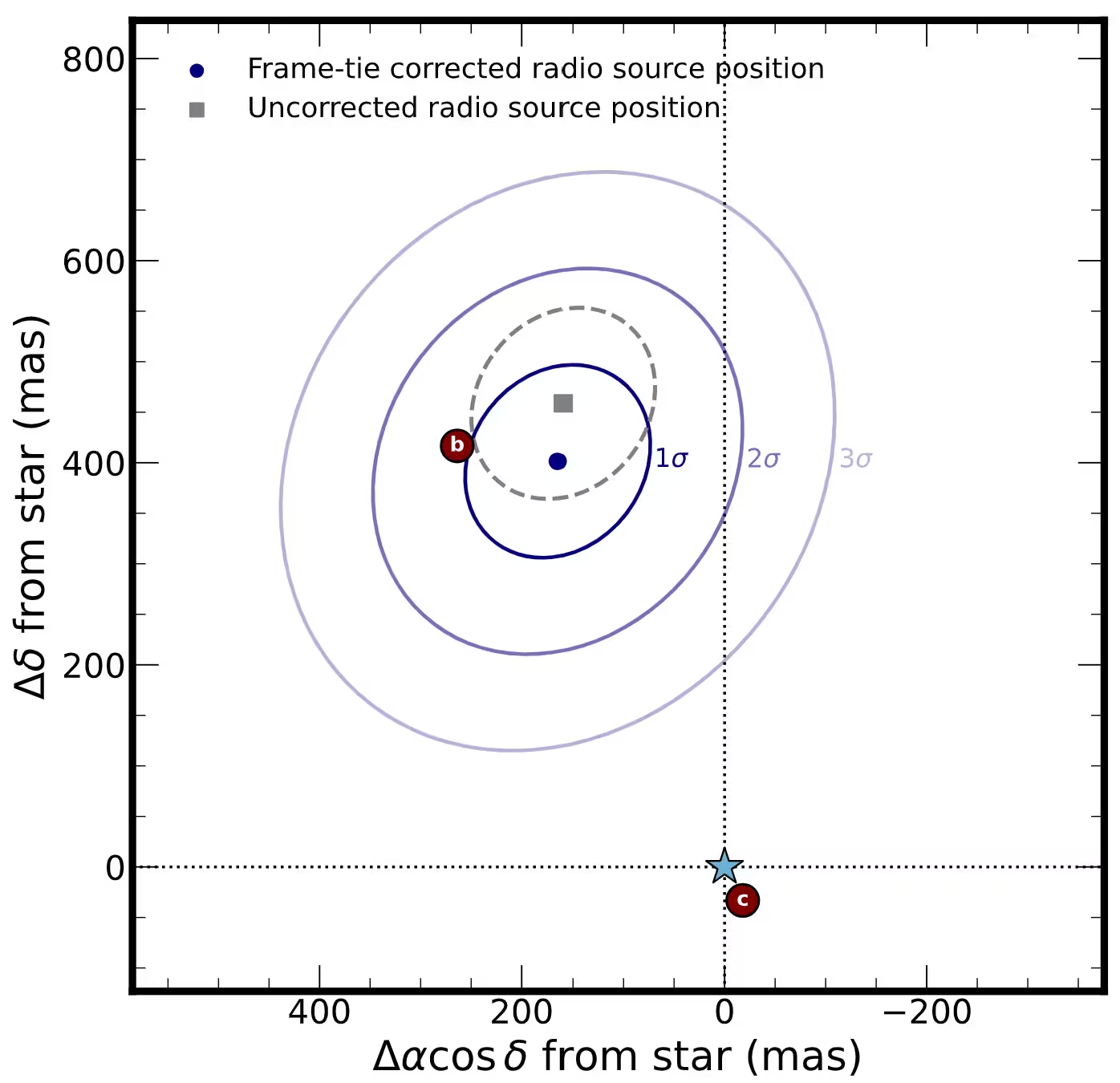
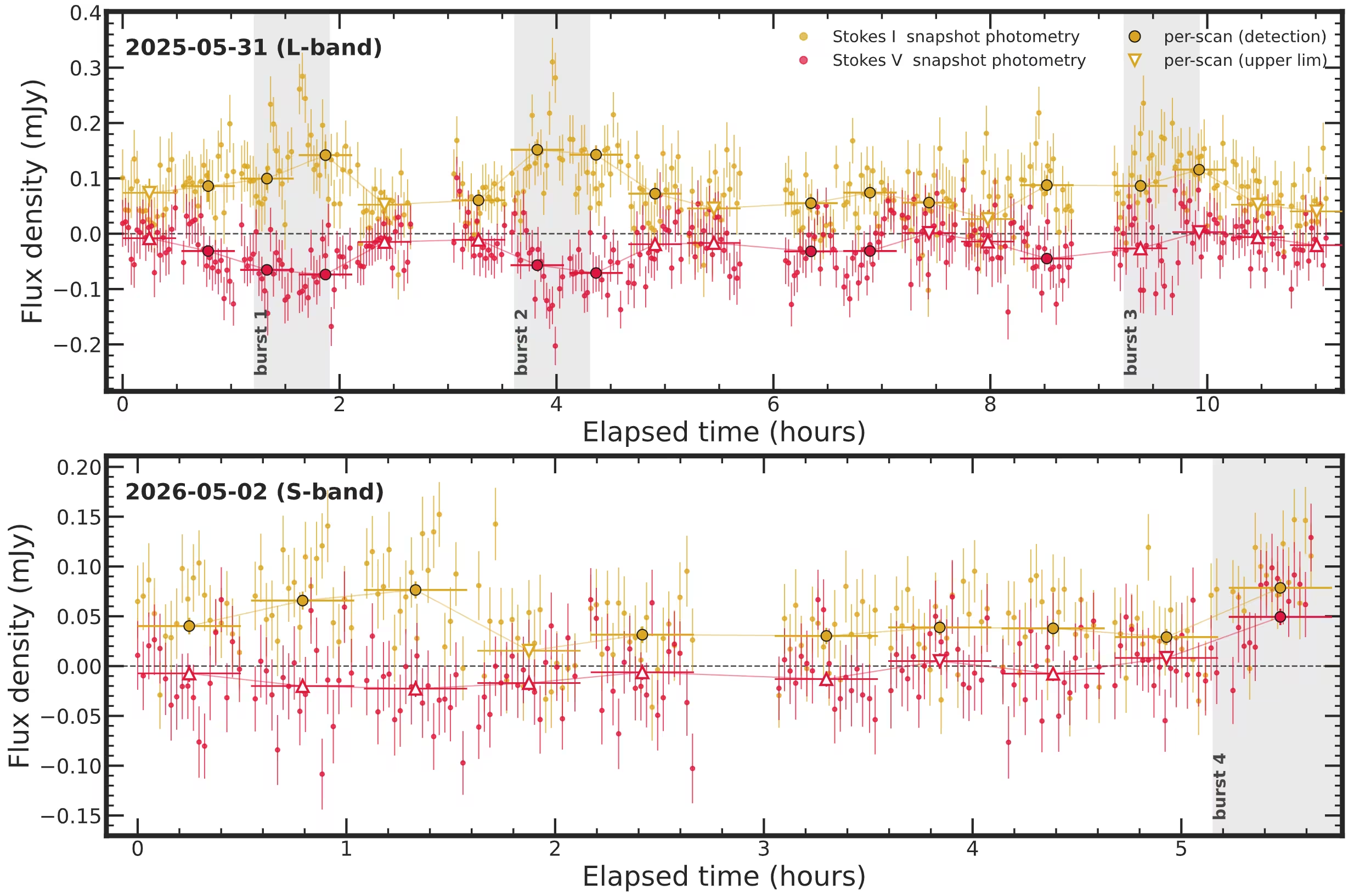
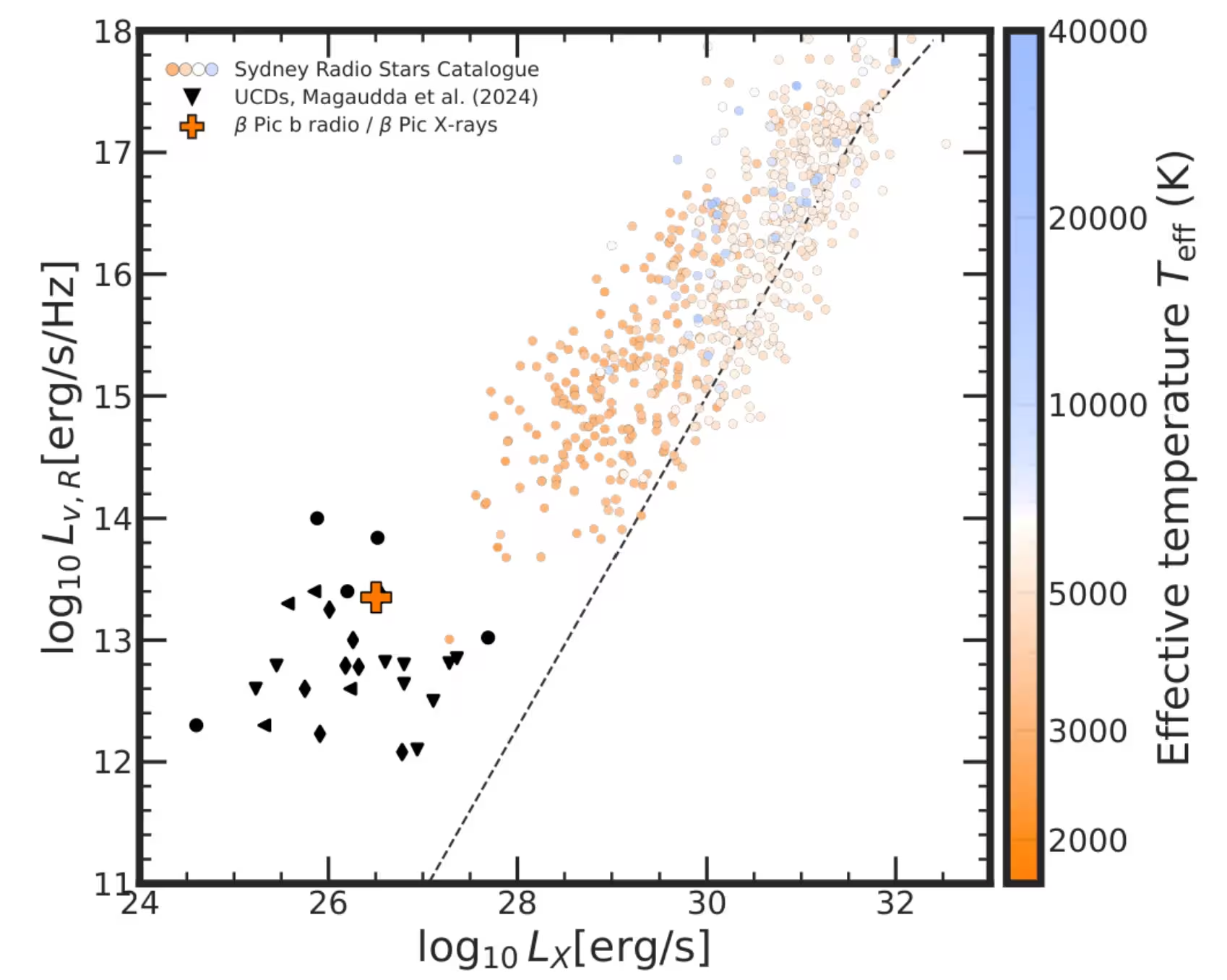
Located approximately 63.4 light-years away, the planet is a massive world, roughly 12 times the size of Jupiter, orbiting a relatively quiet star. By leveraging the high-precision capabilities of South Africa’s MeerKAT radio telescope, researchers identified recurring, highly polarized radio bursts that align with the planet’s position rather than that of its host star.
Unlocking the secrets of planetary magnetism
The signal is not a product of technology, but rather a natural phenomenon. The characteristics of the radio waves—specifically their rapid variability and circular polarization—point to auroral activity similar to that observed on Jupiter or Earth. These emissions are generated through electron cyclotron maser instability, a process where energetic charged particles interact with a planet’s magnetic field to produce intense radio bursts.
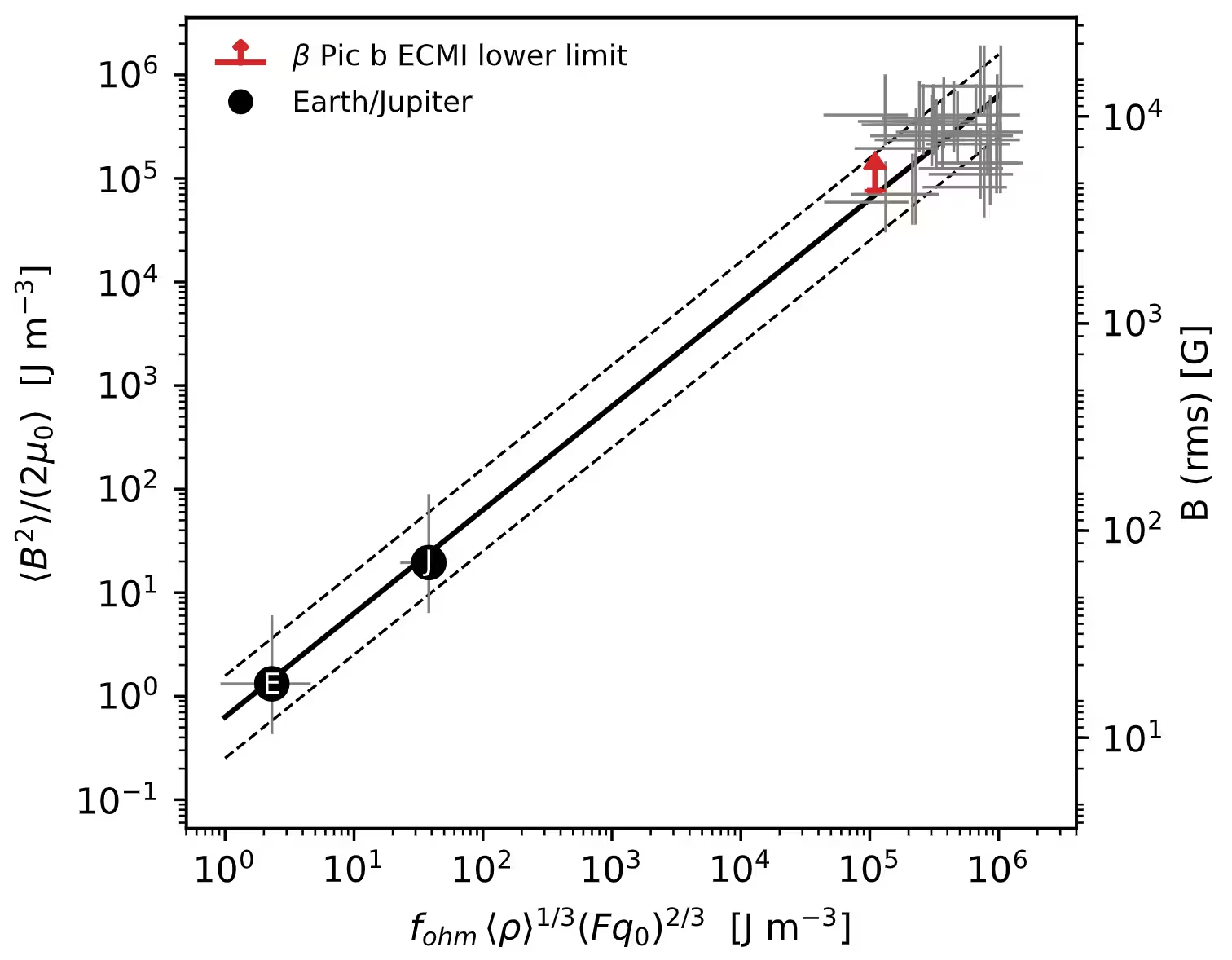
This breakthrough, led by teams from the Center for Astrophysics | Harvard & Smithsonian and the University of Oregon, allowed scientists to calculate the magnetic field strength of Beta Pictoris b directly. The detected frequencies, reaching up to 3.5 gigahertz, imply a local magnetic field of at least 1.25 kilogauss. This is thousands of times stronger than Earth’s magnetic field and provides a rare, direct validation of current theoretical models regarding how massive, young planets generate their own magnetic dynamos.
Pinpointing the source with cosmic markers
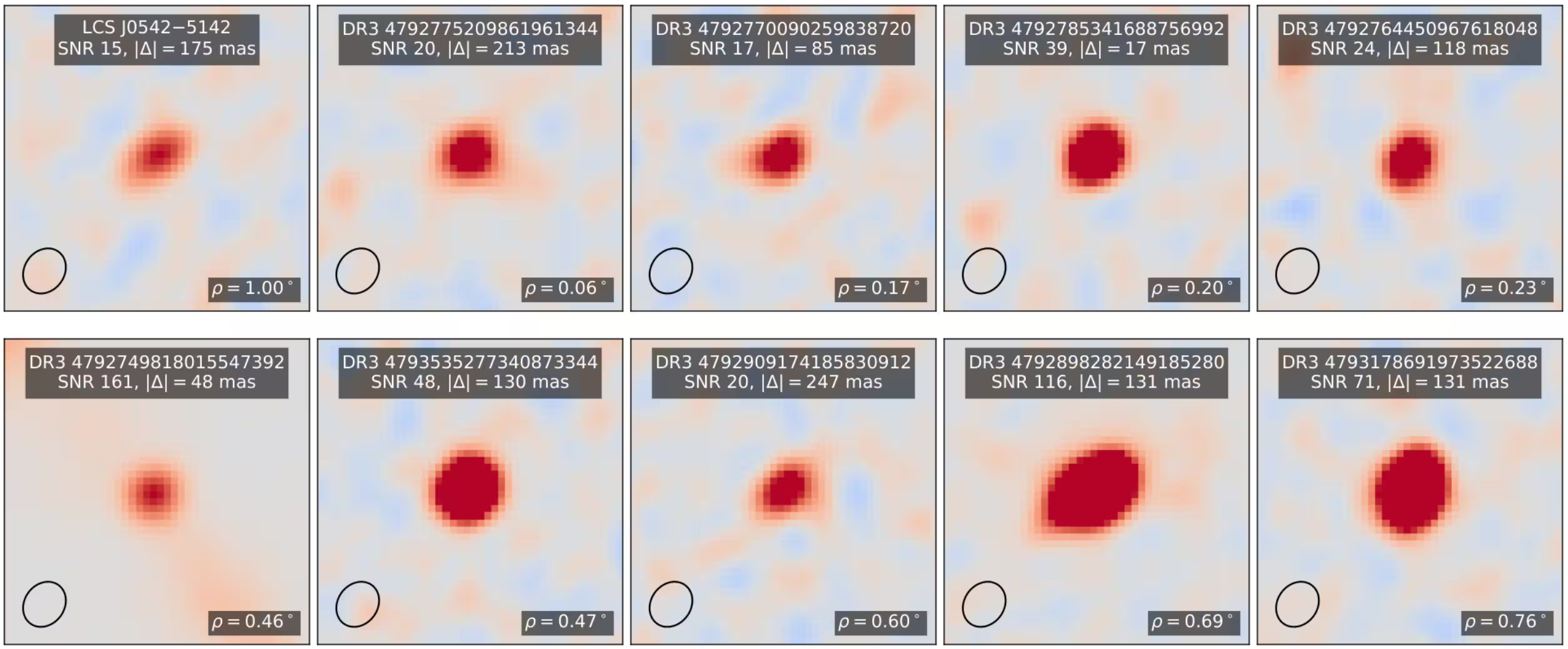
Distinguishing a planet’s radio signature from the noise of its host star has historically been the primary obstacle for researchers. To confirm the origin of the signal, the team utilized distant quasars as stable reference points. By mapping the MeerKAT observations against these celestial anchors, the researchers were able to confirm that the radio emission source was spatially offset from the star with high statistical confidence.
The planet’s rapid rotation—estimated at roughly nine hours per day—is believed to be a key driver in fueling these auroras. As the planet rotates, internal currents likely accelerate electrons along magnetic field lines, triggering the observed radio bursts. While the current data is not yet enough to map the precise geometry of the magnetic field, the discovery opens a new frontier for studying planetary environments at a distance.
The future of radio exoplanet studies
This success highlights the potential for radio astronomy to revolutionize our understanding of exoplanetary atmospheres and interiors. Future observations of Beta Pictoris b may reveal more about its magnetospheric plasma, while refined techniques could soon allow astronomers to detect similar signals from other nearby giant planets.
As telescope sensitivity increases, the ability to “listen” to distant worlds will likely become a fundamental component of characterizing planets throughout our galaxy. The current findings, which have been shared via arXiv, mark the transition of exoplanetary magnetic studies from theoretical modeling to direct observational science.
Background research and further reading
- A search for auroral radio emission from β Pictoris b
- The Detectability of Radio Auroral Emission from Proxima b
- Radio and Optical Aurorae in the Coolest Brown Dwarf
- The magnetic fields of extrasolar planets
- Auroral Radio Emissions from Ultracool Dwarfs: A Review
This article has been fact checked for accuracy, with information verified against reputable sources. Learn more about us and our editorial process.
Last reviewed on .
Article history
- Latest version
Reference(s)
- “Home | Center for Astrophysics | Harvard & Smithsonian.” <https://www.cfa.harvard.edu/>.
- “University of Oregon | Public Research University in Eugene.” <https://www.uoregon.edu/>.
- “Discovery of radio emission from the exoplanet 𝛽 Pictoris b.” <https://arxiv.org/html/2609.16720v1>.
- Shiohira, Yuta., et al. “A search for auroral radio emission from β Pictoris b.” Monthly Notices of the Royal Astronomical Society, vol. 528, no. 2, December 27, 2023, pp. 2136-2144. Oxford University Press (OUP), doi: 10.1093/mnras/stad3990. <https://doi.org/10.1093/mnras/stad3990>.
- Burkhart, Blakesley. “The Detectability of Radio Auroral Emission from Proxima B.” arXiv.org, doi: 10.3847/2041-8213/aa9112. <https://arxiv.org/abs/1706.07038>.
- , doi: 10.1088/0004-637X/818/1/24. <https://doi.org/10.1088/0004-637X/818/1/24>.
- Follert, R.., et al. “Mid-infrared interferometry of massive young stellar objects.” Astronomy & Astrophysics, vol. 522, October 27, 2010, pp. A17 EDP Sciences, doi: 10.1051/0004-6361/200811557. <https://doi.org/10.1051/0004-6361/200811557>.
- Di Valentino, Eleonora. “Challenges of the Standard Cosmological Model.” Universe, vol. 8, no. 8, July 29, 2022, pp. 399 MDPI AG, doi: 10.3390/universe8080399. <https://doi.org/10.3390/universe8080399>.
Cite this page:
- Posted by Aisha Ahmed