Astronomers Just Discovered a Universal Rule Governing How All Black Holes Launch Jets
Astronomers have discovered a universal threshold for black hole jet formation that remains consistent regardless of the object’s massive scale.
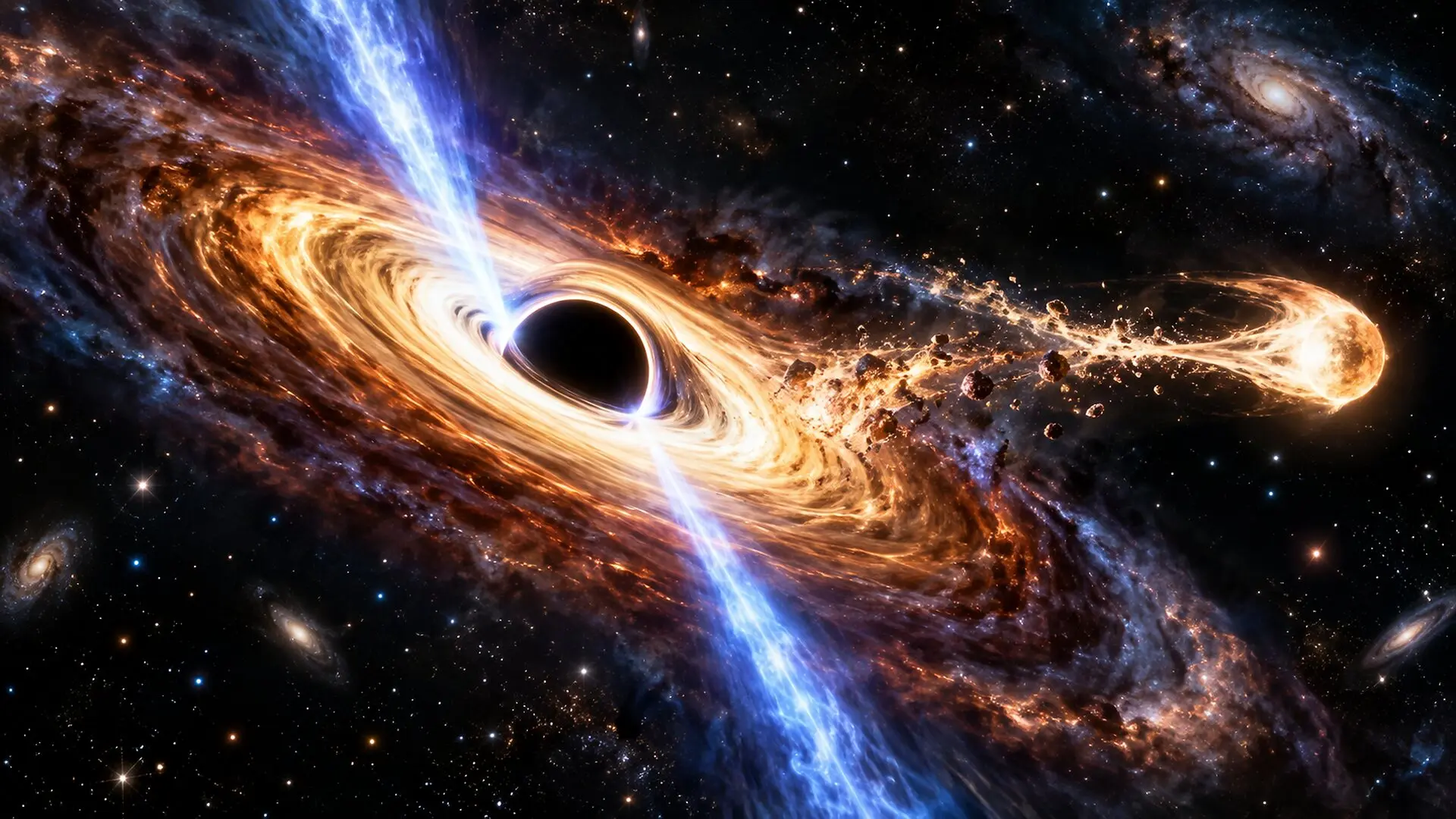
New research suggests that black holes of vastly different scales operate under the same fundamental rules when it comes to launching powerful jets of plasma. By analyzing the dramatic “meals” of supermassive black holes as they consume shredded stars, astronomers have discovered a critical threshold that appears to trigger jet formation, mirroring behavior previously documented only in much smaller stellar-mass black holes.
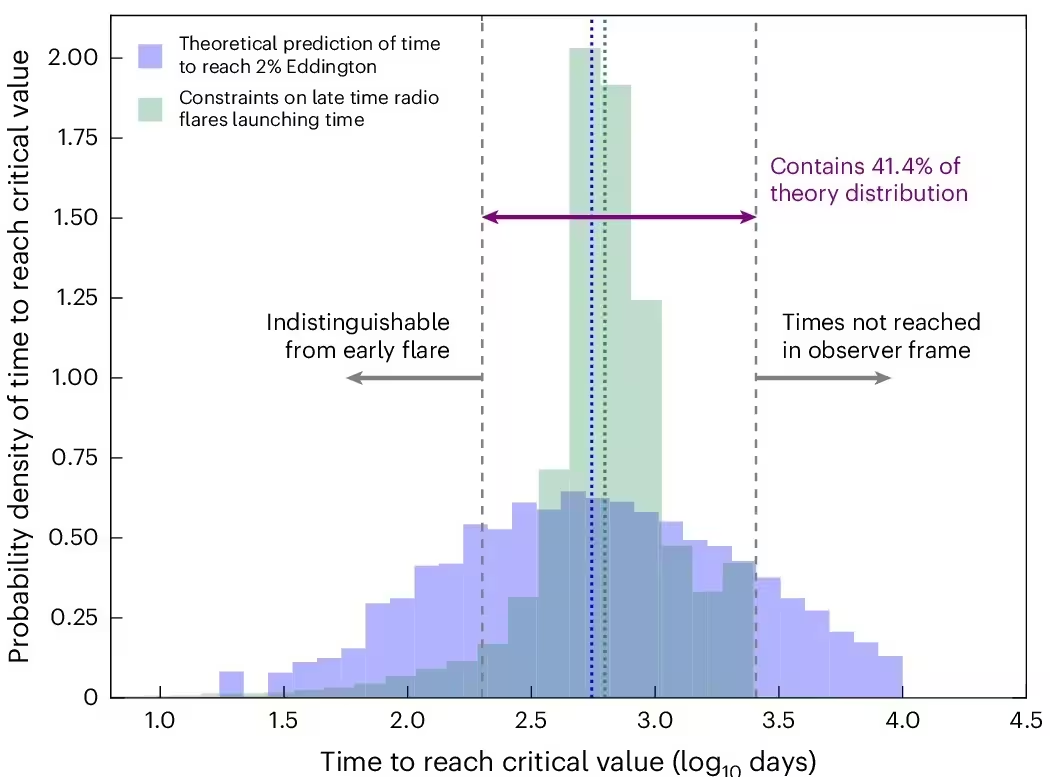
The study, published in Nature Astronomy by researchers from the Institute for Advanced Study and Curtin University, reveals that these cosmic giants initiate delayed radio jets when their accretion rate drops to approximately 2% of the Eddington limit—a tipping point remarkably consistent with their stellar-sized counterparts.
Unlocking the Mechanics of Cosmic Outflows
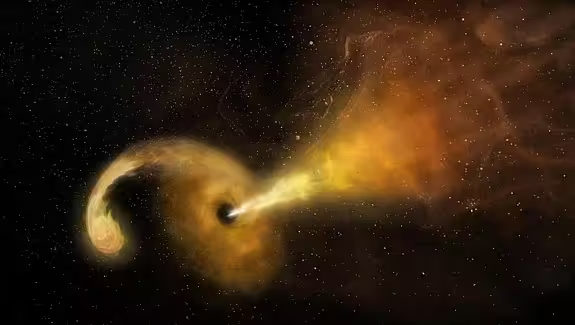
For years, understanding how supermassive black holes launch jets has been hindered by time scales; these massive objects typically evolve far too slowly for human observers to witness meaningful changes in their activity. Tidal disruption events (TDEs)—where a star passes too close to a black hole and is torn apart—serve as a rare, high-speed laboratory. The resulting debris disk around the black hole evolves rapidly, allowing scientists to monitor state changes over months or years rather than eons.
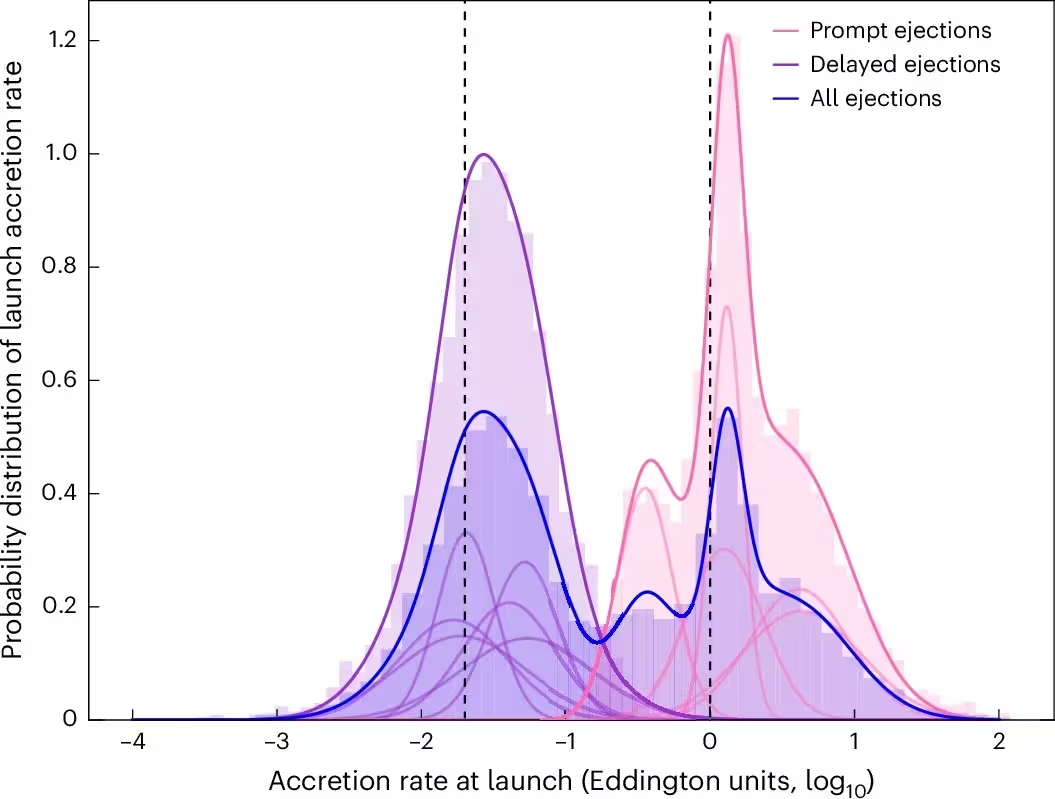
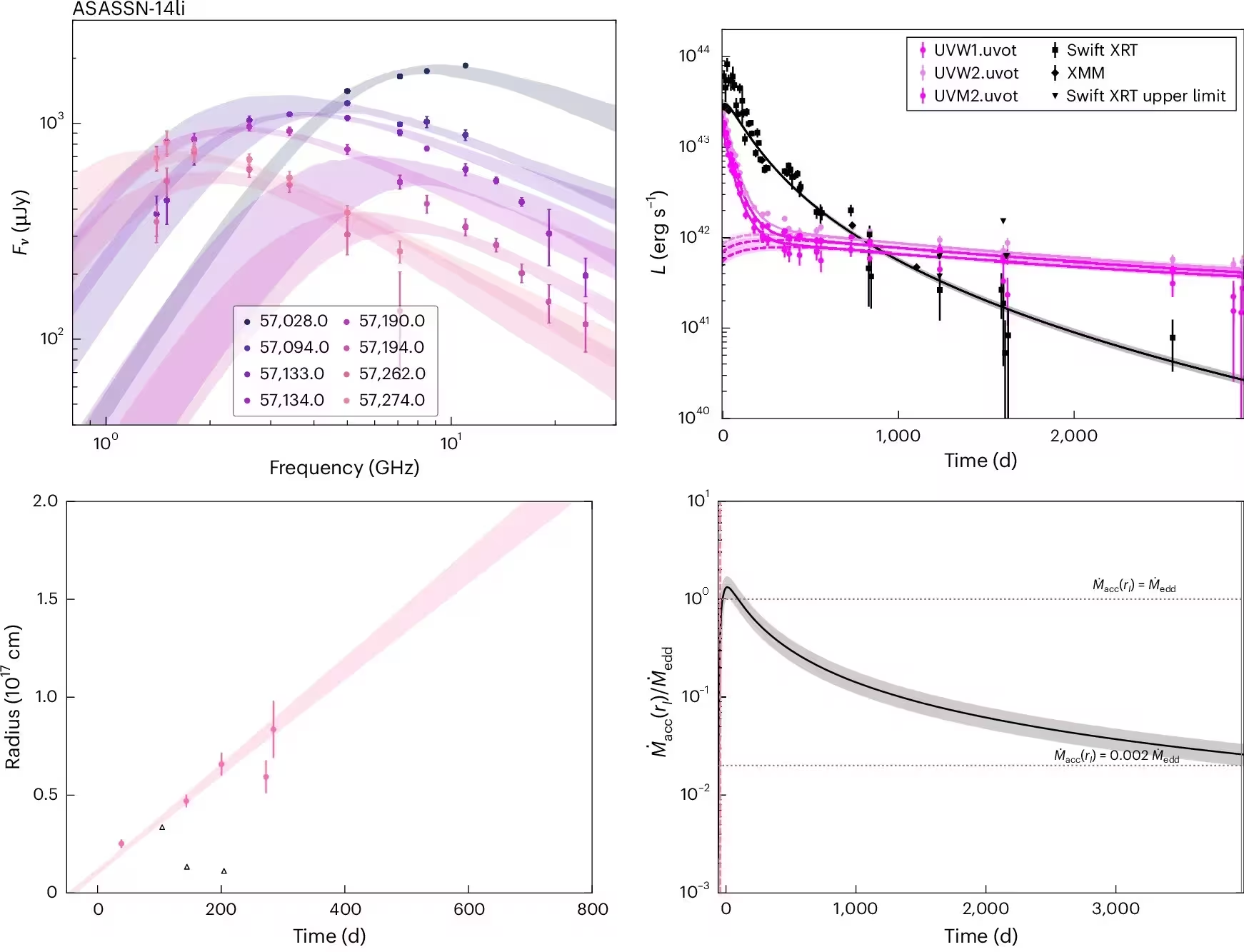
Andrew Mummery and his colleagues examined 20 TDEs, identifying 10 systems with sufficient data to constrain the timing of radio outflows. By modeling optical, ultraviolet, and X-ray emissions, the team calculated the black hole’s feeding rate at the exact moment of jet initiation. They found that these events split into two distinct categories based on their accretion intensity.
A Universal Threshold for Jet Formation
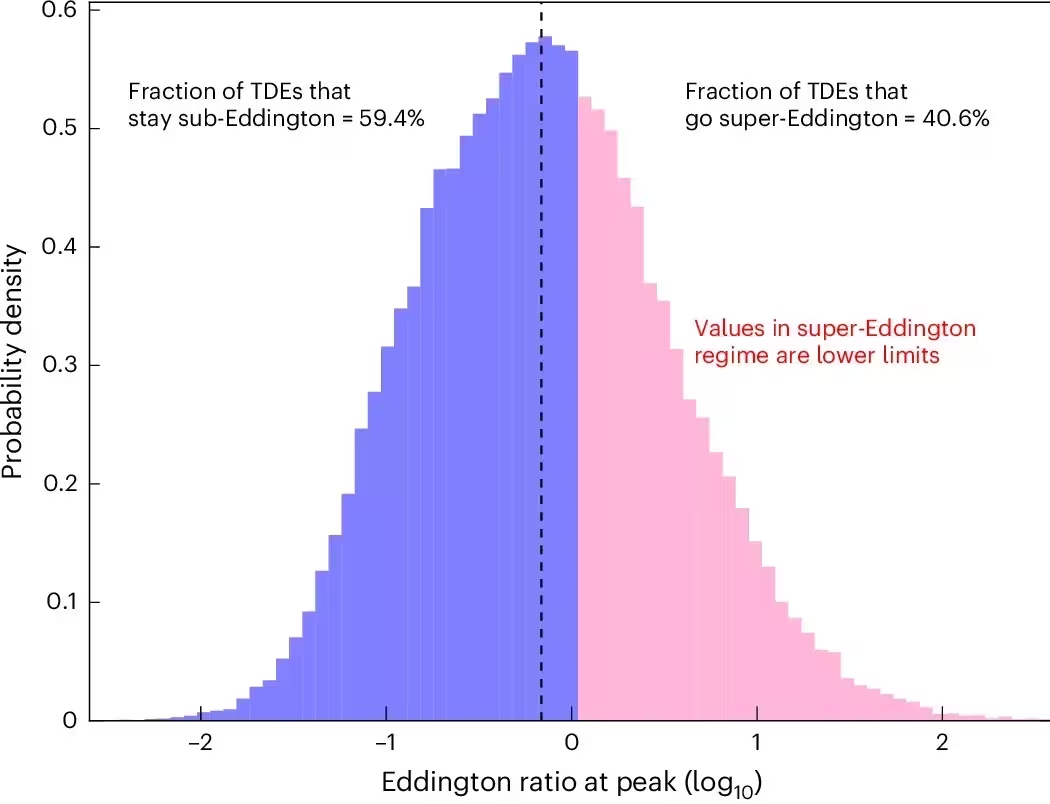
The analysis showed that “prompt” radio outflows occurred while the black hole was consuming matter at or above the Eddington limit, where radiation pressure is extreme. However, a separate class of “delayed” radio flares emerged once the feeding rate plummeted to the 2% threshold. This specific percentage is highly significant because it aligns perfectly with the transition states observed in stellar-mass black hole binaries, where sources shift from a soft X-ray state to a hard state accompanied by compact jets.
The findings indicate that the mechanism for triggering these jets is largely independent of the black hole’s mass. Whether a black hole is 10 times the mass of the Sun or millions of times larger, it appears to hit the same “on” switch when its supply of matter wanes to that critical 2% level.
Predictive Modeling and Future Observations
To validate their hypothesis, the researchers simulated one million TDE disks. Their model predicted that roughly 40% of these events would pass through the 2% threshold within an observable timeframe—a figure that matches existing observational data on delayed radio flares. This predictive power suggests that astronomers can now more effectively schedule follow-up observations of tidal disruptions by calculating when a specific system is likely to reach that critical accretion state.
As next-generation observatories like the Vera C. Rubin Observatory and the Square Kilometre Array come online, the volume of available TDE data is expected to surge, further testing this theory of universal black hole behavior.
Ultimately, this work reinforces the concept that the core physics governing black hole accretion and jet production remain consistent across seven orders of magnitude in mass, providing a vital bridge between our understanding of local, stellar-mass systems and the massive engines at the centers of distant galaxies.
Foundational Research Context
- Do X-ray binary spectral state transition luminosities vary?(Astronomy & Astrophysics, 2003)
- Towards a unified model for black hole X-ray binary jets(Monthly Notices of the Royal Astronomical Society, 2004)
- A Fundamental Plane of black hole activity(Monthly Notices of the Royal Astronomical Society, 2003)
- Radio Properties of Tidal Disruption Events(Space Science Reviews, 2020)
- Ubiquitous Late Radio Emission from Tidal Disruption Events(The Astrophysical Journal, 2024)
This article has been fact checked for accuracy, with information verified against reputable sources. Learn more about us and our editorial process.
Last reviewed on .
Article history
- Latest version
Reference(s)
- Goodwin, Adelle. “A universal critical accretion rate for black hole jet formation - Nature Astronomy.”, September 17, 2026, pp. 1-13. Nature, doi: 10.1038/s41550-026-02951-1. <https://www.nature.com/articles/s41550-026-02951-1>.
- “Curtin University | Make tomorrow better.”, December 18, 2019 <https://www.curtin.edu.au/>.
- Maccarone, T. J.. “Do X-ray binary spectral state transition luminosities vary?.” Astronomy & Astrophysics, vol. 409, no. 2, November 17, 2003, pp. 697-706. EDP Sciences, doi: 10.1051/0004-6361:20031146. <https://doi.org/10.1051/0004-6361:20031146>.
- Fender, R. P.., et al. “Towards a unified model for black hole X-ray binary jets.” Monthly Notices of the Royal Astronomical Society, vol. 355, no. 4, December 1, 2004, pp. 1105-1118. Oxford University Press (OUP), doi: 10.1111/j.1365-2966.2004.08384.x. <https://doi.org/10.1111/j.1365-2966.2004.08384.x>.
- Merloni, A.., et al. “A Fundamental Plane of black hole activity.” Monthly Notices of the Royal Astronomical Society, vol. 345, no. 4, November 11, 2003, pp. 1057-1076. Oxford University Press (OUP), doi: 10.1046/j.1365-2966.2003.07017.x. <https://doi.org/10.1046/j.1365-2966.2003.07017.x>.
- Alexander, Kate D.., et al. “Radio Properties of Tidal Disruption Events.” Space Science Reviews, vol. 216, no. 5, June 29, 2020 Springer Science and Business Media LLC, doi: 10.1007/s11214-020-00702-w. <https://doi.org/10.1007/s11214-020-00702-w>.
- Cendes, Y.., et al. “Ubiquitous Late Radio Emission from Tidal Disruption Events.” The Astrophysical Journal, vol. 971, no. 2, August 20, 2024, pp. 185 American Astronomical Society, doi: 10.3847/1538-4357/ad5541. <https://doi.org/10.3847/1538-4357/ad5541>.
Cite this page:
- Posted by Aisha Ahmed