Scientists Propose Laser-Powered Probes to Reach a Nearby Black Hole Within a Century
Scientists have outlined a concept for a gram-scale probe traveling at one-third light speed to reach a nearby black hole within a single century.
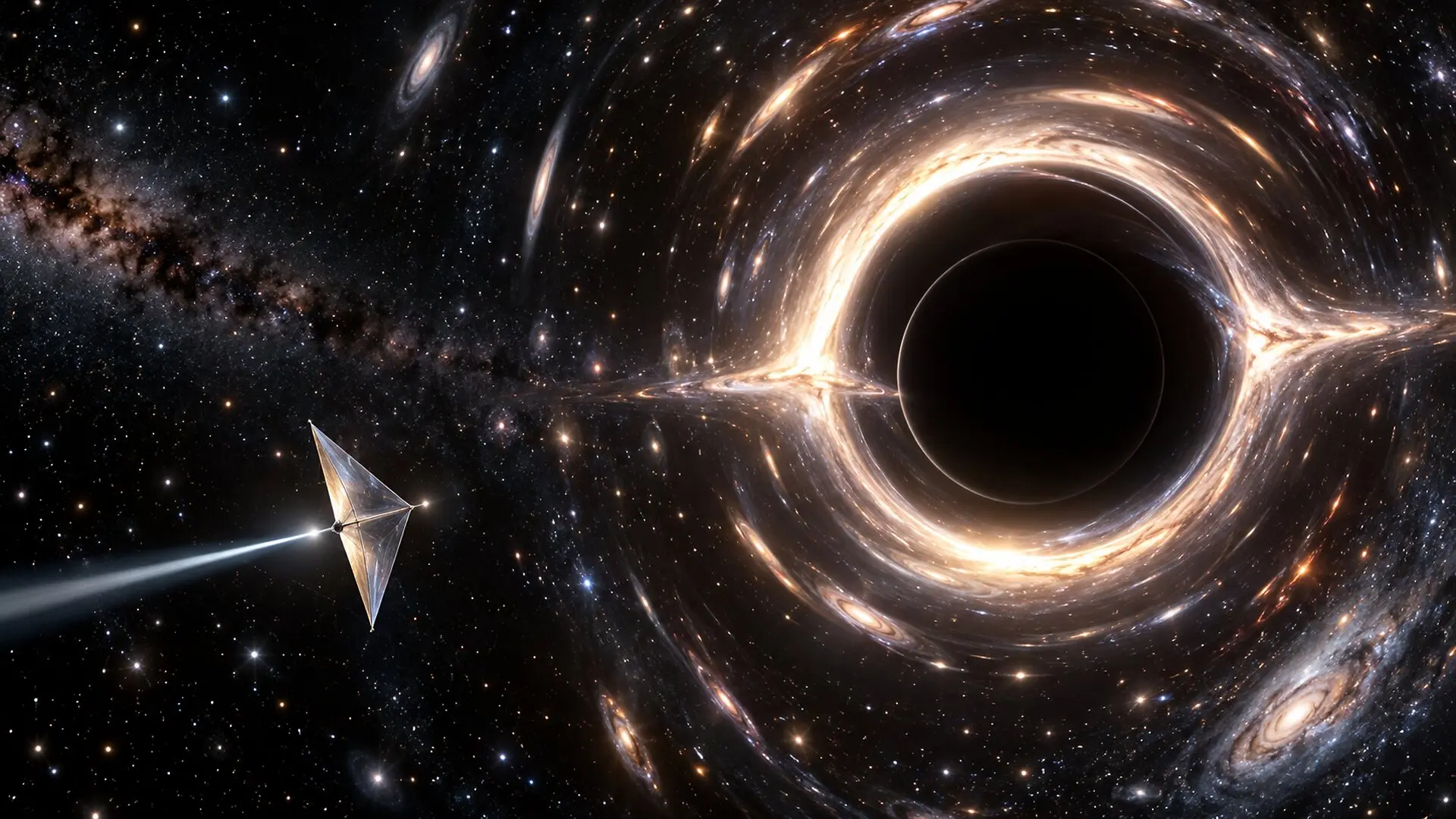
Humanity’s exploration of the cosmos has historically been limited to remote observation, but a new theoretical proposal suggests we could eventually send probes directly to a black hole. Researchers are now mapping out how cutting-edge laser technology might one day propel gram-scale spacecraft to the most extreme environments in the universe.
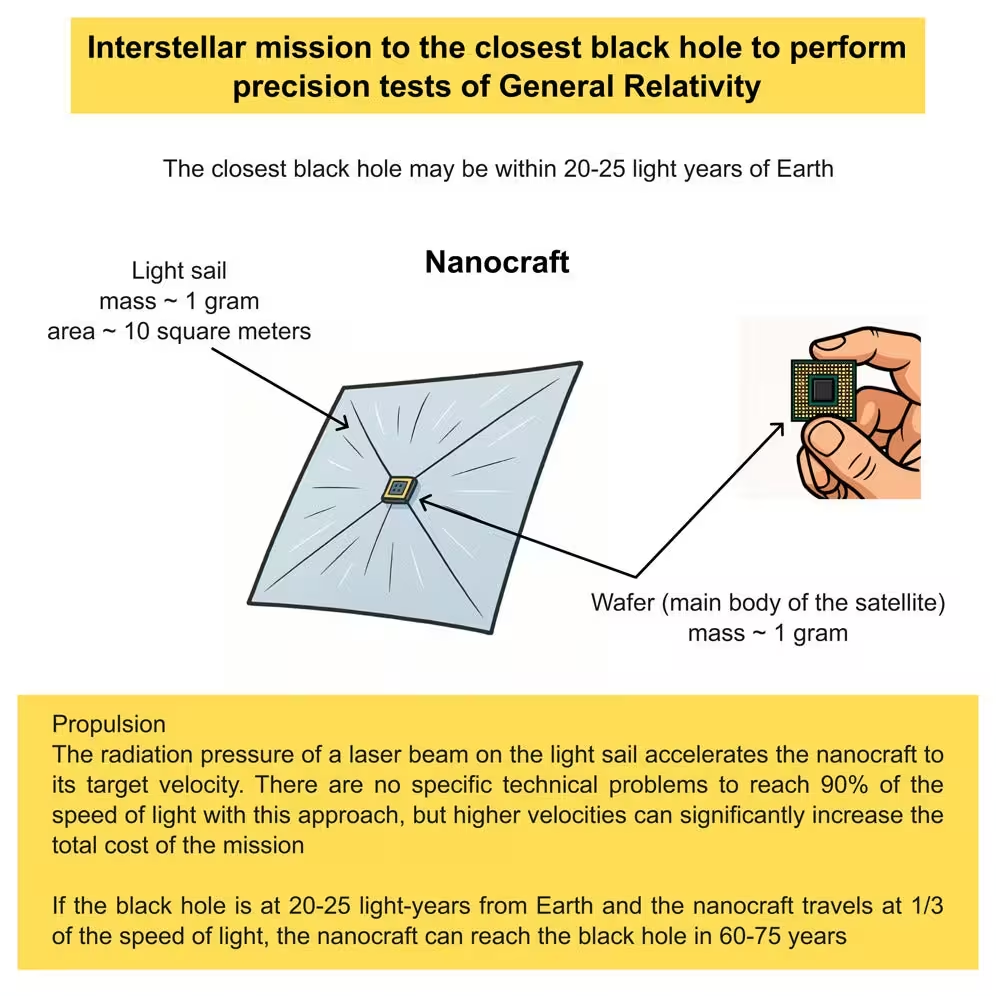
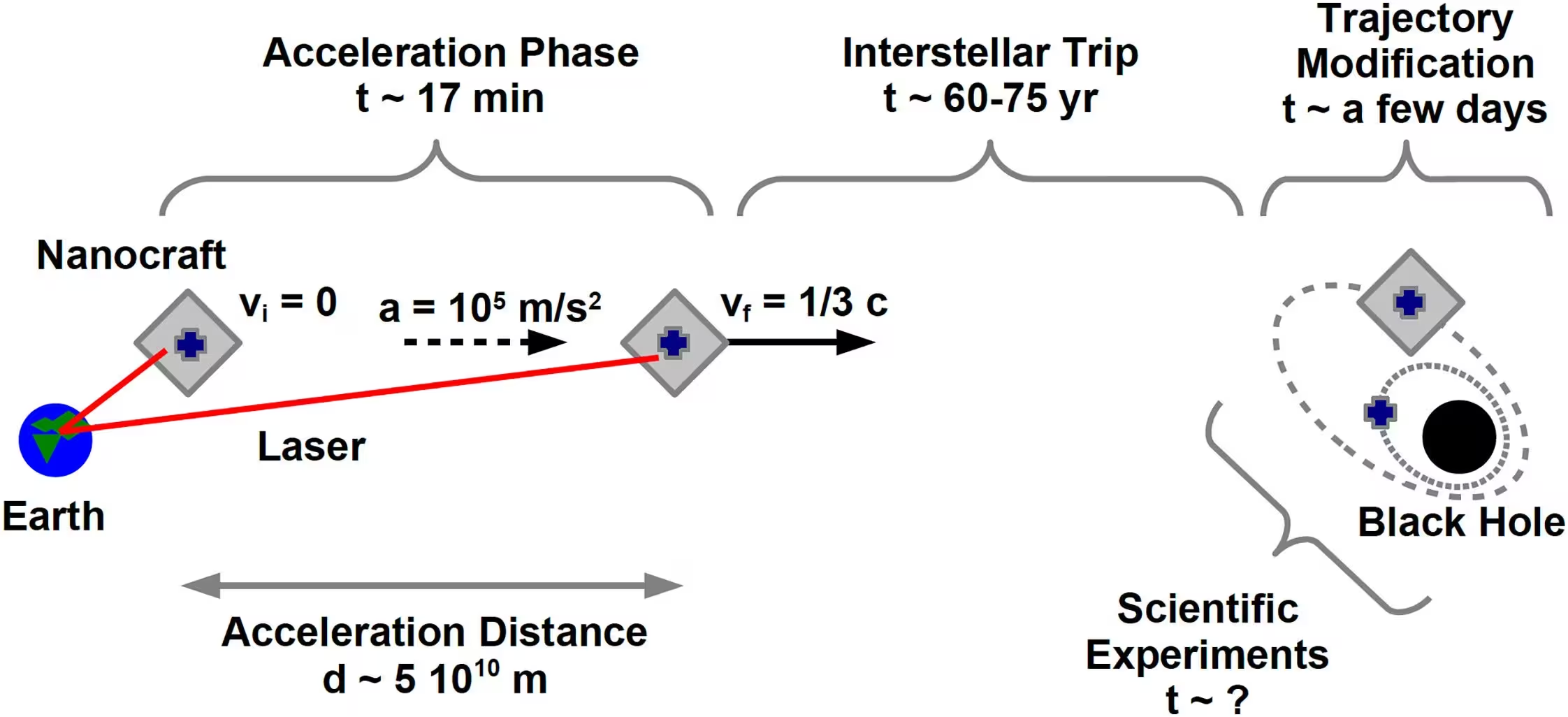
The concept, detailed by physicist Cosimo Bambi of Fudan University in the journal iScience, outlines a mission architecture capable of reaching a nearby black hole within a human lifetime. By utilizing high-powered terrestrial laser arrays to accelerate ultralight probes to one-third the speed of light, such a mission could reach a target situated 20 to 25 light-years away in just 60 to 75 years.
The Search for a Nearby Target
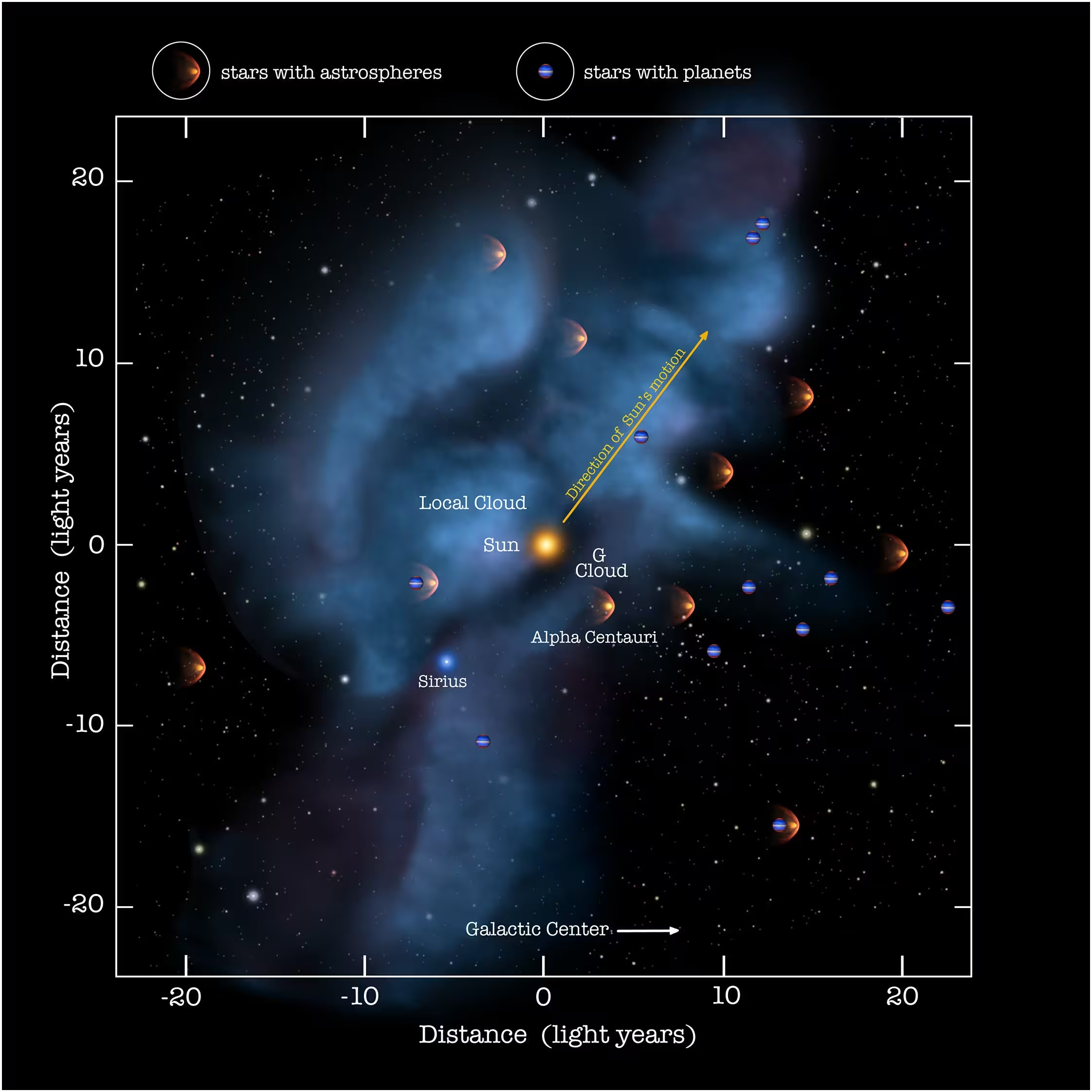
A fundamental hurdle remains: we have yet to confirm the existence of a black hole within our immediate galactic neighborhood. Known stellar-mass black holes like Gaia BH1 are located over 1,500 light-years away, making them unreachable under current mission constraints. However, statistical models of the Milky Way’s population of stars and stellar remnants suggest that an undiscovered, isolated black hole could reside as close as 20 to 25 light-years from Earth.
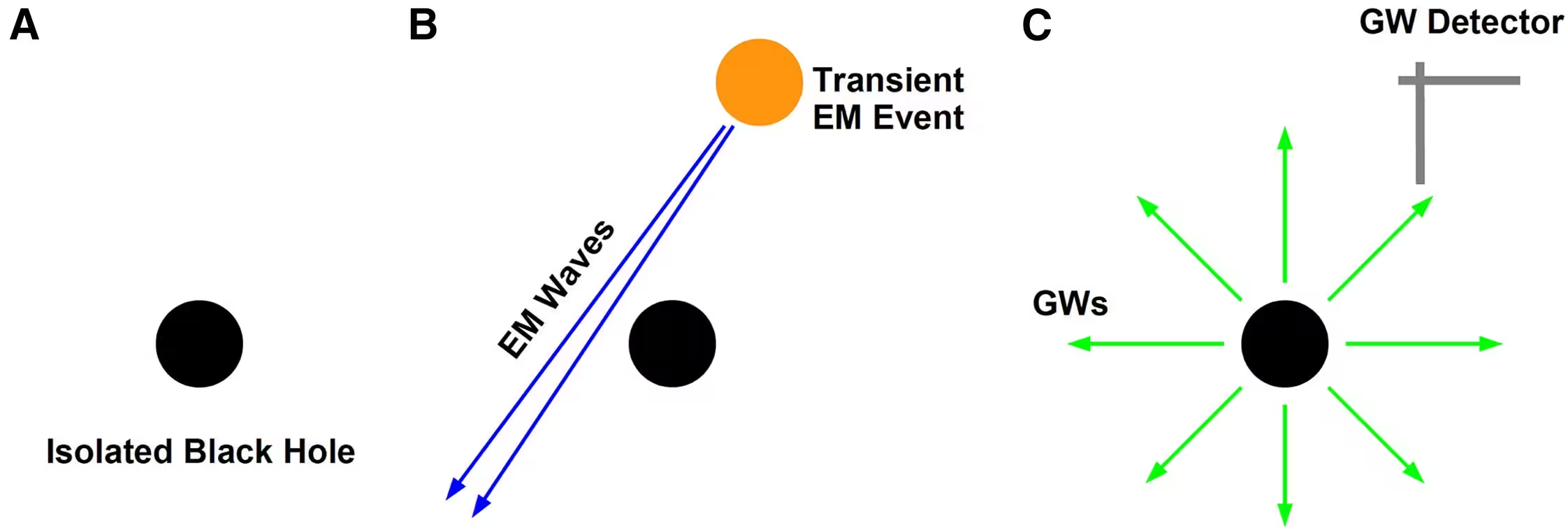
Because isolated black holes do not emit light, detecting them requires indirect methods. Astronomers rely on gravitational microlensing, the detection of faint emissions from captured material, or the identification of gravitational waves caused by interactions with the surrounding spacetime. Identifying such a candidate is the essential first step before any physical mission can be planned.
Propulsion Through Photon Pressure
Conventional rocket fuel is insufficient for the relativistic speeds required for interstellar travel. Instead, the proposal borrows from light-sail concepts, such as those investigated by Breakthrough Starshot. A nanocraft, consisting of a gram-scale wafer and a large, reflective sail, would be pushed by the radiation pressure of a massive ground-based laser array.
This acceleration phase would be brief, lasting roughly 17 minutes, during which the probe would cover about 50 billion meters before beginning its long coast through interstellar space. The logistical challenges, however, are immense; they include the need for advanced autonomous navigation, the durability of electronics across decades, and the exorbitant cost of building a laser array powerful enough to achieve these velocities.
Testing Gravity in Its Natural Habitat
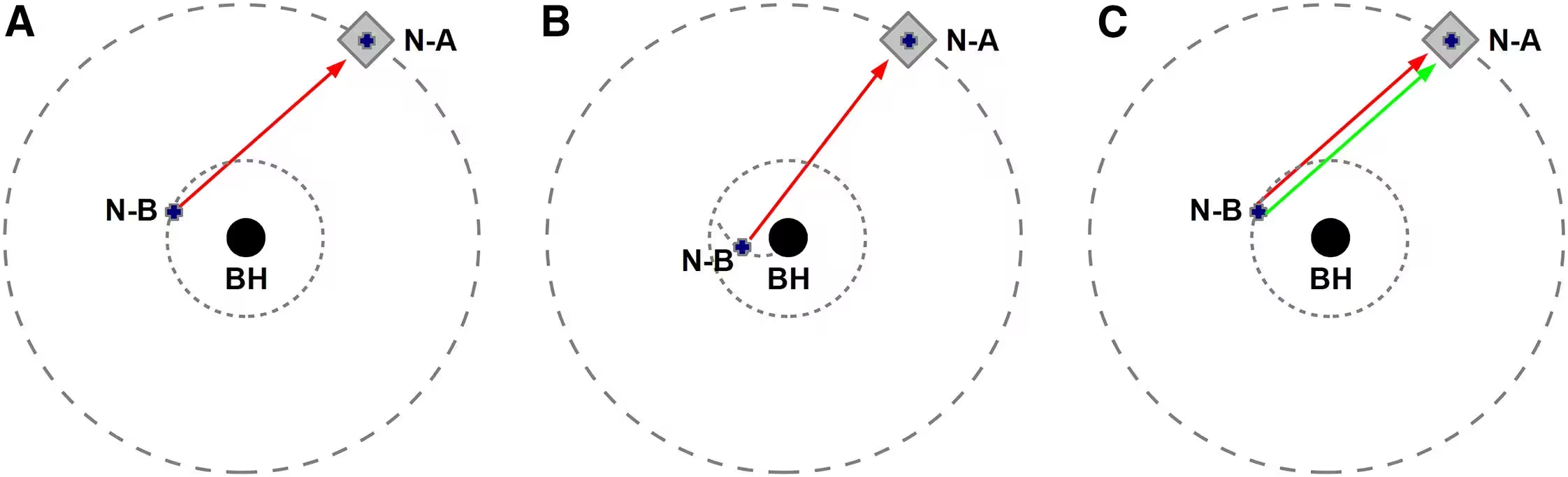
If a probe could successfully reach a black hole, it would serve as an unprecedented laboratory for fundamental physics. By deploying at least two nanocrafts, researchers could compare signals from different distances, allowing for precise measurements of gravitational redshift and orbital mechanics. This would enable scientists to test the Kerr metric, which describes rotating black holes, in a environment far cleaner than the turbulent gas clouds typically observed around supermassive black holes at galactic centers.
Furthermore, such a mission could address the nature of the event horizon itself. By observing a probe as it approaches the horizon, scientists might be able to distinguish between standard black holes and more exotic, hypothetical structures like “fuzzballs” proposed by string theory. Variations in atomic transitions detected near the intense gravitational field could also reveal if fundamental constants fluctuate in such extreme conditions.
Engineering the Impossible
Transitioning from a theoretical concept to an engineering reality involves solving critical problems, most notably how a craft traveling at relativistic speeds would transition into a stable orbit around a black hole. Without a method for deceleration or capture, a probe would be limited to a brief, high-speed flyby, significantly reducing the potential for data collection.
While this proposal remains speculative and far beyond current technical capabilities, it provides a valuable roadmap for future inquiry. It moves the conversation regarding black holes from passive observation to the prospect of active, in-situ experimentation, challenging our understanding of the most mysterious objects in the universe.
For Further Reading
- The Breakthrough Starshot system model: An analysis of the engineering challenges associated with laser-driven interstellar flight. (Acta Astronautica)
- A Sun-like star orbiting a black hole: The research detailing the discovery of Gaia BH1. (Monthly Notices of the Royal Astronomical Society)
- OGLE-2011-BLG-0462: An Isolated Stellar-mass Black Hole Confirmed Using New HST Astrometry and Updated Photometry: Documentation on the confirmation of an isolated black hole through gravitational microlensing. (The Astrophysical Journal)
- First Sagittarius A* Event Horizon Telescope Results. VI. Testing the Black Hole Metric: A look at how current observations test the Kerr description of black holes. (The Astrophysical Journal Letters)
This article has been fact checked for accuracy, with information verified against reputable sources. Learn more about us and our editorial process.
Last reviewed on .
Article history
- Latest version
Reference(s)
- “Rfp Photon Engine Final.” <https://breakthroughinitiatives.org/i/docs/rfp_photon_engine_final.pdf>.
- Parkin, Kevin L.G.. “The Breakthrough Starshot system model.” Acta Astronautica, vol. 152, November 1, 2018, pp. 370-384. Elsevier BV, doi: 10.1016/j.actaastro.2018.08.035. <https://doi.org/10.1016/j.actaastro.2018.08.035>.
- <https://academic.oup.com/mnras/article/518/1/1057/6794289>.
- Sahu, Kailash C.., et al. “OGLE-2011-BLG-0462: An Isolated Stellar-mass Black Hole Confirmed Using New HST Astrometry and Updated Photometry.” The Astrophysical Journal, vol. 983, no. 2, April 11, 2025, pp. 104 American Astronomical Society, doi: 10.3847/1538-4357/adbe6e. <https://doi.org/10.3847/1538-4357/adbe6e>.
- Event Horizon Telescope Collaboration, , et al. “First Sagittarius A* Event Horizon Telescope Results. VI. Testing the Black Hole Metric.” The Astrophysical Journal Letters, vol. 930, no. 2, May 12, 2022, pp. L17 American Astronomical Society, doi: 10.3847/2041-8213/ac6756. <https://doi.org/10.3847/2041-8213/ac6756>.
Cite this page:
- Posted by Aisha Ahmed