Astronomers Just Found a Newborn Planet Still Hiding in Its Construction Site
Astronomers have discovered a rare baby planet less than 1 million years old, providing a unique glimpse into the earliest stages of planetary formation.
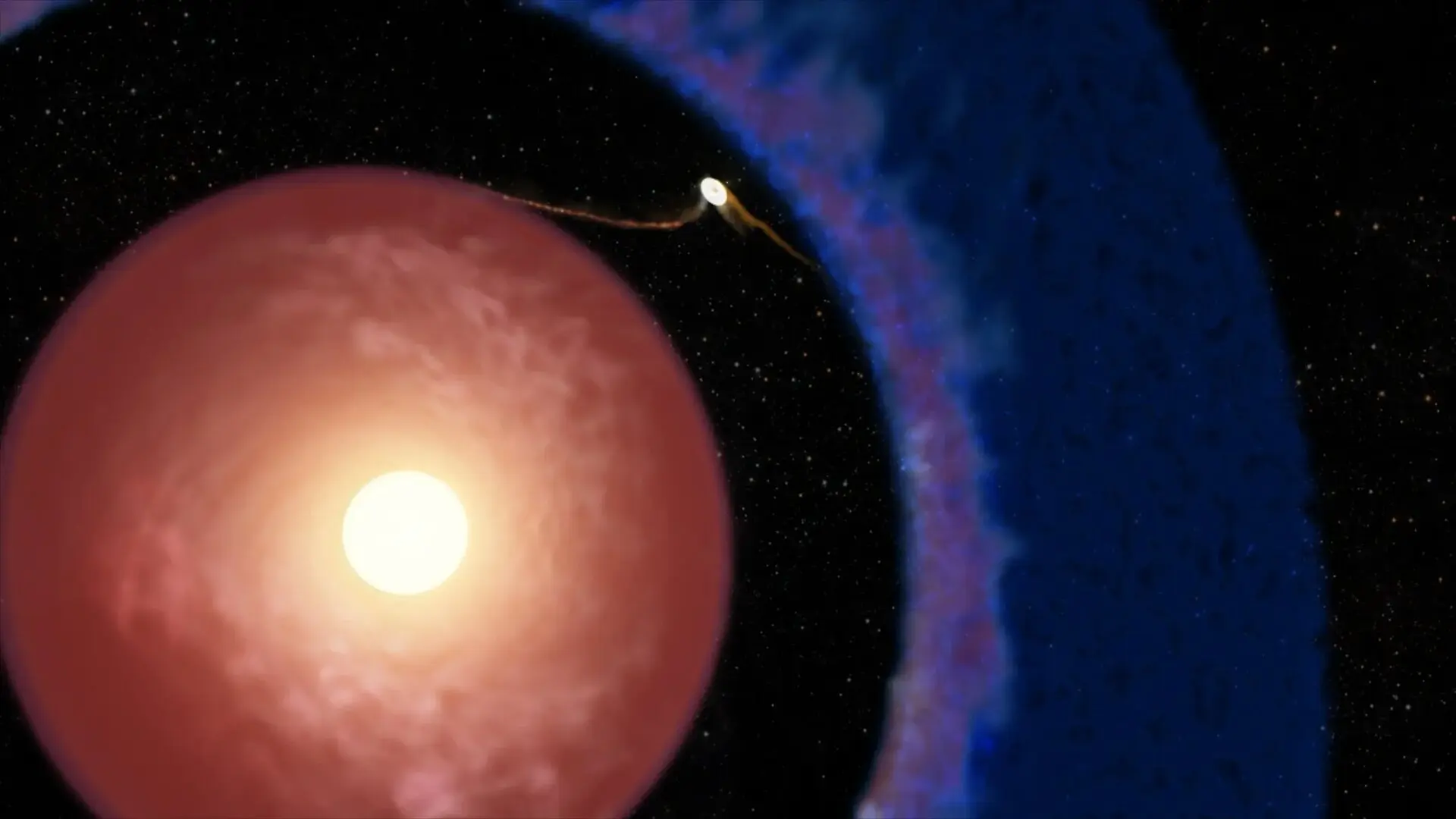
Astronomers have confirmed the existence of Elias 2-24 b, a massive infant world that currently holds the record as the youngest planet ever identified through high-contrast imaging. Located within a system approximately 450 light-years away, the planet is no more than 1 million years old, a mere blink of an eye in the context of cosmic history.
The discovery, detailed in The Astrophysical Journal Letters, sheds light on the earliest, most chaotic phases of planetary development. Led by Andrea Bernardi of Universidad Diego Portales, the research team synthesized archival data from the W. M. Keck Observatory, the Atacama Large Millimeter/submillimeter Array (ALMA), and the European Southern Observatory’s Very Large Telescope (VLT) to track the elusive world.
Uncovering a World Within a Stellar Nursery
Planets in their infancy are notoriously difficult to detect because they are often shrouded in the dense, swirling clouds of gas and dust from which they are born. Furthermore, the intense glare of a young, energetic host star typically masks any light reflected or emitted by a fledgling planet.
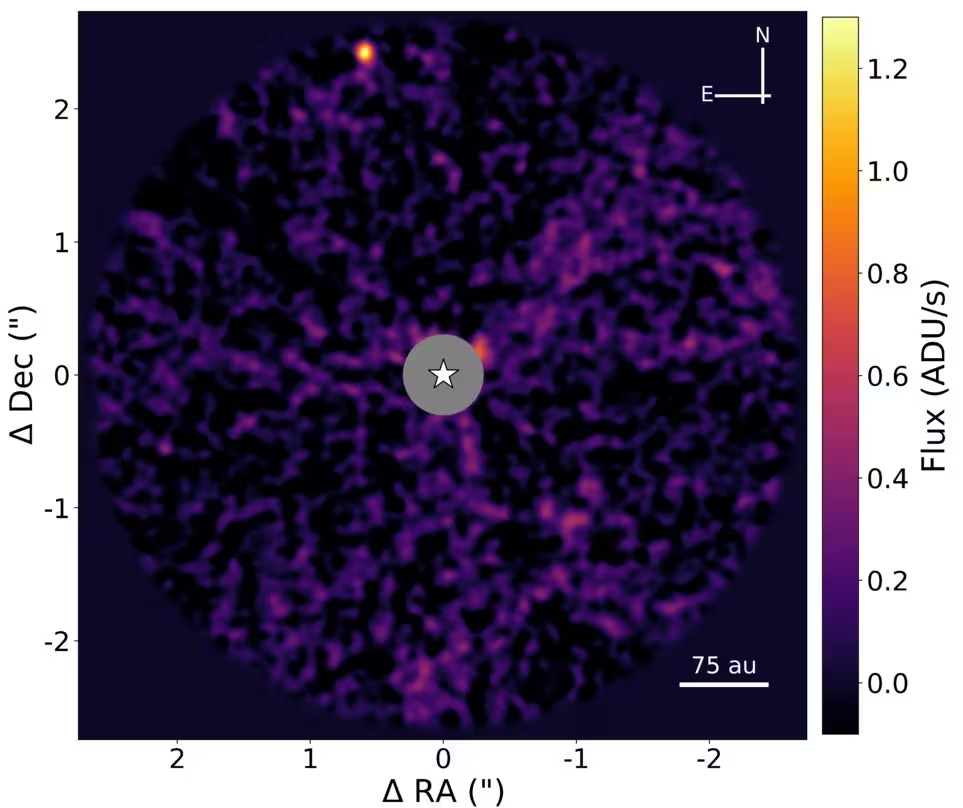
Elias 2-24 b was identified within a distinct gap in its parent disk, roughly 55 astronomical units from its host star. This location is significant because it aligns with theoretical models suggesting that giant planets carve out channels in the protoplanetary disk as they grow. “The planets should be found within the gaps, since they are carving them,” noted Bernardi. “And that’s exactly where we found Elias 2-24 b.”
Validating the Discovery Through Archival Data
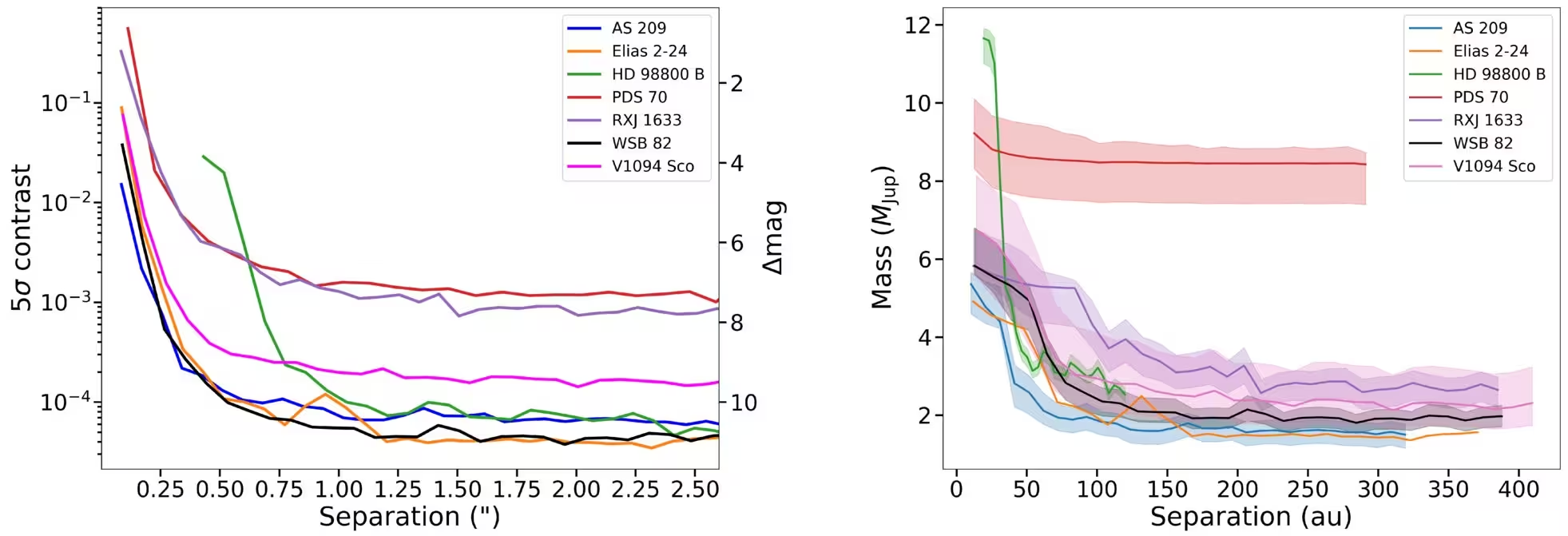
To confirm the presence of the planet, the researchers turned to observations taken by the Keck Observatory’s NIRC2 instrument and its specialized vortex coronagraph. By suppressing the overwhelming light of the central star, the team was able to isolate the faint signal of the planet in data captured in 2018 and 2020.
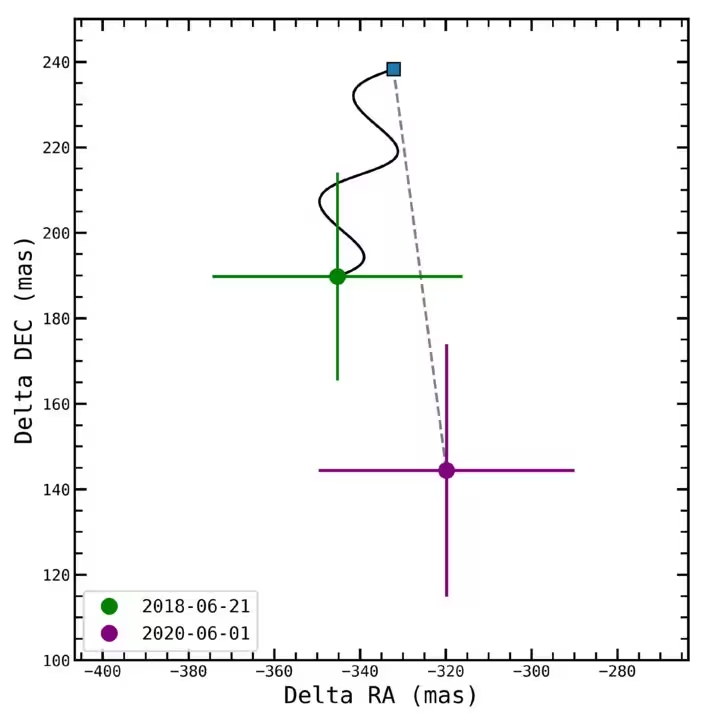
While neither set of observations reached the traditional 5-sigma statistical threshold for a definitive detection on its own, the convergence of evidence—including the planet’s alignment with disk gaps identified by ALMA and its motion relative to the star—provided the necessary confidence to confirm the discovery. The team effectively ruled out the possibility that the point source was merely a distant background star.
Challenging Current Formation Models
The existence of Elias 2-24 b poses a substantial problem for established astronomical theories. Standard core-accretion models typically describe a slow process of building solid matter before gas accumulation begins. However, the discovery suggests that giant planets can form far from their stars and reach maturity much faster than previously thought possible.
Co-author Lucas Cieza emphasized the implications for current science, stating, “Our planet-formation models already struggled to explain the previous record holders for the youngest known planet. Elias 2-24 b shows us that even our best planet-formation models are still missing some important processes.”
Determining the exact mass of the planet remains a challenge. Because the world is so young, it is still actively accreting material, which generates significant heat and brightness. This can cause conventional models to overestimate the mass, leading researchers to treat current estimates as upper limits. Most data point toward a world roughly the size of Jupiter, though further observation is required to refine these figures.
The Future of Exoplanet Exploration
Previous direct imaging successes, such as the PDS 70 system, involved planets in environments at least 5 million years old. By observing a system less than 1 million years old, astronomers have opened a new window into the early architecture of planetary systems.
As telescope technology advances, researchers hope to uncover more of these “baby planets” that have previously remained hidden in the glare of their birth clouds. Instruments like the coronagraph aboard NASA’s Nancy Grace Roman Space Telescope are designed to push the boundaries of what is visible, potentially revealing how these gargantuan worlds begin their lives long before their natal disks have faded away.
Recommended Reading on Protoplanetary Disks
- ALMA Observations of Elias 2-24: A Protoplanetary Disk with Multiple Gaps in the Ophiuchus Molecular Cloud, The Astrophysical Journal Letters, 2017.
- Kinematic and thermal signatures of the directly imaged protoplanet candidate around Elias 2-24, Monthly Notices of the Royal Astronomical Society: Letters, 2023.
- A Dust-Trapping Ring in the Planet-Hosting Disk of Elias 2-24, The Astrophysical Journal, 2024.
- Discovery of a planetary-mass companion within the gap of the transition disk around PDS 70, Astronomy & Astrophysics, 2018.
- Observations of Protoplanetary Disk Structures, Annual Review of Astronomy and Astrophysics, 2020.
This article has been fact checked for accuracy, with information verified against reputable sources. Learn more about us and our editorial process.
Last reviewed on .
Article history
- Latest version
Reference(s)
- Bernardi, Andrea., et al. “Searching for Embedded Protoplanets with the Keck/NIRC2 Vortex Coronagraph: Confirmation of a Core-accretion Planet in the Narrow Gap of the Elias 2-24 Disk.” The Astrophysical Journal Letters, vol. 1009, no. 1, September 16, 2026, pp. L3 American Astronomical Society, doi: 10.3847/2041-8213/ae9bb6. <https://iopscience.iop.org/article/10.3847/2041-8213/ae9bb6>.
- “UDP – Universidad Diego Portales – Universidad Diego Portales.” <https://www.udp.cl/>.
- “W. M. Keck Observatory.”, August 19, 2026 <https://keckobservatory.org/>.
- Cieza, Lucas A.., et al. “ALMA Observations of Elias 2–24: A Protoplanetary Disk with Multiple Gaps in the Ophiuchus Molecular Cloud.” The Astrophysical Journal Letters, vol. 851, no. 2, December 11, 2017, pp. L23 American Astronomical Society, doi: 10.3847/2041-8213/aa9b7b. <https://doi.org/10.3847/2041-8213/aa9b7b>.
- Pinte, C., et al. “Kinematic and thermal signatures of the directly imaged protoplanet candidate around Elias 2−24.” Monthly Notices of the Royal Astronomical Society: Letters, vol. 526, no. 1, February 6, 2023, pp. L41-L46. Oxford University Press (OUP), doi: 10.1093/mnrasl/slad010. <https://doi.org/10.1093/mnrasl/slad010>.
- Carvalho, Adolfo S.., et al. “A Dust-trapping Ring in the Planet-hosting Disk of Elias 2-24.” The Astrophysical Journal, vol. 971, no. 2, August 13, 2024, pp. 129 American Astronomical Society, doi: 10.3847/1538-4357/ad5a07. <https://doi.org/10.3847/1538-4357/ad5a07>.
- Keppler, M.., et al. “Discovery of a planetary-mass companion within the gap of the transition disk around PDS 70.” Astronomy & Astrophysics, vol. 617, September 12, 2018, pp. A44 EDP Sciences, doi: 10.1051/0004-6361/201832957. <https://doi.org/10.1051/0004-6361/201832957>.
- Andrews, Sean M.. “Observations of Protoplanetary Disk Structures.” Annual Review of Astronomy and Astrophysics, vol. 58, no. 1, August 18, 2020, pp. 483-528. Annual Reviews, doi: 10.1146/annurev-astro-031220-010302. <https://doi.org/10.1146/annurev-astro-031220-010302>.
Cite this page:
- Posted by Aisha Ahmed