NASA Just Launched A New Way To Explore Distant Worlds In Your Own Living Room
Explore the universe with NASA’s updated Eyes on Exoplanets, featuring immersive AR, upcoming planet-hunting missions, and detailed views of distant worlds.
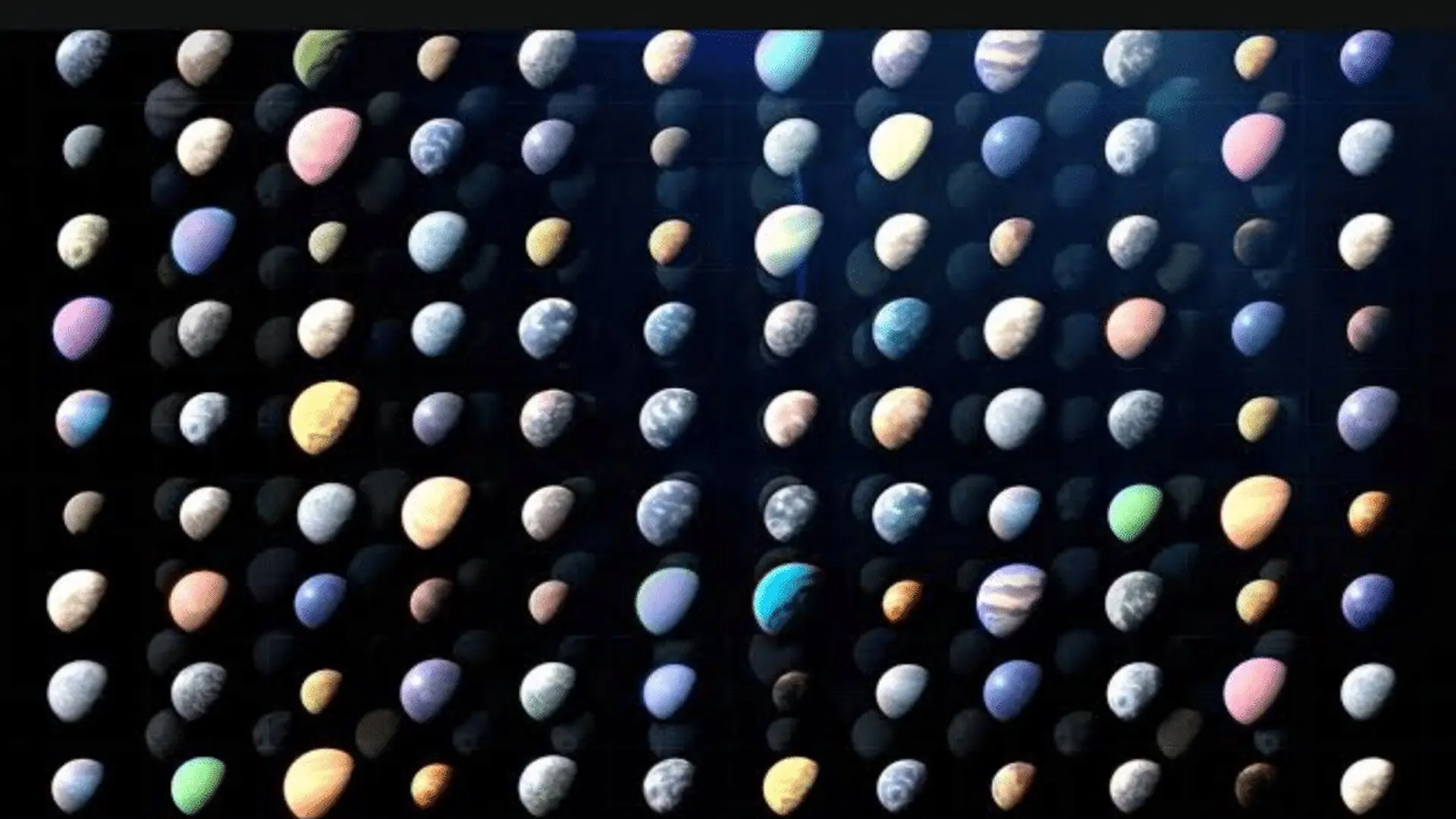
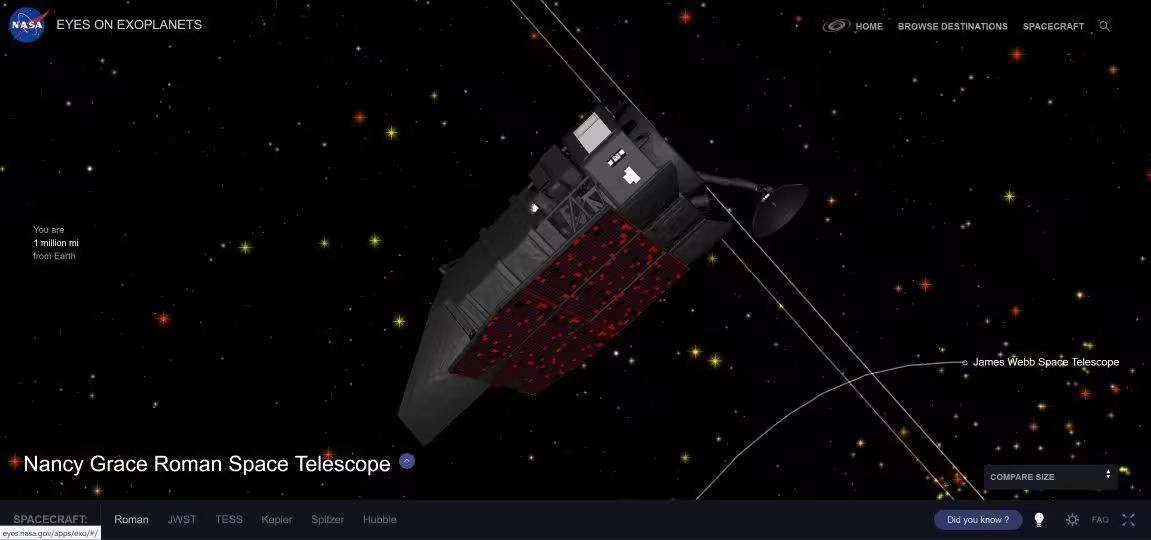
NASA has unveiled a major upgrade to its interactive Eyes on Exoplanets platform, providing the public with an immersive look at the next generation of deep-space exploration. The update, which went live on October 28, 2026, integrates the highly anticipated Nancy Grace Roman Space Telescope into its virtual catalog and introduces augmented reality (AR) capabilities that allow users to place scientific hardware directly into their own environments.
A New Perspective on Planet Hunting
The headline feature of this update is the inclusion of the Nancy Grace Roman Space Telescope. As NASA’s upcoming flagship for wide-field surveys, the Roman mission is tasked with cataloging thousands of planets across the Milky Way. By simulating the observatory within the application, NASA is offering a preview of how the telescope will utilize gravitational microlensing to identify worlds that are currently hidden from view. This technique relies on the gravity of foreground systems to magnify light from distant stars, a strategy that will allow astronomers to detect planets orbiting at extreme distances from their parent stars.
Bringing Hardware Into Your Home
NASA is also breaking down the barrier between complex aerospace engineering and the general public through new mobile-based AR features. Users can now project 3D models of six different spacecraft, including the Roman telescope, into their own living rooms or classrooms. By accessing the “View in your space” tool on a mobile device, users can interact with these virtual machines as if they were physically present.
The interface is designed for intuitive exploration, allowing users to resize and rotate the hardware with simple touch gestures. Beyond the novelty of the experience, the tool provides a rare opportunity for students and enthusiasts to inspect the intricate details of the technology responsible for humanity’s most significant astronomical breakthroughs.

Streamlining Access to James Webb Data
The update further refines the platform’s data navigation by integrating the James Webb Space Telescope into the observatory filtering system. Users can now quickly isolate exoplanet discoveries specifically linked to Webb’s observations through the Browse Destinations menu. This change highlights the specific contributions of Webb’s infrared instruments, which have been instrumental in characterizing the atmospheres and chemical compositions of distant worlds.
By grouping findings by the observatory that performed the detection, NASA is creating a clearer narrative of how modern missions work in tandem. While Roman is poised to dramatically expand the census of known exoplanets through its wide-field surveys, Webb remains the primary tool for conducting the in-depth, targeted follow-up studies necessary to truly understand these far-off systems.
This article has been fact checked for accuracy, with information verified against reputable sources. Learn more about us and our editorial process.
Last reviewed on .
Article history
- Latest version
Reference(s)
- “Eyes on Exoplanets - NASA/JPL.” <https://eyes.nasa.gov/apps/exo/>.
Cite this page:
- Posted by Karan Das