China Reveals Ambitious Two-Rocket Strategy to Land Humans on the Moon by 2030
China’s upcoming crewed Moon landing relies on two complex rocket launches, orbital rendezvous maneuvers, and rigorous testing of three new spacecraft.
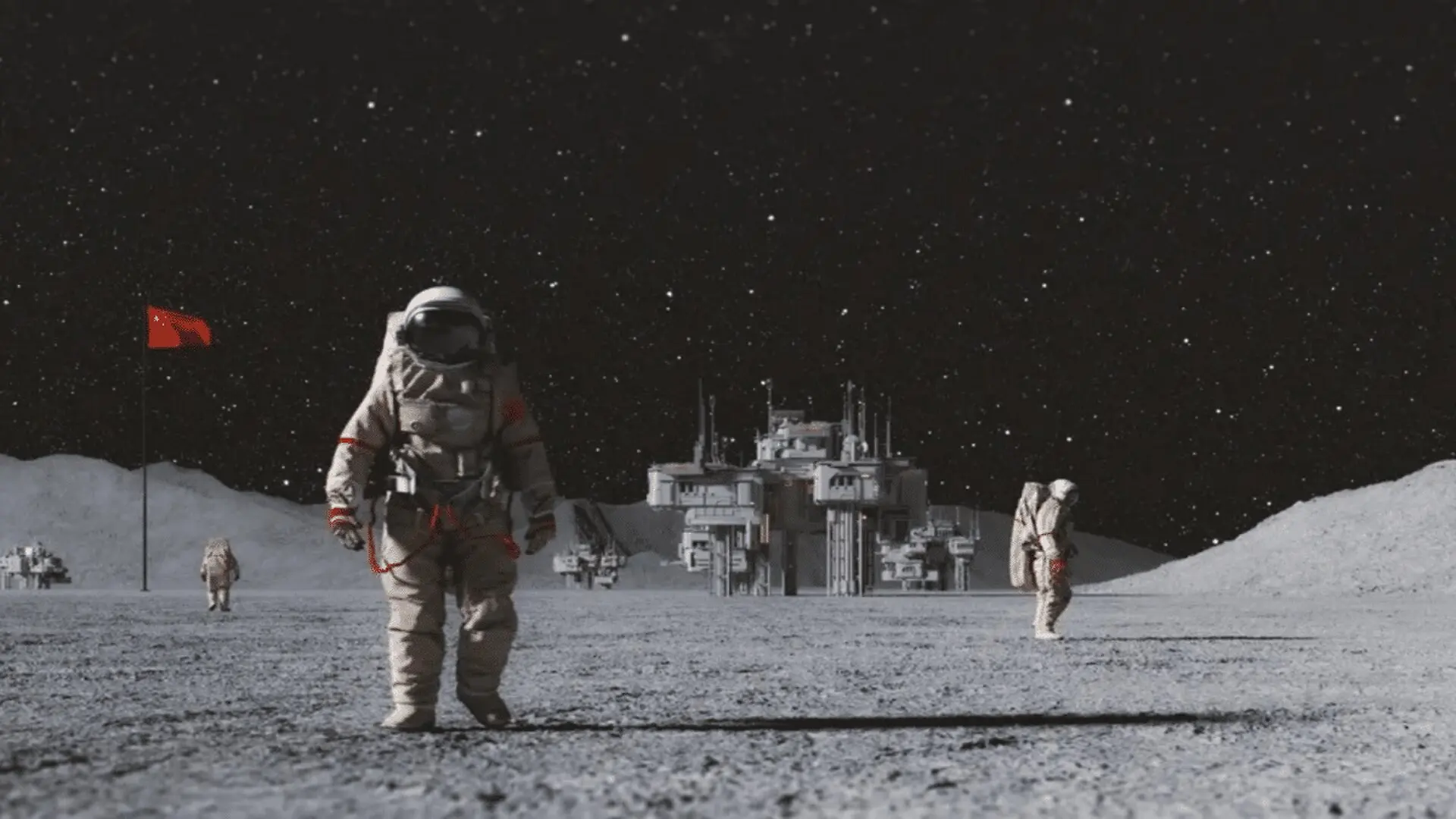
China has solidified its strategy for a crewed lunar landing, confirming a complex mission profile that hinges on two separate rocket launches and a critical orbital rendezvous. The plan, which aims to place taikonauts on the lunar surface before 2030, marks a significant shift in the nation’s spaceflight development.
A Strategic Two-Launch Architecture
The mission architecture relies on the synergy between two specialized vehicles: the Mengzhou crewed spacecraft and the Lanyue lunar lander. Rather than attempting a single, massive launch, China plans to send these components into space on separate Long March 10 rockets. Wang Xiang, deputy chief designer of the nation’s manned space program, outlined this methodology during the 7th Manned Space Symposium in Beijing on October 31, 2026, as reported by China Daily.
Once both vessels reach the vicinity of the Moon, they will execute a docking maneuver in lunar orbit. The crew will then transfer from Mengzhou to Lanyue to begin their descent. Following their surface operations, the lander will ascend to rejoin the orbiting crew module, which will provide the necessary propulsion for the journey back to Earth. This compartmentalized approach allows China to optimize individual systems for either deep-space transit or lunar surface navigation, mirroring the rendezvous philosophy utilized during the Apollo era.
China unveils detailed plan for manned moon landing China plans to land Chinese taikonauts on the Moon before 2030, with a crew of three, two of whom are expected to set foot on the lunar surface, according to information released at the 7th Human Space Symposium on Saturday. The mission will use a “two launches, one lunar landing” approach, involving two Long March-10 carrier rockets. Check the details. #ChinaSpaceMission #moon
— CGTN Frontline (@Frontlinestory) November 1, 2026
The Challenge of Orbital Synchronization
The success of the mission rests on the precise coordination of two spacecraft arriving independently at the Moon. This necessitates sophisticated navigation, communication, and propulsion capabilities to ensure that docking maneuvers can be performed reliably outside of low Earth orbit. Wang noted that the architecture is designed for standardization, intending to foster a modular family of spacecraft that can support recurring lunar missions and, eventually, a long-term human presence.
The program’s infrastructure is built upon a unified technical framework that emphasizes interface verification between the different modules. By establishing these common standards, engineers aim to minimize the risks associated with multi-stage orbital transfers.
Status of Hardware Development
Development milestones are currently moving forward for the program’s three primary pillars: the Long March 10 launch vehicle, the Mengzhou spacecraft, and the Lanyue lander. Each has reached important testing phases, though they have yet to be integrated into a full-scale flight mission.
Recent testing for the Mengzhou module has included zero-height abort scenarios and maximum dynamic pressure escape drills, both essential for ensuring crew safety during launch. Meanwhile, the Lanyue lander has successfully completed validation tests for its descent and takeoff capabilities. The Long March 10 rocket has also undergone low-altitude performance demonstrations, confirming its viability for the heavy-lift requirements of the lunar program.
Broadening the Scope of Lunar Exploration
Beyond the primary goal of the first landing, Chinese space authorities are viewing the mission as a gateway to broader scientific discovery. Wang advocated for a long-term strategy that balances human exploration with systematic, evidence-based research. He suggested that data gathered through the ongoing Chang’e robotic exploration series will be instrumental in informing future crewed missions, creating a feedback loop between uncrewed probes and human landing operations.
As international interest in lunar exploration intensifies, with programs like NASA’s Artemis also targeting the Moon, China’s approach offers a distinct technical path. The coming years will serve as the final crucible for this architecture, as engineers work to transition these individual systems into a cohesive, flight-proven sequence capable of carrying humans to the lunar surface and back again.
This article has been fact checked for accuracy, with information verified against reputable sources. Learn more about us and our editorial process.
Last reviewed on .
Article history
- Latest version
Reference(s)
- “China unveils detailed plan for manned moon landing.”, October 31, 2026 Xinhua <https://www.chinadaily.com.cn/a/202611/01/WS6ae673cce4b06d4aa0566448.html>.
Cite this page:
- Posted by Karan Das