The Moon Is About To Hide Jupiter In A Rare Celestial Event You Can See This Weekend
The Moon, Mars, and Jupiter will align for a stunning November sky show, featuring a rare lunar occultation visible from select regions. Don’t miss it.
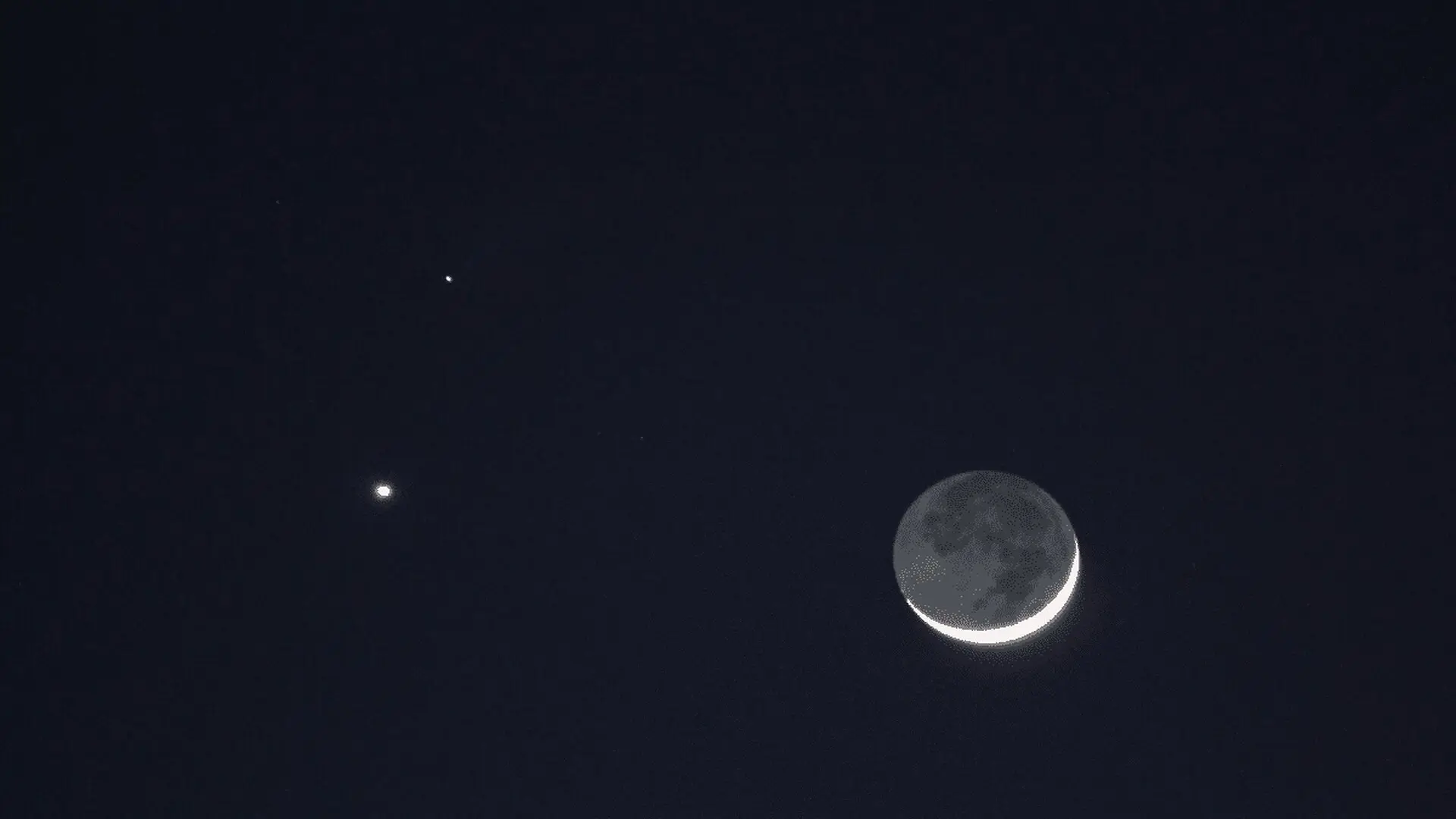
Rare Celestial Alignment Brings Jupiter, Mars, and the Moon Together in the Night Sky
Stargazers are in for a treat this week as a series of cosmic encounters unfold in the eastern sky. Between November 1 and November 3, the Moon will journey through the constellation Leo, passing by Mars, Jupiter, and the star Regulus in a display that provides a clear look at the mechanics of our solar system.
The sequence begins in the early hours of November 2, when the waning Moon—approximately 45 percent illuminated—rises near Mars. At this stage, the two will be separated by less than 5 degrees, a distance easily covered by three fingers held at arm’s length. While Mars will be identifiable by its signature rusty hue, the much brighter Jupiter will sit just below it, forming a striking grouping with the star Regulus.
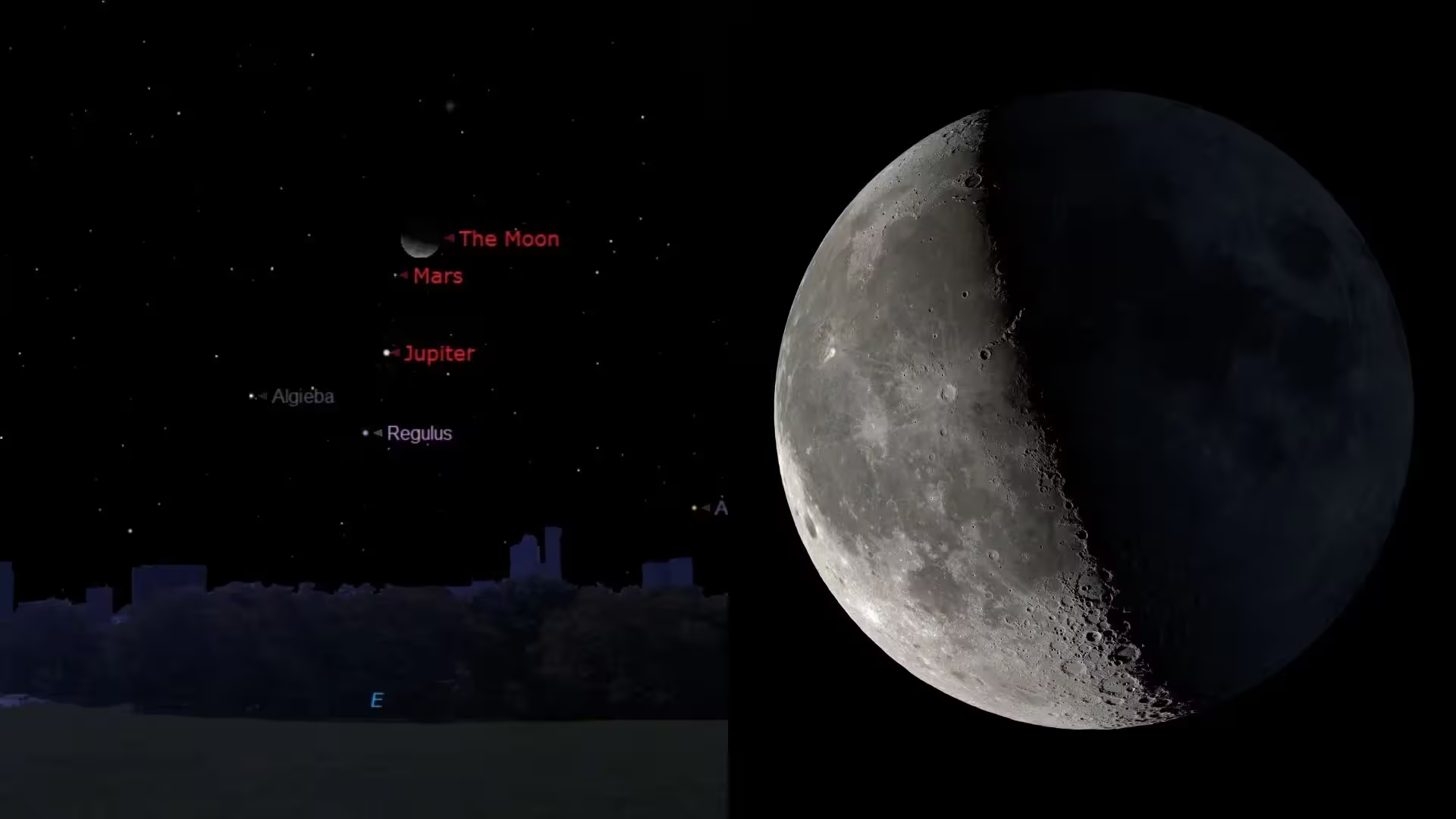
Lunar Occultation: When the Moon Hides a Planet
For observers in specific regions of the Southern Hemisphere, the event will escalate from a close visual pairing to a rare lunar occultation. During this phenomenon, the Moon will drift directly in front of Jupiter, briefly obscuring the massive gas giant from view.
According to data from In-The-Sky.org, this disappearance is expected to be visible from parts of Australia, Indonesia, and various island territories around 20:45 GMT on November 2. Because the timing of the ingress and egress depends heavily on the viewer’s precise coordinates, local astronomers are encouraged to check their specific horizons to see if the planet will vanish behind the lunar limb from their vantage point.
Tracking the Moon’s Progress Through Leo
The lunar trek continues into November 3, when the Moon shifts its position to approach Regulus, the blue-white heart of the constellation Leo. In the United States, observers can expect a tight pairing, with the Moon passing within 1 degree of the star. Meanwhile, across parts of South America—including Brazil, Argentina, Chile, and Colombia—the Moon will perform another occultation, this time masking the distant star from view between 07:00 and 09:00 GMT.
Beyond the primary subjects, those with binoculars may spot the Beehive Cluster, or M44, tucked away in the nearby constellation Cancer. Appearing as a faint, misty patch to the naked eye, the cluster reveals itself as a shimmering collection of stars through simple optical aids, sitting about 10 degrees from the Moon’s dark edge.
Observing the Dynamics of Our Solar System
While these objects appear to gather together, the scene is a trick of perspective. The bodies are separated by vast, interplanetary distances, and their apparent alignment is a result of their distinct orbits and our vantage point from Earth. The event offers a rare, accessible opportunity to witness the Moon’s orbital speed, as it traverses roughly 13 degrees of the sky each day, creating a shifting map of celestial neighbors over the course of just forty-eight hours.
To get the best view, experts recommend finding a dark, unobstructed horizon after midnight. While the planets, the Moon, and Regulus are bright enough to be viewed without equipment, a pair of binoculars will prove useful for isolating the Beehive Cluster and getting a clearer look at the lunar surface during its journey across the night sky.
This article has been fact checked for accuracy, with information verified against reputable sources. Learn more about us and our editorial process.
Last reviewed on .
Article history
- Latest version
Reference(s)
- Wood, Anthony. “The moon, Mars, and Jupiter shine in the heart of the Lion overnight on Nov. 1-2.”, October 31, 2026 Space <https://www.space.com/stargazing/the-moon-mars-and-jupiter-shine-in-the-heart-of-the-lion-overnight-on-nov-1-2>.
Cite this page:
- Posted by Karan Das