Scientists Discover That Squeezing Magnetic Crystals Could Unlock Next-Gen Electronics
Researchers have discovered that squeezing magnetic crystals can manipulate electron behavior, opening new possibilities for future spin-based electronics.
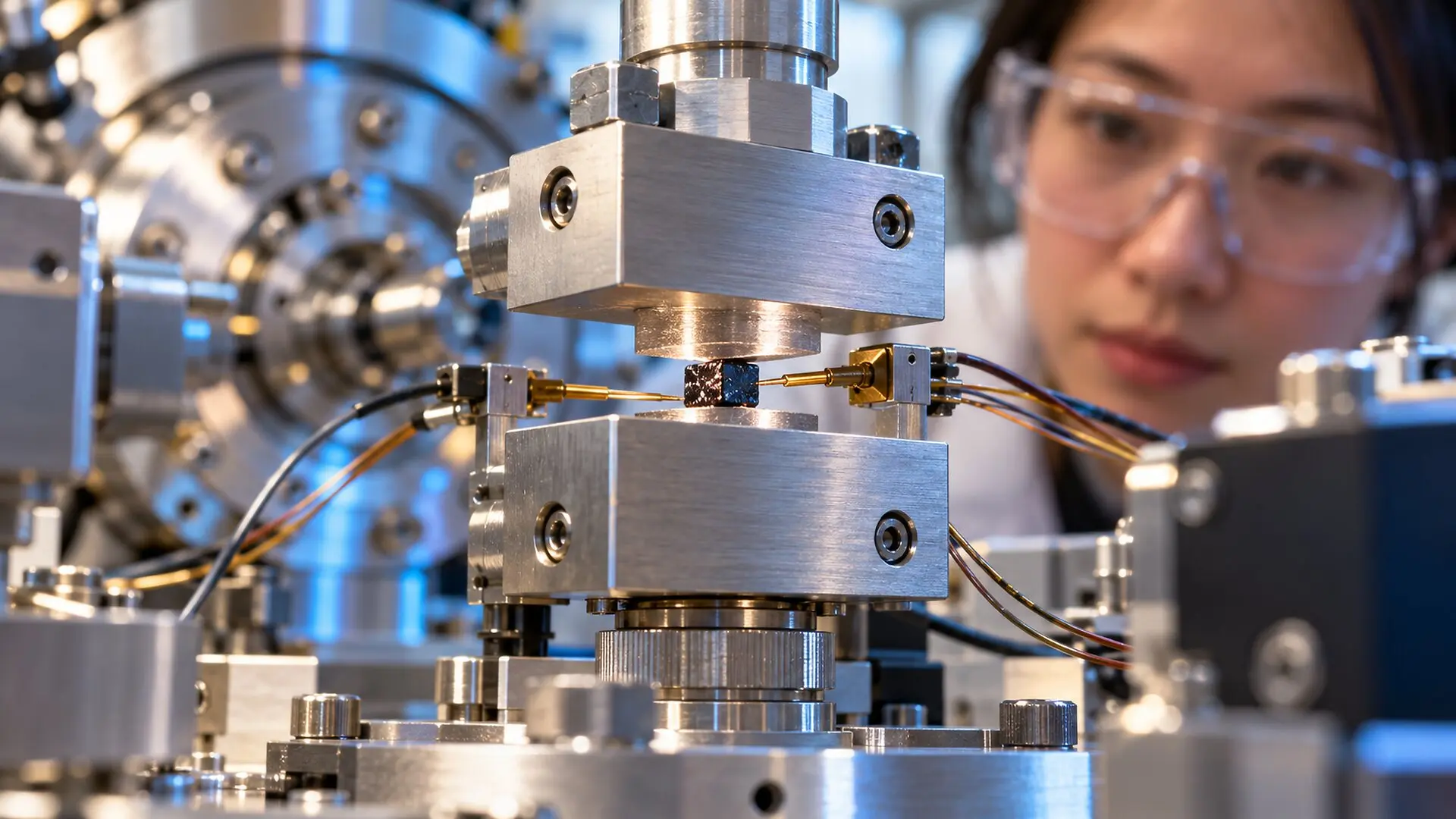
Physicists have discovered that applying mechanical pressure to specific magnetic crystals can fundamentally alter their internal electrical and magnetic properties. By squeezing manganese telluride and iron sulfide, researchers were able to manipulate the arrangement of magnetic domains, a breakthrough that offers a new pathway for developing future spin-based electronics, or spintronics.
The research, which utilized advanced neutron scattering instruments at the Department of Energy’s Oak Ridge National Laboratory (ORNL), sheds light on the behavior of a unique category of materials known as altermagnets. While standard magnets possess an overall magnetization that can be easily manipulated, altermagnets feature compensated magnetic orders that remain largely invisible to conventional measurement tools. This hidden nature has made them a subject of intense scientific interest for next-generation information storage.
Harnessing Invisible Magnetic States
In a typical antiferromagnet, magnetic moments cancel each other out, making them difficult to control. Altermagnets, however, combine this compensation with distinct electronic properties that depend on both spin and the direction of electron momentum. Because these materials do not have a strong net magnetic field, they are promising candidates for devices that use electron spin to process data more efficiently than current silicon-based technology.
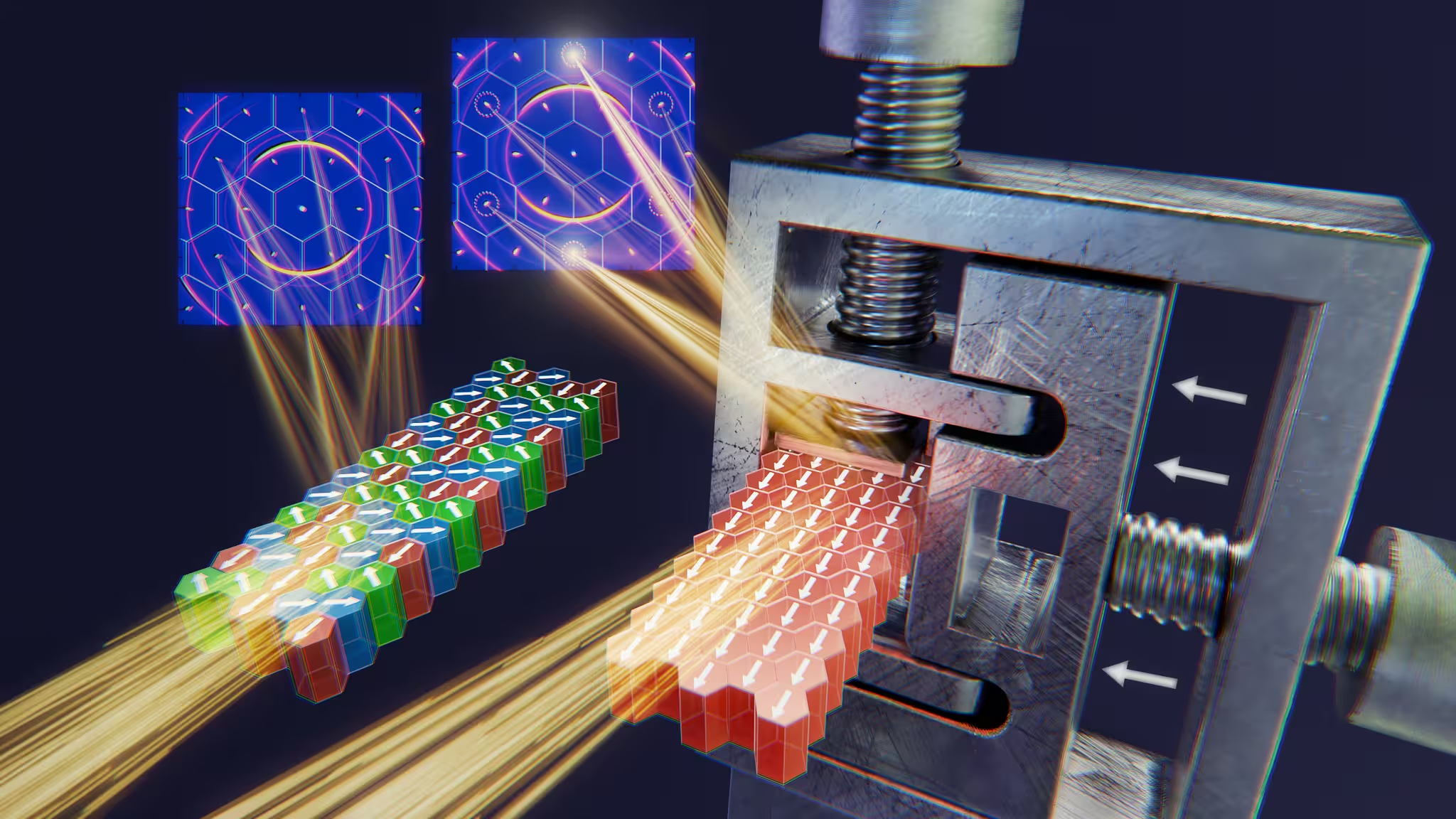
The challenge for researchers is that individual crystals often contain multiple regions, or domains, with conflicting magnetic orientations. These overlapping domains can mask the underlying electronic signature of the material. To address this, the team tested whether applying physical strain—a controlled, microscopic squeeze—could favor one magnetic orientation over others, thereby making the crystal’s behavior more predictable.
Precision Manipulation of Atomic Structure
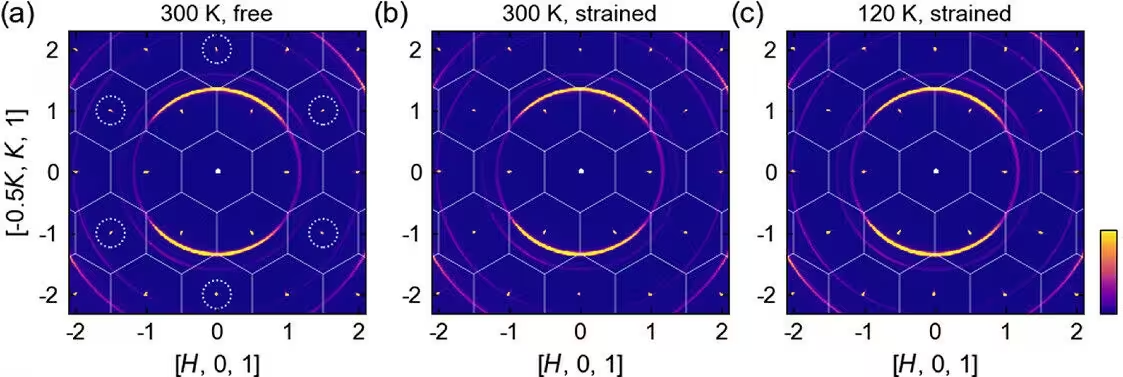
By placing tiny crystals between titanium plates, the team was able to exert precise amounts of pressure. In experiments with manganese telluride, the researchers found that compression successfully organized the crystal into a single in-plane magnetic domain. This change allowed them to clearly observe the orientation of magnetic moments and even reverse the sign of the material’s anomalous Hall response—an electrical voltage that emerges perpendicular to the current flow—without disrupting the material’s magnetic transition temperature.
“By controlling the magnetic domains, we can directly influence the transport behavior, and that opens the door to exploring these materials for spintronic technologies,” noted Pengcheng Dai, a professor of physics and astronomy at Rice University and a former ORNL neutron scientist.
Verifying Results with Neutron Scattering
While electrical data provided initial evidence of these changes, the researchers relied on neutron scattering at the Spallation Neutron Source to confirm exactly how the atomic spins were rearranging. Neutrons interact directly with the magnetic moments within a material, providing a window into the internal structure that electrical signals alone cannot provide.
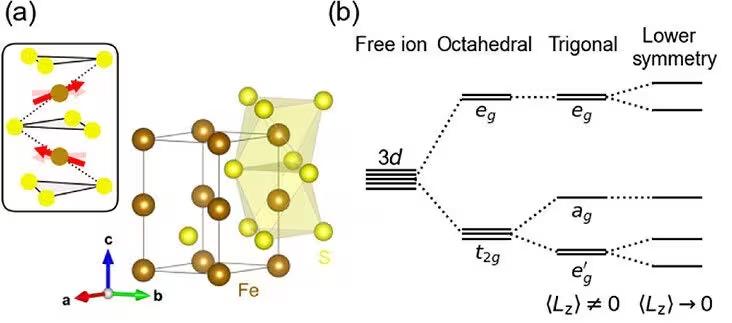
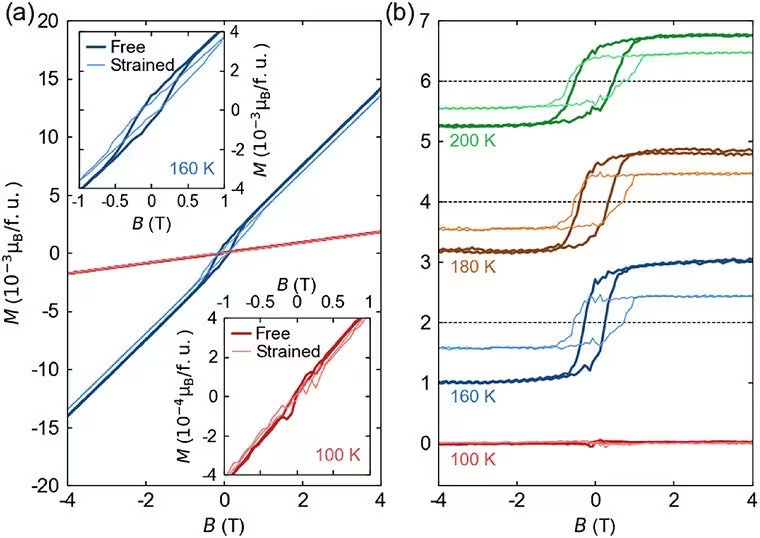
In the iron sulfide samples, neutron diffraction revealed that while the core magnetic structure remained stable, the distribution of domains shifted significantly under pressure. Before compression, the domains were roughly equally distributed; after strain was applied, one orientation became dominant. This suggests that even modest mechanical deformation can be a potent tool for tuning the functional properties of these crystals.
A Path Toward Functional Spintronics
The findings, detailed in studies published in Physical Review X and Advanced Materials, establish a fundamental connection between structural strain and electronic behavior. However, the researchers emphasize that this is a step toward material understanding rather than the creation of a finished commercial device.
The variations in response between manganese telluride and iron sulfide highlight the complexity of altermagnets. Future work will need to determine whether these strain-induced effects can be reliably replicated in integrated electronic components. By demonstrating that magnetic domains can be reshaped via mechanical pressure, the team has provided a new set of variables that engineers can manipulate to unlock the full potential of next-generation spin-based computing.
Further exploration into how these materials respond to different temperatures and compositions remains a priority for the scientific community, as researchers seek to bridge the gap between microscopic physical phenomena and practical technological applications.
This article has been fact checked for accuracy, with information verified against reputable sources. Learn more about us and our editorial process.
Last reviewed on .
Article history
- Latest version
Reference(s)
- <https://www.ornl.gov/>.
- “Rice.” Rice University <https://www.rice.edu/>.
- Liu, Zhaoyu., et al. “Strain-Tunable Anomalous Hall Effect in Hexagonal MnTe.” Physical Review X, vol. 16, no. 3, August 11, 2026 American Physical Society (APS), doi: 10.1103/589s-s1yy. <https://journals.aps.org/prx/abstract/10.1103/589s-s1yy>.
- Yao, Weiliang., et al. “Uniaxial Strain Tuned Magnetism of the Altermagnet Candidate H‐FeS.” Advanced Materials, vol. 38, no. 56, August 6, 2026 Wiley, doi: 10.1002/adma.74398. <https://onlinelibrary.wiley.com/doi/10.1002/adma.74398>.
Cite this page:
- Posted by Aisha Ahmed