Physicists Build a Mini Universe That Measures Time Using Entropy Instead of a Clock
Physicists have constructed a 24,000-atom mini universe that tracks time through entropy exchange, offering a new look at how time emerges in quantum systems.
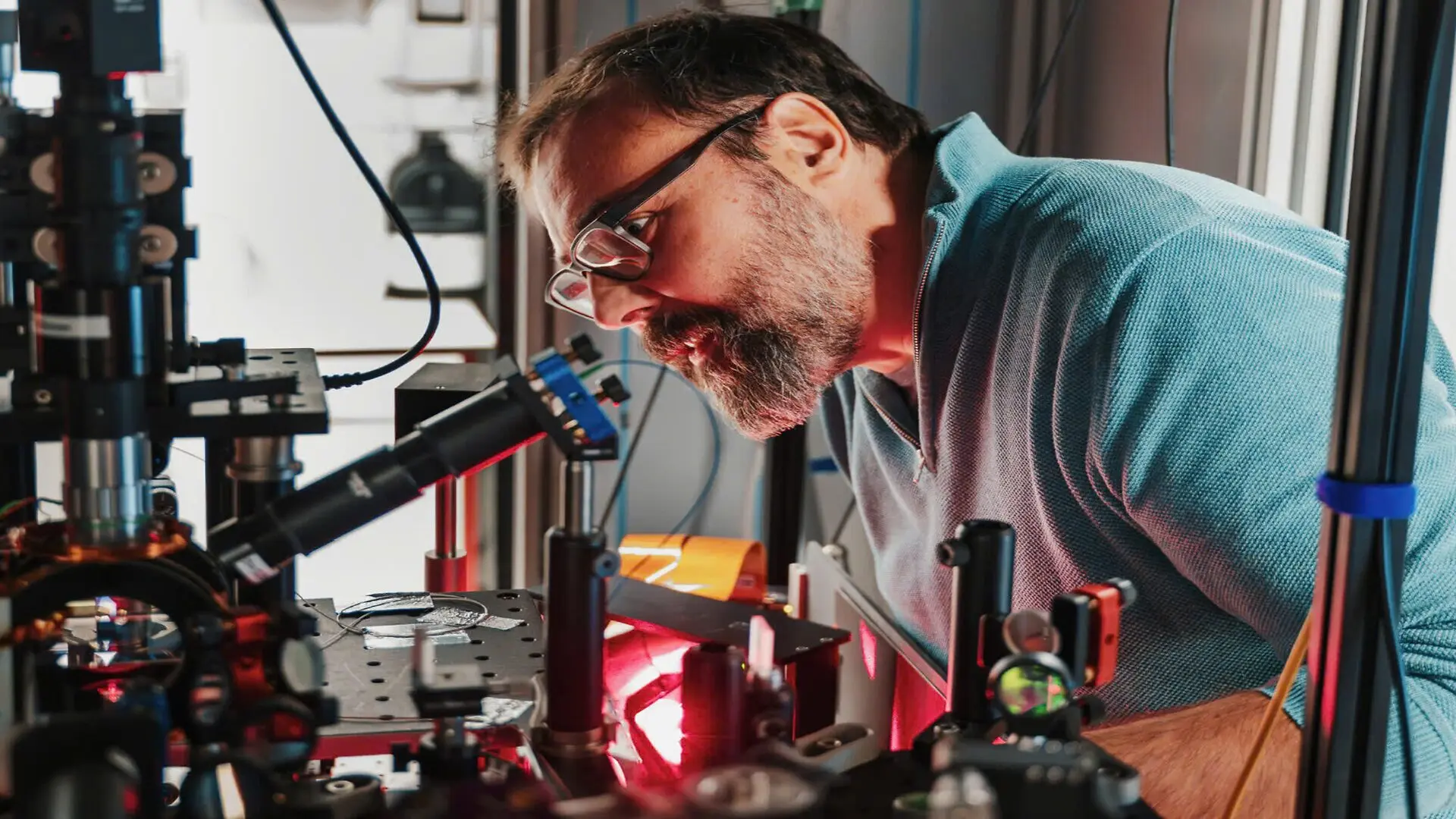
Physicists have successfully engineered a self-contained miniature universe using a cloud of 24,000 ultracold rubidium atoms, creating a system capable of tracking its own evolution without reliance on an external reference clock. This experimental milestone, detailed in Physical Review Research by Giovanni Barontini and his team at the University of Birmingham, provides a unique laboratory testbed for exploring how time might emerge from internal physical relationships.
The challenge of defining time from within a system is a core hurdle in modern theoretical physics, particularly when attempting to reconcile gravity with quantum mechanics. Theories such as the Wheeler-DeWitt equation aim to describe the universe as a quantum state that lacks a traditional, external clock variable. Without an outsider to watch the clock, scientists are forced to consider whether time is an emergent property—a sequence of states defined by the internal dynamics of the system itself.
Simulating Cosmic Evolution
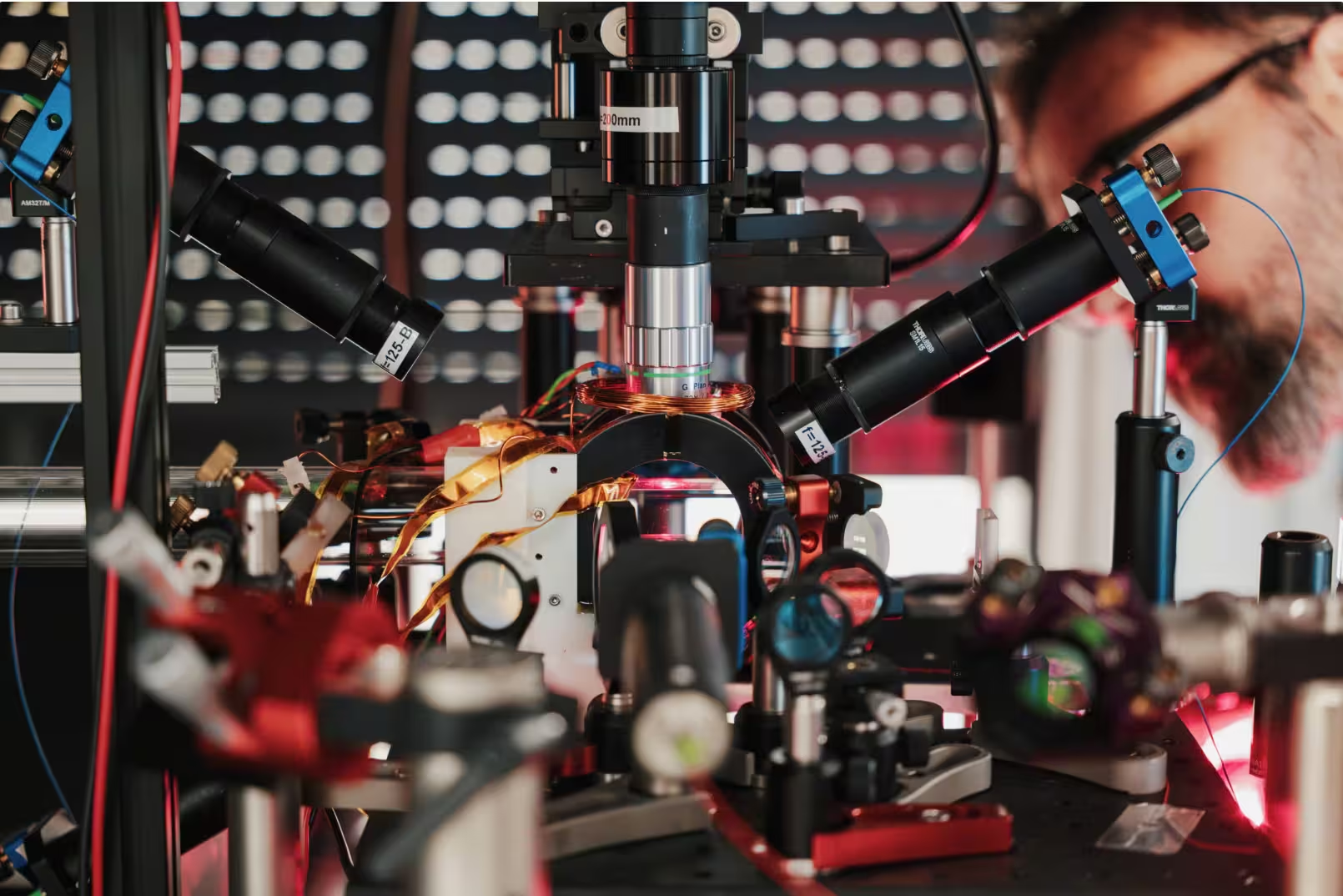
To investigate this, the Birmingham team utilized a Bose-Einstein condensate, where atoms cool to temperatures mere billionths of a degree above absolute zero, forcing them to behave as a single, coherent quantum entity. Using a series of precisely tuned lasers, the researchers trapped these atoms and introduced a 675-nanometer barrier, effectively splitting the cloud into two distinct zones: an observed “bright” region and an unobserved “dark” region.
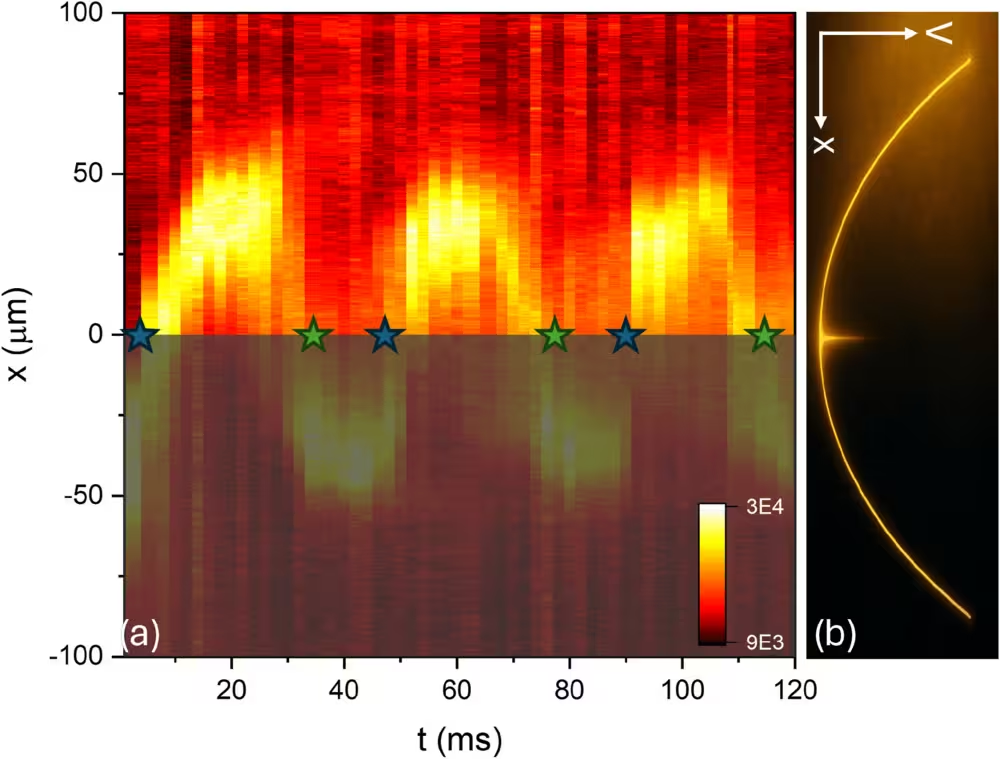
As the atoms oscillated and crossed this barrier, the bright region underwent cycles of expansion and contraction, mirroring the hypothetical expansion and collapse of a larger cosmos. “By tracking the entropy exchange between these regions, we established an ’entropic time’ variable,” explains the research team. This measure allowed the system to order its own sequence of events, functioning as an internal clock derived entirely from the system’s own changing state.
A New Way to Measure the Flow of Events
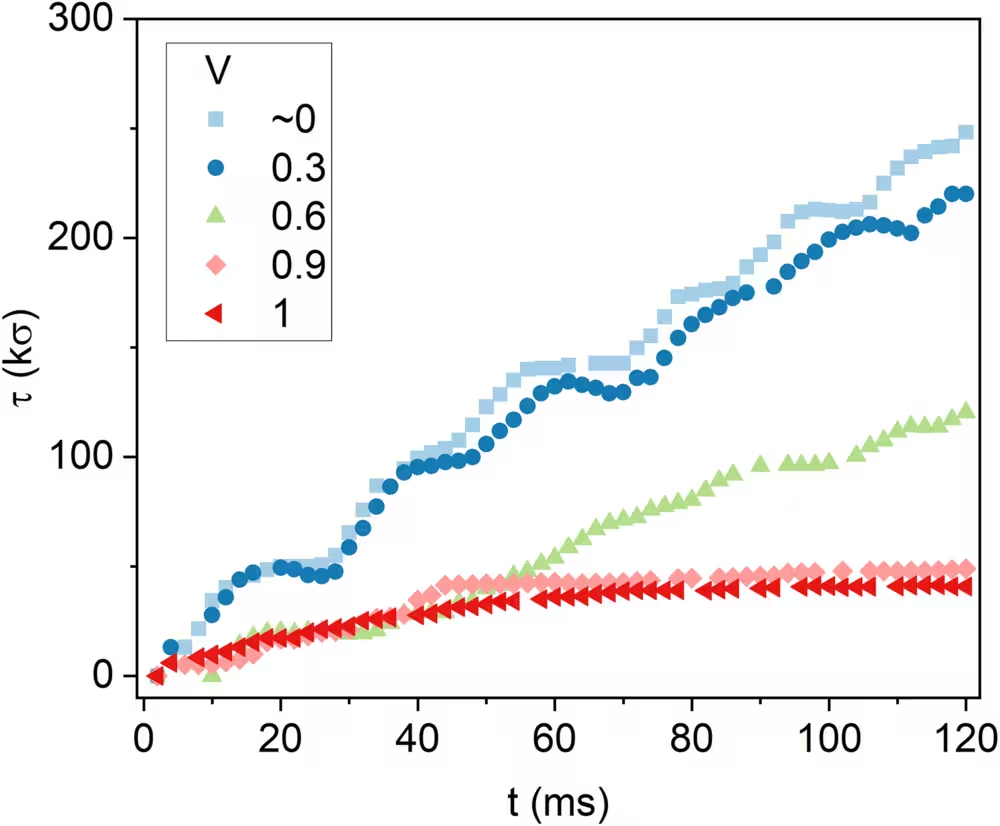
The researchers tracked the cloud over 120 milliseconds, collecting high-resolution data at 2-millisecond intervals. When they compared this internally generated entropic time to their conventional laboratory clocks, they found a remarkable correlation. The entropic variable effectively reconstructed the sequence of events, providing a consistent “arrow of time” for the system as it fluctuated.
Crucially, the experiment demonstrates that while internal time can successfully organize dynamics, it is not universal. When the entropy exchange between the bright and dark regions was limited by high barriers, the entropic clock slowed or even stalled. This indicates that such internal timekeeping is dependent on the specific thermodynamic activity within the system, rather than being an absolute, ticking background force.
Limitations and Future Implications
While the study provides a compelling demonstration of emergent timing, the researchers caution against over-interpreting the results. This miniature universe is a simplified model, not a complete recreation of our own complex cosmos. It does not prove that time is “unreal” on a universal scale, nor does it address the gravitational singularities found in large-scale astrophysics.
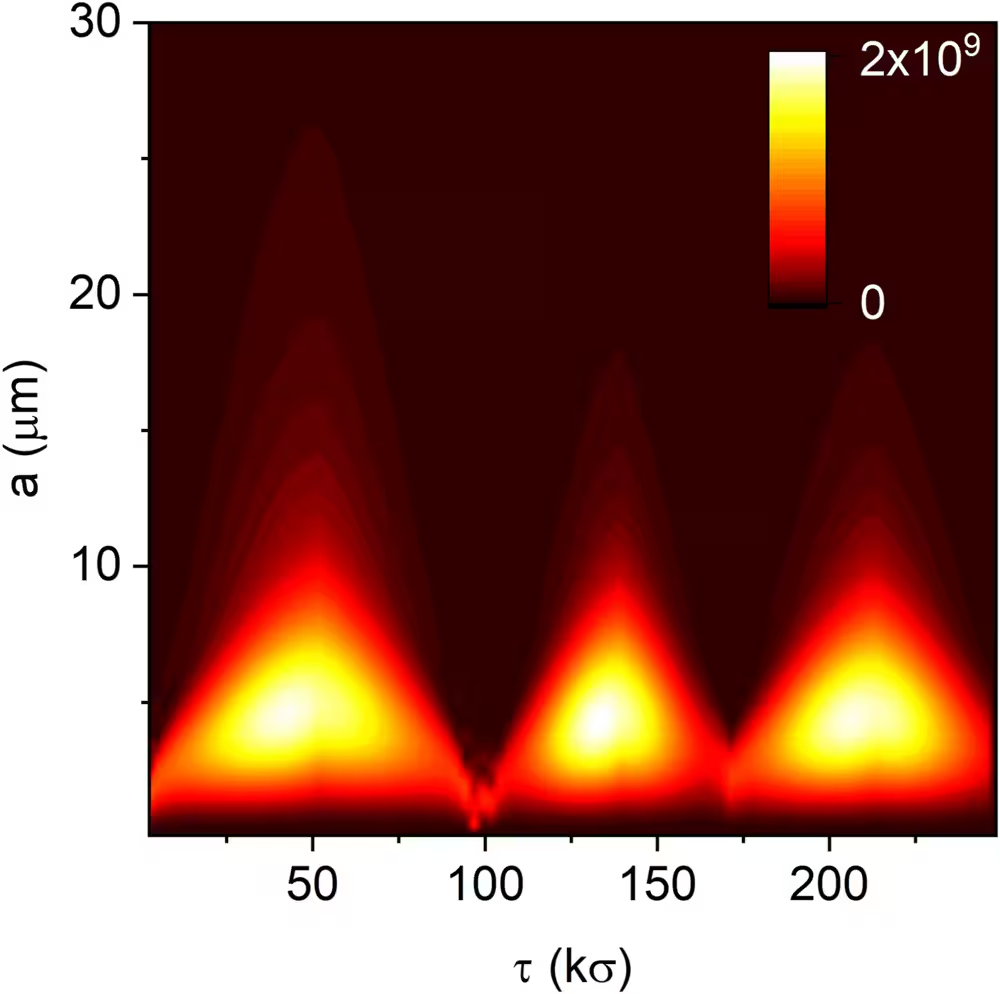
However, the successful derivation of an effective Schrödinger equation based on entropic time shows that this approach has significant predictive power. It opens a new path for quantum simulation, allowing physicists to use controllable, ultra-cold systems to test theoretical frameworks that are otherwise impossible to measure. Future research will likely focus on more complex interactions, potentially simulating “bouncing” universes or even analogue black holes to see if these emergent timing mechanisms hold up under increasingly rigorous conditions.
This article has been fact checked for accuracy, with information verified against reputable sources. Learn more about us and our editorial process.
Last reviewed on .
Article history
- Latest version
Cite this page:
- Posted by Aisha Ahmed