Tianwen-2 Sends First Close-Up of Earth’s Quasi-Satellite Asteroid Kamoʻoalewa
New close‑up of asteroid Kamoʻoalewa shows its unique shape as scientists plan detailed studies and future sample missions to uncover its origins.
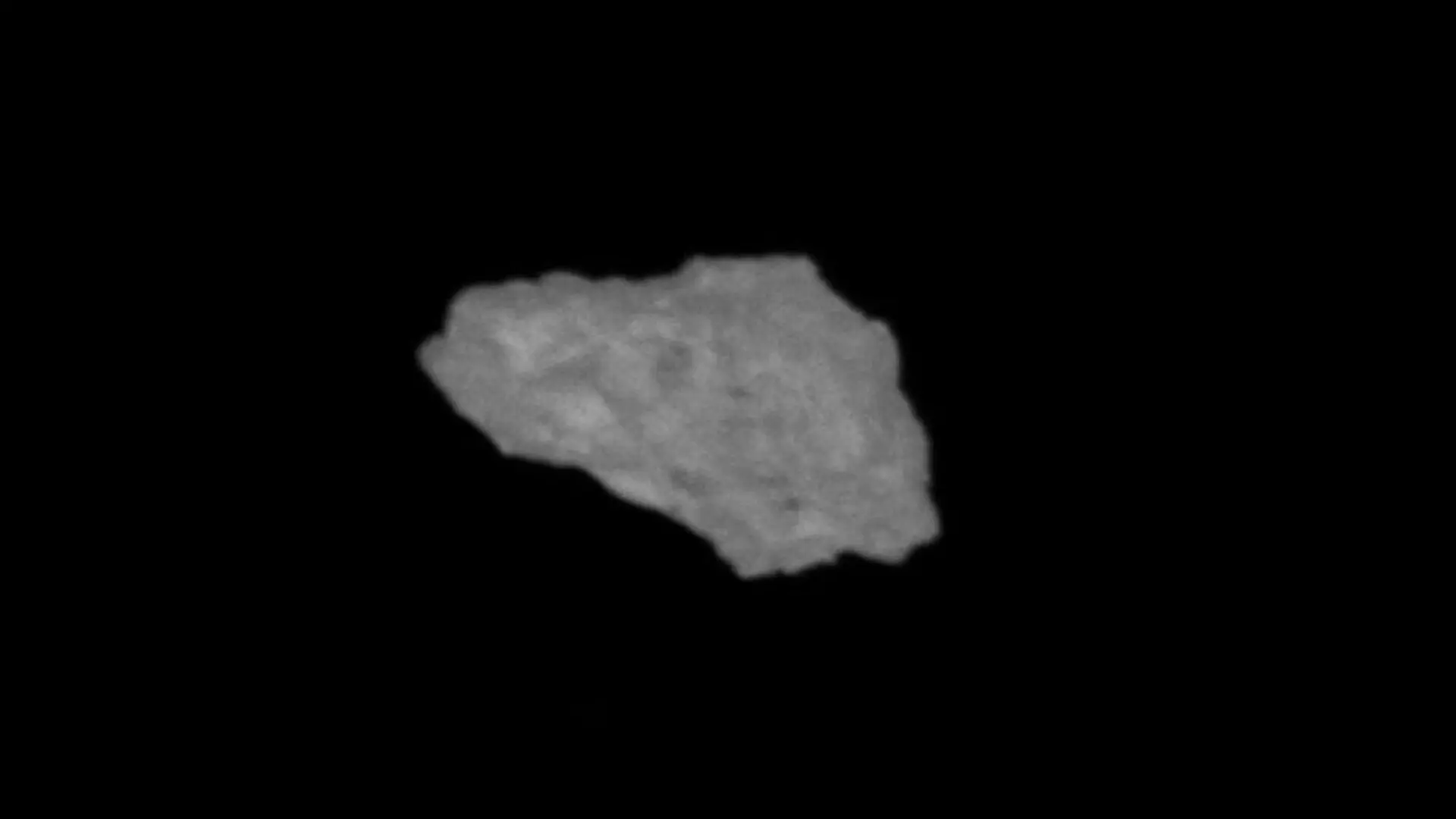
China’s Tianwen‑2 probe has snapped the inaugural close‑up photograph of Kamoʻoalewa, a diminutive asteroid that follows a rare orbital pattern alongside Earth. After more than a year traveling through interplanetary space, the spacecraft reached the target on 2 July 2026, opening a new chapter in the exploration of one of Earth’s few identified quasi‑satellites.
Launched by the China National Space Administration (CNSA) on 29 May 2025, Tianwen‑2 is tasked with conducting an in‑depth study of the asteroid and ferrying back fragments to the planet. The data gathered are expected to shed light on the object’s birth, makeup and the dynamical path that keeps it near our world.
Chinese Probe Moves to Within 20 km of Rare Near‑Earth Asteroid
Covering roughly one billion kilometres, Tianwen‑2 first identified Kamoʻoalewa optically on 6 June 2026, according to CNSA statements. By 19 June the spacecraft had closed to about 2 000 kilometres, and on 2 July it settled at an estimated distance of 20 kilometres, enabling the capture of the first high‑resolution image of the body that previously was only seen through distant telescopes.
The object, also catalogued as asteroid 2016 HO3, does not orbit Earth directly; its primary trajectory circles the Sun. Its classification as a quasi‑satellite stems from its tendency to linger near Earth while maintaining an independent solar orbit, completing a looping circuit roughly every 45 years.
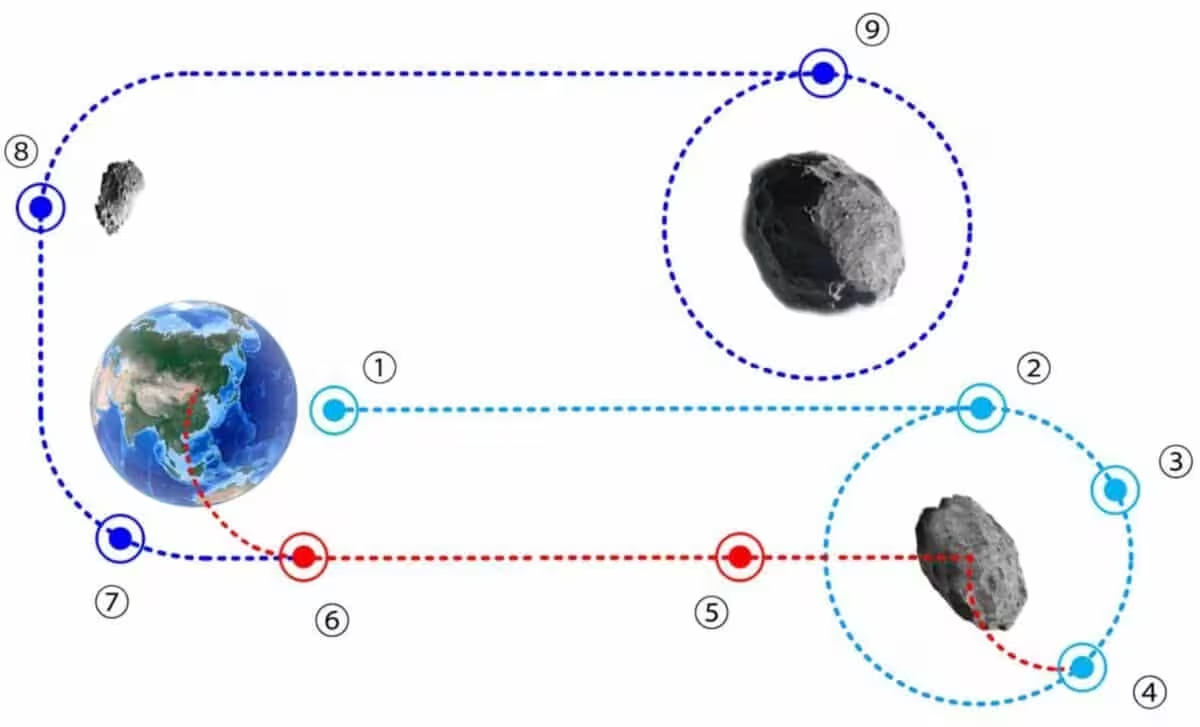
A January paper in Space Science Reviews highlighted Kamoʻoalewa as an exceptionally uncommon Earth co‑orbital. Researchers led by Rongqiao Zhang at the Lunar Exploration and Space Engineering Center in Beijing described the asteroid as a promising laboratory for probing the origins and orbital evolution of Earth’s quasi‑satellites.
Classified within the Apollo group of near‑Earth objects, Kamoʻoalewa is estimated to measure between 40 and 100 metres across, potentially making it the smallest asteroid ever visited by a crewed mission.
Mission Plans to Return Asteroid Material for Laboratory Study
While stationed near Kamoʻoalewa, Tianwen‑2 will conduct a suite of scientific measurements and attempt to harvest surface samples for transport back to Earth. Investigators aim to resolve questions about the asteroid’s internal makeup—whether it is a loosely bound rubble pile or a more consolidated rock.
The team also hopes to detect traces of water and to characterize the mineralogy of the asteroid’s crust. Such findings could illuminate how the object arrived at its current orbit and whether the solar wind has altered its surface over time.
Zhang’s earlier analysis underscored the significance of Kamoʻoalewa’s atypical trajectory, ambiguous provenance and poorly understood physical traits, arguing that the body offers a unique window onto Earth’s small co‑orbital population.
Another lingering hypothesis suggests that Kamoʻoalewa might contain material derived from the Moon. Ground‑based telescopic data have hinted at this possibility, but only direct analysis of returned samples can confirm or refute the claim.
Following a roughly nine‑month stay orbiting the asteroid, Tianwen‑2 is slated to head toward a secondary objective: the main‑belt comet 311P. Prior to venturing deeper into the solar system, the probe will deliver its asteroid payload during an Earth flyby.
Comet 311P, located beyond Mars, has attracted attention for its distinctive six‑pronged dust tail, a feature that aligns with the spacecraft’s planned trajectory for its extended mission phase.
Studying bodies like Kamoʻoalewa and 311P provides scientists with tangible samples that preserve clues about the solar system’s formative epochs. The insights expected from Tianwen‑2 are poised to enrich our understanding of Earth’s rare orbital companion and the broader population of small solar system objects.
This article has been fact checked for accuracy, with information verified against reputable sources. Learn more about us and our editorial process.
Last reviewed on .
Article history
- Latest version
Reference(s)
- Zhang, Rongqiao., et al. “Tianwen-2 Mission of China’s Planetary Exploration Program.” Space Science Reviews, vol. 222, no. 1, January 19, 2026 Springer Science and Business Media LLC, doi: 10.1007/s11214-026-01268-9. <https://link.springer.com/article/10.1007/s11214-026-01268-9>.
Cite this page:
- Posted by Aisha Ahmed