DeepMind AI Forecasts Category‑5 Hurricanes Three Days Early, Boosting Disaster Preparedness
DeepMind’s new weather AI can forecast hurricanes a full day ahead, giving vulnerable communities vital extra warning time.
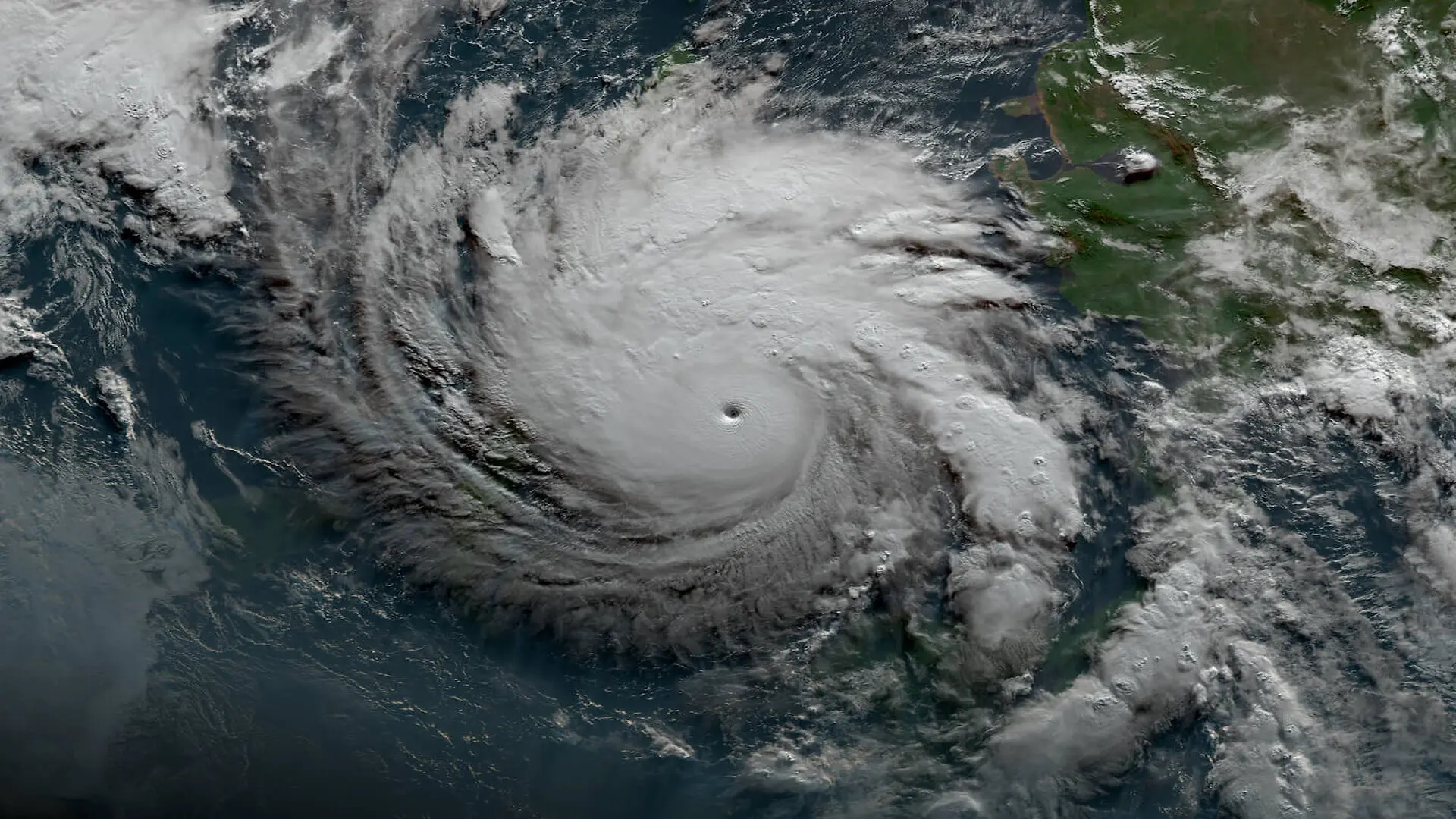
For residents caught in a storm’s path, every additional hour can be critical.
In 2025, Hurricane Melissa struck Jamaica as the most powerful cyclone ever recorded on the island. The storm’s rapid escalation surprised meteorologists, but an early alert from WeatherNext – an artificial‑intelligence system created by Google DeepMind – gave authorities a crucial edge. Working alongside the National Hurricane Center, the model forecast Melissa’s sudden intensification with essentially full confidence three days before landfall, marking the first successful prediction of a low‑wind storm evolving into a Category 5 hurricane.
When it comes to tropical cyclones, each extra hour of warning can mean the difference between safety and disaster. These systems can change course or strength in minutes, turning a benign disturbance into a devastating force. Extending forecast horizons therefore provides communities with vital time to mobilize resources, issue evacuations, and protect lives.
Predicting such chaotic phenomena is notoriously difficult. Small variations in atmospheric conditions can dramatically shift a storm’s trajectory, limiting the reliability of longer‑range forecasts. Conventional methods rely on physics‑driven simulations that typically project only two days ahead. DeepMind’s approach, however, stretches that window to three days without compromising precision.
Beyond extreme events, WeatherNext also delivers 15‑day weather outlooks more quickly and with lower energy consumption than traditional models. Rather than supplanting existing tools, the AI system complements them, supplying forecasters with richer data for critical decision‑making.
“By merging cutting‑edge machine learning with the indispensable expertise of human forecasters, we aim to build a collaborative forecasting ecosystem that safeguards lives and helps societies adapt to a changing climate,” the DeepMind team explained in the same post.
Reinventing the Forecasting Toolbox
Conventional weather prediction relies on numerical models that simulate atmospheric physics—temperature, pressure, humidity, wind, and countless other variables—to estimate future states. Supercomputers process these equations, but the calculations are time‑intensive, expensive, and often inflexible. Even minor deviations in initial conditions can lead to significant errors, especially for complex systems like cyclones.
Five years ago, DeepMind introduced an AI model that outperformed physics‑based methods for short‑term (90‑minute) forecasts. Subsequent projects such as GraphCast and GenCast demonstrated that machine learning could reliably predict weather up to ten days ahead, handling vast datasets while reducing computational load. These systems partition the globe into fine‑grained pixels and learn how conditions in one region influence neighboring areas.
Extreme weather, however, poses a distinct challenge. While abundant data exist for routine patterns, cyclones are comparatively rare and highly variable. Introducing random perturbations to generate multiple scenarios often distorts the spatial relationships essential for realistic simulations.
WeatherNext addresses this by embedding uncertainty directly within the AI architecture, allowing the model to produce probabilistic forecasts rather than a single deterministic outcome.
Uniting Global Scale with Local Detail
Traditional forecasting faces a trade‑off: coarse‑resolution global models excel at tracing a storm’s broad path, guided by large‑scale atmospheric flows, yet they miss the fine‑scale turbulence that drives rapid intensification. Conversely, high‑resolution regional models capture intensity changes but lack the broader context needed for accurate trajectory forecasts.
WeatherNext reconciles these opposing needs. Trained on decades of worldwide climate data and a curated set of nearly 5,000 historic cyclones, the AI runs thousands of “what‑if” simulations for each storm, assigning probabilities and confidence levels to each outcome. This ensemble approach enables the system to forecast a multitude of plausible scenarios.
Generating a 15‑day outlook takes under a minute on a single AI chip, and the model matches the accuracy of leading physics‑based systems such as GenCast and the NOAA Hurricane Analysis and Forecast System when predicting maximum wind speeds and tracks three days ahead—extending the conventional two‑day horizon.
DeepMind is not alone in this race. Companies like Huawei and Nvidia are also developing faster, more precise AI‑driven forecasting tools. The consensus among scientists is that machine learning can accelerate predictions and lower costs, though physics‑based models remain essential for interpretability and discovery of novel atmospheric patterns.
Future efforts may link weather forecasts with ancillary hazard models—such as storm‑surge or tsunami simulations—to evaluate compound risks. Integrating these tools could give emergency responders a more comprehensive view of potential threats, from coastal flooding during a cyclone to earthquake‑induced tsunamis coinciding with severe weather.
Evan Thompson of the Meteorological Service Jamaica observed the practical impact of WeatherNext during Hurricane Melissa’s approach.
“Early evacuation and improved preparation directly reduced harm to our citizens,” he told DeepMind in a statement. “These advances genuinely save lives and protect livelihoods.”
This article has been fact checked for accuracy, with information verified against reputable sources. Learn more about us and our editorial process.
Last reviewed on .
Article history
- Latest version
Reference(s)
- <https://www.nhc.noaa.gov/>.
- team, WeatherNext. “How WeatherNext helped the National Hurricane Center better predict Hurricane Melissa’s historic landfall in Jamaica.”, May 19, 2026 Google DeepMind <https://deepmind.google/blog/how-weathernext-helped-the-national-hurricane-center-better-predict-hurricane-melissas-historic-landfall-in-jamaica/>.
- “DeepMind AI weather forecaster beats world-class system.”, December 4, 2024 <https://www.nature.com/articles/d41586-024-03957-3>.
- Kiest, Kristina. “The Hurricane Analysis and Forecast System (HAFS).”, August 27, 2022 NOAA Weather Program Office <https://wpo.noaa.gov/the-hurricane-analysis-and-forecast-system-hafs/>.
- Bi, Kaifeng. “Accurate medium-range global weather forecasting with 3D neural networks - Nature.”, vol. 619, no. 7970, pp. 533-538. Nature, doi: 10.1038/s41586-023-06185-3. <https://www.nature.com/articles/s41586-023-06185-3>.
- “NVIDIA Earth 2 Platform.” NVIDIA <https://www.nvidia.com/en-us/high-performance-computing/earth-2/>.
Cite this page:
- Posted by Vikram Desai