2,000-Year-Old Scent Discovered Inside Pompeii Incense Burners
Scientists uncover a 2,000‑year‑old trace of life in Pompeii, offering a rare glimpse into ancient biology preserved for millennia.
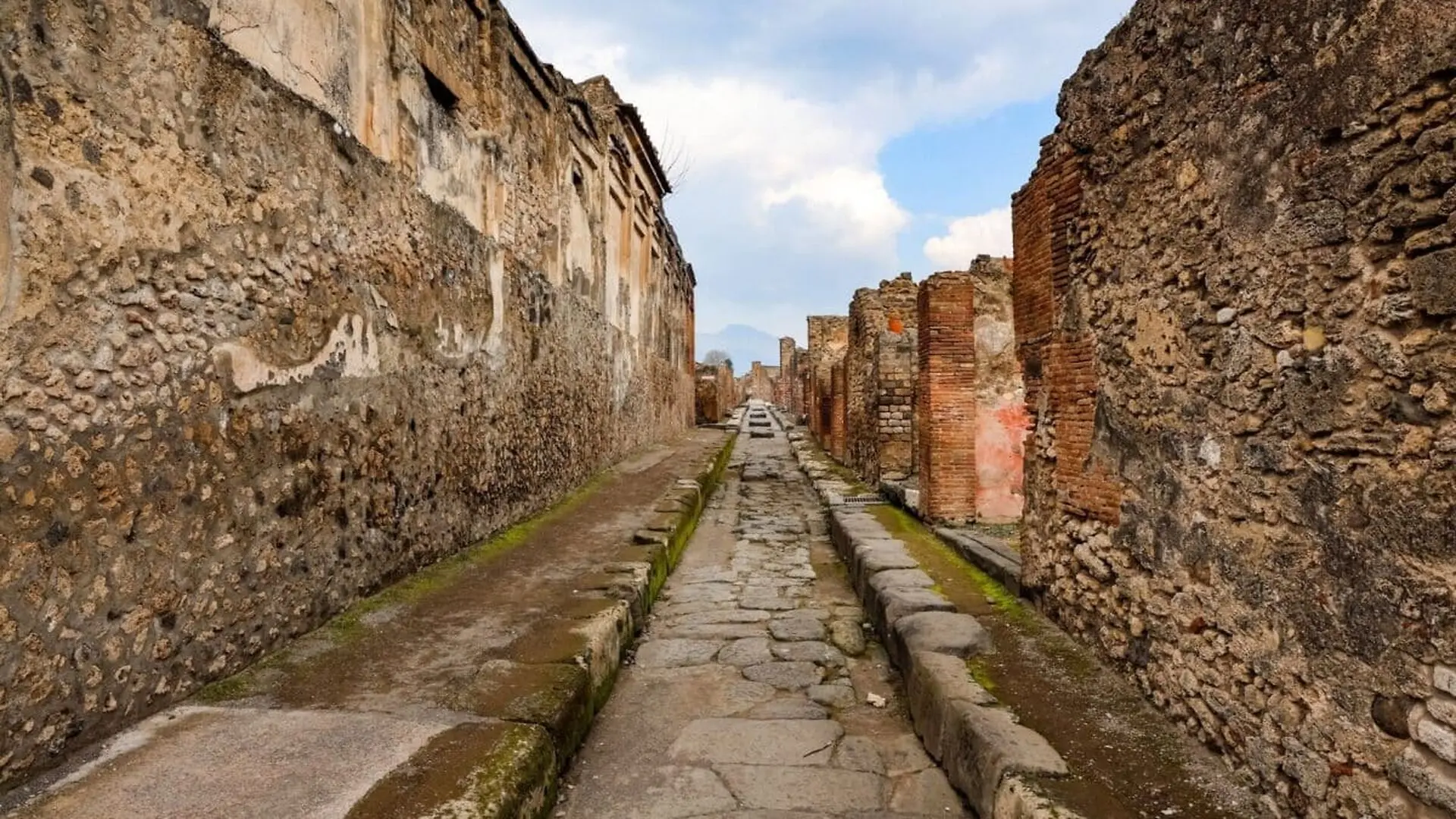
For almost two millennia, the aromas that once filled the homes of Pompeii’s residents have remained invisible. Recent laboratory work on ancient ash deposits is now allowing scientists to recover a fragment of that vanished scent world. By examining two Roman incense burners, researchers have identified chemical and microscopic remnants that illuminate the olfactory atmosphere of everyday religious practice before Mount Vesuvius covered the city in AD 79.
Inside the terracotta vessels, minute plant particles and organic residues lingered, some derived from local vegetation, others pointing to substances that traveled great distances before arriving in Italy. These findings are helping scholars reconstruct a sensory experience that disappeared with the eruption, while also shedding light on the role of fragrance in Roman domestic rituals.
Roman Censers Yield Unexpected Chemical Traces
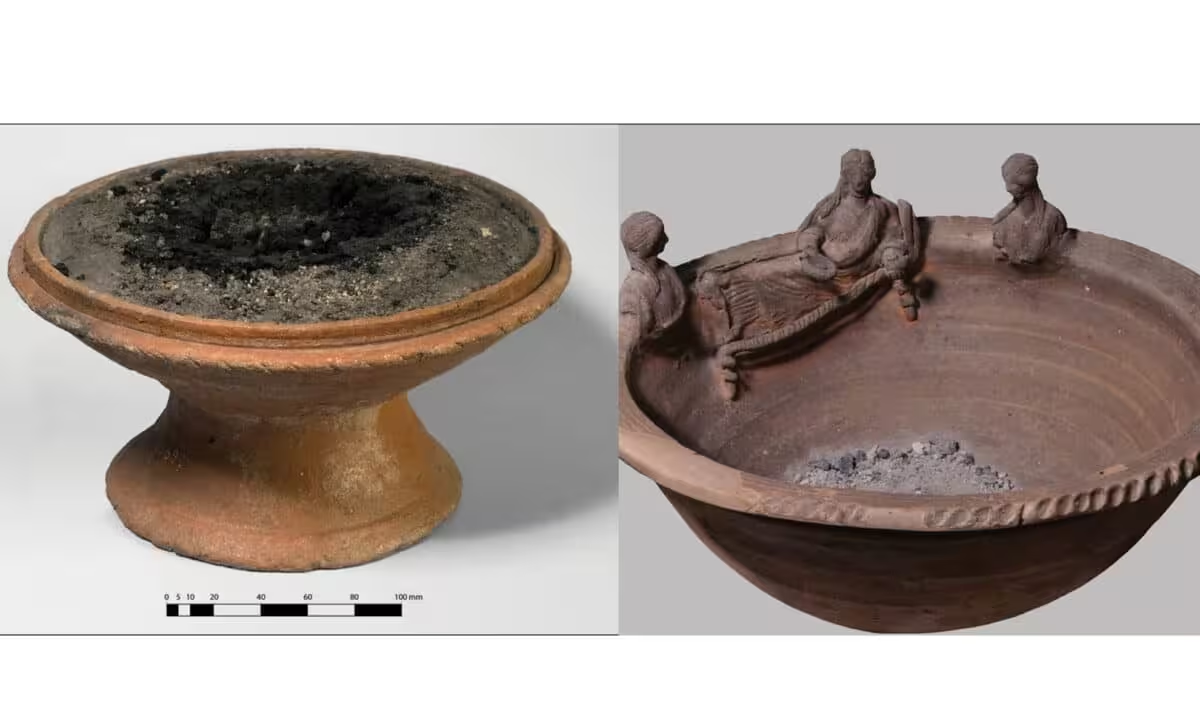
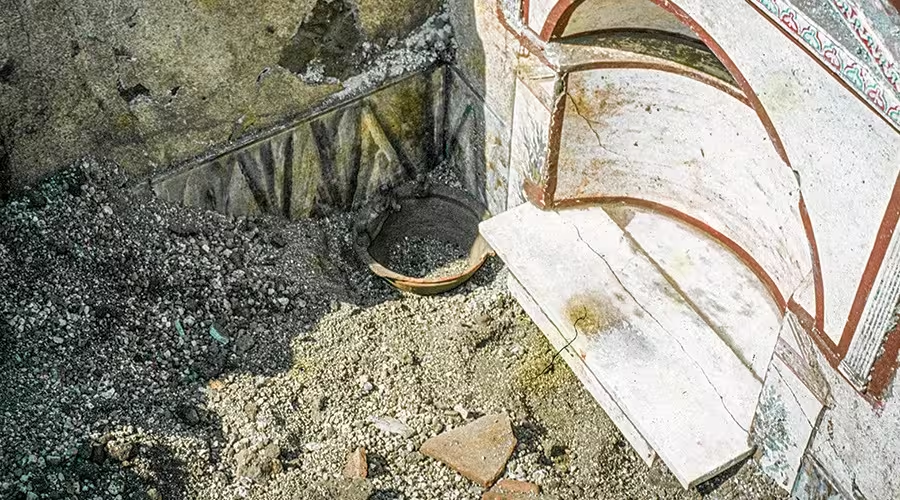
The investigation began with two small terracotta censers recovered decades ago—one excavated in the urban area of Pompeii, the other from a shrine at the nearby rural villa of Boscoreale. The Pompeian censer originated from a building that appears to have been converting into an inn at the moment of the disaster, whereas the Boscoreale example was found within a household altar surrounded by other cultic items.
In Roman belief, household deities called the Lares and Penates received offerings that often included incense. Classical writers describe the burning of fragrant plants alongside wine, fruit, flowers, and grain. The poet Propertius famously requested “soft costmary and lovely incense” in his verses. Until now, however, direct material evidence of the specific substances used in such rites has been scarce.
According to a study published in Antiquity, the research team extracted tiny samples from multiple zones of each censer and screened them for plant microremains. They also analyzed phytoliths—silica bodies that persist long after the original plant tissue decays—and employed chemical profiling to detect residues of resins, oils, and other organics.
A Blend of Local Plants and a Far‑Travelled Resin
The analyses revealed that the burners were not filled with a single type of incense. Instead, the residues point to a mixture of woody and herbaceous materials, likely including oak, laurel, grasses, and stone‑fruit relatives. Notably, no evidence of animal dung—a fuel used in some ancient contexts—was detected. Some of the botanical components may have served as fuel, while others were probably offered as fragrant dedications.
Many of the identified species grow naturally around Pompeii, echoing earlier discoveries of burned figs, pine nuts, and other local plants at nearby shrines. The most striking find, however, was a chemical signature consistent with an aromatic resin belonging to the same family as frankincense, most plausibly elemi. This resin would have arrived in Italy via the extensive trade routes that linked the Roman world with Arabia, tropical Africa, and Asia, often passing through Alexandria before reaching domestic markets.
The presence of imported elemi in a household censer provides the first direct archaeological proof that such exotic fragrance was burned during private worship in Pompeii.
Reconstructing the Aroma of Roman Home Worship
The censer that contained the exotic resin also showed possible traces of grape‑derived substances, which could represent wine or vinegar. While the researchers acknowledge that modern contamination cannot be ruled out entirely, such a finding would align with literary accounts of wine being poured during incense rituals.
When the evidence is combined, a vivid picture emerges: a Roman household altar enveloped in smoke from locally sourced wood and plants, infused with the richer scent of imported elemi, while wine was likely offered alongside the fragrant fumes.
Experts in sensory archaeology are increasingly turning to biomolecular data to recover aspects of ancient life that statues, architecture, and ceramics alone cannot convey. Although these results do not define the exact odor profile of every Pompeian street or home, they provide a concrete glimpse into the smellscape that surrounded intimate religious ceremonies.

This article has been fact checked for accuracy, with information verified against reputable sources. Learn more about us and our editorial process.
Last reviewed on .
Article history
- Latest version
Reference(s)
- Eber, Johannes., et al. “Ashes from Pompeii: incense burners, residue analyses and domestic cult practices.” Antiquity, vol. 100, no. 411, March 30, 2026, pp. 694-713. Antiquity Publications, doi: 10.15184/aqy.2026.10320. <https://doi.org/10.15184/aqy.2026.10320>.
Cite this page:
- Posted by Vikram Desai