Neanderthals Built 176,000-Year-Old Stone Rings Deep Inside French Cave
Deep in a hidden cave, scientists discovered an ancient structure that suggests Neanderthals may have been far more sophisticated than previously believed.
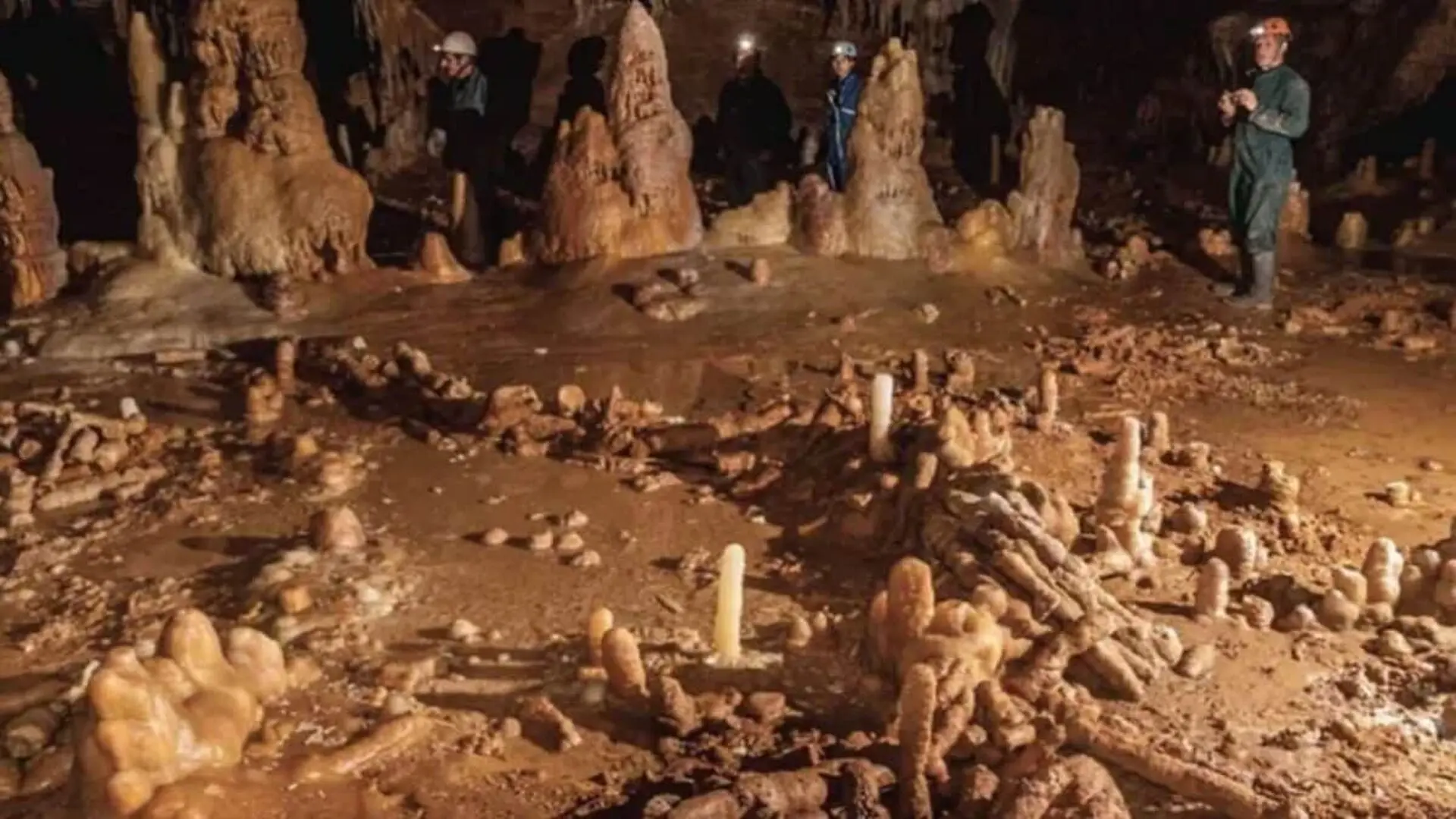
Deep beneath the darkness of Bruniquel Cave in southwestern France, archaeologists uncovered two concentric formations assembled from broken stalagmite pieces. Radiometric analysis places the constructions at roughly 176,500 years old, predating the arrival of anatomically modern humans in Europe and pointing squarely to Neanderthals as their creators.
The find upends long‑standing assumptions about Neanderthal cognition. Once dismissed as primitive relatives of Homo sapiens, these ancient architects demonstrate a capacity for planning, cooperation and symbolic behavior that rivals that of later modern humans.
Stone Circles Crafted in Darkness
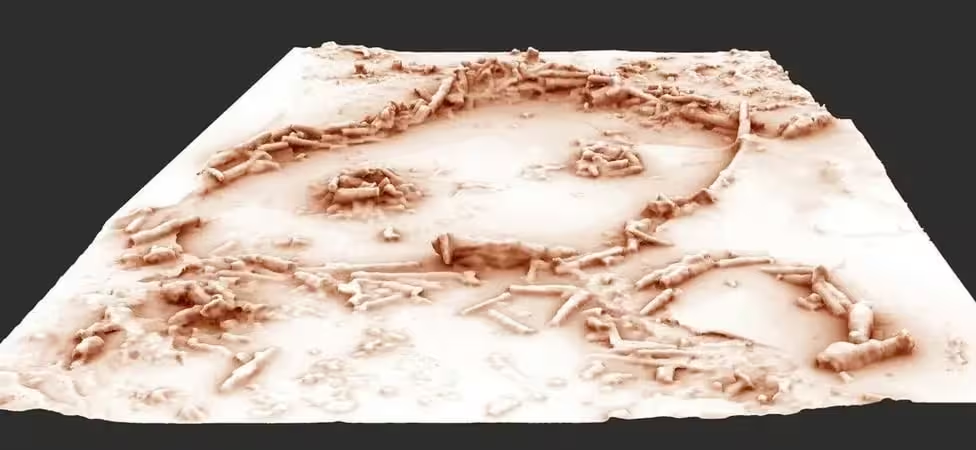
Both rings reside in the cave’s largest chamber and are built almost entirely from stalagmites that were deliberately detached from the floor. The larger circle spans approximately 6.7 × 4.5 m, while the smaller measures about 2.2 × 2.1 m. Together, the builders arranged close to 400 fragments, accumulating more than 112 m of calcite and weighing around 2.2 tons.
The fragments share a striking regularity, with most pieces about 30 cm long, indicating that the builders intentionally broke the stalagmites to a uniform size before arranging them. Many of the stones also bear scorch marks, their surfaces darkened or reddened, suggesting controlled exposure to fire whose purpose remains uncertain.
Reassessing the Timeline
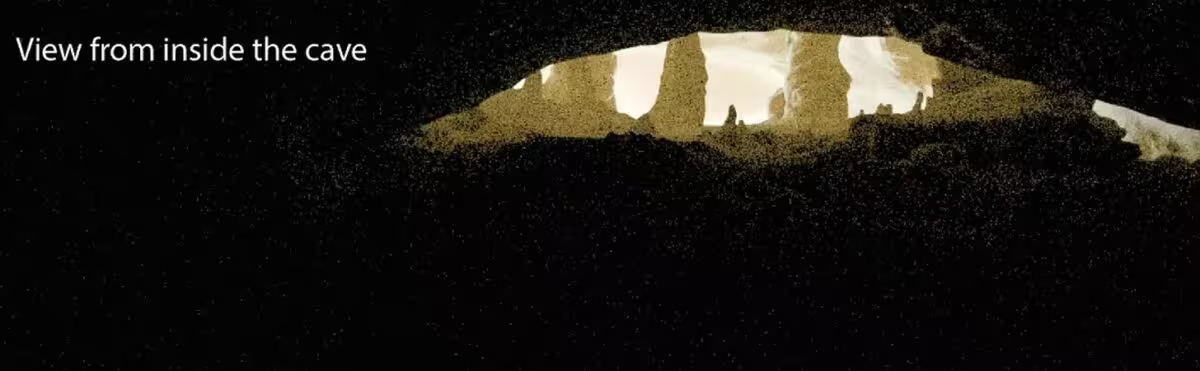
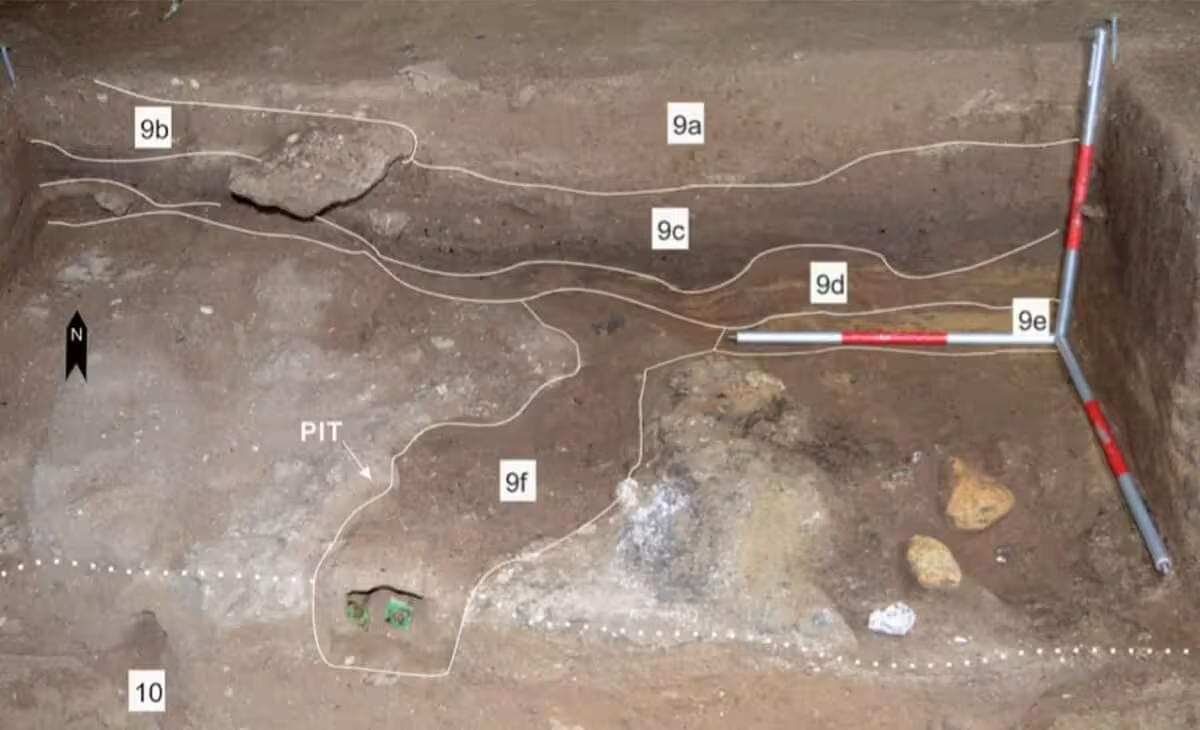
Initial investigations in the 1990s yielded a burnt bone fragment that implied an age of roughly 47,600 years, a timeframe that left room for modern humans to be involved. However, a 2016 study published in Nature applied uranium‑series dating directly to the calcite, pushing the age back to about 176,500 years. Because Homo sapiens had not yet entered Europe at that point, the researchers concluded that Neanderthals were the only plausible architects, as detailed in the accompanying ScienceDirect paper.
Possible Functions
The purpose of the stone circles remains a matter of debate. Some scholars propose that the structures served as shelter during a glacial episode, while others argue for a ritualistic or ceremonial role, perhaps an early form of a communal space. The sheer scale of the undertaking, however, underscores a level of social organization that exceeds previous expectations for Neanderthal groups.
“First, it reveals the appropriation of a deep karst space (including lighting) by a pre‑modern human species.” He added “Second, it concerns elaborate constructions that have never been reported before, made with hundreds of partially calibrated, broken stalagmites (speleofacts) that appear to have been deliberately moved and placed in their current locations, along with the presence of several intentionally heated zones.”
The Bruniquel rings add to a growing catalog of Neanderthal achievements, including painted stalagmites discovered in Spanish caves dating to about 65,000 years ago. Together, these sites suggest that Neanderthals possessed complex social structures and symbolic capacities far richer than once believed.
This article has been fact checked for accuracy, with information verified against reputable sources. Learn more about us and our editorial process.
Last reviewed on .
Article history
- Latest version
Reference(s)
- Callaway , Ewen. “Neanderthals built cave structures — and no one knows why - Nature.”, May 25, 2016 Nature <https://www.nature.com/articles/nature.2016.19975>.
- Génuite, K.., et al. “The evolution of the cave's entrance of Bruniquel and consequences for its accessibility by early Homo neanderthalensis.” Quaternary Science Reviews, vol. 377, April 1, 2026, pp. 109866 Elsevier BV, doi: 10.1016/j.quascirev.2026.109866. <https://www.sciencedirect.com/science/article/pii/S0277379126000752?via%3Dihub>.
Cite this page:
- Posted by Vikram Desai