Mass Grave of 120 Young Soldiers Unearthed in Austria Linked to Napoleonic Wars
A bone found by a girl in Braunau am Inn sparked the discovery of nine mass graves in Ranshofen, revealing at least 120 victims near Hitler’s birthplace.
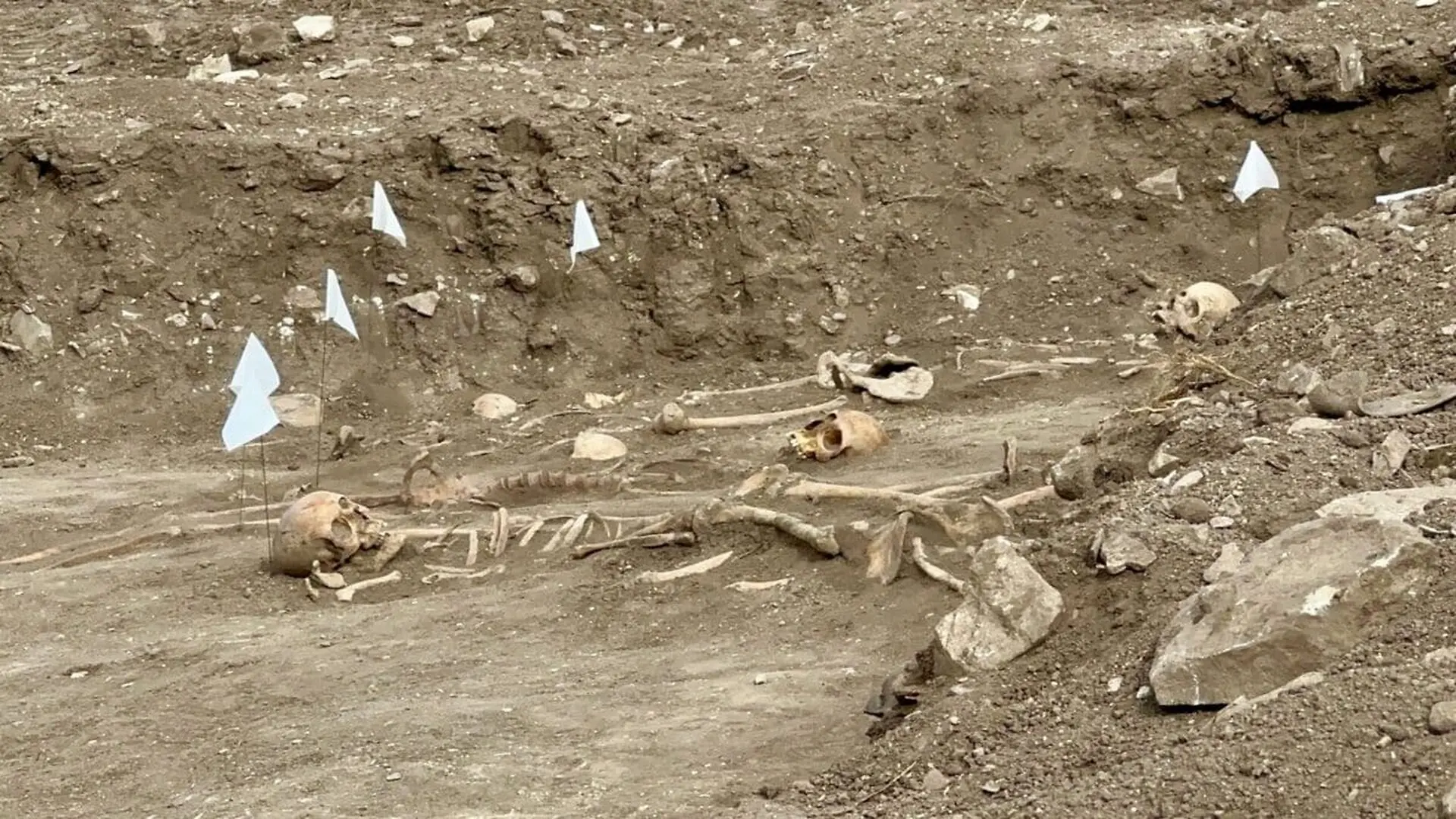
Archaeologists have uncovered nine burial pits containing the remains of at least 120 young men in the Austrian town of Braun am Inn, a site that predates the Nazi era by more than a century.
Mass Grave Discovery Expands Into Major Archaeological Project
The investigation began in March 2026 after a local resident reported an unusual bone fragment to police. Human remains were confirmed, prompting Austria’s Federal Monuments Office to launch a systematic excavation.
What initially seemed to be a single find quickly grew: investigators first identified six graves, then added three more, spreading across roughly 150 square metres, according to Euronews.
Preliminary anthropological analysis indicates that most of the skeletons belong to males aged 15 to 25. The bodies were interred in a haphazard manner—some face‑down, others on their sides, and a few laid head‑to‑foot—suggesting a rapid burial process.
No personal effects accompanied the remains, raising the possibility that the individuals were stripped before interment, though the exact reason for the absence of belongings remains unclear.
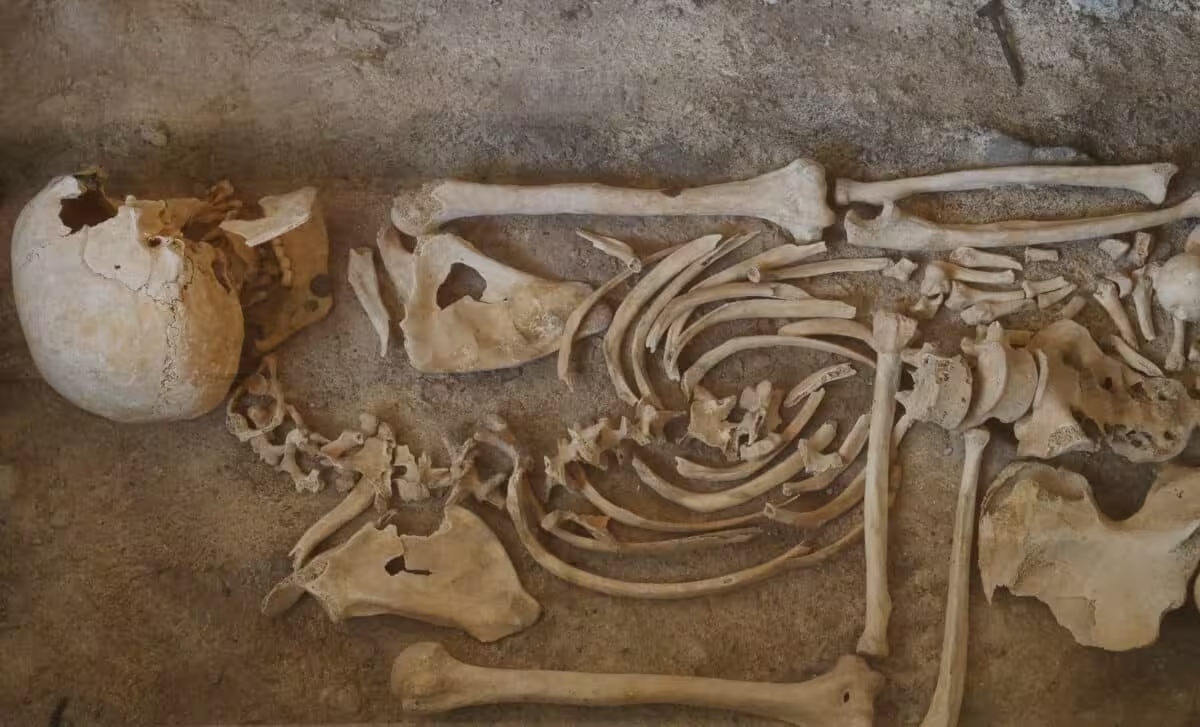
The skeletal remains show no signs of gunshot wounds. One individual suffered a lower‑leg amputation shortly before death, indicating medical intervention. Additional skeletons display broken ankle bones, which anthropologist Sheridan Strang suggests could stem from prolonged marching, though such injuries alone do not explain the cause of death.
With no clear fatal injuries, researchers are exploring alternative explanations, including disease or complications related to military service and treatment. No definitive cause of death has been established for any of the individuals.
Radiocarbon Dates Point to Napoleonic Conflicts
A radiocarbon sample from one skeleton returned a calibrated range of 1723–1813. Combined with the demographic profile and the hurried burial style, the results steer investigators toward the French Wars of 1792–1815, which encompassed the Napoleonic campaigns involving Austrian troops.
Historical records indicate that Braun am Inn was briefly occupied by French forces, and Napoleon is known to have visited the town in 1805. While no major battle is documented within the town itself, local accounts mention a skirmish near the burial site in that year.
Archaeologists are assessing whether the men may have died in a field hospital or military encampment before being placed in communal graves. Euronews reports that the site could represent one of the largest mass‑grave discoveries linked to the Napoleonic Wars in Central Europe.

The Napoleonic hypothesis remains provisional. Ongoing DNA and isotope analyses aim to reveal the youths’ geographic origins, dietary habits, and any additional clues about their demise.
Excavation work continues, and researchers have not excluded the possibility of uncovering more graves or skeletal material at the location. Importantly, the burial complex bears no connection to National Socialism, despite Braun am Inn’s notoriety as Adolf Hitler’s birthplace; the interments predate his 1889 birth by several decades.
In parallel, Austrian authorities have opened a police station in the house where Hitler was born, a move intended to deter extremist pilgrimages, according to the BBC.
The newly revealed mass graves add a previously unknown chapter to Braun am Inn’s military history, offering a glimpse into the lives and untimely deaths of a cohort of young men from an era long before the town’s more infamous associations.
This article has been fact checked for accuracy, with information verified against reputable sources. Learn more about us and our editorial process.
Last reviewed on .
Article history
- Latest version
Cite this page:
- Posted by Vikram Desai