500,000-Year-Old Elephant Bone Hammer Shows Early Humans Mastered Tool Repair
Researchers study a rare English bone fragment, revealing a lost chapter of early human innovation and tool use.

Archaeologists have identified a 500,000‑year‑old bone fragment from a large proboscidean that was deliberately fashioned into a hammer‑like implement. The artifact, recovered from the Boxgrove limestone deposits in West Sussex, pushes back the earliest known use of elephant bone for tool repair in Europe.
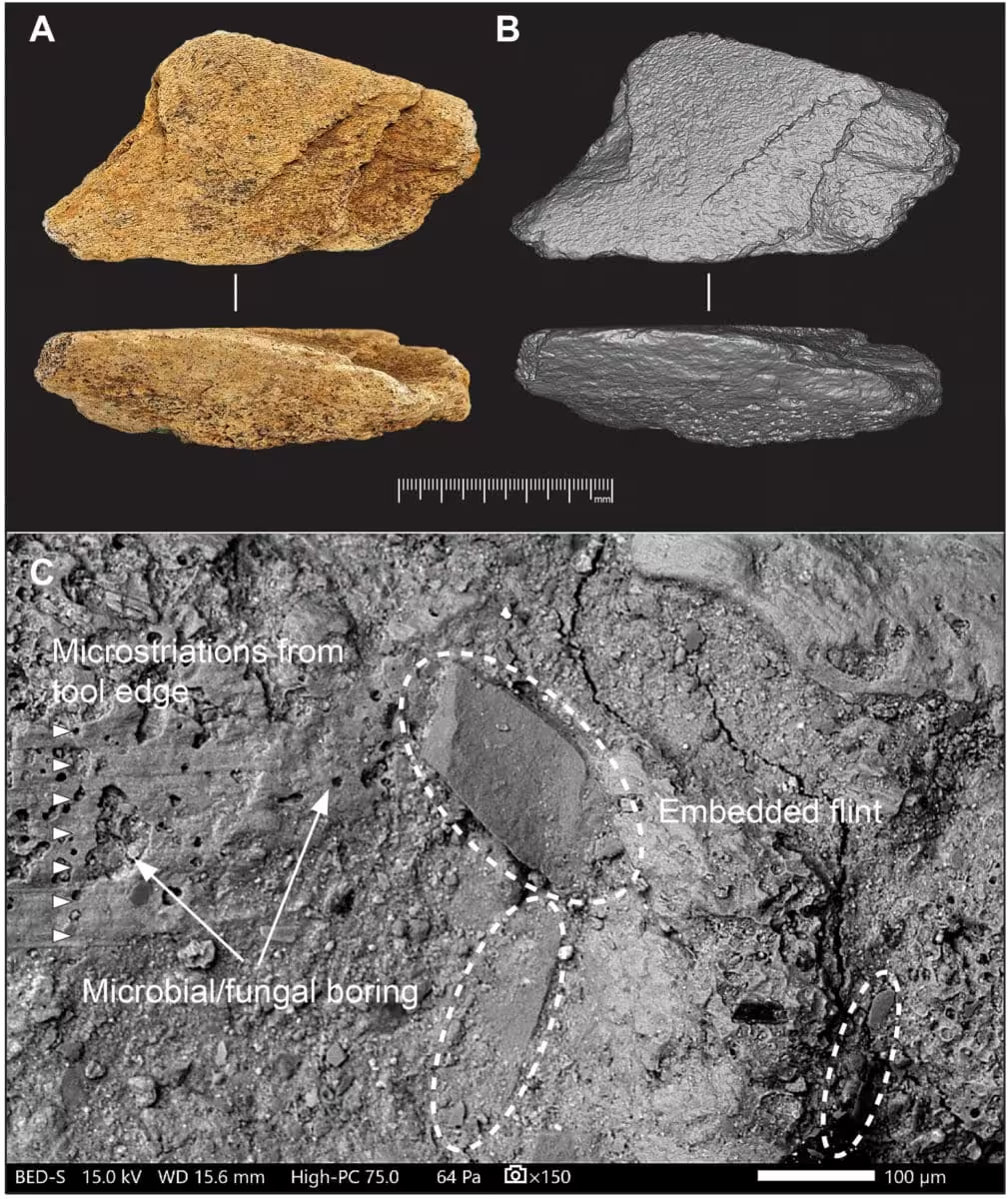
The piece measures roughly 11 cm in length, 6 cm in width and 3 cm in thickness, and bears a triangular outline. Microscopic examination shows intentional shaping of the cortical layer, indicating that ancient makers selected a specific part of the bone for its durability.
Elephant Bone Shaped into a Specialized Hammer
Researchers from University College London and the Natural History Museum determined that the fragment likely originated from an elephant or mammoth, although the exact species and skeletal element remain uncertain. Its dense, thick outer bone would have been ideal for delivering precise, low‑impact blows.
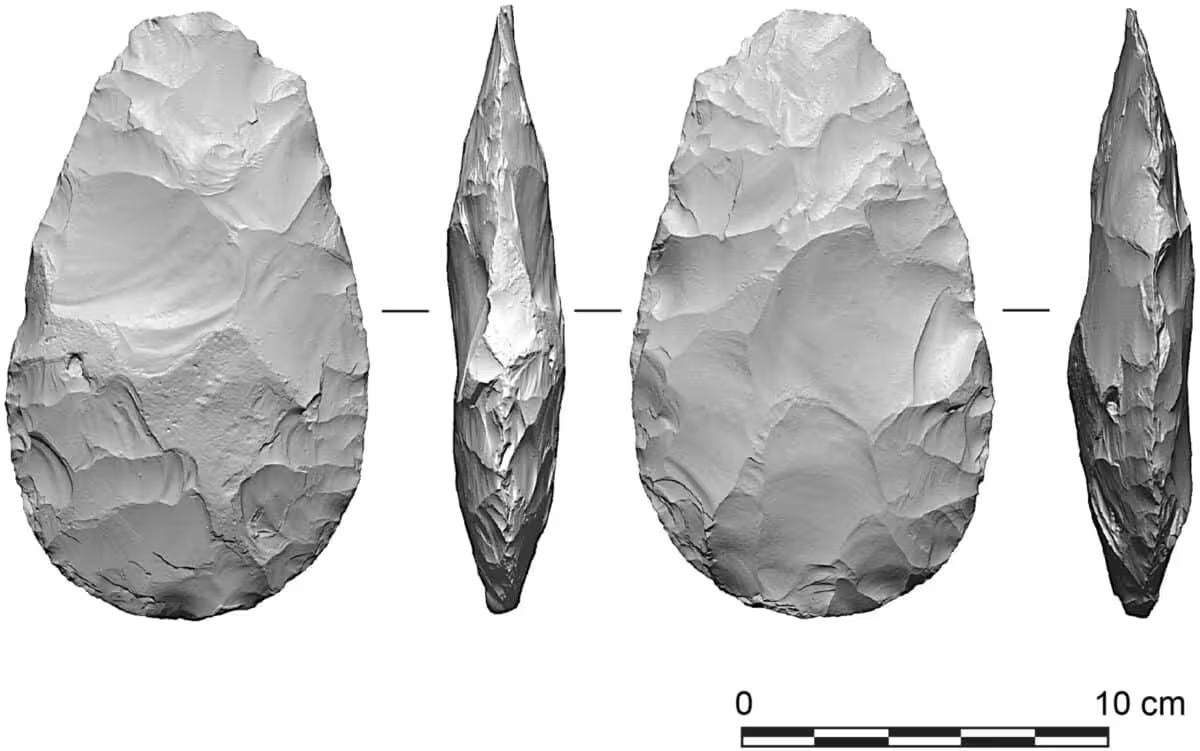
Rather than serving as a heavy‑handed striking tool, the bone hammer was employed to trim and reshape stone implements. By delivering controlled impacts, it could chip away at damaged edges of flint handaxes without fracturing the stone, effectively extending the lifespan of the cutting tools.
Microscopic Traces Uncover Its Function
High‑resolution 3‑D scans and electron‑microscope imaging revealed a series of tiny notches, impact scars, and embedded flint fragments on the bone surface. These wear patterns demonstrate repeated use of the object to strike and reshape stone tools.
Lead author Simon Parfitt described the find as “a testament to the ingenuity and resourcefulness of our ancient ancestors,” noting that the rarity of elephant bone in the region would have made such a tool a valuable asset.
“This remarkable discovery showcases the ingenuity and resourcefulness of our ancient ancestors. They possessed, not only a deep knowledge of the local materials around them, but also a sophisticated understanding of how to craft highly refined stone tools. Elephant bone would have been a rare but highly useful resource, and it’s likely this was a tool of considerable value.”
The researchers believe the bone hammer was repeatedly repurposed rather than discarded after a single use, underscoring a sophisticated approach to material economy.
Boxgrove Site Sheds Light on Early Toolmaking
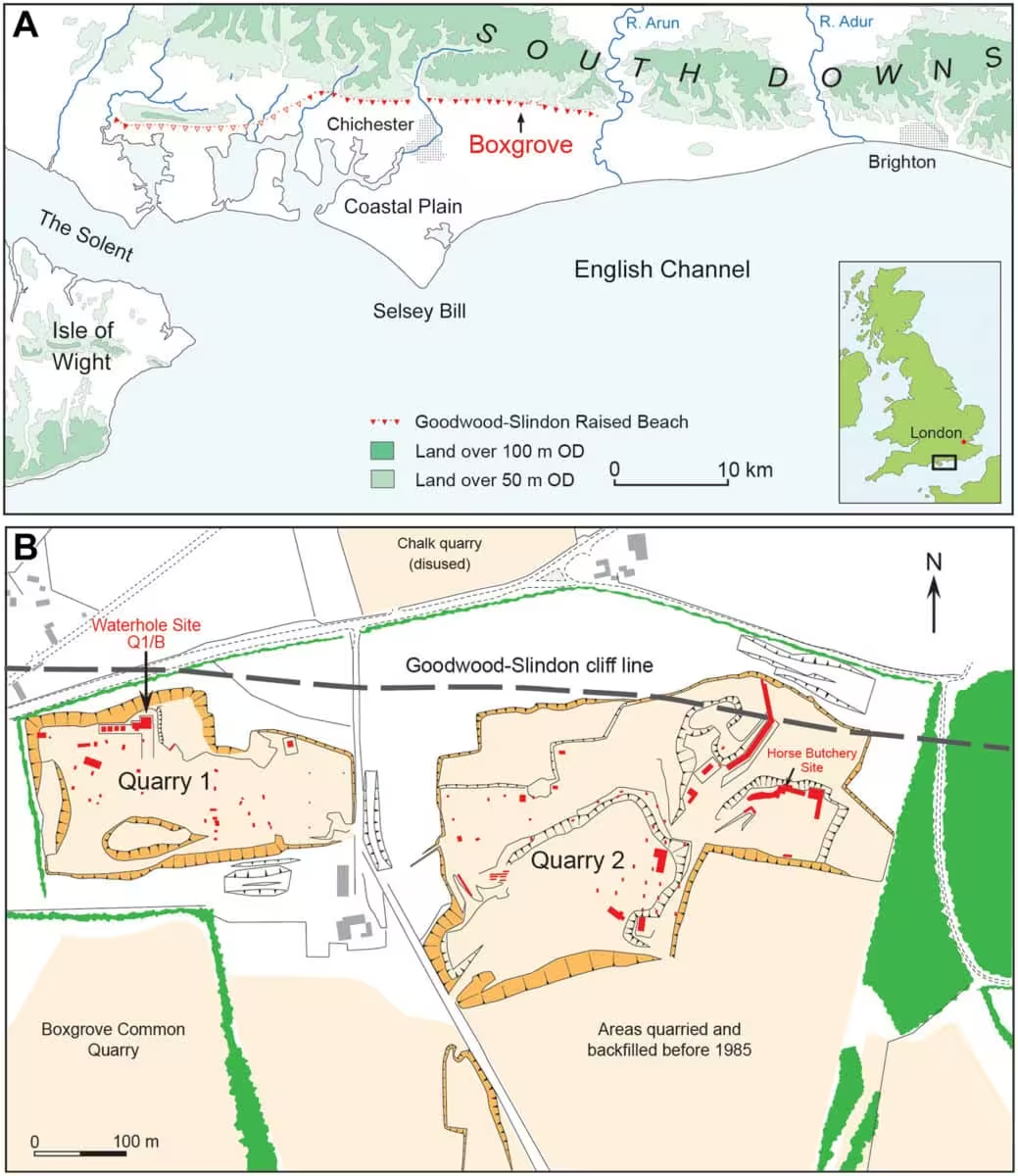
Boxgrove, situated near Chichester, has yielded a diverse assemblage of flint, bone, and antler artifacts. This discovery marks the first identification of an elephant‑bone implement among those finds.
While it remains unclear whether the proboscidean was hunted or scavenged, the freshness of the bone at the moment of shaping suggests that early humans actively selected and processed the material for tool production.
The study, published in Science Advances, notes that comparable bone tools from Africa’s Olduvai Gorge date to roughly 1.5 million years ago. Prior to this find, the oldest European examples dated to about 450,000 years, making the Boxgrove specimen the earliest known of its kind on the continent.
Dr. Silvia Bello of the Natural History Museum emphasized that the artifact “demonstrates an advanced level of complex thinking and abstract thought,” highlighting early humans’ ability to strategically select and repeatedly employ scarce resources.
This article has been fact checked for accuracy, with information verified against reputable sources. Learn more about us and our editorial process.
Last reviewed on .
Article history
- Latest version
Reference(s)
- “Discovery.” <https://profiles.ucl.ac.uk/1717-simon-parfitt/publications>.
- “Dr Silvia Bello | Natural History Museum.” <https://www.nhm.ac.uk/our-science/people/silvia-bello.html>.
Cite this page:
- Posted by Vikram Desai