Hidden Stone Chambers Unveiled In French Neolithic Mounds Using Electrical Resistivity Mapping
Archaeologists uncover mysterious underground anomalies in two Neolithic barrows at France’s Coeby cemetery, hinting at hidden stone burial structures.
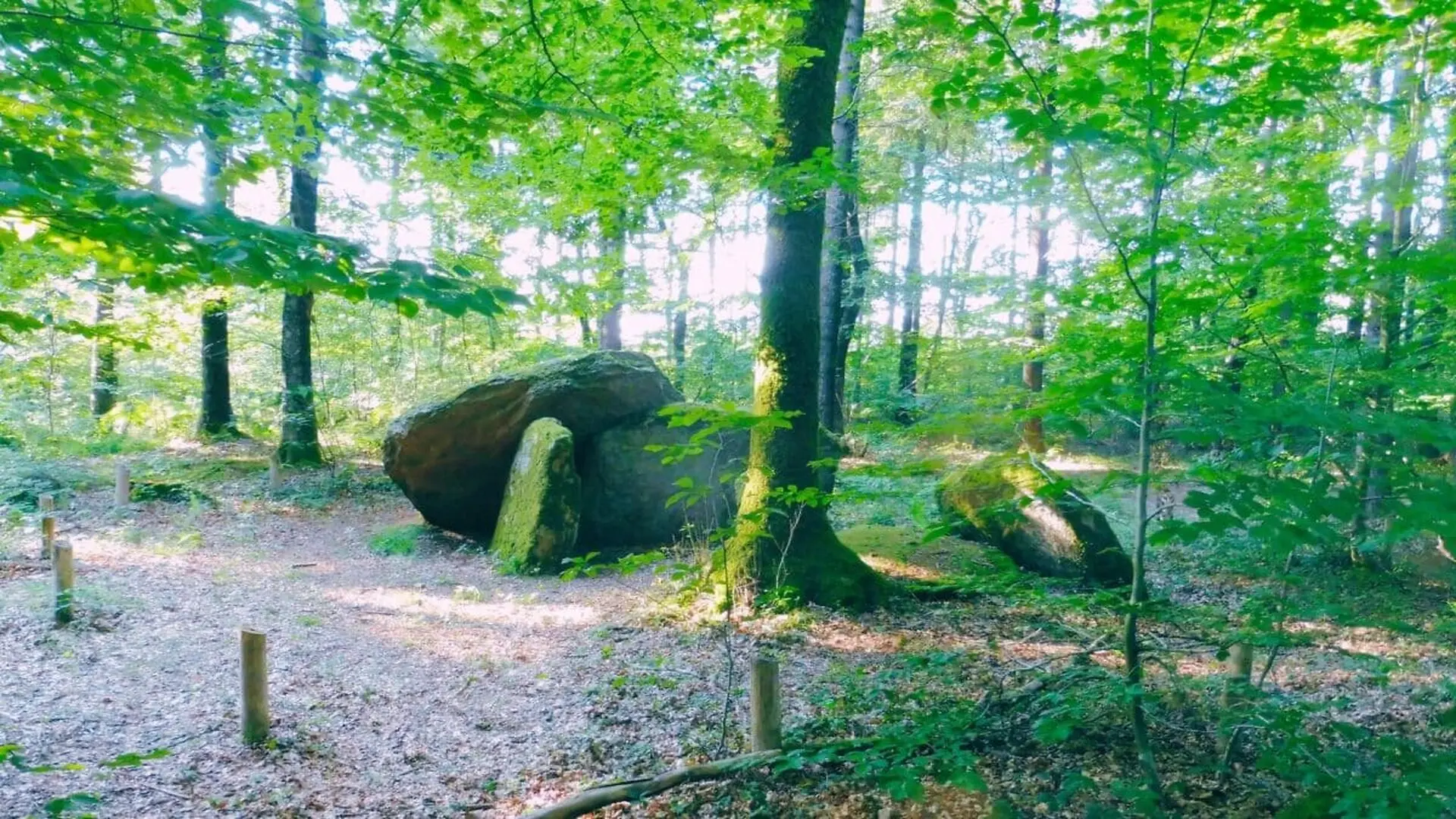
Neolithic long barrows that litter the western European landscape have long puzzled researchers, offering tantalising hints of ancient burial rituals while concealing their interiors beneath fragile mounds. Traditional excavation often risks damaging these delicate structures, prompting archaeologists to explore non‑invasive alternatives.
Non‑Destructive Survey of the Coëby Necropolis
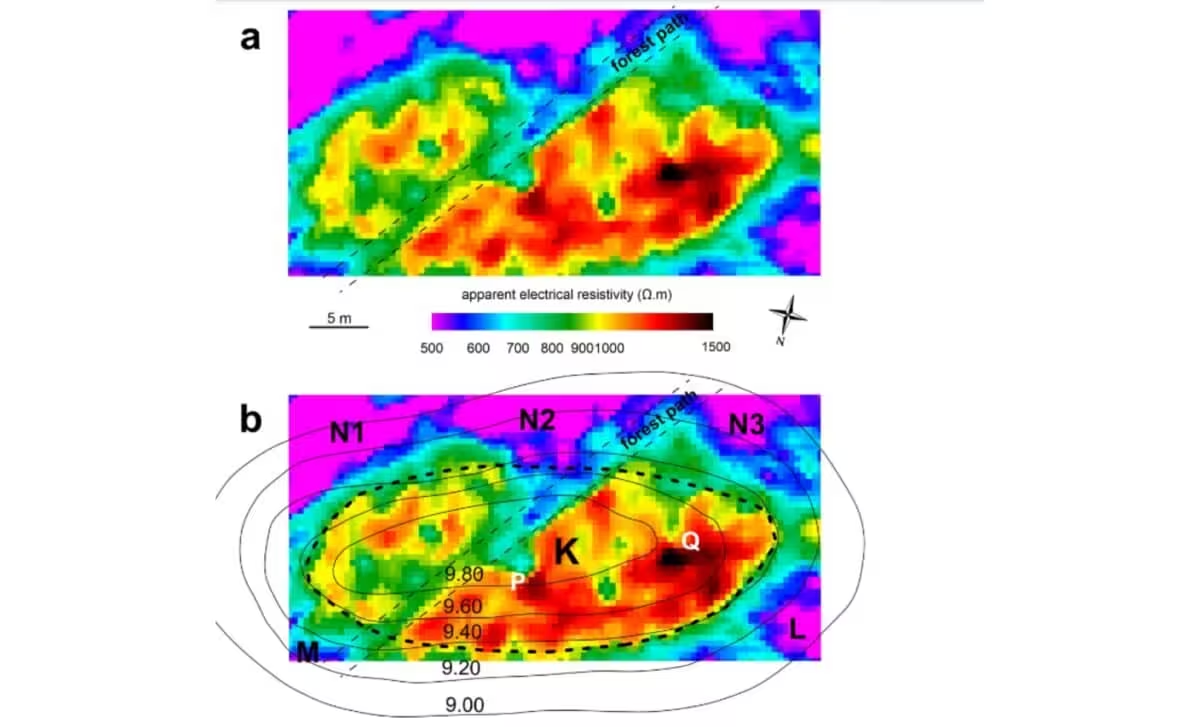
A research team from the University of La Rochelle turned its attention to the Coëby burial ground near Trédion, where two modest mounds—catalogued as TRED30 and TRED31—had attracted little scholarly focus since their initial recording in 1986. Rather than opening the earth, the investigators deployed a high‑resolution electrical‑resistivity survey to chart hidden features while preserving the barrows’ integrity.
How Electrical Resistivity Reveals Subsurface Stone
The fieldwork required researchers to traverse the overgrown site, pausing at thousands of points to log resistivity values manually. The principle mirrors that of a metal detector: an electric current is introduced into the soil, and variations in the returned signal indicate differences in material composition. As detailed in the paper published in Archaeological Prospection, the loose silt that forms most of the barrows conducts electricity readily, whereas granite blocks produce a pronounced increase in resistance, allowing the team to trace stonework without disturbing the ground.
The broader Coëby complex encompasses a network of standing stones, passage graves, and additional barrows extending over 260 feet, all partially obscured by vegetation and intersected by a service road.
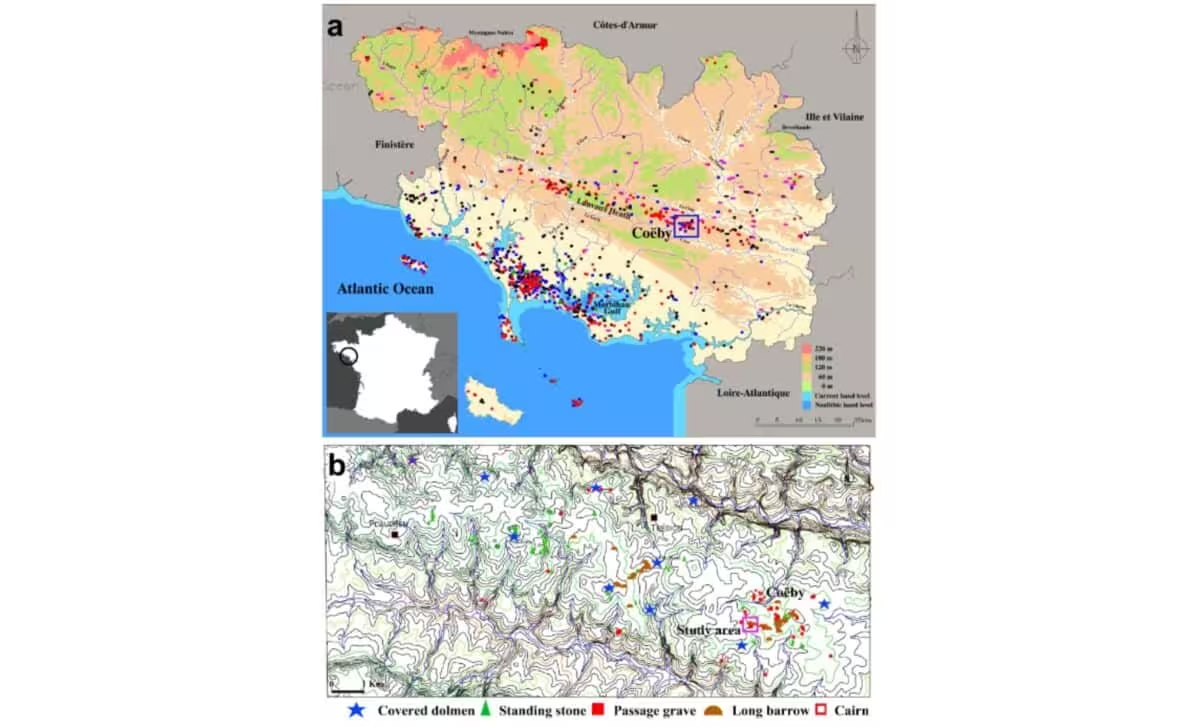
Stonework Patterns Suggest a Wider Cultural Footprint
The resistivity maps pointed toward clusters of high‑resistance zones that align with the layout of Passy‑type monuments—structures characterised by roughly hewn, anthropomorphic standing stones that were prevalent from Normandy to the Yonne Valley during the mid‑fifth millennium BCE. If the Coëby mounds fit this typology, they would represent a notable extension of that tradition toward the southwest.
Researchers interpreted the anomalies as evidence of stone chambers constructed from slabbed granite, reinforcing the notion that TRED30 and TRED31 functioned as authentic burial monuments within the Coëby cemetery. Nevertheless, several irregularities remain unresolved, prompting calls for more comprehensive investigation.
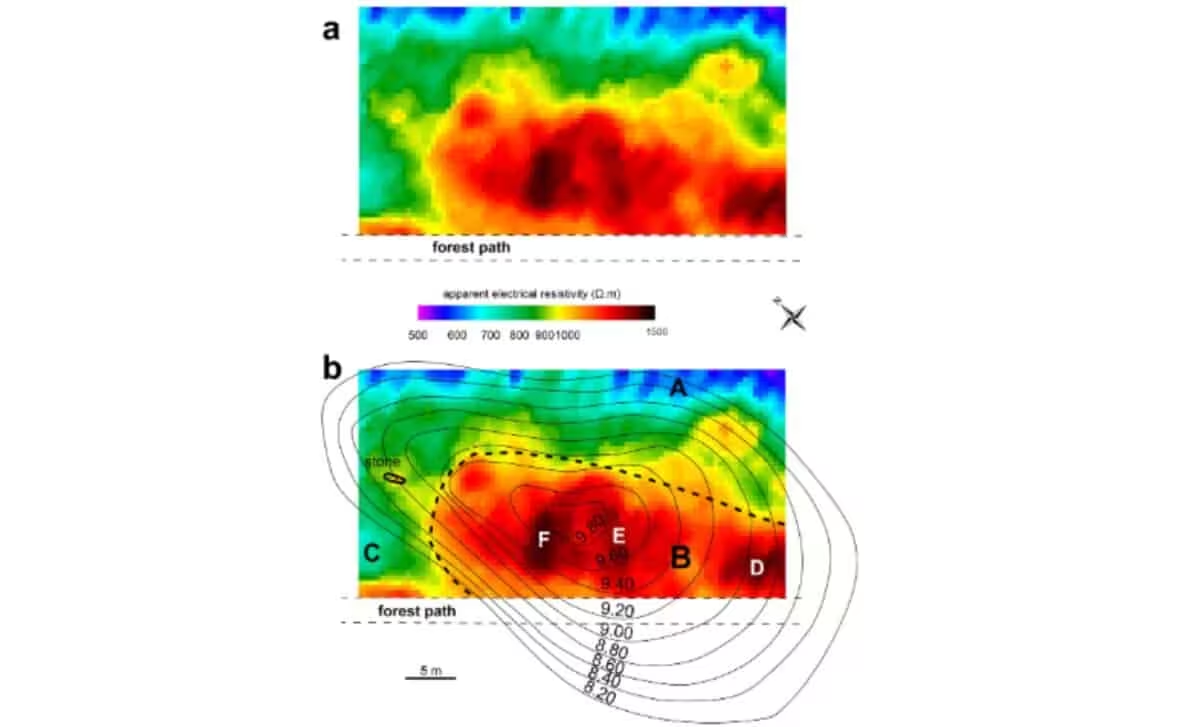
Surface Stone Confirms Subsurface Findings
Erosion had already exposed a granite monolith perched on the central axis of one barrow, directly above the zone of strongest resistivity signals. The coincidence of an above‑ground standing stone with the inferred underground chamber was described by the team as a fortunate alignment that underscores the value of the non‑intrusive approach.
Earlier work in the 1990s uncovered two granite slabs fashioned into crude human silhouettes within a neighbouring mound, adding another layer to the mystery of why such figurative stones recur both atop and within these structures. The authors contend that only a full excavation could finally resolve the functional and symbolic roles of the detected anomalies.
This article has been fact checked for accuracy, with information verified against reputable sources. Learn more about us and our editorial process.
Last reviewed on .
Article history
- Latest version
Reference(s)
- Gouézin, Philippe., et al. “Atypical Long Barrows in the Cöeby Neolithic Cemetery (Trédion, Morbihan, France)? The Contribution of Electrical Surveys.” Archaeological Prospection, July 19, 2026 Wiley, doi: 10.1002/arp.70060. <https://onlinelibrary.wiley.com/doi/epdf/10.1002/arp.70060>.
Cite this page:
- Posted by Vikram Desai