Ancient Interlocking Wooden Structure Unearthed in Zambia, Dating Back 476,000 Years
A 476,000‑year‑old wooden structure at Kalambo Falls reveals ancient hominins were shaping and joining wood millennia before Homo sapiens.

For many years, stone tools have dominated the picture of early human technology because organic materials such as wood rarely survive the deep past. New finds at Kalambo Falls, however, reveal that ancient peoples also worked with timber, offering a glimpse into a forgotten aspect of prehistoric engineering.
Located along the Kalambo River in northern Zambia, the site has long been a hotspot for well‑preserved fossils and artifacts. Archaeological work dating back to the 1950s—most notably by John Desmond Clark—has uncovered a wealth of material safeguarded by the region’s unique environmental conditions.
River‑Deposited Timber Structure Survives for Hundreds of Millennia
The wooden fragments were recovered from sediment layers that shielded them from oxygen, the primary driver of decay. Researchers led by University of Liverpool archaeologist Larry Barham note that mineral‑rich waters, especially silica, contributed to the wood’s long‑term preservation and strengthening.
Because the timber is far older than the range of radiocarbon dating, the team turned to luminescence dating, which gauges the last exposure of surrounding mineral grains to sunlight. This method placed the wood at a minimum age of 476,000 years.

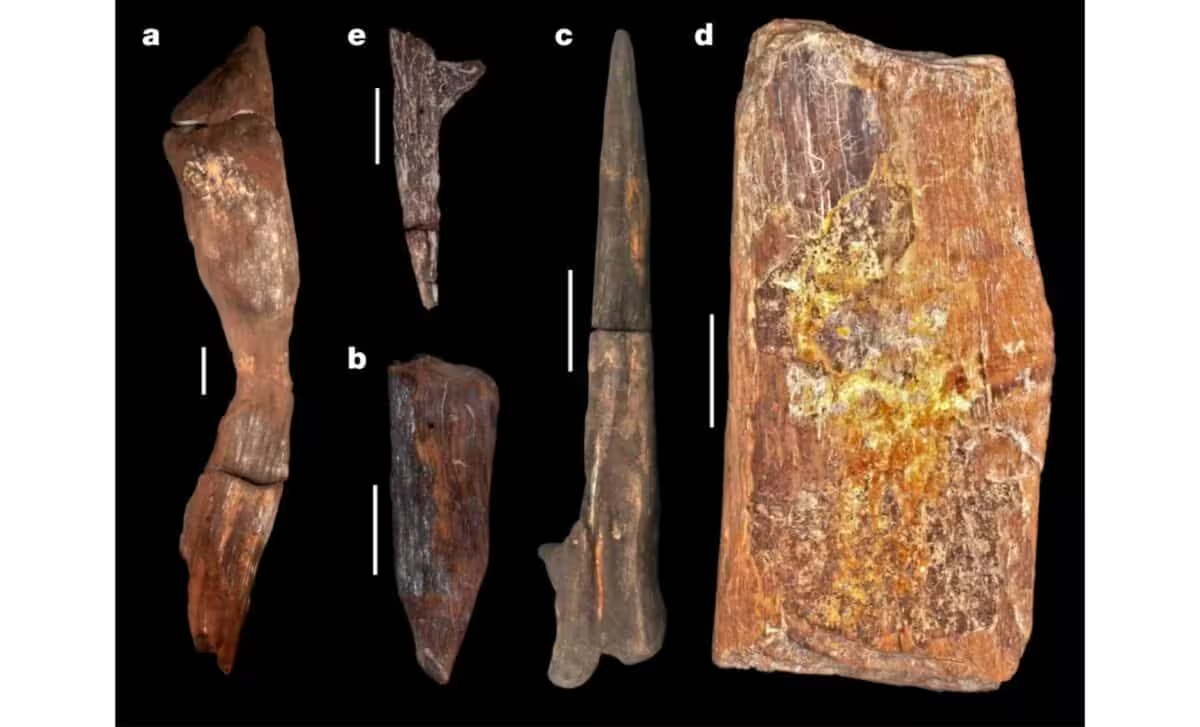
The find consists of two logs that were deliberately shaped and interlocked by a carved notch. The 2023 Nature paper describing the discovery emphasizes that this construction has “no known parallels in the African or Eurasian Palaeolithic.”
While earlier wooden artifacts—such as a polished plank from the Acheulean site of Gesher Benot Ya’aqov in Israel, dated to more than 780,000 years ago—are known, the Kalambo example is distinct because it demonstrates the intentional assembly of multiple timber elements into a coherent structure.
Who Crafted the Interlocking Timber?
Potential candidates include Homo erectus, a long‑lasting species that existed from roughly two million to one hundred thousand years ago, and Homo heidelbergensis, whose presence in Zambia is suggested by a recently discovered skull. Wood artifacts from Florisbad in South Africa, associated with Homo helmei, also raise the possibility of an alternative builder.
The discovery reshapes assumptions about early woodworking. Previously, timber was linked mainly to simple tools like spear shafts, handles, or fire‑making implements. The notched logs from Kalambo Falls indicate that some Middle Pleistocene hominins possessed the skill to fashion wood for more elaborate purposes.
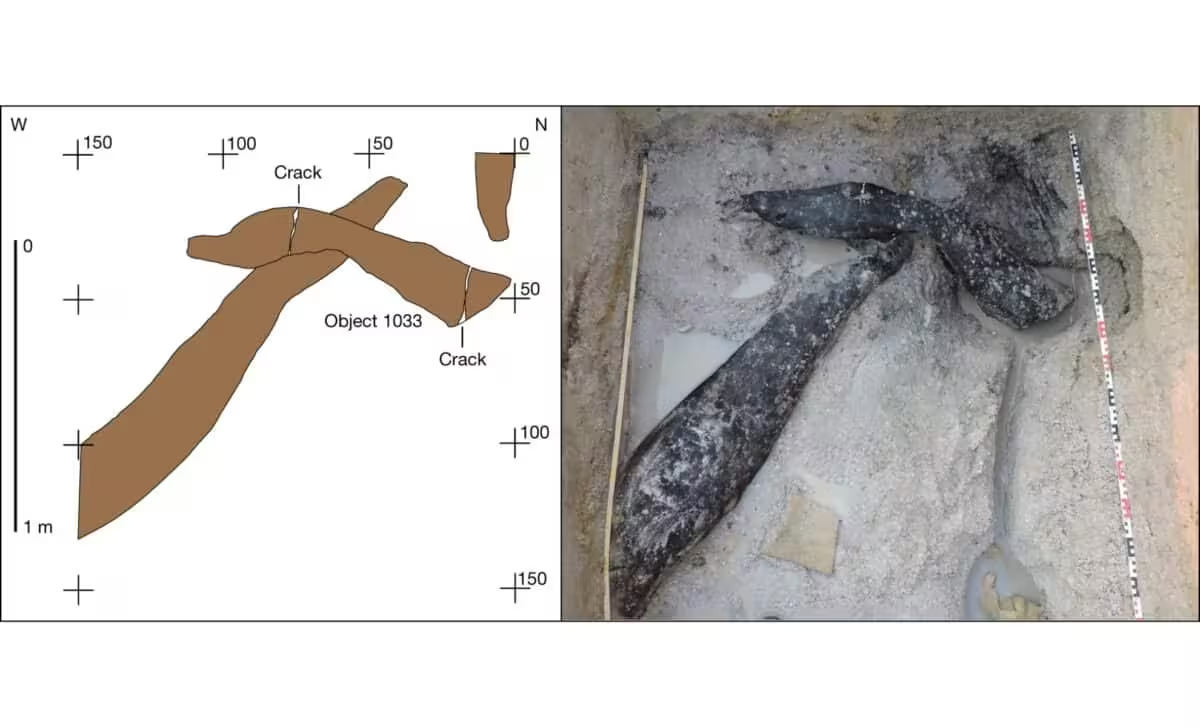
The exact purpose of the timber assembly is still debated. Barham’s team proposes that it could have functioned as a wedge or a portable work platform, noting that the artifact “has no parallel in the Middle Pleistocene record.”
High‑Resolution Scanning Illuminates Ancient Craftsmanship
To protect the delicate remains, researchers generated digital 3D models that allow virtual manipulation of the pieces, enabling close inspection of tool marks without physical contact.
Experimental replication with modern wood demonstrated that natural forces, such as water flow, can smooth surfaces but cannot produce the precise cuts and notches observed on the Kalambo logs.
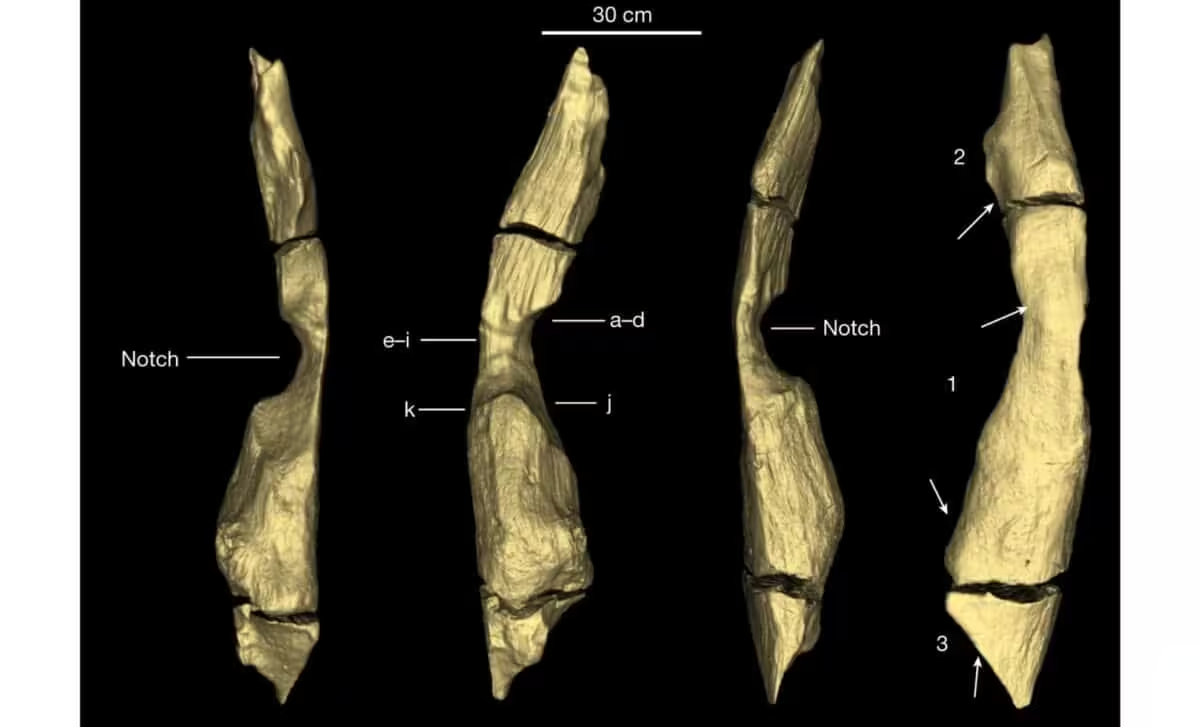
The interlocking design resembles early wooden construction techniques, where carved notches enable stable connections. Researchers suggest such a system could have supported a platform, walkway, storage solution, or even a rudimentary shelter.
Larry Barham emphasizes that the find “demonstrates the combination of two or more parts to make a construction,” providing tangible evidence that Middle Pleistocene hominins were capable of building more than just mobile camps.
Kalambo Falls continues to yield unprecedented insights into prehistoric life. In 2026, the site was provisionally added to Zambia’s UNESCO World Heritage list, recognizing its exceptional record of ancient human activity.
This article has been fact checked for accuracy, with information verified against reputable sources. Learn more about us and our editorial process.
Last reviewed on .
Article history
- Latest version
Reference(s)
- Barham, L.. “Evidence for the earliest structural use of wood at least 476,000 years ago - Nature.”, vol. 622, no. 7981, pp. 107-111. Nature, doi: 10.1038/s41586-023-06557-9. <https://www.nature.com/articles/s41586-023-06557-9>.
Cite this page:
- Posted by Vikram Desai