Neolithic Stone Road Discovered Beneath Adriatic Mud Off Croatia’s Korčula Island
A 7,000‑year‑old stone road uncovered off Croatia’s Adriatic coast reveals surprising clues to a lost prehistoric world.
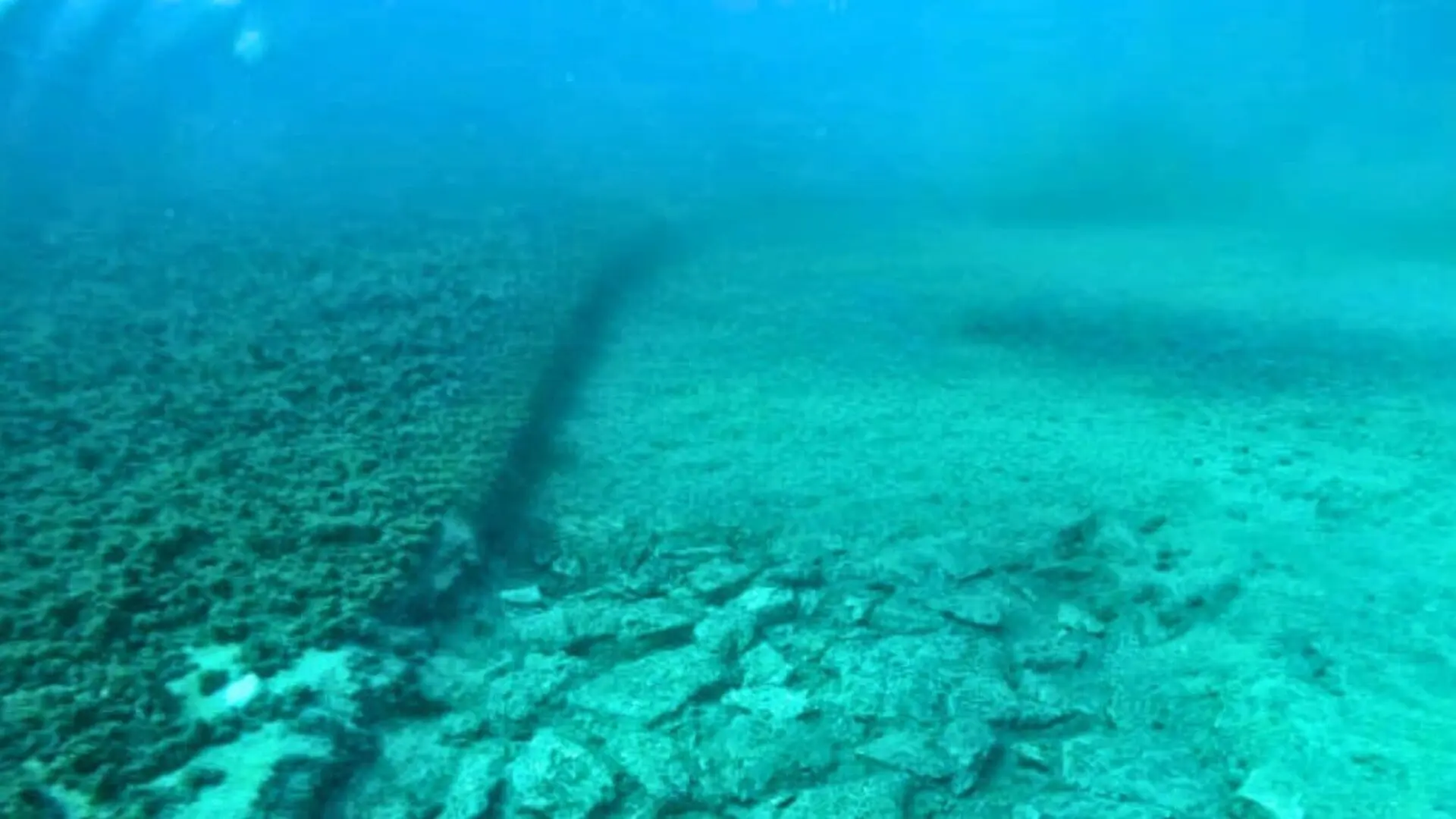
Divers exploring the Adriatic off Croatia’s Korčula island have uncovered a stone pathway dating back almost 7,000 years, concealed beneath thick layers of seabed mud. The find expands the known footprint of the submerged Neolithic complex at Soline, one of the Mediterranean’s most important underwater prehistoric sites. Researchers suggest the road once linked the ancient settlement to the island’s main shoreline.
Measuring about four metres across, the lane consists of meticulously laid stone slabs. It now lies four to five metres beneath the water’s surface, where centuries of mud had hidden it from view. Once the sediment was removed, the structure proved remarkably intact.
The investigation was carried out by specialists from the University of Zadar, the Dubrovnik Museums, the Museum of the City of Kaštela, and the City Museum of Korčula, together with a team of underwater photographers and divers. The university issued a public statement confirming that people traversed this road nearly seven millennia ago.
Engineered Island Settlement Linked by Stoneway
The pathway forms part of the broader Soline complex, which archaeologists believe was originally erected on a purpose‑built island separated from Korčula’s coast by a narrow land bridge. The site was first spotted in 2021 by University of Zadar archaeologist Mate Parica, who noticed anomalies on satellite imagery of the area. A subsequent dive revealed stone walls on the seabed, interpreted as remnants of a constructed environment.

The calm, protected setting of Soline—sheltered by surrounding islands—has been crucial to its preservation. Parica explained that the lack of strong wave action likely kept the stone slabs stable beneath the mud for millennia, allowing the road to survive in such good condition.
Located in a bay between Korčula’s Old Town and Lumbarda, the settlement’s walls sit at roughly four metres depth, shallow enough for snorkelers to glimpse them from the surface. Select artifacts recovered from the site are now displayed in the renovated Town Museum of Korčula.
Radiocarbon Results Date the Community to Around 4,900 BCE
Analysis of wooden material retrieved near the site places the entire Soline settlement at approximately 4,900 BCE, confirming its construction roughly 7,000 years ago. This timeframe falls within the Neolithic period, a stage when societies across the globe were transitioning from nomadic hunting to settled agriculture. In the eastern Adriatic, this shift gave rise to communities capable of building engineered islands and stone‑paved routes.
The researchers attribute both the settlement and its road to the Hvar culture, a Neolithic‑to‑Chalcolithic group named after the nearby island of Hvar. According to the Wikiwand entry on the Hvar culture, the submerged road likely served as a stone thoroughfare leading to the artificial island, which has since sunk. Alongside the roadway and walls, excavators have recovered stone axes, decorated pottery, and other items typical of Hvar‑culture assemblages.
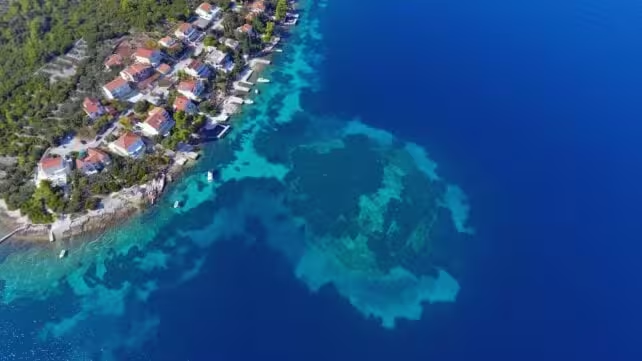
The scale of the construction demonstrates a level of communal planning not always assumed for Neolithic groups. The stoneway was intentionally built, wide enough to function as a genuine thoroughfare, providing concrete evidence of how the Hvar culture organized and connected its coastal settlements nearly seven thousand years ago.
Discovery of a Mirror Settlement on the Opposite Shore
During work at Soline, University of Zadar archaeologist Igor Borzić identified anomalous formations beneath the waters of Gradina Bay on the island’s opposite side. A dive expedition uncovered a second submerged settlement at a comparable depth of four to five metres, featuring a layout and building technique strikingly similar to Soline.
Excavated items from Gradina Bay—including stone blades, axes, and pottery shards—closely match those recovered at Soline, reinforcing the attribution to the Hvar culture. The presence of two analogous sites spanning the full width of Korčula suggests a larger Neolithic population in the area than previously inferred.
Underwater Neolithic sites are relatively scarce throughout the Mediterranean; most contemporary coastal settlements either eroded, survived inland of rising seas, or remain undiscovered on the seafloor. The confirmation of two structurally comparable settlements surrounding a single island makes Korčula an exceptional concentration of such archaeological evidence, and ongoing investigations continue to refine our understanding of early Adriatic coastal societies.
This article has been fact checked for accuracy, with information verified against reputable sources. Learn more about us and our editorial process.
Last reviewed on .
Article history
- Latest version
Cite this page:
- Posted by Vikram Desai