Viking Woman’s Grave With Scallop Shells Stuns Archaeologists
A remarkable discovery in Trøndelag, Norway, reveals a Viking-age woman buried with scallop shells, an unexpected detail that challenges what historians thought they knew about pre-Christian Scandinavian burial rituals.
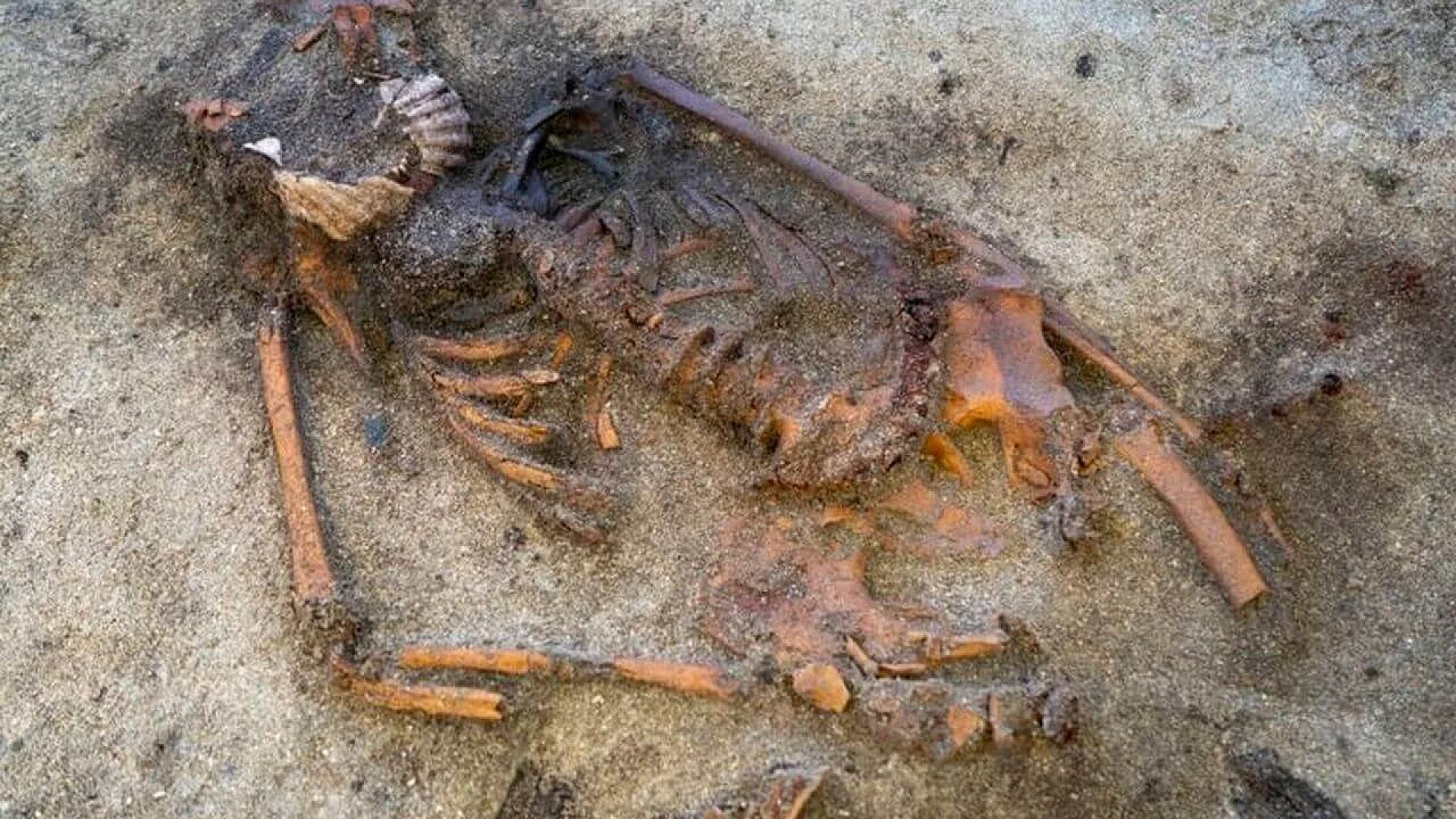
Viking-age burials often bring to mind weapons, jewelry, and striking symbols of rank. But a newly excavated grave in Trøndelag, Norway, is turning heads for a much quieter object with a much louder mystery: scallop shells deliberately placed near a woman’s jaw.
This is the kind of detail archaeologists rarely see, not because shells are impossible to find, but because their positioning appears intentional and meaningful. In a field where millimeters matter, the shells’ placement is the story.
What was found in the grave
Archaeologists uncovered the burial of a well-preserved woman, along with objects that help date and interpret the grave.
Key items reported from burial
- Human remains
- A woman’s skeleton preserved enough support careful analysis
- Grave goods
- Oval brooches
- A ring buckle
- Other associated objects used to interpret status and time period
- The standout
- Scallop shells placed near the jaw
- The shells were oriented facing outward, suggesting they were not случайно scattered but set with purpose
How the discovery unfolded
This find began with a small signal that something important was underground.
- A bronze brooch was detected
- Metal detectorist Roy Sør located the object, triggering closer attention to the site
- An archaeological team investigated
- Researchers from the Norwegian University of Science and Technology (NTNU) assessed and excavated the burial
- Detailed recording of placement
- The team carefully documented where items lay, especially the shells’ relationship to the jaw area, because placement can hold symbolic clues
Even in challenging soil conditions, the excavation preserved enough context to raise a major question: why shells, and why there?
Why scallop shells are such a big deal here
The shells are not just unusual. They are described as unprecedented in known pre-Christian Viking burials. That matters because Viking burial archaeology is built on comparisons. When an object appears with no clear parallel, researchers have to slow down and reconsider assumptions.
What makes this placement so intriguing
- Intentional orientation
- Facing outward, the shells look arranged rather than accidental
- No clear precedent
- Researchers do not have an established Viking-era pattern that explains shells at the jaw
- Symbolism is uncertain
- While scallop shells have symbolic associations in other cultures and later periods, those links do not neatly explain this specific Viking-age context
In short, the shells are doing what the best archaeological finds do: forcing new questions rather than offering easy answers.
What it could mean for Viking ritual knowledge
Because the shells do not fit neatly into the usual categories of Viking grave goods, the burial hints at a ritual landscape that have been more diverse and local than popular images suggest.
Possibilities raised by the find
- Local ritual traditions
- The burial could reflect a community-specific practice not widely documented elsewhere
- Social identity and status
- The accompanying items suggest the woman may have held status, potentially as a free, married woman, which invites a broader look at women’s identity was expressed in death
- Connections through the sea
- Marine shells naturally raise questions about coastal life, movement, and exchange, even if the exact route or reason remains unknown
What is clear is that the grave adds weight to a growing realization in archaeology: Viking Age practices were not one-size-fits-all.
What researchers still cannot say yet
This discovery is powerful, but it also comes with real limits.
- The shells’ meaning is still unclear
- Any single explanation would be premature
- Soil and preservation challenges
- Acidic conditions can erase clues, making interpretation harder
- More comparisons are needed
- Similar finds, if uncovered, would help confirm whether this was unique or part of a wider tradition
Future work aims to learn more from the remains and the wider burial context, including how this individual may connect to other finds in the region.
The takeaway: a small object rewriting a big story
A few shells placed near a jaw might sound minor, but in archaeology, small details can shift entire narratives. This Trøndelag burial challenges what researchers thought they knew about Viking funerary customs and pushes attention toward the complexity of women’s burials, status, and ritual expression.
For science lovers, this is the thrill: history is not fixed. Sometimes it changes because someone, a thousand years ago, placed two shells exactly where they wanted them, and left us to figure out why.
This article has been fact checked for accuracy, with information verified against reputable sources. Learn more about us and our editorial process.
Last reviewed on .
Article history
- Latest version
- Last updated by Dayyal Dungrela, MLT, BSc, BS
Reference(s)
- Brandslet, Steinar. “Sensational Viking Age grave newly uncovered.”, 09 December 2025 Norwegian SciTech News <https://norwegianscitechnews.com/2025/12/sensational-viking-age-grave-newly-uncovered>.
Cite this page:
- Posted by Zara Tariq