Scientists Find Method to “Recharge” Aging Cells Using Nanoflowers
Researchers have found a way to turbocharge the cell’s tiny power plants using engineered nanomaterials, opening a new path toward treating hard‑to‑fix mitochondrial diseases and boosting regenerative medicine.
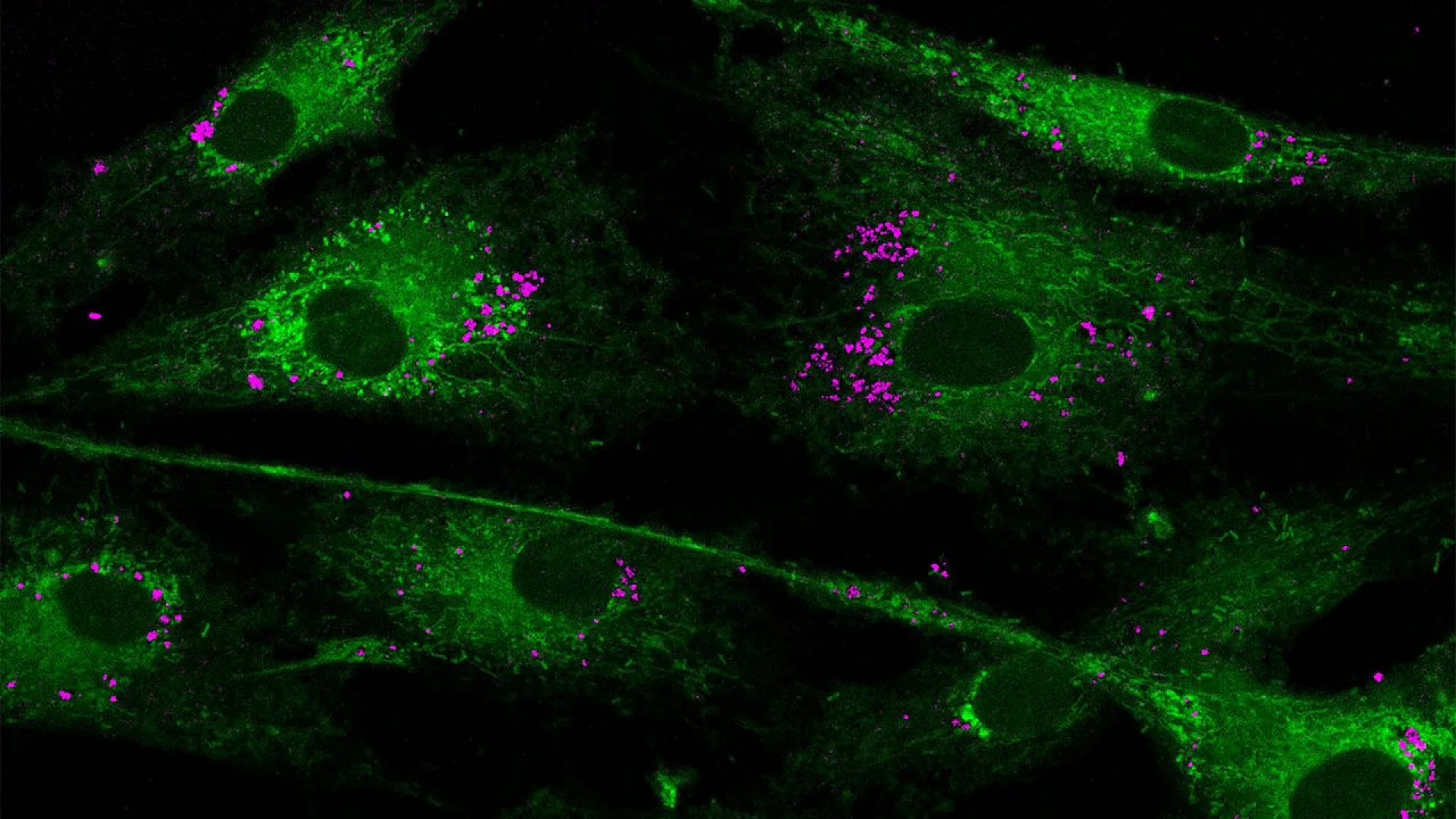
Every cell in your body runs on energy. That energy comes from tiny structures called mitochondria, often described as the power plants of the cell. They generate adenosine triphosphate (ATP), the molecule that fuels everything from muscle contraction to brain activity.
When mitochondria are damaged or fail to work properly, cells cannot make enough energy. Over time, this mitochondrial dysfunction is linked with a wide range of problems, such as:
- Muscle weakness and fatigue
- Cognitive decline and neurodegenerative diseases
- Heart failure and cardiomyopathy
- Metabolic disorders and some age related conditions
Current treatments mostly manage symptoms. They rarely fix the underlying energy crisis inside cells. Scientists have therefore been searching for ways to restore or replace faulty mitochondria rather than just treating the consequences.
A Natural Rescue System: Mitochondrial Transfer
Cells are not completely helpless when their mitochondria fail. In recent years, researchers discovered that some cells can donate healthy mitochondria to their struggling neighbours. One important donor cell type is human mesenchymal stem cells (hMSCs).
These stem cells can:
- Sense nearby damaged cells
- Form physical connections, sometimes through tiny tube like structures
- Transfer their own healthy mitochondria into stressed or injured cells
This natural process of mitochondrial transfer can partially restore energy production and improve cell survival. However, there is a catch. Under normal conditions, hMSCs do not produce enough mitochondria to support large scale or highly effective rescue in severe disease.
To truly harness this biological rescue system for therapy, scientists need a way to:
- Make hMSCs generate more mitochondria
- Improve the quality and function of those mitochondria
- Increase the efficiency of transfer into damaged cells
This is where an unexpected ally comes in nanotechnology.
Enter the Nanoflowers: What Are MoS₂ Nanoflowers?
Researchers have engineered special nanoparticles made from molybdenum disulfide (MoS₂). Under the microscope, these particles resemble tiny flowers, so they are called nanoflowers.
These nanoflowers have several appealing features for biomedical use:
- Unique surface structure
- Their flower like shape provides a large surface area for interactions with cells.
- Chemical activity
- MoS₂ can interact with reactive oxygen species (ROS), molecules that play a dual role in cells as both damaging agents and important signals.
- Tunability
- By controlling size, shape and surface chemistry, scientists can influence how nanoflowers behave inside cells.
The key insight of the new work is that these MoS₂ nanoflowers can be used to reprogram how stem cells manage their mitochondria.
Turning Stem Cells into “MitoFactories”
When human mesenchymal stem cells were treated with MoS₂ nanoflowers, their mitochondrial system changed dramatically. The stem cells did not simply tolerate the nanoflowers they responded by becoming mitochondrial power factories.
How the Nanoflowers Boost Mitochondria
- Increased mitochondrial number
- The treated stem cells showed about a twofold rise in mitochondrial DNA copy number.
- This indicates that the cells produced many more mitochondria than usual.
- Activation of mitochondrial biogenesis pathways
- Key proteins that control mitochondrial formation and maintenance were switched on.
- These proteins orchestrate how new mitochondria are built and how existing ones are maintained.
- Higher energy output
- With more and better functioning mitochondria, ATP production increased.
- The stem cells became much more capable of supplying energy, both for themselves and for other cells.
Collectively, this upgraded state turns hMSCs into what the researchers describe as “MitoFactories” highly efficient sources of healthy, functional mitochondria.
The Role of Reactive Oxygen Species: From Threat to Signal
Reactive oxygen species are often associated with oxidative stress and cellular damage. However, at controlled levels, ROS act as important signalling molecules.
MoS₂ nanoflowers help fine tune ROS levels inside stem cells:
- They interact with ROS, stabilising them at a range that is not destructive.
- These balanced ROS levels then activate stress responsive pathways.
- Some of these pathways directly promote mitochondrial biogenesis and resilience.
Instead of causing chaos, ROS in this context serve as a controlled alarm system, telling the cell to strengthen its energy machinery. The nanoflowers support this delicate balance, preventing excessive damage while preserving useful signalling.
More Mitochondria, Better Rescue: Enhanced Transfer to Damaged Cells
Producing more mitochondria is only half the story. For therapy, what matters most is whether these mitochondria can reach and help damaged cells.
In co culture experiments and disease models, nanoflower treated hMSCs showed:
- Improved mitochondrial transfer
- More mitochondria moved from the donor stem cells into recipient cells under stress.
- The efficiency of this intercellular transfer was significantly increased compared with untreated hMSCs.
- Better rescue of energy production
- Recipient cells regained higher ATP levels.
- Mitochondrial function in these cells improved, meaning their own energy systems started working more normally again.
- Increased cell survival
- Damaged cells that received mitochondria from the upgraded hMSCs were more likely to survive and recover.
This shows that the nanoflower treated stem cells are not just stuffed with extra mitochondria. They are also more skilled at donating those mitochondria where they are needed.
Testing in Disease Relevant Settings
To move beyond simple cell culture, scientists evaluated the MitoFactories in disease like models. One key example involved cardiotoxicity, a kind of heart cell damage that can occur as a side effect of some chemotherapy drugs.
In these cardiotoxic models:
- Heart like cells exposed to harmful agents showed severe mitochondrial stress and energy failure.
- When co cultured with MoS₂ nanoflower treated hMSCs, these damaged cells received a surge of healthy mitochondria.
- Their mitochondrial function improved and cell viability increased.
These results suggest that this strategy could one day help protect or repair the heart in patients undergoing chemotherapy or suffering from other heart injuries linked to mitochondrial damage.
Researchers believe similar benefits may apply to other conditions influenced by mitochondrial dysfunction, such as:
- Certain neurodegenerative diseases
- Ischemic injuries like stroke or heart attack
- Age related tissue degeneration
Why This Breakthrough Matters for Regenerative Medicine
The concept of regenerative medicine revolves around helping the body repair itself. Traditionally, stem cell therapies focused on:
- Replacing lost or damaged cells
- Secreting helpful factors that promote healing
The discovery of mitochondrial transfer added a third pillar stem cells as energy donors. The MoS₂ nanoflower technology significantly upgrades this third function.
Potential Clinical Advantages
- Targeted mitochondrial therapy
- Instead of delivering whole cells and hoping for broad effects, clinicians could deploy hMSCs optimised to restore cellular energy specifically.
- Stronger and more reliable stem cell treatments
- Conventional hMSC therapies show variable results. Enhancing their mitochondrial machinery could make them more consistently effective.
- Relevance across many diseases
- Since mitochondrial dysfunction appears in heart disease, brain disorders, metabolic problems and ageing, one platform may help multiple conditions.
- Insight into ageing and longevity
- Mitochondrial health is closely tied to the ageing process. Techniques that replenish or revitalise mitochondria may help preserve tissue function over time.
Safety, Challenges and Open Questions
As exciting as this work is, several important questions remain before any clinical use.
Key Challenges
- Scaling up production
- Large, reproducible batches of MoS₂ nanoflowers must be manufactured with consistent properties.
- Comprehensive safety testing
- Long term effects of MoS₂ nanoflowers in the body are not yet known.
- Researchers need to study how these particles are processed, cleared or stored in tissues.
- Behavior in complex organisms
- Most current data come from cell based experiments and controlled models.
- Living organisms have immune systems, diverse tissues and dynamic environments that may influence how nanoflower treated hMSCs behave.
- Fine control of mitochondrial activity
- Too much mitochondrial activation could, in theory, lead to unwanted effects, such as excessive ROS or uncontrolled proliferation.
- Optimising dose, timing and delivery route will be crucial.
Next Steps in Research
To advance this technology toward medical use, scientists are planning:
- In vivo studies
- Testing MitoFactories in animal models of heart injury, neurodegeneration or metabolic disease.
- Measuring not only therapeutic benefits but also distribution, persistence and clearance of MoS₂ nanoflowers.
- Mechanistic dissection
- Mapping the precise molecular pathways linking nanoflower treatment, ROS modulation and mitochondrial biogenesis.
- Identifying which signalling proteins are essential and which can be targeted with complementary drugs.
- Optimisation of nanoflower design
- Adjusting size, coating and formulation to improve compatibility with human cells.
- Exploring targeted delivery systems that bring nanoflowers specifically to stem cells in particular tissues.
- Translational pathways
- Designing protocols that can be adapted to clinical grade manufacturing of MitoFactory hMSCs.
- Laying the groundwork for early phase trials once preclinical safety data are strong enough.
What This Could Mean for Patients in the Future
If ongoing research validates and extends these early findings, future therapies might include:
- MitoFactory infusions for heart repair
- Patients recovering from heart attack could receive infusions of nanoflower primed hMSCs to restore mitochondrial function in injured heart muscle.
- Protective treatments during chemotherapy
- Cancer patients could receive MitoFactory support to safeguard heart cells or other vulnerable tissues from mitochondrial toxicity.
- Neuroprotective strategies
- In certain neurodegenerative conditions, these stem cells might deliver mitochondria across supporting cell networks to improve neuronal resilience.
- Ageing tissue revitalisation
- In the longer term, protocols might emerge that periodically boost mitochondrial health in key tissues, potentially delaying functional decline.
These scenarios are still speculative and will require rigorous study. Yet they illustrate how a single technological advance in nanomaterials can reshape the landscape of regenerative medicine.
Conclusion
The development of molybdenum disulfide nanoflowers that convert human mesenchymal stem cells into highly efficient mitochondrial suppliers represents a major conceptual leap. By carefully modulating reactive oxygen species and activating mitochondrial biogenesis pathways, these nanoflowers transform ordinary stem cells into powerful MitoFactories.
In laboratory models, the upgraded stem cells:
- Produce more and better mitochondria
- Transfer them more effectively to damaged cells
- Restore cellular energy and improve survival in disease relevant settings
There is still a long road from bench to bedside, with safety, scaling and mechanistic questions to answer. However, this work opens a promising path toward therapies that treat disease at its energetic core, rather than just managing symptoms. For patients living with conditions rooted in mitochondrial failure, this emerging approach offers a genuine spark of hope for more precise and powerful regenerative treatments in the years ahead.
The research was published in PNAS on October 24, 2025.
This article has been fact checked for accuracy, with information verified against reputable sources. Learn more about us and our editorial process.
Last reviewed on .
Article history
- Latest version
- Last updated by Dayyal Dungrela, MLT, BSc, BS
Reference(s)
- Soukar, John., et al. “Nanomaterial-induced mitochondrial biogenesis enhances intercellular mitochondrial transfer efficiency.” Proceedings of the National Academy of Sciences, vol. 122, no. 43, 24 October 2025, doi: 10.1073/pnas.2505237122. <https://www.pnas.org/doi/abs/10.1073/pnas.2505237122>.
Cite this page:
- Posted by Zara Tariq