Three 13th‑Century Ships Unearthed in Menorca’s Cove of Mysteries Reveal a Hidden Relic
Archaeologists uncover three 13th‑century shipwrecks and a mysterious reliquary in Menorca’s medieval ’Cove of Mysteries’, sparking fresh intrigue.
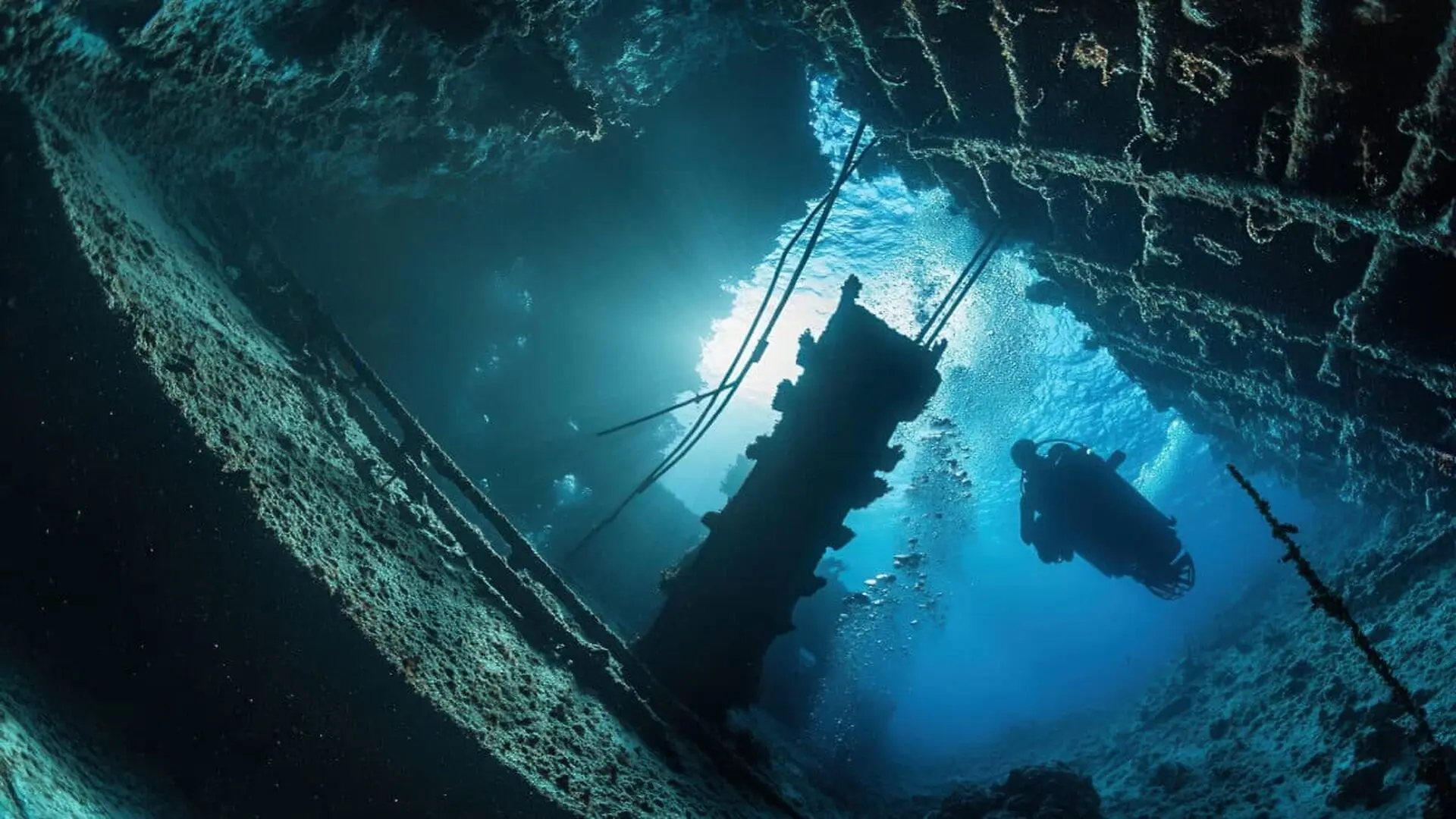
Archaeologists have uncovered three medieval shipwrecks lying side‑by‑side in Menorca’s “Cove of Mysteries,” a silent underwater graveyard where the vessels have remained untouched for almost eight centuries. Scientific analysis suggests they were lost to a sudden, weather‑driven tsunami rather than an earthquake.
During the 13th century the Balearic archipelago was a frontier between Moorish territories and expanding Christian kingdoms. After James I of Aragon seized Majorca in 1229 and Ibiza six years later, his grandson Alfonso completed the conquest of Menorca in 1287, reshaping the islands’ political landscape.
Near the present‑day town of Ciutadella, at the ancient harbor of Cala en Busquets, researchers identified three distinct hulls that span a broad chronological range, with some timbers dating back two millennia. The site, once a Roman capital and later a bustling Moorish port, has yielded artifacts that illuminate this tumultuous era Smithsonian.
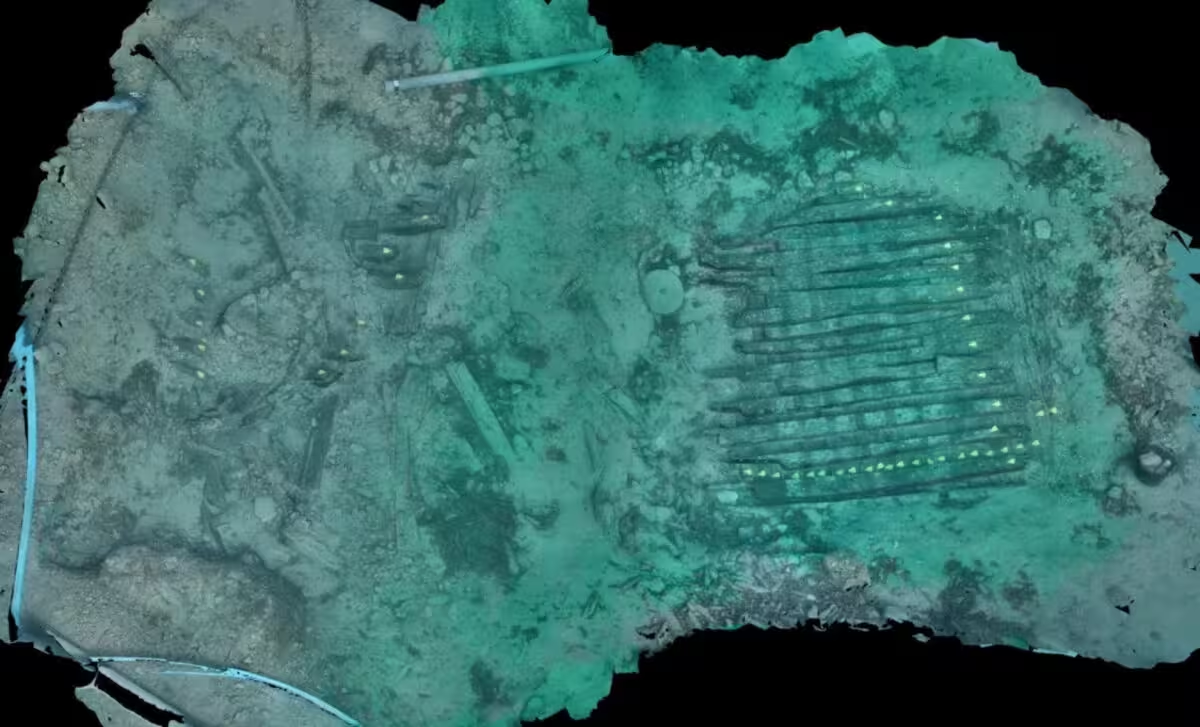
Concurrent Sinking Revealed by Overlapping Hulls
Designated Busquets I, II and III after their discovery location, the three wrecks sit atop one another, a clear sign that they descended in a single catastrophic event. Radiocarbon dating places the loss in the early 1240s, and researchers argue that a “rissaga”—a rapid‑pressure, meteorological tsunami—was the likely culprit Popular Mechanics.
A fresh field season launched in 2023 by the New York‑based Explorers Club, together with local archaeologists and cultural‑heritage specialists, delivered the most detailed documentation of the site to date.
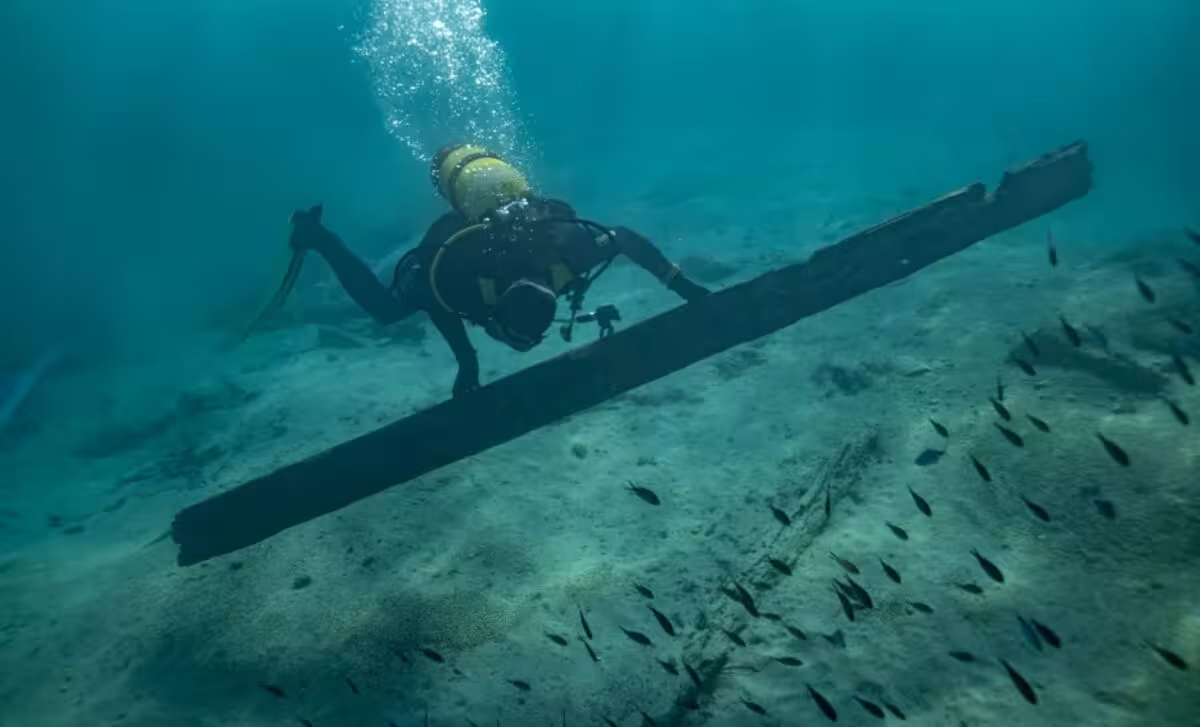
Why the Wrecks Remained Undisturbed for Centuries
Two key factors appear to have shielded the remains. First, merchants began replacing ceramic amphorae with wooden barrels in the second century CE; unlike metal‑laden amphorae, the wooden containers left little trace for magnet‑based treasure hunters, reducing the incentive for looting.
Second, the modern port of Menorca was built on the island’s eastern shore, leaving the western “Cove of Mysteries” largely untouched and allowing sediments to protect the wrecks from waves and human activity.
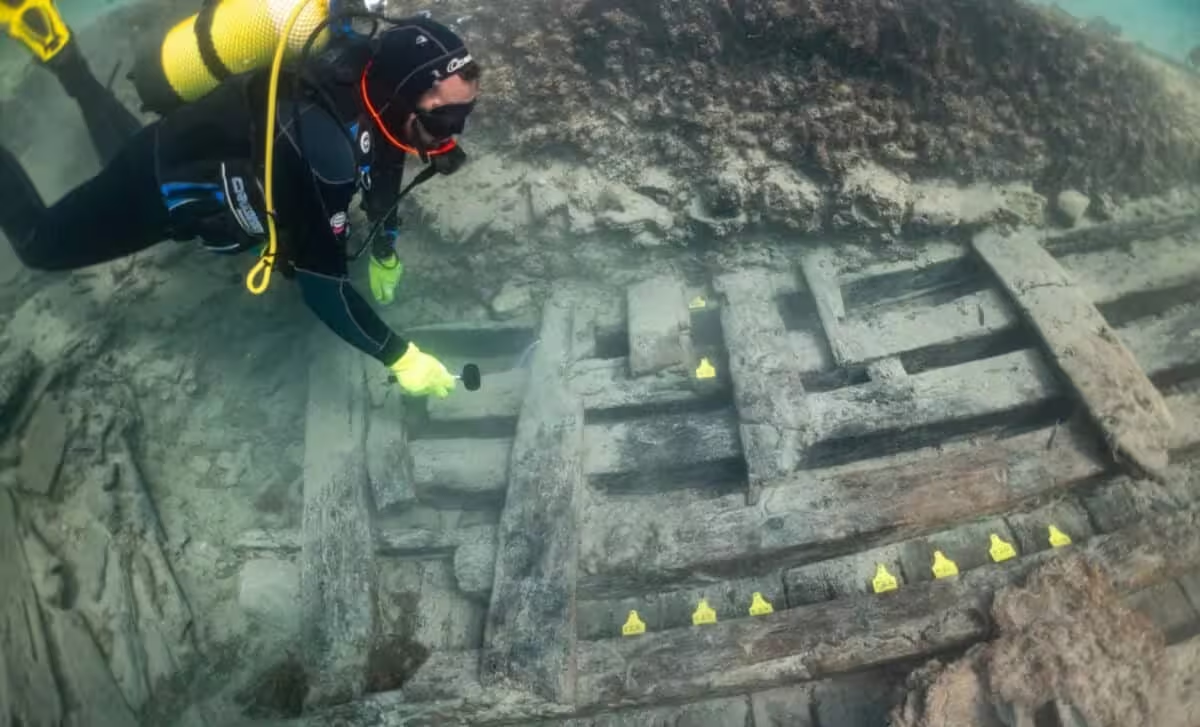
A 13th‑Century Relic May Hold a Sacred Secret
Among the recovered objects is an encolpium—a reliquary traditionally worn by senior clergy. Catalan archaeologist Xavier Aguelo Mas, working with the Menorca Shipwreck Project, called it the island’s “artifact of the decade.” The piece is undergoing careful desalination at the Museum of Menorca while experts await clues about its interior. As Aguelo Mas told Smithsonian, “Maybe a bone? Parchment? We don’t know. It’s an unraveling story still … This tiny little cove, this underwater museum … still has a lot to tell.”
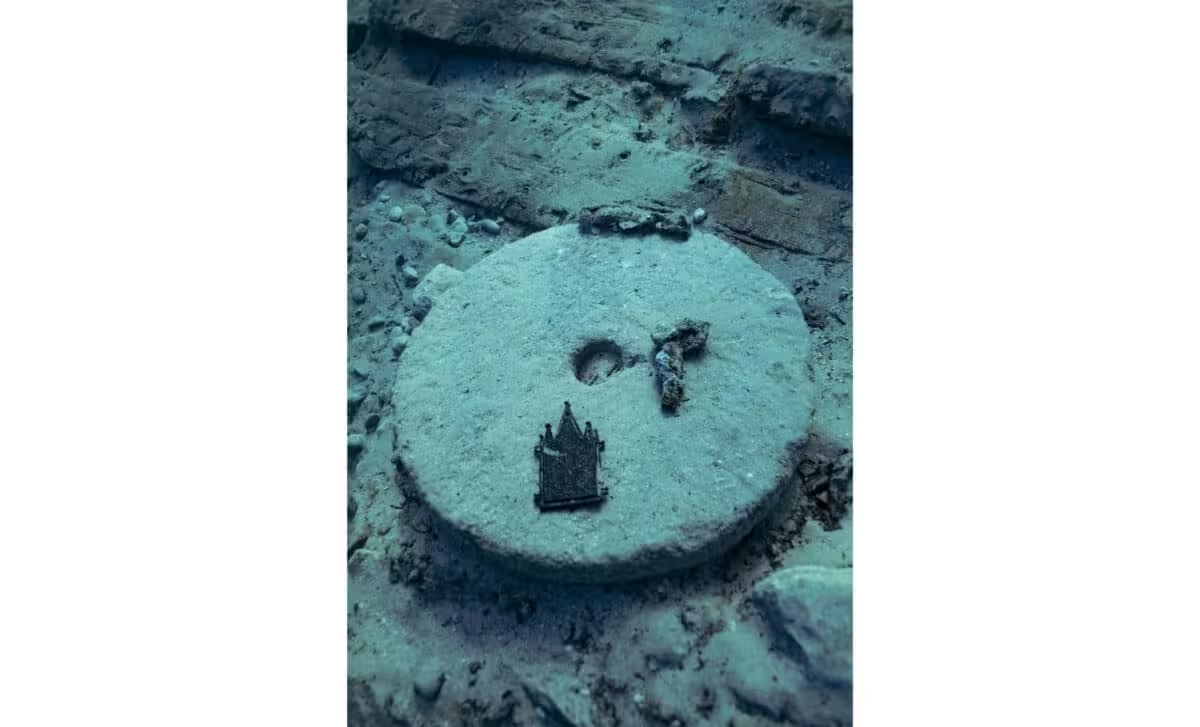
The expedition has also recovered a mix of Moorish and Christian artifacts, underscoring the cultural crossroads that defined the Balearics. The team plans to release a comprehensive scientific paper in 2027, while further underwater work continues to explore the medieval legacy hidden beneath the island’s sediments.
This article has been fact checked for accuracy, with information verified against reputable sources. Learn more about us and our editorial process.
Last reviewed on .
Article history
- Latest version
Reference(s)
- Hitchcock-Smith, Katie. “Take an Exclusive Look at Three Newly Discovered Medieval Shipwrecks in Menorca's 'Cove of Mysteries'.”, July 9, 2026 Smithsonian Magazine <https://www.smithsonianmag.com/history/take-an-exclusive-look-at-three-newly-discovered-medieval-shipwrecks-in-menorcas-cove-of-mysteries-180989092/>.
- Orf, Darren. “Three Ships Sank in a Freak Tsunami 800 Years Ago. They Just Gave Up the ‘Artifact of the Decade.’.”, July 17, 2026 Popular Mechanics <https://www.popularmechanics.com/science/archaeology/a71900833/menorca-shipwreck/>.
Cite this page:
- Posted by Vikram Desai