Ancient Bronze Sword Unearthed in Germany Still Shines After 3,000 Years
Archaeologists uncover a millennia‑old German sword in astonishing condition, revealing a stunning surprise from the soil beneath southern Germany.
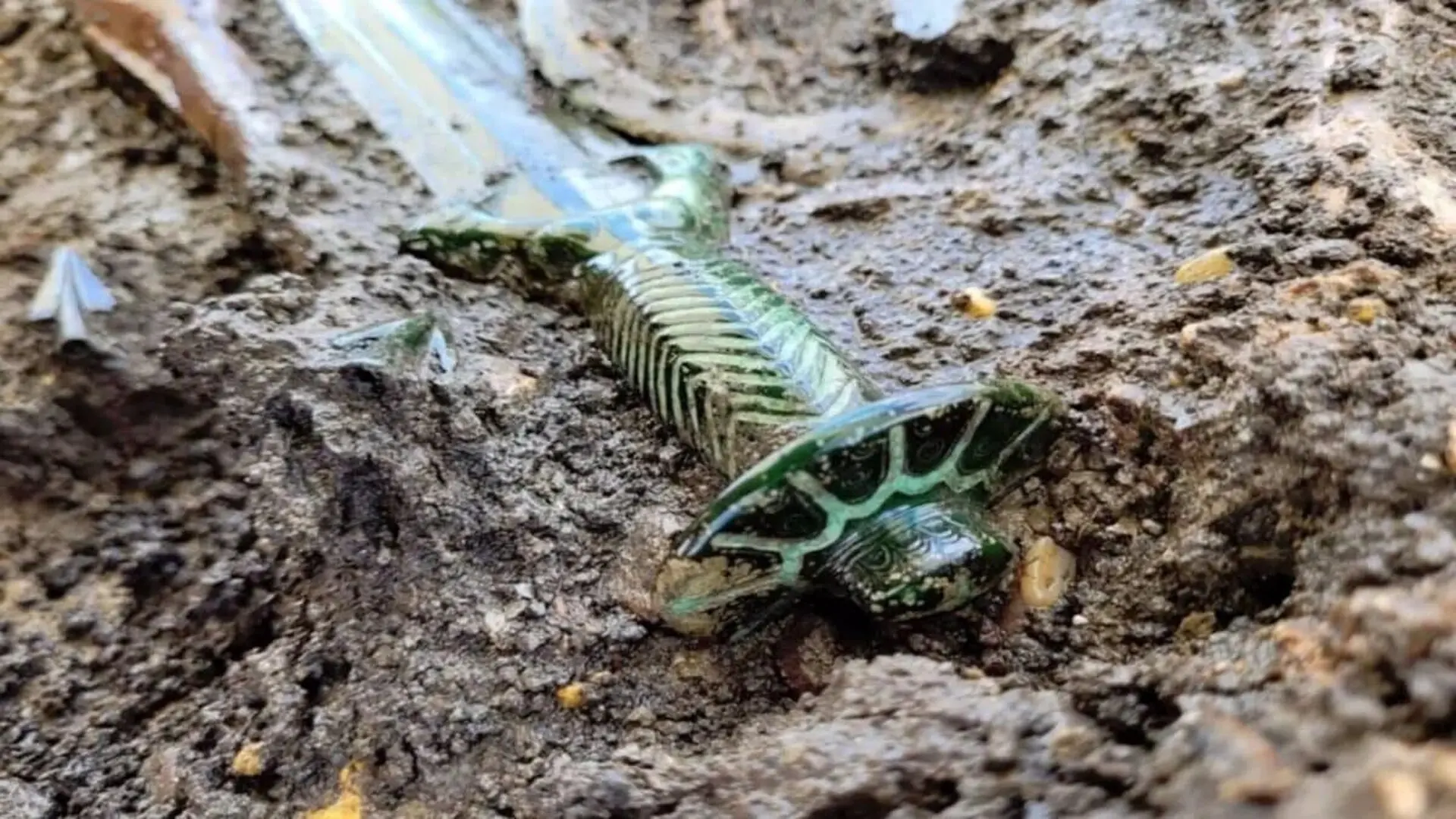
Archaeologists in Nördlingen, southern Bavaria, have uncovered a bronze sword that is about 3,000 years old and remains in a condition that experts describe as “almost still shining.”
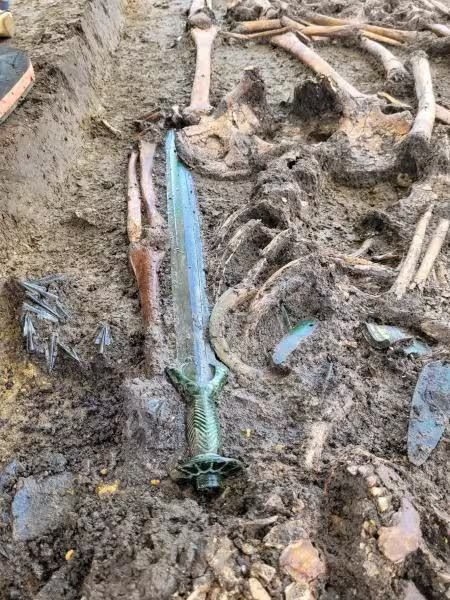
The blade was recovered from a Bronze Age burial site that also contained the skeletal remains of a man, a woman and a child, dating to the late 14th century BCE. Because many graves from this period have been disturbed or looted, a weapon this well preserved is exceptionally rare.
Three‑Millennium‑Old Bronze Blade Shines After Millennia
The sword features an octagonal bronze hilt that was cast directly onto the blade—a sophisticated method that only master smiths of the era could execute.
In a statement, the Bavarian State Office for Monument Protection noted that this casting technique was limited to a few production zones, primarily in southern Germany near the findspot and in a broader region covering northern Germany and Denmark.
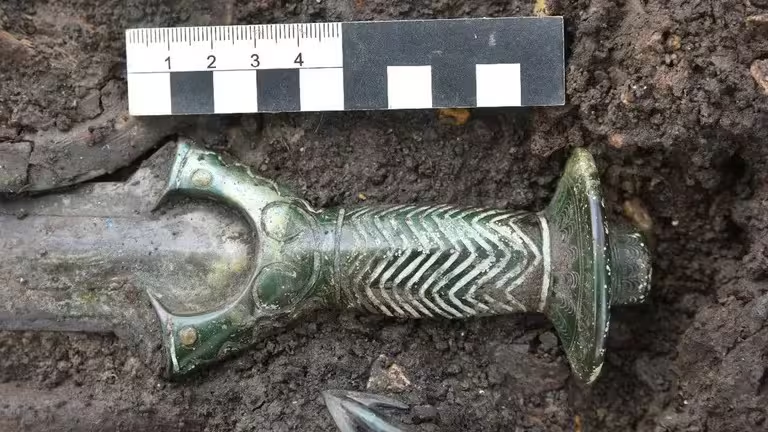
Although the blade shows no signs of heavy wear or battle damage, its ergonomics suggest it was more than a ceremonial object. The weapon’s weight distribution would have allowed it to be wielded effectively in combat.
Analyses indicate that the sword’s center of gravity was optimized for cutting actions, reinforcing the idea that it could have functioned as a practical fighting tool despite its antiquity.
Insights Into Bronze‑Age Combat From a Near‑Perfect Weapon
Scholars have long debated the role of bronze swords, given that bronze is softer than iron and more prone to damage. Some propose that many bronze blades served primarily symbolic purposes.
To test these theories, researchers have recreated Bronze Age combat scenarios, observing how such swords perform under realistic fighting conditions.
The Bavarian find adds a critical data point to this debate. Its precise shape, balance, and manufacturing technique provide fresh evidence of the sophisticated metalworking skills of Bronze Age artisans and hint at how the weapon might have been used.
As reported by Live Science, intact bronze swords from the Middle Bronze Age are scarce because many graves were looted over the millennia. Discovering one in situ with human remains offers a rare glimpse into a complete burial assemblage.
Ongoing Analysis May Uncover More About the Burial
The sword continues to undergo detailed examination, and archaeologists have yet to finish studying the burial context. Further analysis will refine the weapon’s classification and may shed light on its production origins and purpose within the grave.
The simultaneous discovery of the three individuals raises additional questions about familial connections and the relationship between the occupants and the sword.
Mathias Pfeil, head of the monument protection office, emphasized the rarity of the find and praised the sword’s remarkable preservation.
“The sword and the burial still have to be examined so that our archaeologists can classify this find more precisely,” he explained. “But it can already be said: the condition is exceptional! A find like this is very rare!”
Today, the bronze blade stands as one of the best‑preserved examples of Bronze Age craftsmanship uncovered to date.
This article has been fact checked for accuracy, with information verified against reputable sources. Learn more about us and our editorial process.
Last reviewed on .
Article history
- Latest version
Reference(s)
- “Pi Bronzezeitliches Schwert.” <https://www.blfd.bayern.de/mam/blfd/presse/pi_bronzezeitliches_schwert.pdf>.
- Geggel, Laura. “'Octagonal' sword from Bronze Age burial in Germany is so well preserved, it shines.”, June 15, 2023 Live Science <https://www.livescience.com/archaeology/octagonal-sword-from-bronze-age-burial-in-germany-is-so-well-preserved-it-shines>.
Cite this page:
- Posted by Vikram Desai