Byzantine Town Uncovered In Egypt’s Desert And Golden Tongues Found In Ancient Tombs
Egyptian excavations uncover a Byzantine town with streets, a church, and tombs packed with gold burial items.
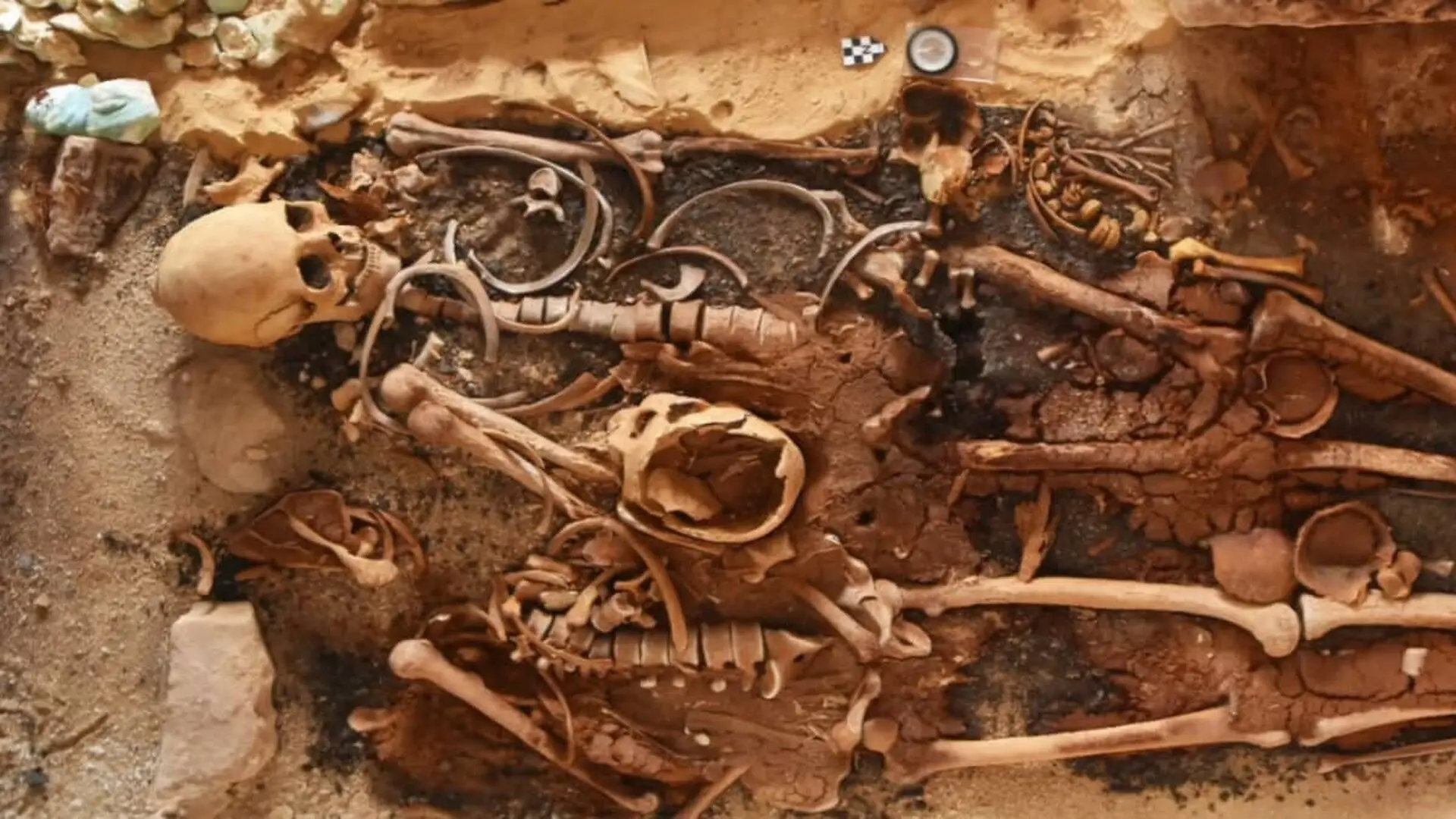
Egypt remains a premier laboratory for uncovering tangible clues about ancient societies, their worship practices, and mortuary rituals. Because the Nile Valley passed through successive Egyptian, Greek, Roman and Byzantine administrations, its layers often capture overlapping cultural signatures, sometimes within a single dig.
Two recent excavations illustrate this stratigraphic richness. In the heart of the Dakhla Oasis, archaeologists traced the layout of a planned fourth‑century settlement, while farther north along the Mediterranean shoreline, another team opened a series of tombs containing gold ornaments and burial gear linked to the Ptolemaic and Roman periods. Together, the discoveries span several centuries and illuminate distinct facets of daily and spiritual life in ancient Egypt.
A Fourth‑Century Urban Center Unearthed in Dakhla Oasis
The Dakhla site revealed more than scattered ruins; the excavation exposed a deliberately organized town. A principal north‑south thoroughfare intersected a network of east‑west lanes, and two open plazas provided communal space. Ministry officials highlighted a basilica‑style church anchored on the main road as the most noteworthy building, flanked by twin watchtowers and a fortress distinguished by unusually thick walls.
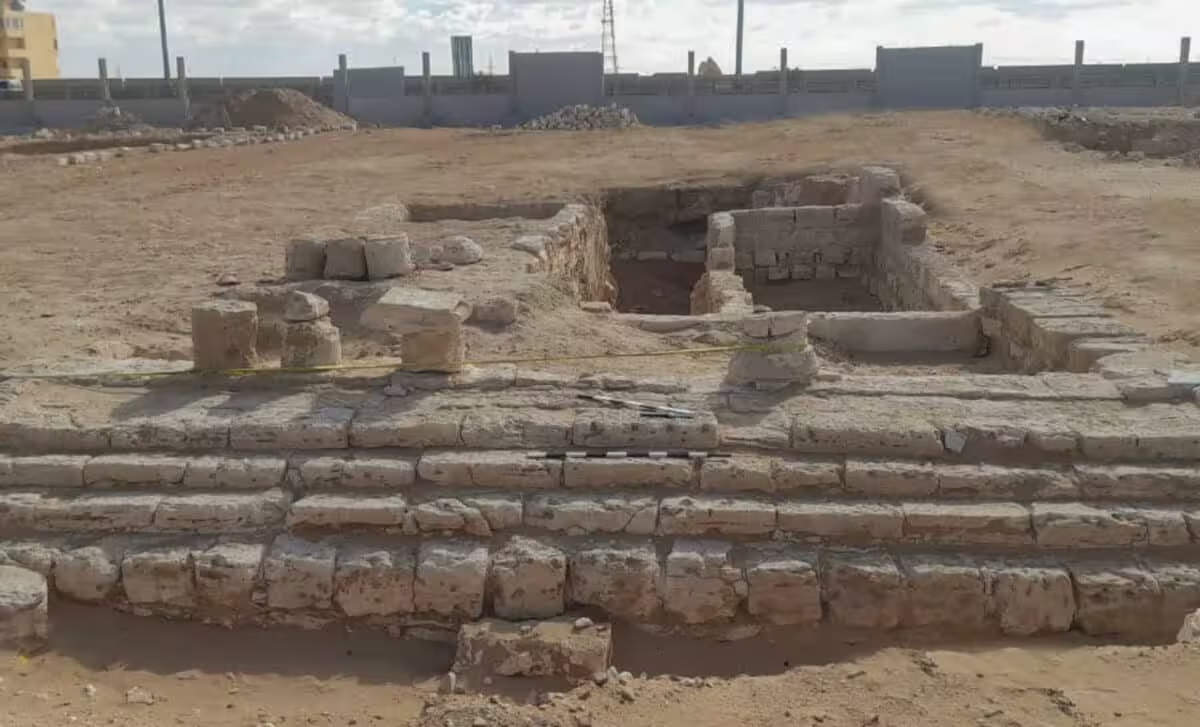
Residential structures suggest a comfortable lifestyle for the period. Homes featured high vaulted ceilings, spacious reception halls, and dedicated kitchen areas equipped with ovens and grinding implements. One dwelling dated to the early 300s belonged to a deacon named Tessos; before the basilica’s construction, the house likely served as an informal gathering place for worship.
Excavators also recovered items that could qualify for UNESCO World Heritage status, including bronze coins bearing Byzantine rulers’ portraits, gold pieces depicting Roman emperor Constantius II (reigned 337‑361 C.E.), and nearly 200 ostraca—pottery shards reused as writing surfaces. Inscribed in Greek and Coptic, these fragments record transactions, personal letters, and other mundane communications. Additional household artifacts such as pottery, perfume and oil containers, and various stoneware were also retrieved.
Golden Mouthpieces Reveal Ancient Burial Customs
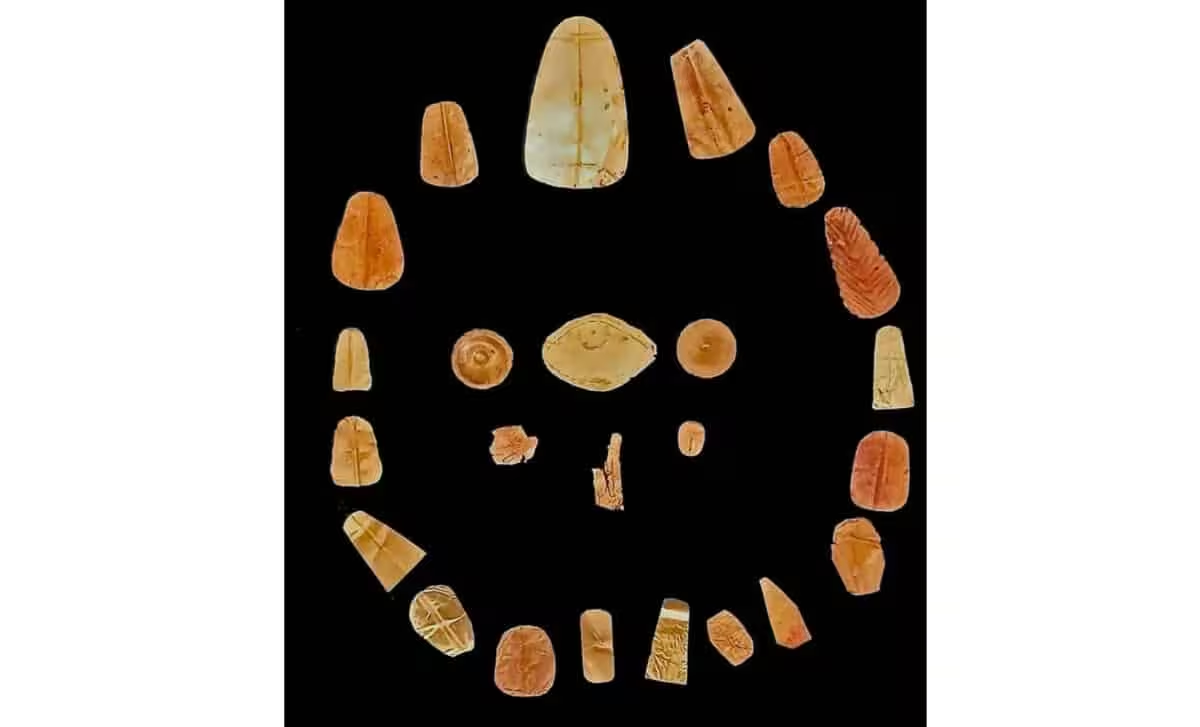
At Marina el‑Alamein, approximately 60 miles north of Alexandria, archaeologists opened a new cluster of tombs and discovered 24 delicate gold strips placed in the mouths of the deceased. This practice was believed to enable the dead to speak in the afterlife. One strip bears the Eye of Horus, an ancient symbol associated with protection and good fortune.
The tombs display a striking range of construction methods. Of the 18 tombs uncovered in this phase, 11 were cut directly into bedrock, with shafts extending as deep as 26 feet, while the remaining seven were built from limestone blocks at ground level. Researchers interpret this variety—rock‑cut, freestanding, and shallow structures—as reflecting differing social statuses among the interred, according to the antiquities ministry. With the latest additions, the total number of tombs at the site now reaches 48.
Marina el‑Alamein has been under investigation since its first identification in 1986. Scholars associate the site with the ancient Greco‑Roman harbor town of Leukaspis, founded in the second century B.C.E. and occupied through the fourth century B.C.E. The burial assemblage demonstrates the coexistence of Egyptian and Greek funerary traditions.
Artifacts Paint a Picture of a Greco‑Roman Port City
Beyond the gold tongues, excavators retrieved an eight‑foot granite sarcophagus still containing human remains, slated for further analysis. Other notable finds include an unfinished marble statue of the goddess Aphrodite, a limestone relief depicting a seated man holding a bird, and a plaster‑cast sphinx.
The burial assemblage also includes everyday items such as ceramic vessels, amphorae, oil lamps, dishware, stone basins, limestone altars, and small glass bottles that may have collected mourners’ tears. One altar was carved to resemble a false door, an Egyptian architectural motif intended to link the world of the living with that of the dead. Collectively, the finds illustrate how the community of Leukaspis blended Greek and Egyptian customs in its funerary practices.
This article has been fact checked for accuracy, with information verified against reputable sources. Learn more about us and our editorial process.
Last reviewed on .
Article history
- Latest version
Cite this page:
- Posted by Vikram Desai