10,000-Year-Old Rock Art in Egypt’s Sinai Tells a Long, Unbroken Story of Human Life
A newly identified rock shelter in southern Sinai preserves prehistoric paintings, ancient carvings, and later inscriptions, revealing how people returned to the same desert refuge for nearly 10,000 years.
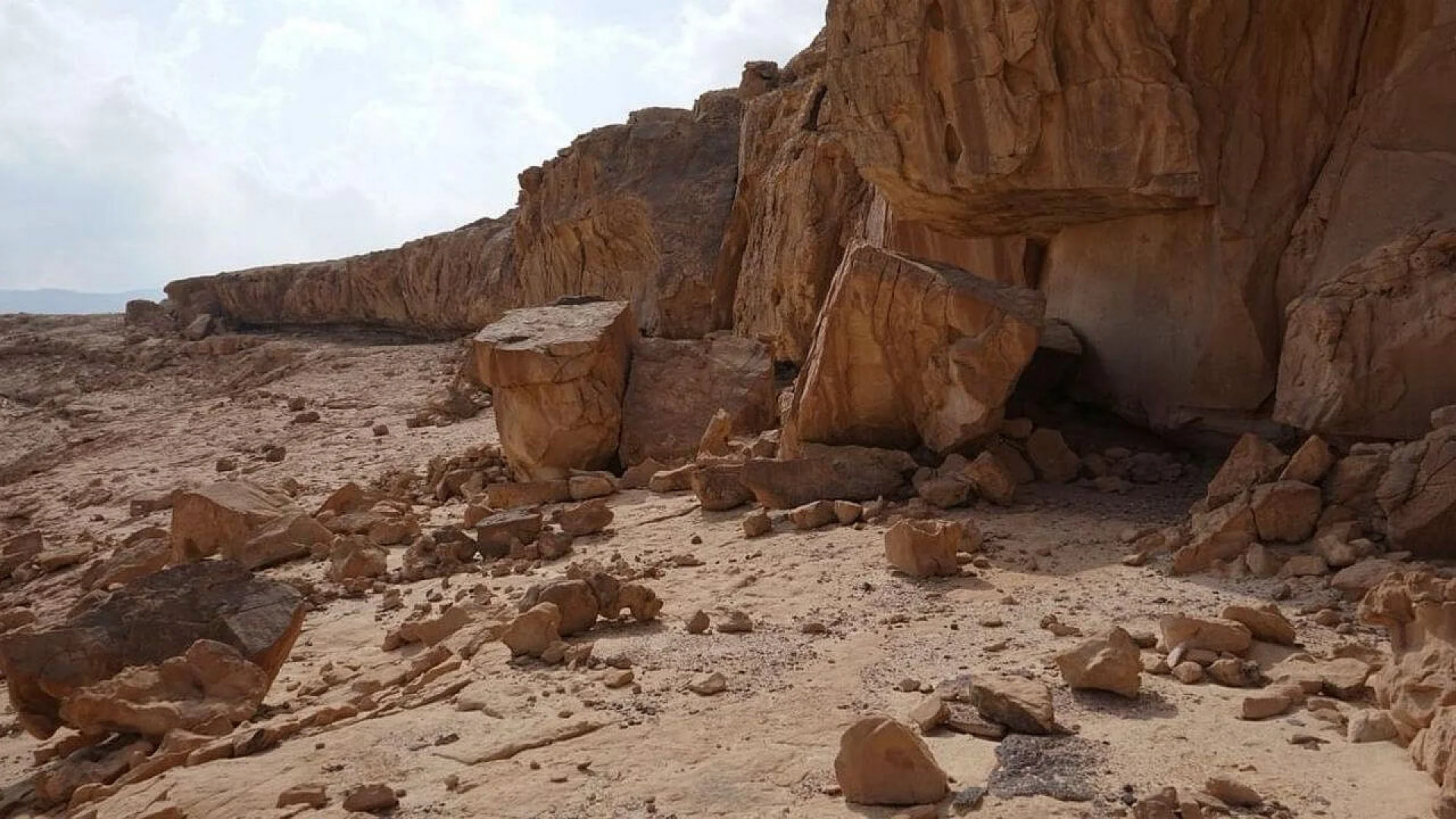
The desert can look empty at first glance. Endless rock, dry wind, and silence. But sometimes, if you look closely, the stone begins to speak.
In Egypt’s southern Sinai, archaeologists have identified a previously unknown rock art site on the Umm Irak Plateau. At this location, a natural rock formation stretches about 100 meters long. Its surface holds drawings, carvings, and inscriptions left behind by different communities over nearly 10,000 years.
That timeline alone is enough to pause for a moment.
According to Egypt’s Ministry of Tourism and Antiquities, the site is among the most important recent archaeological discoveries in the region. It does not represent just one civilization or one historical period. Instead, it shows how the same place was used, marked, and remembered again and again across thousands of years.
It is, in many ways, a desert archive.
Officials from Egypt’s Supreme Council of Antiquities have described the site as an “open-air natural museum.” And honestly, that phrase fits.
Inside the rock shelter, the ceiling displays red pigment drawings of animals and symbols. These images likely date back to prehistoric times, when early human communities were still developing artistic traditions and symbolic communication.
Elsewhere on the same formation, archaeologists found inscriptions written in Arabic and in the Nabataean language. The Nabataeans are best known for their famous city of Petra in modern-day Jordan. Their presence in Sinai connects this desert region to ancient trade networks that once crossed the Middle East.
Now imagine this scene.
A prehistoric artist paints animals in red on a rock ceiling. Thousands of years later, a Nabataean traveler carves words nearby. Centuries after that, Arabic inscriptions appear on the same stone surface. None of them erased what came before. Instead, they added another layer.
It is rare to find such a long, continuous record in a single physical space.
The red pigment images are among the most striking features of the site. They include animals and abstract symbols, though their exact meanings are still being studied.
Animal depictions in prehistoric art often connect to survival. They can represent hunting scenes, herding practices, or even spiritual beliefs tied to wildlife. Sinai today is dry and rugged, but thousands of years ago, environmental conditions may have been different. The animals painted on the rock could provide clues about the region’s past climate and ecosystems.
Some engravings also appear to reflect daily life and economic activities of early communities. This suggests the shelter was not only symbolic, but practical. People lived here. They worked here. They rested here.
And they left signs of their presence.
Symbols add another layer of mystery. Prehistoric markings can represent territory, identity, ritual, or group memory. We may never fully understand what each shape meant to the people who created it. But the repetition and variety show intention. These were not random scratches. They were deliberate acts of expression.
The rock art is powerful on its own. But the physical evidence inside the shelter makes the discovery even more meaningful.
Archaeologists found animal droppings, stone partitions, and hearth remains. These are small details, but they matter a lot.
Animal droppings suggest that livestock may have been sheltered there. Stone partitions indicate that people organized the space, perhaps separating living areas or animals from sleeping spots. Hearth remains show that fires were built, which means cooking, warmth, and probably long evenings of conversation under the rock ceiling.
This was not just a sacred or ceremonial site. It was a working shelter.
People likely returned here season after season. Generations may have grown up knowing this place as a refuge from harsh desert conditions. The walls became a shared memory board across time.
And that continuity is extraordinary.
The Sinai Peninsula sits at a geographic crossroads between Africa and Asia. For thousands of years, it has served as a passageway for traders, travelers, and migrating communities.
The newly documented site lies near the mountain town of Saint Catherine. This town is home to Saint Catherine's Monastery, one of the oldest continuously operating Christian monasteries in the world and a UNESCO World Heritage site.
The broader region carries deep religious, cultural, and economic significance. Trade caravans once crossed these routes, linking Egypt with the Levant and beyond. Pilgrims traveled through these mountains. Local Bedouin communities have long called this landscape home.
So it makes sense that a rock shelter in this area would carry layers of human history.
Still, seeing all those layers physically preserved in one place is something else entirely.
The Nabataean inscriptions tie the shelter to ancient trade networks. The Nabataeans flourished between roughly the fourth century BCE and the second century CE. Their merchants controlled major caravan routes, transporting incense, spices, and other valuable goods across the region.
Their inscriptions in Sinai show that this desert was not isolated. It was connected.
Later, Arabic inscriptions appeared on the same formation during the Islamic period. These may have been left by travelers, pilgrims, or local inhabitants marking their presence. In desert landscapes, writing on stone can serve as both memory and message.
What stands out most is continuity.
Each generation interacted with the same rock surface. They did not ignore it. They added to it.
Over thousands of years, the shelter transformed into a layered conversation across time.
Most archaeological sites capture a limited period. A settlement might last a few centuries before being abandoned. A burial site might reflect one dynasty.
But the Umm Irak rock shelter appears to hold evidence from prehistoric times all the way to the Islamic era. That kind of long chronological sequence in a single location is rare.
It allows researchers to study change and continuity side by side.
When people think of Egypt, they often imagine pyramids and pharaohs. And yes, those are monumental achievements.
But Egypt’s history is far older and more diverse than its famous monuments.
This discovery highlights prehistoric communities, traders, pastoralists, and travelers who shaped the region long before and long after the pharaonic era. It reminds us that Egyptian heritage is not only about massive stone temples. Sometimes it is about small carvings on a desert wall.
If early communities thrived in this region 10,000 years ago, their presence can offer clues about environmental conditions at the time.
Rock art, animal imagery, and occupation traces may help scientists understand how climate shifted and how people adapted. In a world currently facing climate challenges, understanding ancient resilience can feel surprisingly relevant.
Southern Sinai is currently experiencing development projects aimed at boosting tourism, especially around Saint Catherine. Increased attention can bring economic opportunity, but it also raises important questions.
Rock art is fragile. Exposure to weather, uncontrolled tourism, or vandalism can damage ancient pigment and carvings.
Local Bedouin communities have also expressed concerns about protecting their ancestral lands during large development efforts. Balancing preservation, tourism, and community rights will be essential.
A site that survived 10,000 years deserves careful protection today.
If you stood inside the shelter at Umm Irak Plateau, you might first notice the quiet. The desert wind outside. The rough texture of stone.
Then your eyes would adjust. Faint red figures. Carved lines. Words in different scripts.
And suddenly, time would feel layered.
A prehistoric painter mixing red pigment. A Nabataean trader pausing during a journey. An Arabic inscription carved centuries later. Fires burning under the same ceiling. Animals sheltered from the wind.
All of them separated by thousands of years, yet connected by a single place.
The rock did not move. Civilizations did.
And in that stillness, the stone remembered.
This article has been fact checked for accuracy, with information verified against reputable sources. Learn more about us and our editorial process.
Last reviewed on .
Article history
- Latest version
Cite this page:
- Posted by Hassan Raza
- 10000 Year Old Site
- Ancient Egypt Desert Shelter
- Arabic Inscriptions Rock Art
- Earth Science
- Egypt Archaeological Discovery
- Egypt Rock Art
- Nabataean Inscriptions Sinai
- Prehistoric Cave Art Egypt
- Red Pigment Rock Paintings
- Saint Catherine Sinai
- Sinai Peninsula Archaeology
- Supreme Council Of Antiquities Egypt
- Umm Irak Plateau