New Evidence Reveals Amino Acids Formed Through Multiple Routes in the Early Solar System
New isotope evidence from meteorites shows that amino acids formed through more than one chemical route in the early solar system, revealing a complex pre-life chemistry long before Earth existed.
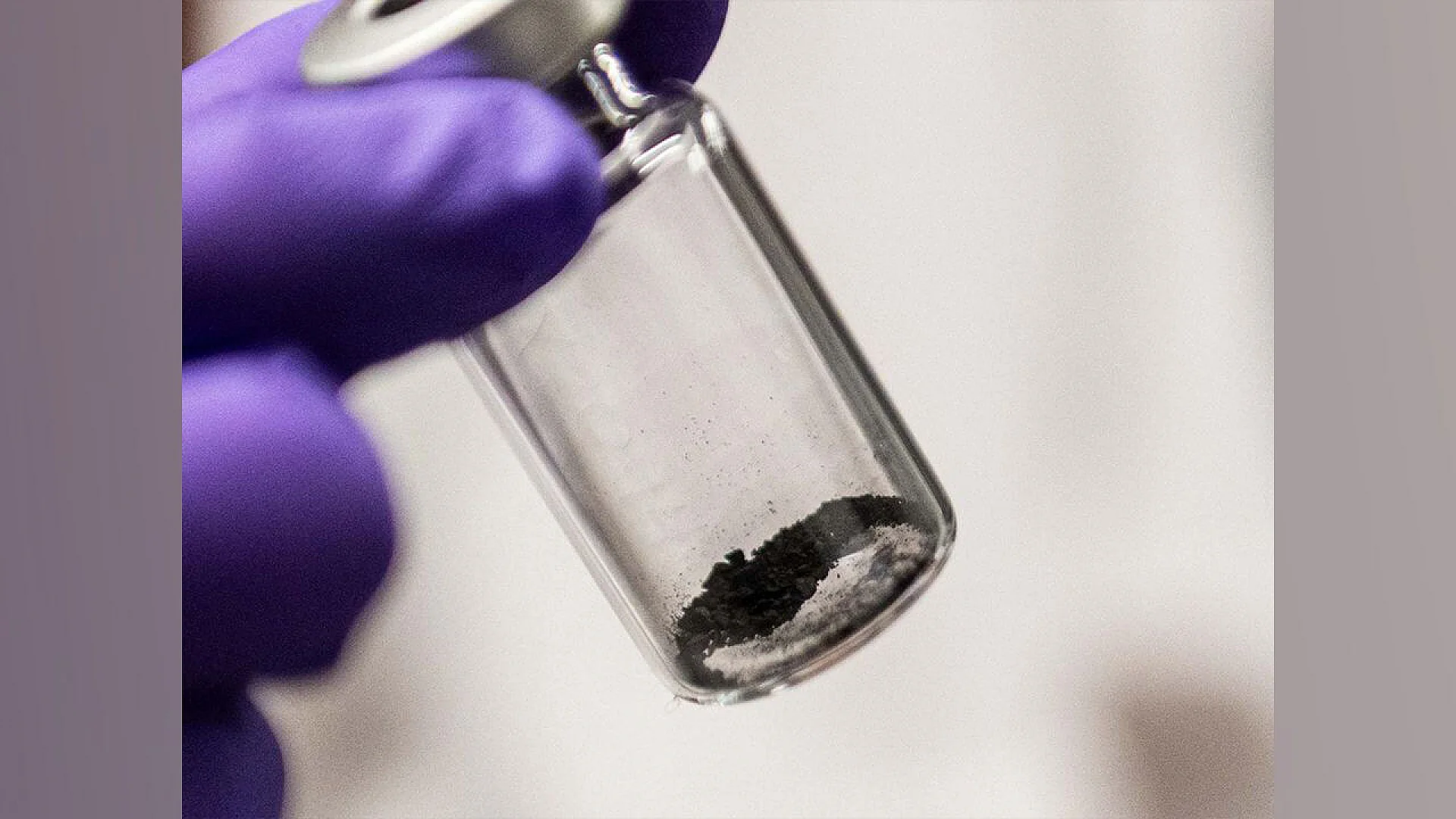
Long before Earth formed oceans, air, or life, chemistry was already busy in space. Small rocky bodies were moving through the young solar system, collecting ice, dust, and organic material. Some of those bodies still fall to Earth today as meteorites.
Inside certain meteorites, scientists find amino acids. These are the basic units that make up proteins in living organisms. Their presence in space rocks has fascinated researchers for decades, because it shows that important biological ingredients existed before life itself.
For a long time, many scientists assumed that these amino acids formed through one main chemical process. That idea was simple and neat. But nature often turns out to be more complicated.
A new study suggests that amino acids in meteorites did not all form the same way. Instead, they appear to carry evidence of several chemical pathways, each shaped by different environments in the early solar system.
Why scientists look at isotopes
To understand where these amino acids came from, researchers rely on isotopes. Isotopes are versions of the same element that have slightly different weights. Carbon and nitrogen, two key elements in amino acids, both have light and heavy isotopes.
Chemical reactions do not treat all isotopes equally. Some reactions prefer lighter isotopes, while others favor heavier ones. Because of this, the final molecule carries an isotopic signature that reflects how it was made.
These signatures act like chemical fingerprints. They allow scientists to trace a molecule’s history, even billions of years later.
In meteorites, isotopic ratios are especially useful. They help confirm that the amino acids are truly extraterrestrial and not the result of contamination from Earth. They also reveal clues about temperature, environment, and reaction type during formation.
Meteorites as time capsules
The study focused on carbon-rich meteorites known as carbonaceous chondrites. These rocks formed early in the solar system and avoided extreme heating, which helped preserve delicate organic molecules.
Within these meteorites, scientists find many different amino acids. Some, like glycine and alanine, are common in biology. Others are rare or not used by life at all.
This mixture is important. Molecules that are uncommon on Earth are less likely to be biological contamination. They provide strong evidence of non-biological chemistry in space.
Researchers carefully extracted individual amino acids from meteorite samples. Then they measured the carbon and nitrogen isotope ratios of each molecule separately. This detailed approach allowed direct comparisons between different amino acids found in the same rock.
The patterns were not uniform
When the isotope data were analyzed, a clear result emerged. The amino acids did not all share the same isotopic fingerprints.
Some amino acids showed carbon and nitrogen isotope ratios that matched a well-known chemical process called Strecker synthesis. This reaction involves simple molecules like aldehydes, ammonia, and hydrogen cyanide, and it can occur in the presence of water.
Strecker synthesis has long been considered a likely pathway for amino acid formation inside asteroid parent bodies, where liquid water may have existed for short periods.
However, other amino acids told a different story. Their isotopic signatures did not fit the Strecker pattern. Instead, they suggested formation under colder conditions, possibly in icy environments far from the young Sun.
These differences appeared even within the same meteorite. That detail is critical. It means the variations cannot be explained simply by later alteration or weathering on a single parent body.
Multiple chemical environments at work
The findings suggest that the early solar system hosted more than one setting capable of making amino acids.
One setting was likely cold and icy. In such environments, chemical reactions can occur on the surfaces of frozen dust grains, driven by radiation. These reactions can produce organic molecules with distinct isotopic signatures.
Another setting was warmer and wetter. Inside some asteroids, heat from radioactive elements melted ice and created liquid water. This allowed aqueous chemistry, including Strecker-type reactions, to take place.
According to the study, amino acids formed in both settings. Later, they were mixed together as asteroids grew, collided, and broke apart.
The meteorites we find today are fragments of this complex history. Each amino acid carries part of the story.
What this means for early Earth
These results matter because meteorites likely delivered organic material to early Earth. If amino acids arrived through multiple pathways, they would have come with greater chemical diversity.
That diversity could have influenced how early chemical systems developed. Different amino acids behave differently. Some bond more easily. Others are more stable. A varied supply increases the chances that useful combinations emerge.
The study also suggests that amino acid formation is not rare or limited to one special process. If multiple pathways operate naturally, then similar chemistry could occur in other planetary systems as well.
This does not mean life is guaranteed elsewhere. But it does mean that life’s basic ingredients can form under a wide range of conditions.
Testing ideas with laboratory experiments
For many years, scientists have recreated amino acid formation in laboratories. Some experiments use electrical sparks in gas mixtures. Others simulate watery environments inside asteroids.
The isotopic data from meteorites provide a way to test these experiments. When laboratory products match meteoritic isotopes, confidence in those pathways grows.
In this study, some amino acids matched laboratory predictions. Others did not. That mismatch suggests that current experiments do not capture the full range of chemistry that occurred in space.
It also highlights the need for more varied experimental designs. No single setup can represent the entire early solar system.
Remaining questions and limitations
Although the isotope evidence is strong, it does not identify every exact reaction step. Isotopes point to conditions and pathways, but not always to a single precise mechanism.
There is also variation between meteorites. Some experienced more water exposure or heating than others. Untangling original formation signals from later changes remains challenging.
Future studies may analyze additional meteorites and include other elements, such as hydrogen or oxygen. These could add more detail to the chemical picture.
Researchers are also interested in how these amino acids survived the journey to Earth. Entry through the atmosphere and impact with the surface can destroy organic molecules, yet many appear to have endured.
A richer view of pre-life chemistry
Overall, the study paints a picture of a chemically active early solar system. Amino acids did not come from a single source or process. They formed through multiple routes, across different environments, and over long periods of time.
This complexity strengthens, rather than weakens, our understanding of life’s origins. A system with many pathways offers more opportunities for useful chemistry to emerge.
By studying ancient space rocks in detail, scientists continue to uncover how chemistry prepared the ground for biology. The story is not simple, but it is becoming clearer with every new measurement.
The research was published in Proceedings of the National Academy of Sciences on February 09, 2026.
This content has been reviewed by subject-matter experts to ensure scientific accuracy. Learn more about us and our editorial process.
Last reviewed on .
Article history
- Latest version
Reference(s)
- Baczynski, Allison A.., et al. “Multiple formation pathways for amino acids in the early Solar System based on carbon and nitrogen isotopes in asteroid Bennu samples.” Proceedings of the National Academy of Sciences, vol. 123, no. 8, 09 February 2026, doi: 10.1073/pnas.2517723123. <http://doi.org/10.1073/pnas.2517723123>.
Cite this page:
- Posted by Aisha Ahmed