Bacteria Show Cellular Memory Passing Stress Lessons to Future Generations
Bacteria can learn, store memories and inherit them, shedding light on how they adapt and develop antibiotic resistance.
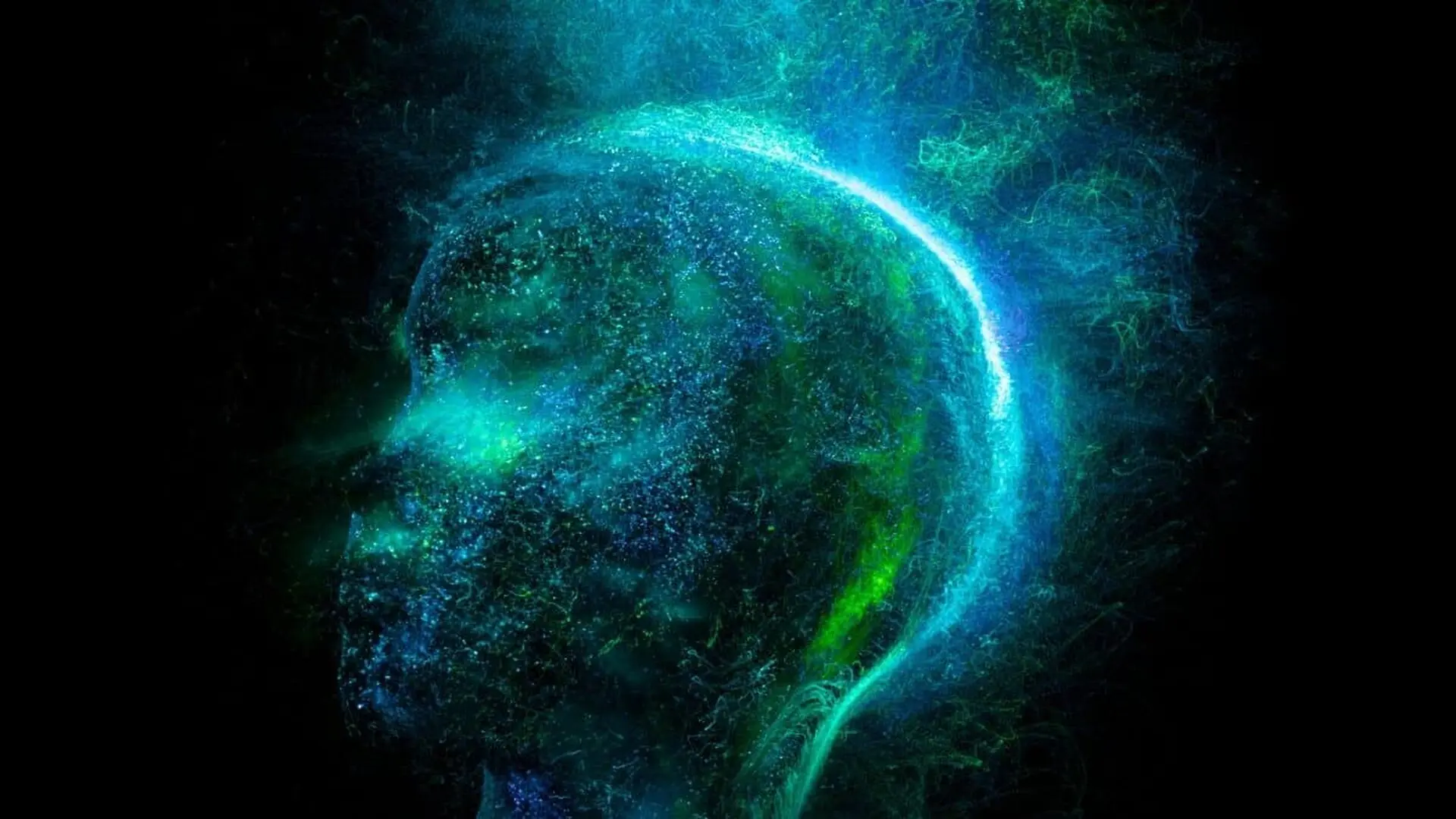
Memory is usually thought of as a property of brains, but research over the past twenty years shows that even unicellular organisms can store information and use it to shape future actions.
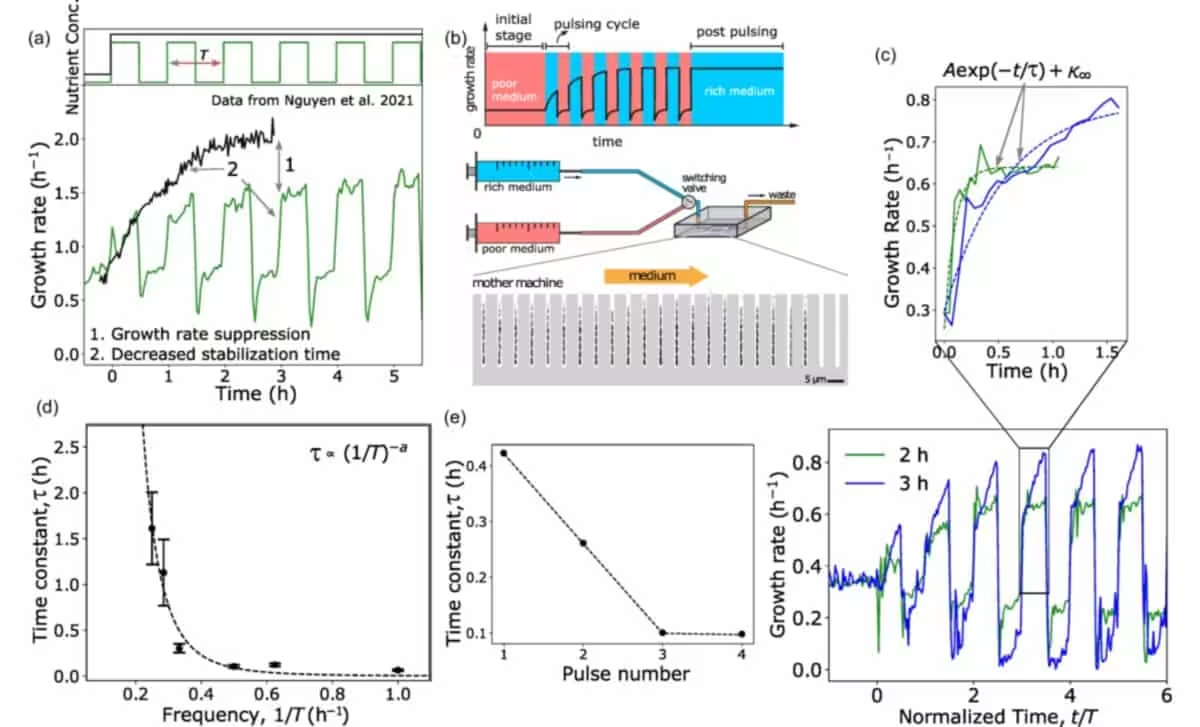
A recent investigation by computational biologists and physicists at Carnegie Mellon University and Georgia Institute of Technology examined how Escherichia coli responds to fluctuating nutrient environments. The team discovered that the bacteria’s behavior cannot be explained solely by the conditions they encounter at any given moment; instead, they draw on cues gathered from earlier exposures.
Historical Exposure Guides Bacterial Decision‑Making
Researchers tracked the growth of E. coli cultures while repeatedly altering the available nutrients. The resulting patterns indicated that present‑day conditions alone were insufficient to predict bacterial responses.
“We were trying to think about the mechanisms that allow such a simple organism to perform such complex adaptation,” explained lead author Josiah Kratz, a former Carnegie Mellon graduate student now serving as a postdoctoral scholar at Georgia Tech.
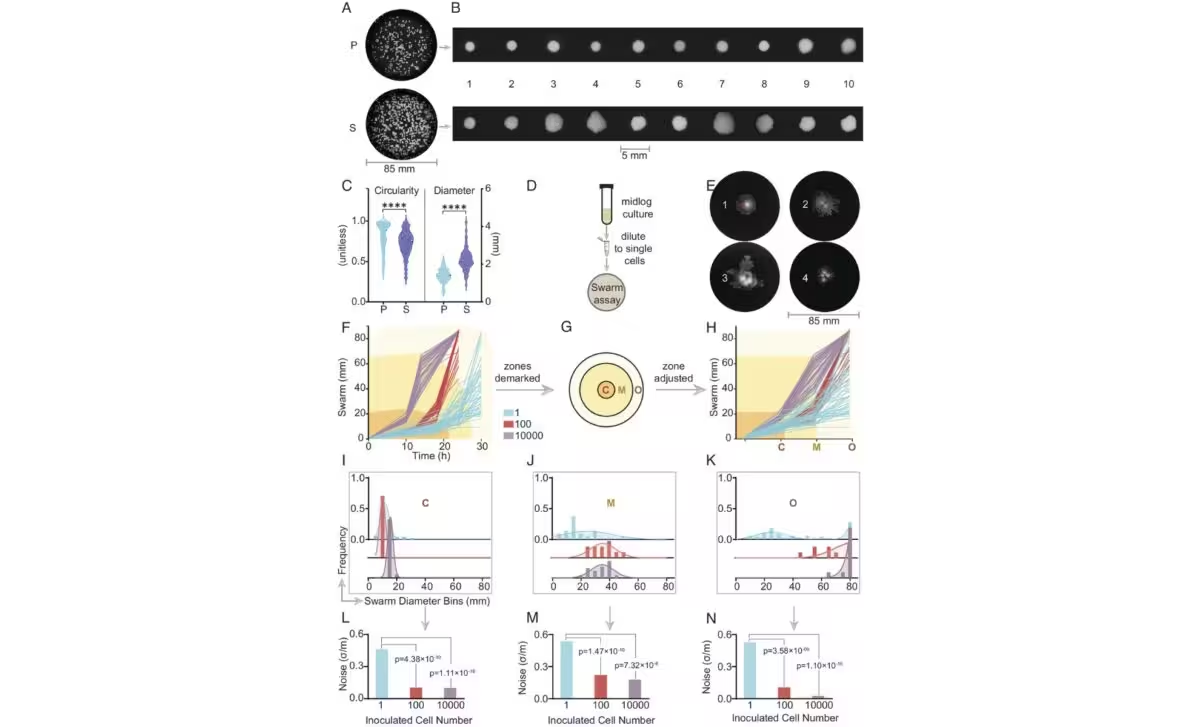
The work, published in PRX Life, attributes this adaptive edge to the bacteria’s capacity to learn from prior environmental conditions.
“The cell isn’t just responding to the input from the environment at a given time, it’s actually making decisions based off of its past history that it’s experienced, so that was surprising to us,” Kratz said. “No one to our knowledge has shown that bacteria in this context exhibit learning.”
Earlier studies have hinted at similar capabilities. A 2024 investigation led by microbial ethologist Souvik Bhattacharyya at the University of Texas at Austin demonstrated that E. coli can retain information about its surroundings and later employ that knowledge to coordinate swarming—a collective movement that enables colonies to colonize new niches or flee hostile settings (PNAS, reported by Popular Mechanics).
Nutrient Stress Imprints Inheritable Molecular Marks
The Carnegie Mellon–Georgia Tech team also probed how E. coli reacts when essential nutrients become scarce. Under stress, the cells synthesize biomolecules that alter protein expression, and these modified proteins can be transmitted to subsequent generations, equipping descendants with a molecular record of conditions they never directly faced.
Experiments revealed that such inherited molecular signatures accelerate the adaptation of daughter and granddaughter cells when they encounter the same stress again.
Bhattacharyya, now an assistant professor at UT Health Houston’s McGovern Medical School and not involved in the current work, emphasized the timeliness of these findings, noting that they address a central question about how bacterial memory might be mathematically modeled.
“It moves the field forward rather than adding a new dimension,” he said.
Beyond basic science, the ability to trace a bacterium’s experiential history could prove valuable in clinical contexts. Understanding what bacterial populations have previously encountered may become a key factor in tackling infections and combating antibiotic resistance, a threat highlighted by the World Health Organization.
“If we really want to have a better understanding and better control over eradicating bacterial populations, we’re going to need to also take into account what they’ve experienced in the past,” Kratz said.
Memory, Learning and the Question of Consciousness
The study also touches on a longstanding debate about the nature of consciousness. Proponents of the Cellular Basis of Consciousness hypothesis argue that associative learning and durable memory formation imply a rudimentary form of awareness even in simple organisms—a claim that remains contentious (see discussion).
Kratz clarified that their findings do not hinge on whether bacteria are conscious.
“If you define memory as a persistence of information across time, that doesn’t require consciousness or even intelligence,” he said. “Given the way that we’ve framed adaptation and learning in this context, we’re solely focused on how the system—the system being a cell—takes inputs and makes decisions.”
The implications may extend to human neuroscience as well. Colin Hill, a microbiology professor at University College Cork, suggested that if single‑cell organisms can exhibit memory, some aspects of human memory might also be stored at the cellular level, independent of neuronal networks.
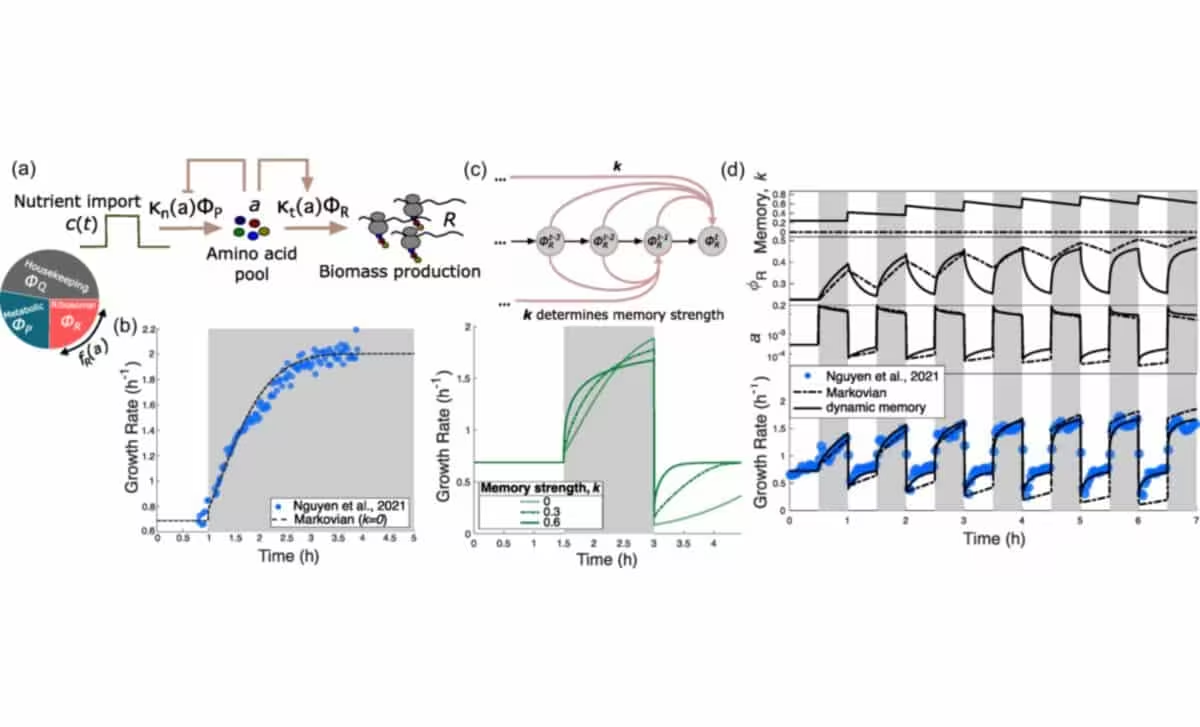
Kratz also noted that the mathematical framework describing bacterial learning mirrors recurrent neural networks, a class of deep‑learning models inspired by feedback loops in the human brain. He argued that the intracellular molecular interactions follow computational principles akin to those employed in artificial intelligence.
Bhattacharyya added that further exploration of bacterial memory could illuminate fundamental mechanisms of information storage across all life forms.
“Maybe we can use that information to go deep into the basic facets of human memory,” he said. “Bacterial memory can tell us a lot about how information is stored, and shows how diverse the memory mechanisms, memory processes, and timescales can be.”
This article has been fact checked for accuracy, with information verified against reputable sources. Learn more about us and our editorial process.
Last reviewed on .
Article history
- Latest version
Reference(s)
- Kratz, Josiah C.., et al. “Multi-Timescale Adaptation and Emergent Learning in Single Bacterial Cells.” PRX Life, vol. 4, no. 2, May 15, 2026 American Physical Society (APS), doi: 10.1103/5zbg-8vll. <https://journals.aps.org/prxlife/abstract/10.1103/5zbg-8vll>.
- Bhattacharyya, Souvik., et al. “A heritable iron memory enables decision-making in Escherichia coli.” Proceedings of the National Academy of Sciences, vol. 120, no. 48, November 21, 2023 National Academy of Sciences, doi: 10.1073/pnas.2309082120. <https://www.pnas.org/doi/10.1073/pnas.2309082120>.
- Neith, Katie. “Bacteria Can Pass Down Memories, Groundbreaking Study Finds—Suggesting Your Memory May Be Hiding in Single Cells.”, July 9, 2026 Popular Mechanics <https://www.popularmechanics.com/science/a71856173/bacteria-learn-cellular-memory/>.
- “Antimicrobial resistance.” <https://www.who.int/news-room/fact-sheets/detail/antimicrobial-resistance>.
- Reber, Arthur. “The CBC theory and its entailments: Why current models of the origin of consciousness fail.”, vol. 25, no. 1, pp. 8 PubMed Central (PMC), doi: 10.1038/s44319-023-00004-6. <https://pmc.ncbi.nlm.nih.gov/articles/PMC10883262/>.
- “Checking your browser - reCAPTCHA.” <https://pmc.ncbi.nlm.nih.gov/articles/PMC11094104/>.
Cite this page:
- Posted by Asif Iqbal