AI Unlocks 2,000‑Year‑Old Stoic Scroll From Vesuvius Ash, Revealing Lost Ancient Wisdom
A Vesuvius‑sealed scroll has finally been deciphered, revealing a lost ancient argument scholars thought was lost forever.
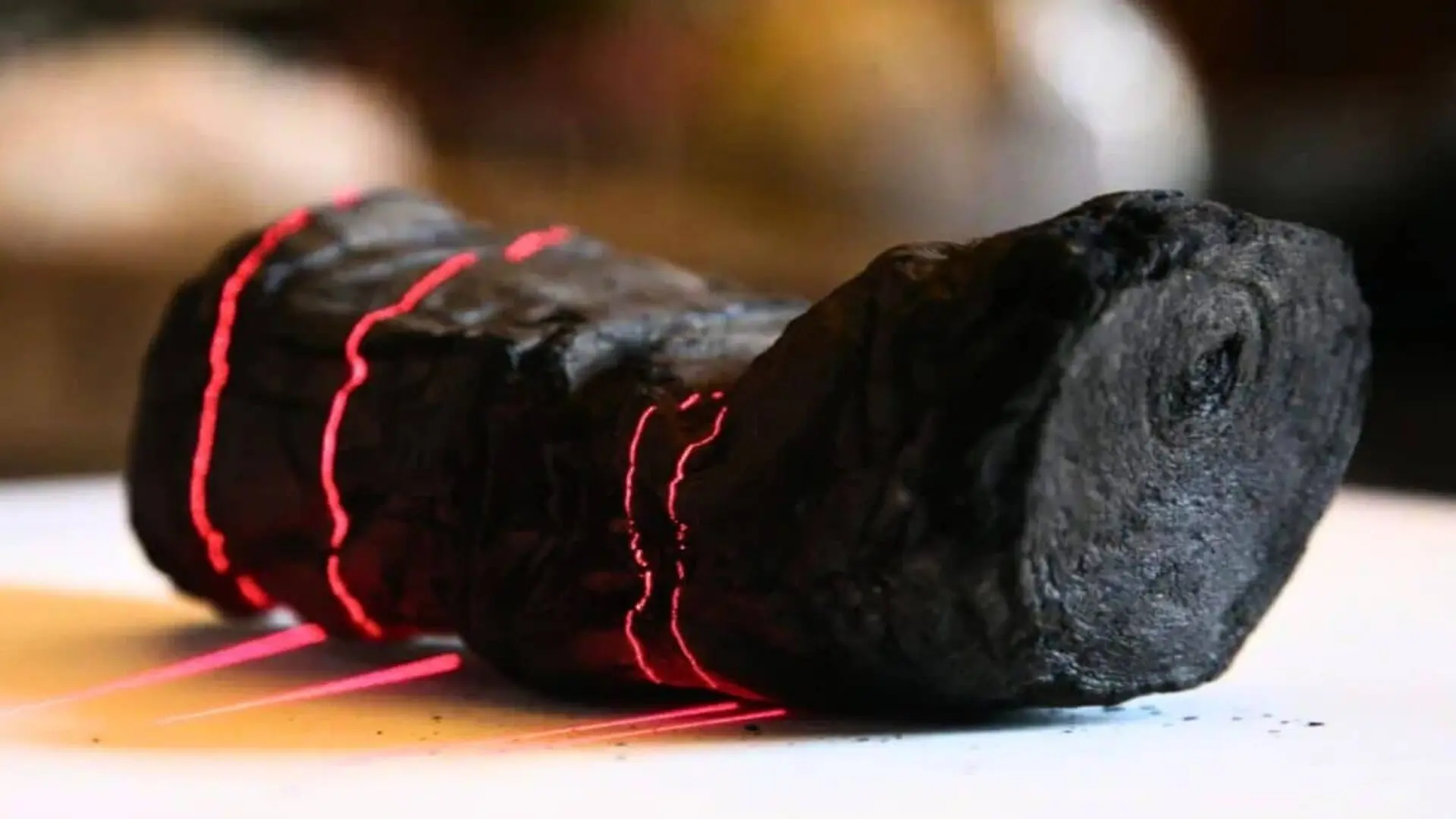
For almost two thousand years a tiny, charred roll of papyrus lay forgotten in a Naples archive, its script reduced to a compact, blackened cylinder barely an inch across. The fragment, rescued from the Herculaneum ruins after Mount Vesuvius burst in 79 C.E., survived the volcanic blast only to be further mangled by early attempts to open it.
By combining X‑ray computed tomography with machine‑learning analysis, an international team has now extracted every legible line from the damaged roll, unveiling a 2,000‑year‑old philosophical discourse on logic, moral character, and the limits of human understanding.
The findings were unveiled at a scientific gathering in Naples on 25 June 2026 and reported by National Geographic. The nearly five‑foot fragment comprises about twenty columns of ancient Greek, accessible for the first time since the first century B.C.E.
How Human Hands Worsened the Damage
The Herculaneum papyri constitute the sole surviving library from the Greco‑Roman world. Buried beneath roughly 60 feet of volcanic ash, the roughly 1,800 rolls were carbonized into fragile, blackened clumps that disintegrated at the slightest touch.
When the Villa of the Papyri was uncovered in the 1750s, scholars resorted to drastic measures—cutting scrolls in half, scraping layers, and later applying gelatin and acetic acid in the 1960s and 1980s. The scroll now catalogued as PHerc. 1667 suffered severe loss: its diameter shrank from 1.9 inches to under 0.8 inches, and more than half of the material was destroyed.
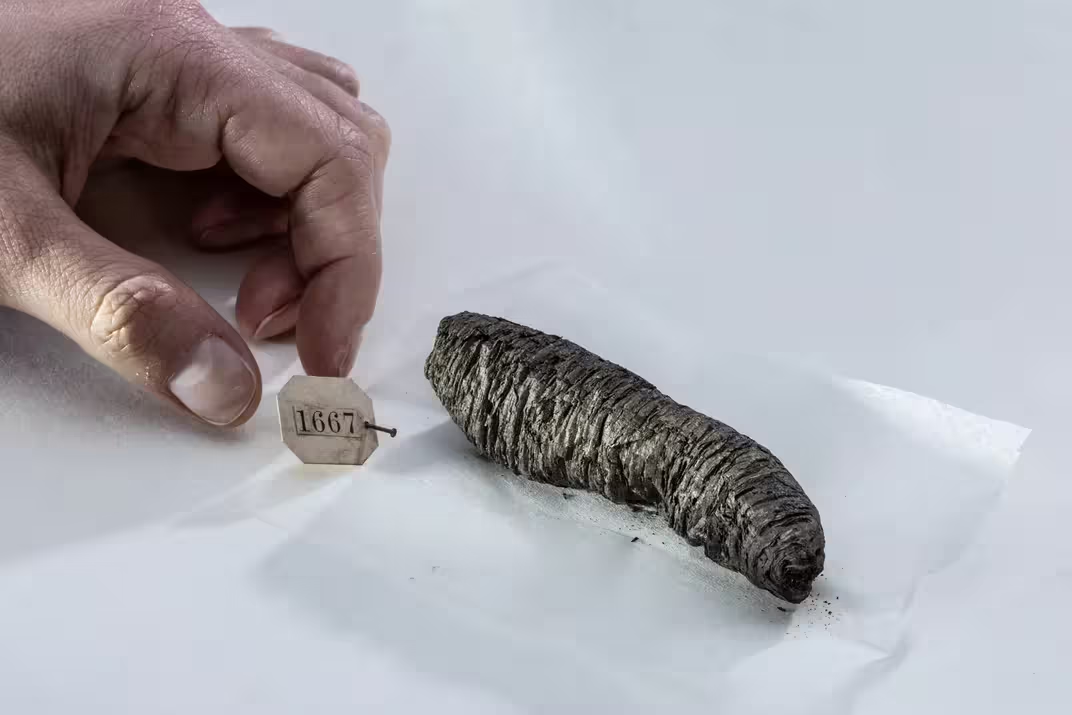
“What we have today represents only a fragment of the original roll,” explained Federica Nicolardi, lead papyrologist for the Vesuvius Challenge, during the press briefing. “Although the title and opening portion are missing, we can now trace the author’s line of reasoning across successive columns.”
Digital Unwrapping Reveals Hidden Ink
The breakthrough relies on a method pioneered by computer scientist Brent Seales at the University of Kentucky. His approach captures three‑dimensional X‑ray images of the scroll’s interior, then uses specialized software to isolate and flatten each layer, making the text readable. Because ink on carbonized papyrus appears only as a subtle texture, Seales also trained an artificial‑intelligence model to recognize those faint signatures.
Seales launched the Vesuvius Challenge in 2023 with backing from two Silicon Valley investors, offering more than $1.8 million in prizes for advances in scroll decipherment. The competition quickly progressed from a single legible word in 2023 to thousands of Greek characters, and eventually to a confirmed title.
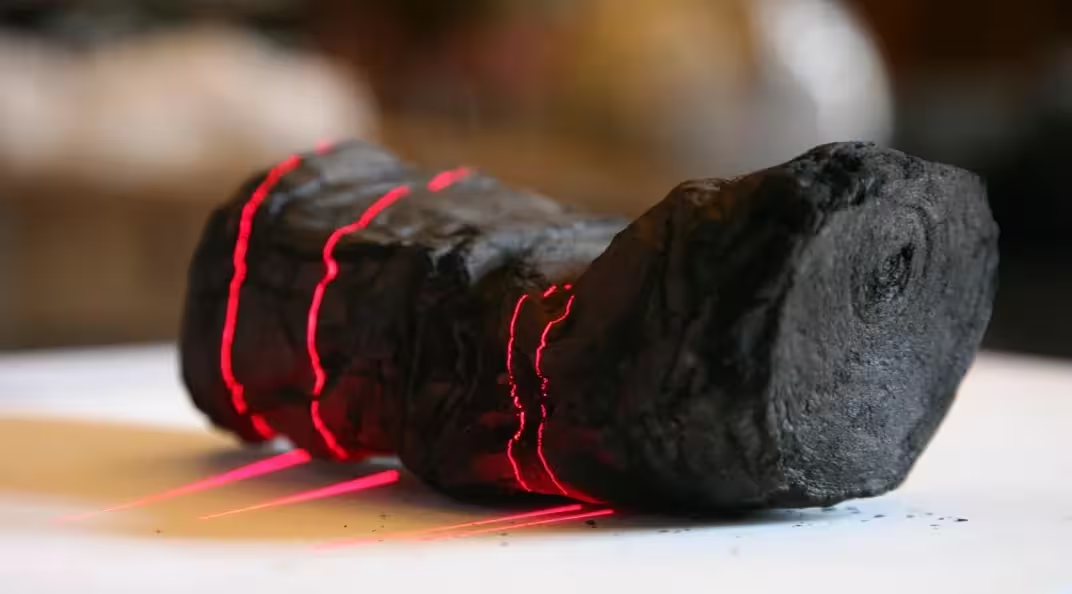
Seales described the technology at the conference: “It may look like sorcery, but it is simply a powerful tool for restoring lost voices from antiquity.”
Stoic Themes Emerge from the Text
The recovered material aligns with core Stoic doctrines that prioritize reason, moral virtue, and the pursuit of practical wisdom (phronesis). The surviving sections caution against allowing emotion to dominate rational judgment and explore the limits of human cognition, noting, “We will inquire into something, but we will not grasp it, if in some way we depart from ourselves and from our own nature.”
Classical scholar Claudio Vergara interprets the passage as a meditation on innate rationality and the drive toward goodness—key tenets of Stoic philosophy.
The scroll also references Aristocreon, the nephew of Chrysippus, an early Stoic thinker whose own writings survive only through secondary citations. While it remains uncertain whether Chrysippus authored the treatise, the association adds intrigue to the fragment’s provenance.
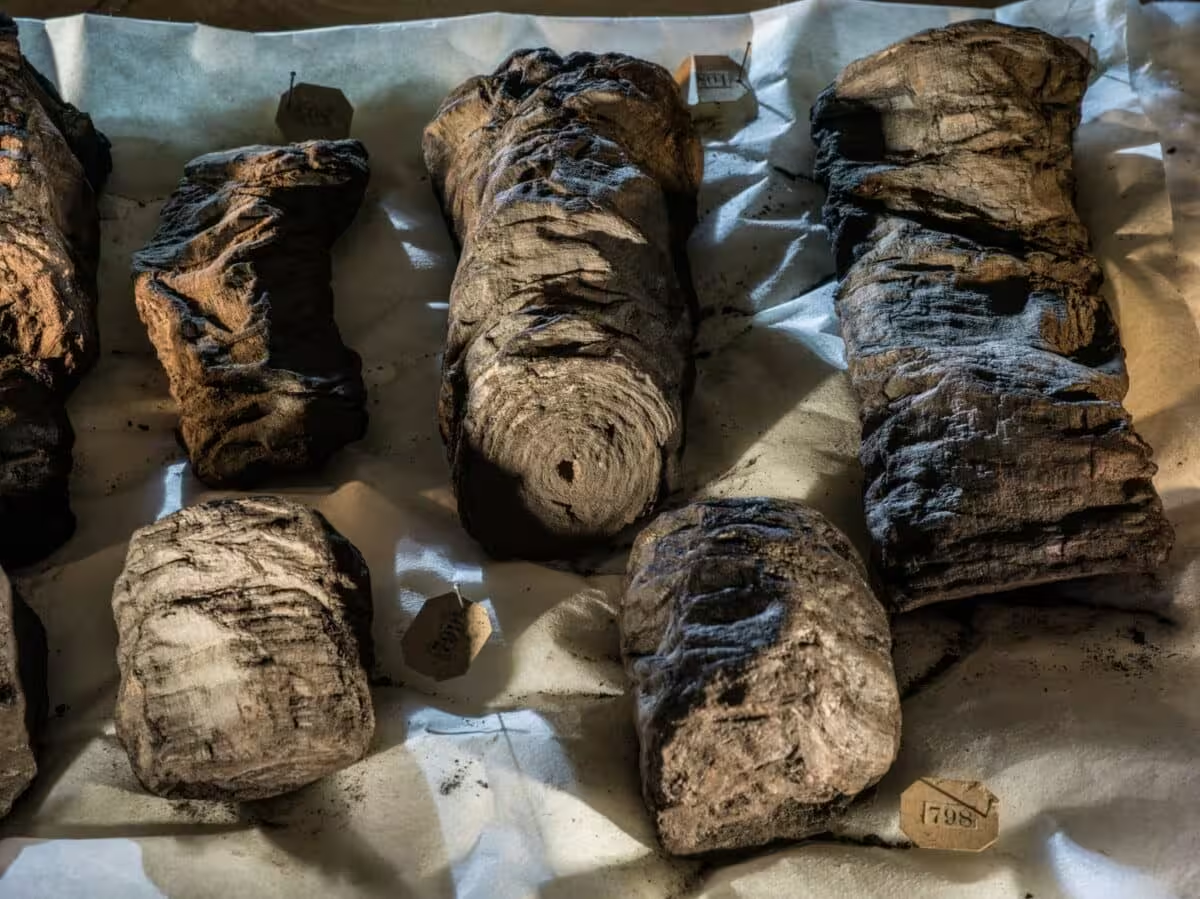
Classicist Thomas Coward of the University of Bristol, who was not part of the project, emphasized the importance of accessing original texts rather than relying on later excerpts that may be altered or reinterpreted, speaking to New Scientist.
Nicolardi noted that the script in PHerc. 1667 appears more archaic than that of other Herculaneum rolls, featuring sharper and more varied letterforms. This suggests a composition date in the second or possibly third century B.C.E., making it one of the earliest Roman‑era manuscripts ever recovered.
Further Discoveries as the Initiative Expands
Beyond PHerc. 1667, researchers identified a title in another fragment: Philodemus, On Gods, Book 8. Prior scholarship had only documented Books 1 and possibly 3 of that series, so the new find hints at a more extensive corpus.
A third roll, PHerc. 172, yielded over 70 columns of text from Philodemus’ On Vices, a substantial addition given that the manuscript was previously unreadable.
The Vesuvius Challenge now offers a $1 million award to the first team that fully deciphers another complete scroll by this time next year, with the condition that all methodologies be made public for broader scientific use. Since Herculaneum has never been completely excavated, archaeologists suspect additional rolls remain hidden beneath the site.
This article has been fact checked for accuracy, with information verified against reputable sources. Learn more about us and our editorial process.
Last reviewed on .
Article history
- Latest version
Reference(s)
- Kean, Sam. “Vesuvius buried these scrolls.
AI is bringing them back..”, June 24, 2026 National Geographic <https://www.nationalgeographic.com/history/article/herculaneum-scrolls-mount-vesuvius-ai>. - “Chartes - Dettaglio Papiro.” <https://www.chartes.it/index.php?r=document/view&id=1691>.
- Challenge, Vesuvius. “An entire Herculaneum scroll has been read for the first time.”, June 25, 2026 Vesuvius Challenge <https://scrollprize.org/firstscroll>.
- Bennett, Hayley. “Lost books by ancient philosophers recovered from 'unreadable' scrolls.”, June 25, 2026 New Scientist <https://www.newscientist.com/article/2531697-lost-books-by-ancient-philosophers-recovered-from-unreadable-scrolls/>.
- “Vesuvius Challenge — Reading the Herculaneum Scrolls with AI.” <https://scrollprize.org/>.
Cite this page:
- Posted by Asif Iqbal