Synthetic SpudCell Grows, Replicates
SpudCell marks a major advance in synthetic biology, creating a synthetic cell that grows, replicates DNA and produces offspring, though not alive.
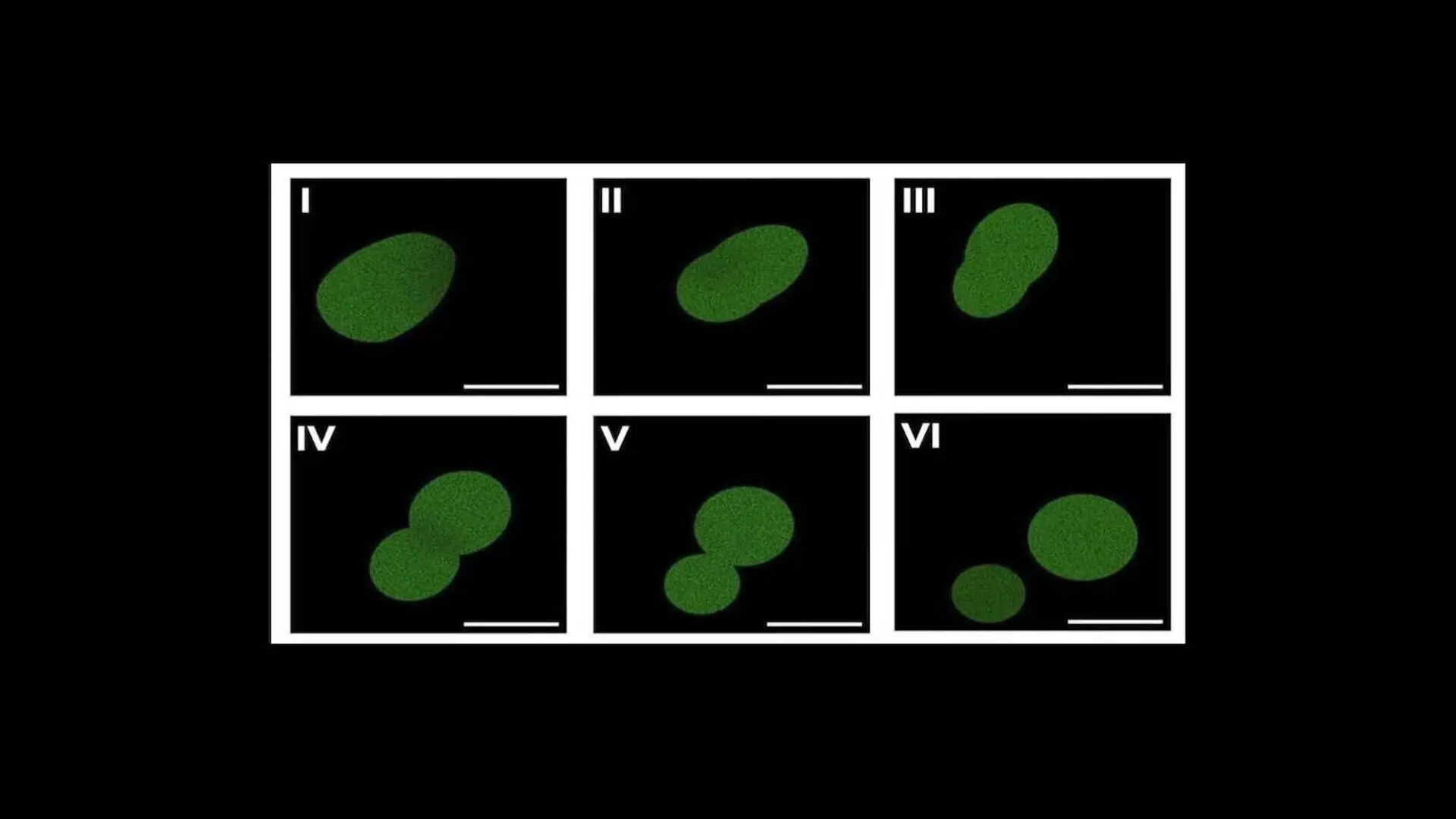
SpudCell marks a major advance toward synthetic biology’s goal of creating life from the ground up.
Researchers at the University of Minnesota have assembled a fully synthetic entity that mimics four core characteristics of living cells: nutrient uptake, growth, DNA replication, and division.
The rise of genomic technologies has equipped scientists with the ability to redesign cellular genetic circuits for applications ranging from disease treatment to sustainable manufacturing. Yet the ultimate ambition remains the construction of a completely artificial cell—a proof that the essential components of life can be recreated in the lab.
Previous milestones include Craig Venter’s 2016 creation of a minimal bacterial cell containing just 473 genes, and the Synthetic Yeast Genome Project’s effort to synthesize all sixteen yeast chromosomes, though those chromosomes have yet to function together inside a single organism.
In their latest work, the Minnesota team introduced “SpudCell,” a potato‑shaped construct visible under a microscope, which operates inside a lipid‑bound vesicle called a liposome. The synthetic genome spans roughly 90,000 base pairs and is distributed across multiple plasmids, each dedicated to distinct biochemical tasks.
“We have reproduced in chemistry the full suite of cellular behaviors that were previously confined to biology,” explained project lead Kate Adamala in a university press release. “This demonstrates that fundamental life processes such as growth and replication do not require any mysterious, non‑chemical spark.”
SpudCell relies on a curated toolkit of 36 purified enzymes, primarily derived from Escherichia coli, to transcribe its genome and assemble proteins. Nutrients enter the system through protein pores embedded in the liposomal membrane, while larger macromolecules are delivered via tiny lipid vesicles that merge with the outer shell.
Because the artificial cell depends on externally supplied “food,” it cannot survive unaided in natural environments—a built‑in safety feature. As Adamala told New Scientist, the construct is “a bedridden Frankenstein’s monster that has to be spoon‑fed, so there’s no risk of it running amok.”
Upon nutrient intake, the encoded genes drive protein synthesis and membrane lipid incorporation, causing the vesicle to swell. After a few hours the enlarged structure undergoes division, yielding two daughter cells.
Cell division was achieved without recreating the complex cytoskeletal machinery of natural organisms. Instead, the researchers induced mechanical stress by clustering proteins on the membrane surface, which eventually pinched the membrane into two separate entities.
SpudCell also exhibited a rudimentary form of selection. When a genetic modification that enhanced nutrient uptake was introduced, the altered lineage outperformed the original within five generations, especially under conditions of limited resources.
Despite these capabilities, the construct does not meet the full criteria for life. It lacks the ability to produce its own ribosomes, the molecular machines required for protein synthesis, and the supplied ribosomes degrade over time, restricting the system to roughly five to ten division cycles.
Jack Szostak of the University of Chicago commented to Quanta that the achievement represents “an impressive step,” but noted that the absence of self‑generated ribosomes curtails long‑term growth potential. He added that the ability to synthesize its own ribosomes would bring the system much closer to genuine biological cells.
The team envisions applications for these engineered cells in the production of pharmaceuticals, fuels, and specialty chemicals, offering a less toxic and energy‑intensive alternative to traditional industrial processes. To facilitate broader adoption, they have launched a nonprofit organization, Biotic, dedicated to sharing the underlying tools with the scientific community.
This article has been fact checked for accuracy, with information verified against reputable sources. Learn more about us and our editorial process.
Last reviewed on .
Article history
- Latest version
Reference(s)
- “Biotic | Biology is Open Technology Inspiring Civilization.” <https://www.biotic.org/>.
Cite this page:
- Posted by Asif Iqbal