Orbital Seeks FCC Approval For 100,000 AI-Powering Data Center Satellites
Orbital unveils a non‑communication satellite project, showcasing a startup’s unique mission beyond traditional constellations.
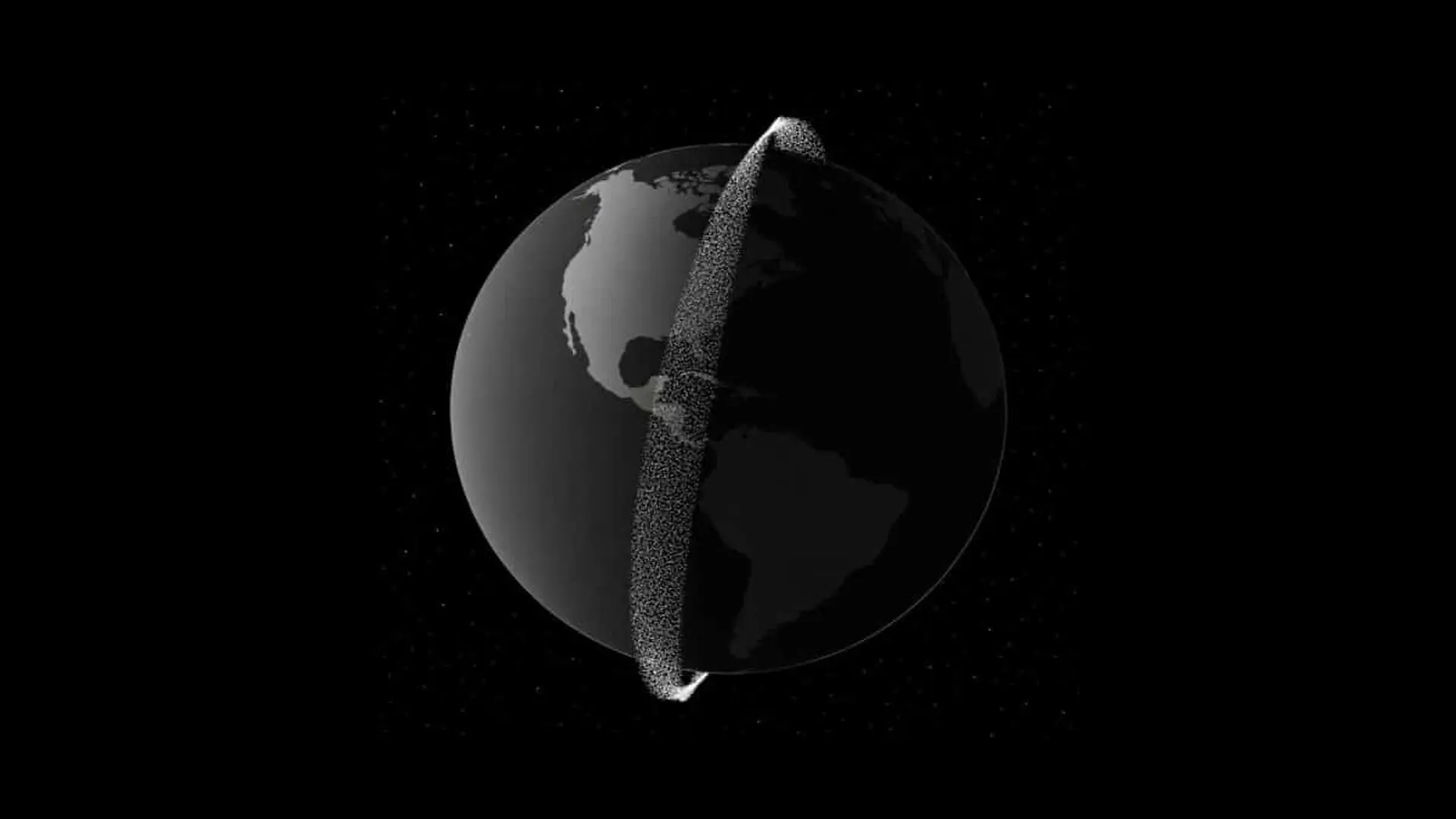
Orbital has moved its first regulatory hurdle forward by filing a request with the Federal Communications Commission (FCC) to launch as many as 100,000 satellite‑based data centers. The venture aims to supply roughly 10 gigawatts of compute capacity, a figure intended to keep pace with the exploding appetite for artificial‑intelligence workloads.
The paperwork, submitted on 24 June, outlines the envisioned constellation’s dimensions, orbital band, and data‑exchange architecture. It follows the Los Angeles startup’s recent emergence from stealth mode after securing a $5 million pre‑seed round.
Orbital is stepping into a market that is gaining traction across the space sector. According to SpaceNews, a growing number of firms are exploring orbital data‑center concepts as traditional ground facilities strain under the combined pressures of power, cooling and land constraints imposed by AI expansion.
Satellite Design Tailored for On‑Orbit Computing
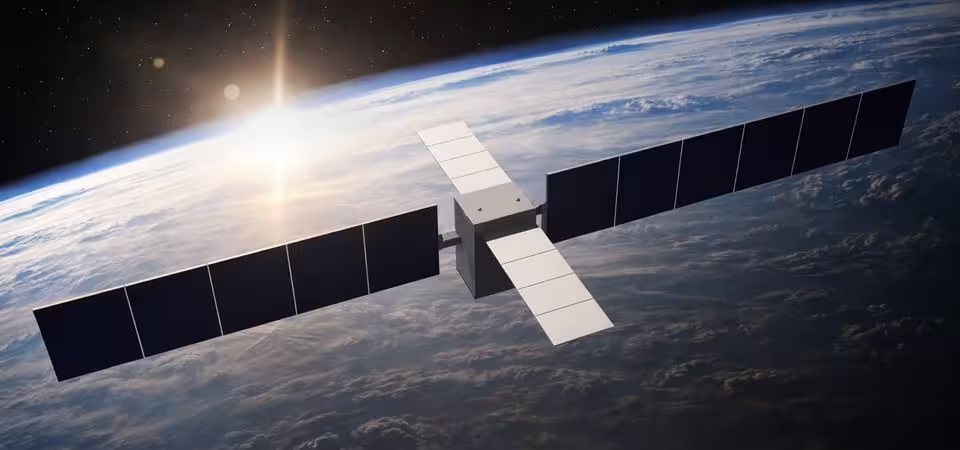
Orbital proposes a fleet of 100‑kilowatt‑class platforms operating in low‑Earth orbit between 500 and 850 km. Each unit would sport solar panels and radiators extending roughly 100 m, with a dry mass in the range of 1.5 to 2.5 metric tons.
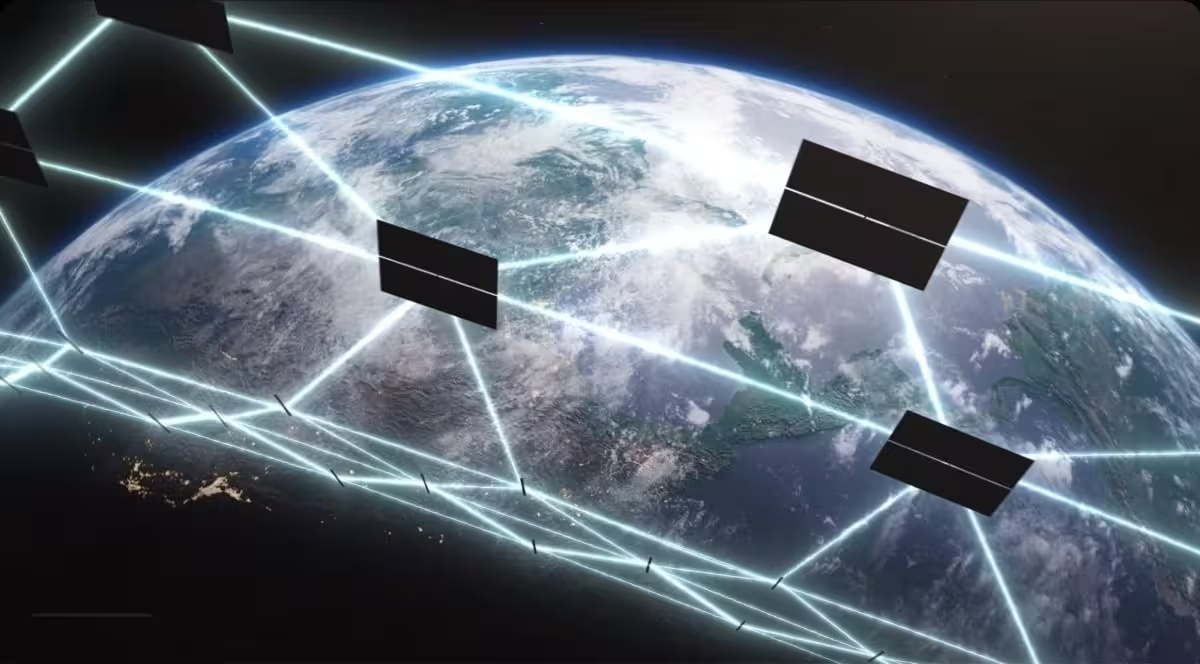
Unlike typical communications satellites, these craft are intended to run data‑processing workloads. They would rely on optical inter‑satellite links tied into existing third‑party networks. The FCC filing, cited by SpaceNews, lists SpaceX’s Starlink as a possible conduit for those optical connections.
A test flight is slated for next year, featuring a payload far smaller than the hardware planned for later operational units.
“The demonstrating payload is going to be a very, very scaled down version of what we’re looking to do with a single GPU,” founder and CEO Euwyn Poon said. “Maybe one one hundredth the size.”
Roadmap Toward a Dedicated Compute Satellite by 2028
Following the demonstration, Orbital intends to roll out Orbital‑1, its inaugural full‑scale compute satellite, targeted for launch in 2028. Founder Euwyn Poon notes that the vehicle is being engineered to mirror the eventual production model as closely as possible, even though the broader constellation may not materialize until several years later.
Design parameters remain fluid. Poon points out that Starcloud is pursuing 200‑kilowatt spacecraft for an 88,000‑satellite network, while SpaceX has outlined a 150‑kilowatt class for its proposed orbital data‑center effort, filing plans for up to one million units.
The current Orbital team counts six engineers with backgrounds at SpaceX, Amazon and Northrop Grumman, blending expertise in spacecraft construction, high‑volume manufacturing and advanced technology development.
Production Scale‑Up and Launch Logistics Pose Major Hurdles
Poon acknowledges that mass‑producing the satellites will be the most demanding aspect of the program. He describes orbital data centers as relatively simple assemblies of solar arrays, radiators and electronics, yet they must survive the harsh environment of space, including vacuum and radiation exposure.
“The complexity is all launch,” Poon said, emphasizing the critical role of heavy‑lift rockets for deploying a fleet of this magnitude.
While the core bus is being designed in Los Angeles, Orbital is scouting manufacturing collaborators and broader partnership opportunities. Poon draws a parallel to his prior venture Spin, an electric‑scooter startup he sold to Ford. He recalls that modest design tweaks—such as adopting swappable batteries—produced outsized gains, and he believes similar iterative improvements could translate into significant efficiencies across a fleet of 100,000 satellites.
This article has been fact checked for accuracy, with information verified against reputable sources. Learn more about us and our editorial process.
Last reviewed on .
Article history
- Latest version
Reference(s)
- “Orbital — Data Centers in Space.” <https://orbital.inc/>.
- “ICFS Application Summary - ICFS Portal.” <https://fccprod.servicenowservices.com/icfs?id=ibfs_application_summary&number=SAT-LOA-20260624-00251>.
- Rainbow, Jason. “Orbital files plans for 100,000 orbital data centers.”, June 30, 2026 SpaceNews <https://spacenews.com/orbital-files-plans-for-100000-orbital-data-centers/>.
- “Data Centers in Space | Starcloud – The Future of AI.” <https://www.starcloud.com/>.
Cite this page:
- Posted by Asif Iqbal