After 1,900 Years, AI Reveals the Face of a Pompeii Victim Caught in Deadly Eruption While Fleeing to the Coast
AI rekonstruuje tvář oběti Pompejí, která před 1900 lety použila misku jako poslední štít
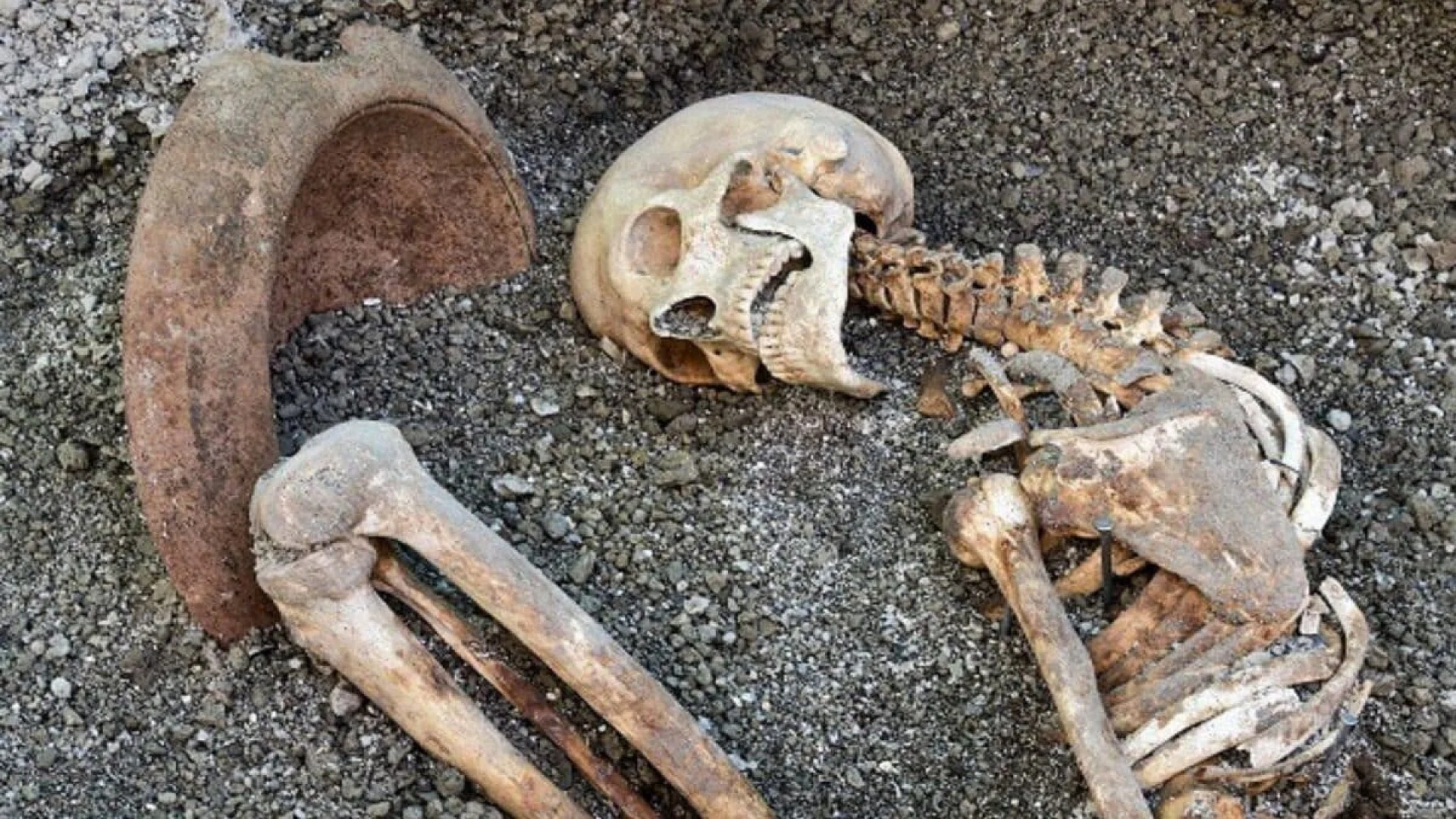
A team of archaeologists and computer scientists has used artificial intelligence to generate a portrait of a man who fled the 79 AD eruption of Mount Vesuvius, based on a skeleton uncovered in the recently opened Porta Stabia burial ground outside ancient Pompeii.
Digital Face of a Pompeian Escapee
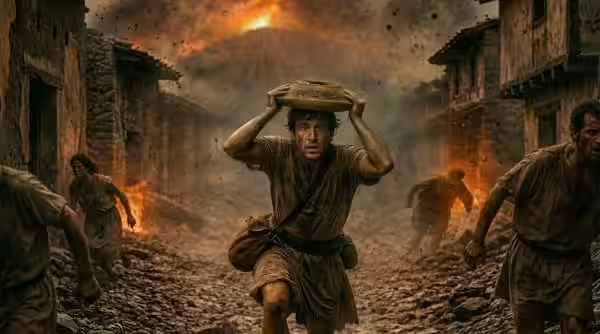
The AI‑rendered image, titled “Fuga dall’eruzione” (Escape from the Eruption), depicts the victim sprinting along a road strewn with volcanic debris while the volcano erupts in the distance. A second figure, identified as a younger individual, appears alongside him and is thought to have been overtaken by the ensuing pyroclastic flow, according to the Pompeii Archaeological Park.
How Researchers Built the Portrait
First, forensic anthropologists recorded the skeletal dimensions and bone morphology of the remains. Those data were fed into a custom AI model that generated a plausible facial structure. Subsequent refinements were made with photo‑editing tools to align the portrait with known Roman anatomical features. The University of Padua oversaw the technical workflow, and the final 2D illustration was polished for historical fidelity.
Details of the process were reported by Reuters, which noted that the AI system translated the biological markers into a lifelike visage before experts applied artistic adjustments.
Grave Goods Reveal a Last‑Minute Attempt to Survive
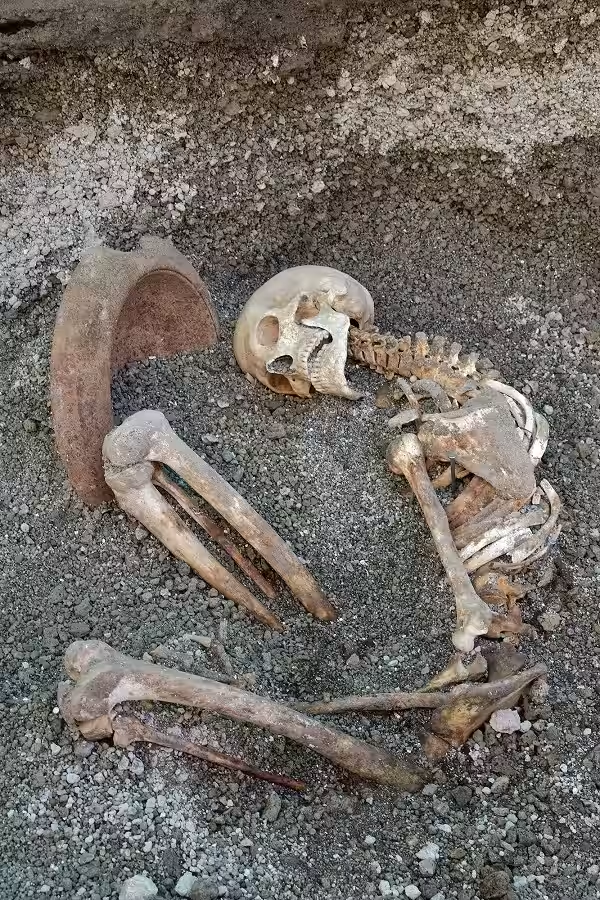
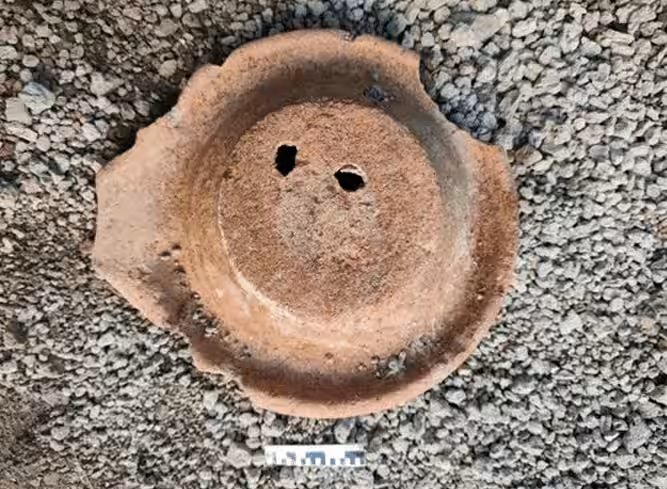
The man’s skeleton was recovered near the Porta Stabia gate, where he had been carrying a large terracotta cooking mortar on his head, likely using it as a shield against falling pumice and lapilli. A ceramic oil lamp was found nearby, suggesting he tried to navigate the darkness created by the ash cloud. Ten bronze coins and an iron ring encircling his left pinky finger also accompanied the remains.
These items, together with the positioning of the bones, indicate that the individual was among the early victims who attempted to escape toward the coast before the lethal pyroclastic flows engulfed the city.
Further Discoveries in the Porta Stabia Cemetery
The facial reconstruction is part of a series of recent findings in the Porta Stabia necropolis, an area traditionally used for burials outside the city walls in accordance with Roman law. Excavations have uncovered multiple inhumations and funerary structures dating to the months before the 79 AD disaster, as detailed in the park’s official communication.
Both the man and the younger individual appear to have perished during the initial phase of the eruption, based on the type of volcanic material that overlies their remains. Their proximity suggests they may have been part of the same fleeing group.
Debate Over Digitally Recreating Ancient Lives
The creation of a virtual likeness for a person who died millennia ago has sparked discussion about the ethical boundaries of AI in archaeology. Park officials acknowledge that such “digital twins” raise questions about consent and the potential for exploitation, even as they argue the images serve an educational purpose.
To address these concerns, the archaeological park will host a forum in July 2026 titled “Orbits – Dialogues with Intelligence,” focusing on the philosophical and moral implications of artificial intelligence in heritage research.
Official Reactions
Italian Culture Minister Alessandro Giuli praised the discovery, describing Pompeii as “perhaps the most prestigious place in the world for archaeological research, where every new find illuminates the fabric of ancient life in an exciting way.”
Gabriel Zuchtriegel, director of the archaeological park, emphasized that, when applied responsibly, AI can “contribute to a renewal of classical studies, illustrating the classical world in a more immersive way.”
This article has been fact checked for accuracy, with information verified against reputable sources. Learn more about us and our editorial process.
Last reviewed on .
Article history
- Latest version
Cite this page:
- Posted by Asif Iqbal