Ovarian Cell Subtype Trapped in Immature State Linked to Polycystic Ovary Syndrome
Single-cell mapping reveals a misregulated gene network driving follicular arrest and points toward unexpected metabolic drug candidates.
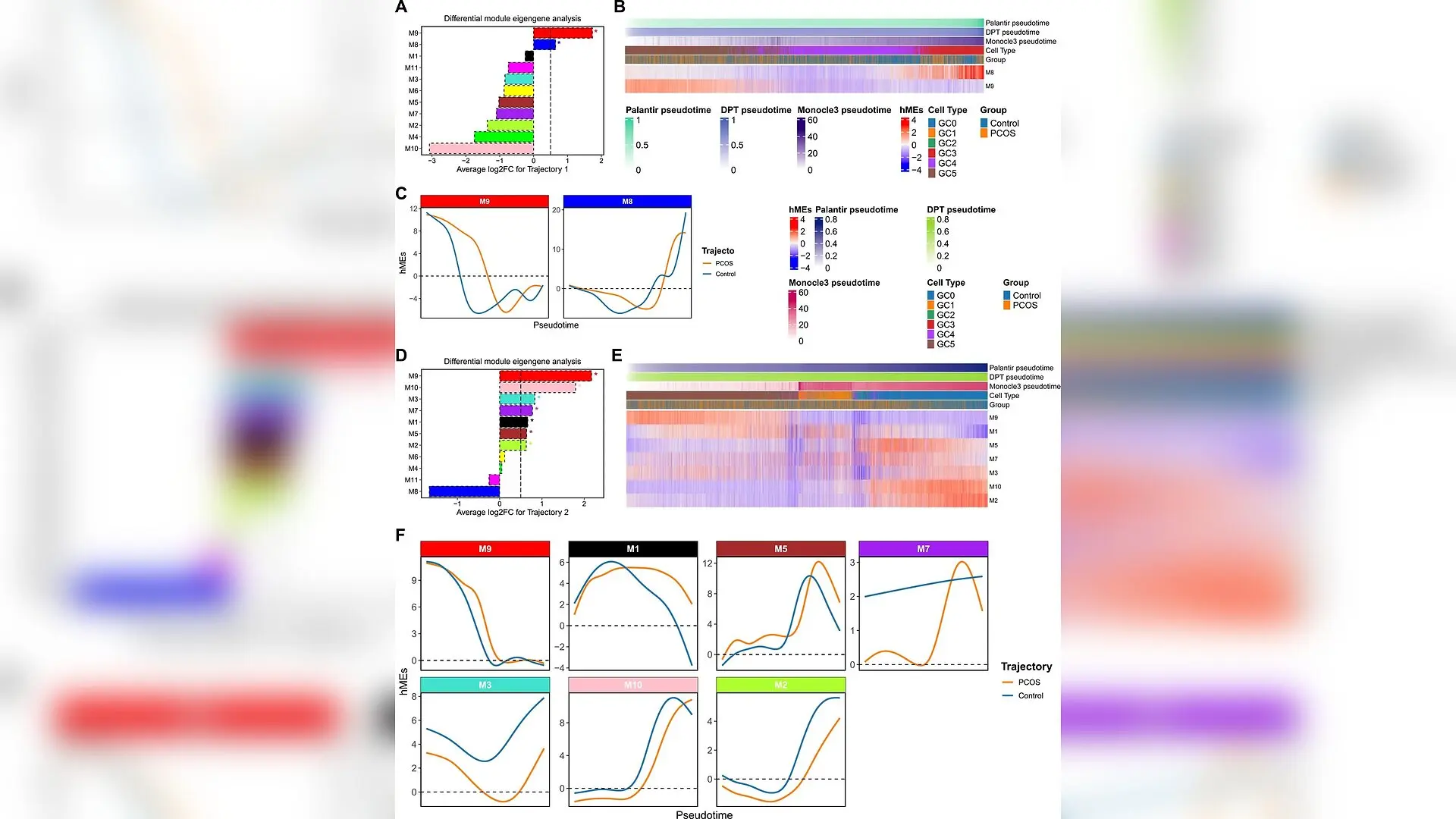
A specific subtype of ovarian cells trapped in an immature state may explain why polycystic ovary syndrome halts egg development, according to a study published in the International Journal of Women’s Health. The research uncovers how faulty gene regulation disrupts crucial ovarian cells and points toward potential new drug therapies for the condition.
Polycystic ovary syndrome affects 6 to 20 percent of women worldwide and stands as the leading cause of anovulatory infertility, where the ovaries fail to release an egg during a menstrual cycle. While scientists have long known that follicular developmental arrest sits at the heart of the disorder, the exact molecular triggers inside the ovary remained unclear. Granulosa cells, which form the vital layer surrounding and supporting developing eggs, display abnormal growth and defective maturation in patients with the condition.
Single-Cell Mapping Reveals a Hidden Ovarian Cell State
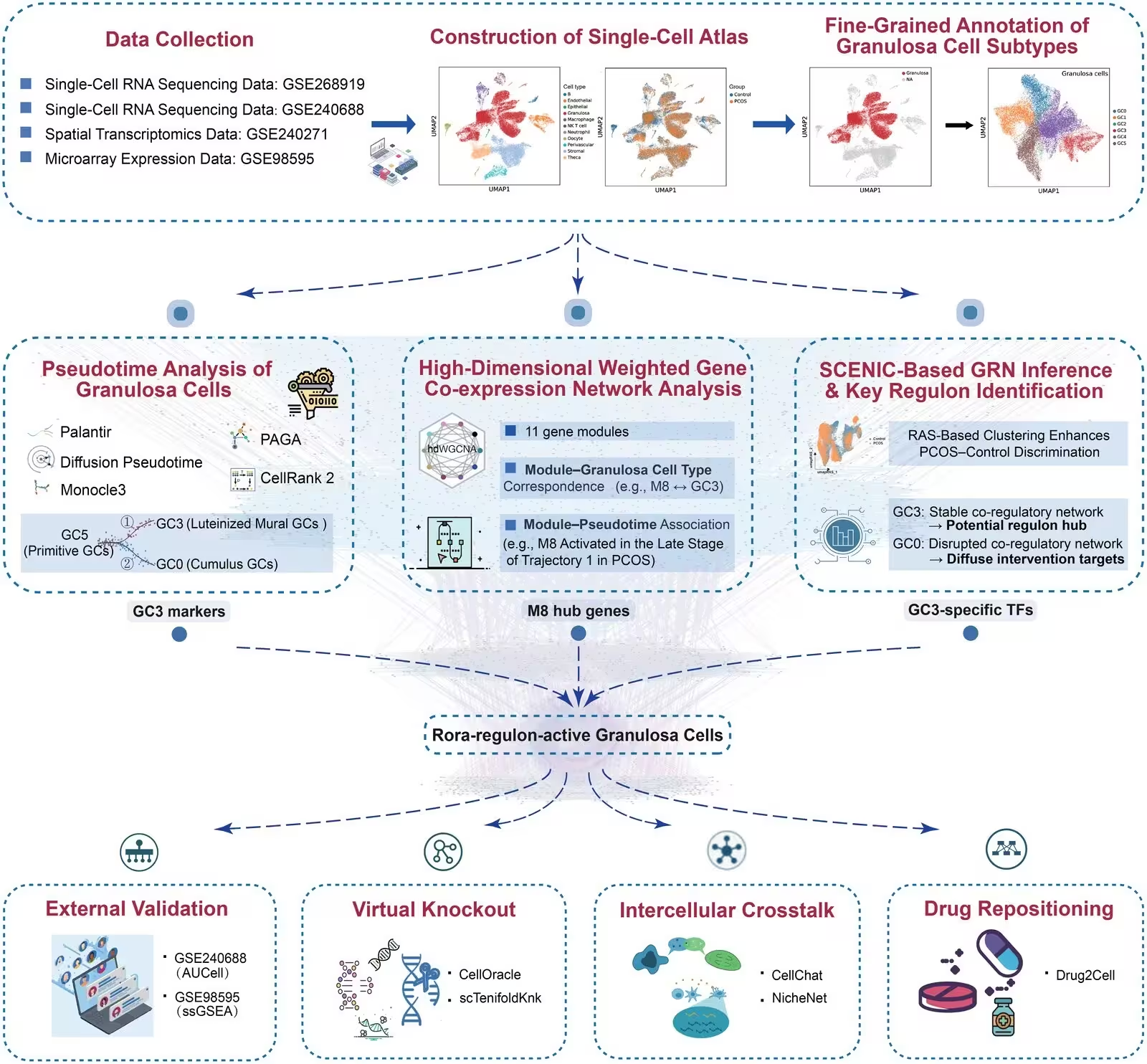
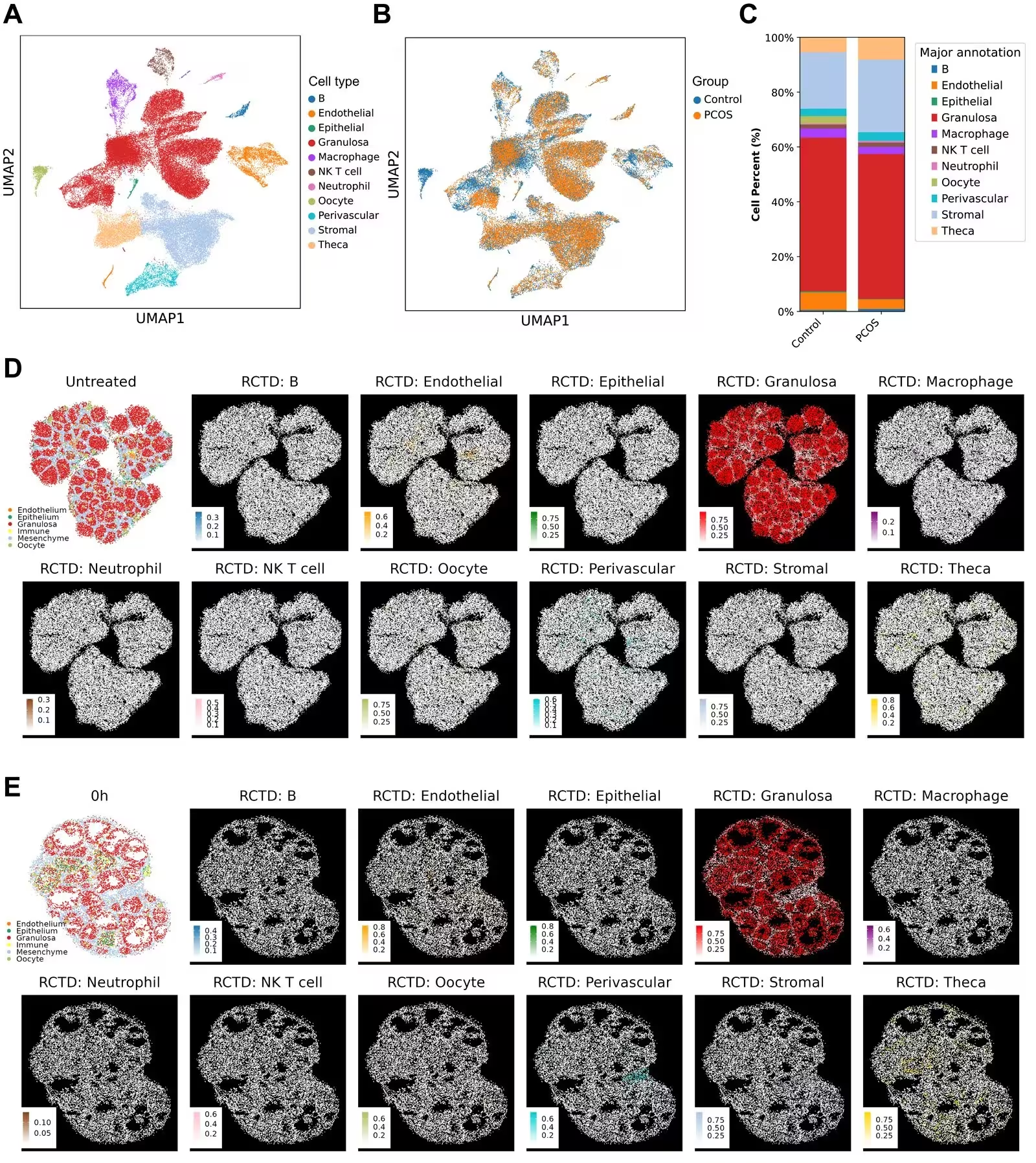
To uncover what goes wrong at a microscopic level, a team of researchers led by scientists in China constructed a single-cell transcriptomic atlas. By analyzing more than 61,000 cells from mouse ovarian tissue, they mapped out 11 major cell populations and zoomed in on the fine details of granulosa cell heterogeneity. They found that granulosa cells are not all alike, dividing them into six distinct subpopulations.
Among these groups, a specific subset of luteinized mural cells, which normally support late-stage follicular development and prepare for ovulation, showed profound abnormalities. These cells exhibited robust activation of a transcription factor known as Rora, leading the researchers to designate them as Rora-regulon-active granulosa cells. While these cells mapped to a category of mature-leaning cells, they retained heavy immature features and lipid-metabolic reprogramming, suggesting they failed to finish their proper differentiation.
The Ovarian Microenvironment and Signaling Crosstalk
Further analysis showed that this troubled cell subset was dramatically expanded in polycystic ovary syndrome, accounting for over 51 percent of that specific subpopulation in disease models compared to just 2.6 percent in healthy controls. Cross-species validation using human datasets confirmed that this signature is similarly enriched in human samples. The researchers investigated how these cells interact with their surroundings using cell-to-cell communication tools.
The data pointed to heavy signaling input from neighboring stromal cells via the midkine pathway, particularly through the interaction between the ligand Mdk and its receptor Sdc1 on the surface of the abnormal granulosa cells. Additionally, the Rora-active cells showed potential crosstalk with ovarian macrophages through vascular endothelial growth factor signaling, implicating local inflammation and tissue remodeling in maintaining the pathological state.
Virtual Gene Knockdown and Potential New Treatments
To test whether disabling the master regulator could correct the cellular traffic jam, the team performed virtual gene knockdown simulations. The computational models indicated that reducing Rora expression partially redirected the aberrant cells back toward a normal developmental trajectory. This computational rescue hints that targeting the underlying regulatory network could help restore healthy cell maturation.
Could Existing Drugs Be Repurposed for Ovulation Support?
Using drug-repositioning algorithms, the team screened chemical databases to identify compounds that specifically target the troubled cell population. The pipeline successfully identified several established ovulation-induction agents, such as human chorionic gonadotropin and human menopausal gonadotropin, providing an internal validation of the method. More intriguingly, the analysis prioritized two non-traditional candidate compounds, betaine hydrochloride and bempedoic acid, which are known for regulating lipid and glucose metabolism and reducing inflammation.
While these computational predictions offer fresh avenues for precision-targeted therapies, the authors note important limitations. The primary work relied on mouse models and publicly available datasets with limited human sample sizes, meaning that direct clinical testing and in vitro validation will be necessary to establish safety and efficacy before any new treatments reach patients.
The research was published in International journal of women's health on January 1, 2026.
This article has been fact checked for accuracy, with information verified against reputable sources. Learn more about us and our editorial process.
Last reviewed on .
Article history
- Latest version
Reference(s)
- Ji, Pengcheng., et al. “Single-Cell Transcriptomics Reveals Rora-Associated Aberrant Granulosa Cell Differentiation in Polycystic Ovary Syndrome.” International Journal of Women's Health, vol. Volume 18, October 1, 2026, pp. 1-24. Informa UK Limited, doi: 10.2147/IJWH.S638672. <https://doi.org/10.2147/IJWH.S638672>.
Cite this page:
- Posted by Priya Sharma