Atorvastatin Plus Ezetimibe Pill Cuts Cholesterol 14 Percent Better
A massive review of 46 clinical trials reveals that combining lipid-lowering drugs in a single pill significantly improves cholesterol reduction without raising adverse event risks.

Combining atorvastatin with ezetimibe in a single pill cuts low-density lipoprotein cholesterol by nearly 14 percent more than taking atorvastatin alone, according to a comprehensive review of 46 clinical trials. The research pooled data from 10,567 patients to establish how dual-drug strategies compare against standard monotherapy.
Many patients with high cholesterol struggle to reach target lipid levels using statins by themselves, prompting researchers to evaluate combination treatments. Statins work by blocking liver cholesterol synthesis, but this biological action often triggers a compensatory increase in intestinal cholesterol absorption. Adding ezetimibe blocks that intestinal absorption pathway, creating a dual-mechanism approach to lipid management.
The systematic review and network meta-analysis, published in PeerJ, evaluated atorvastatin monotherapy alongside free-equivalent combinations and fixed-dose combinations of atorvastatin and ezetimibe. Investigators analyzed randomized controlled trials published between 2003 and 2023, encompassing participant age ranges of 55 to 64 years with baseline low-density lipoprotein cholesterol levels spanning 3.1 to 4.9 millimoles per liter.
Which Combination Strategy Works Best for Cholesterol Reduction?
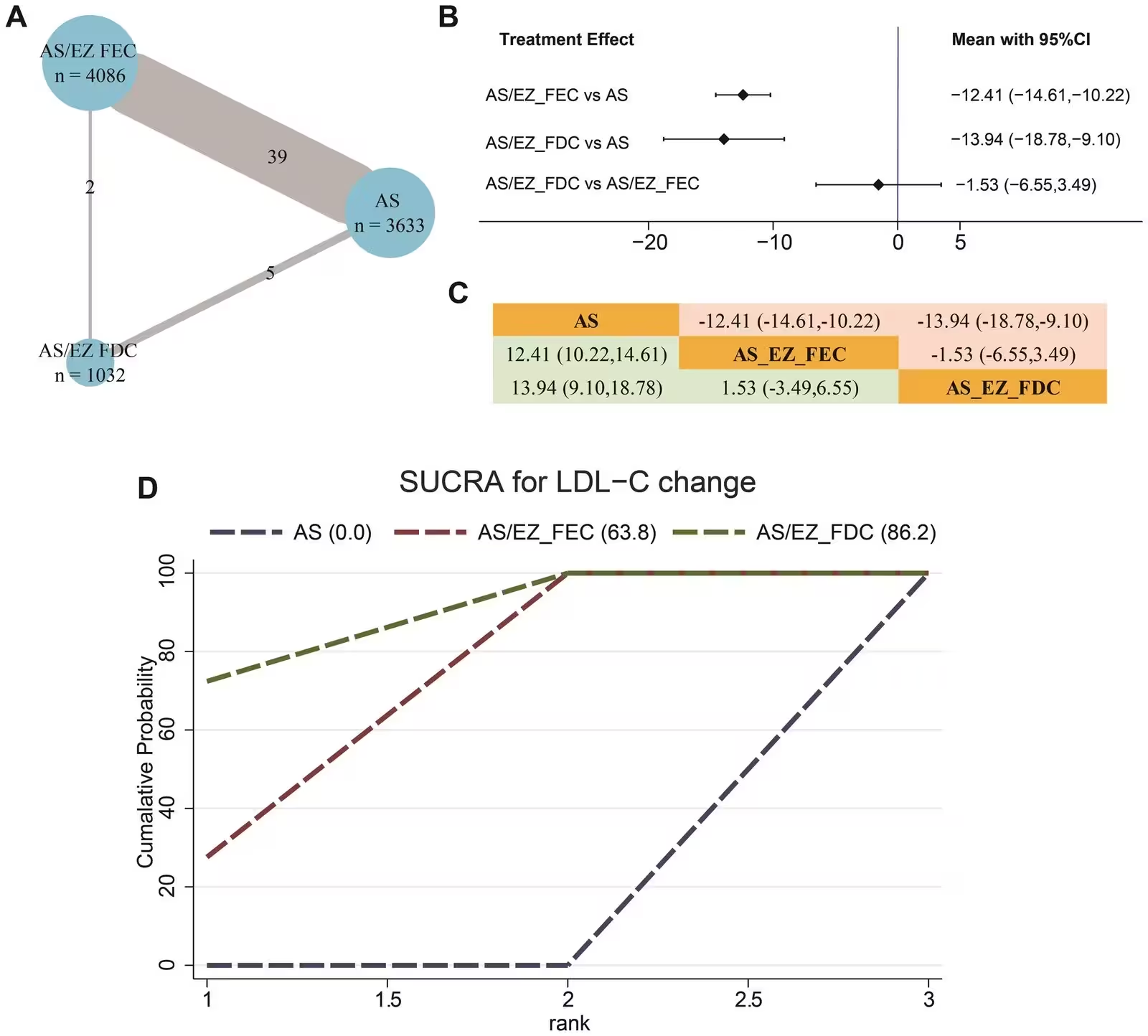
The analysis revealed that fixed-dose combination therapy provided the greatest reduction in low-density lipoprotein cholesterol, outperforming atorvastatin monotherapy by a mean difference of 13.94 percent. Free-equivalent combinations also showed substantial efficacy, reducing these cholesterol levels by 12.41 percent more than monotherapy alone. Using surface under the cumulative ranking curve probabilities, the fixed-dose combination ranked highest for potency at 86.2 percent, followed by the free-equivalent combination at 63.8 percent, while monotherapy ranked lowest.
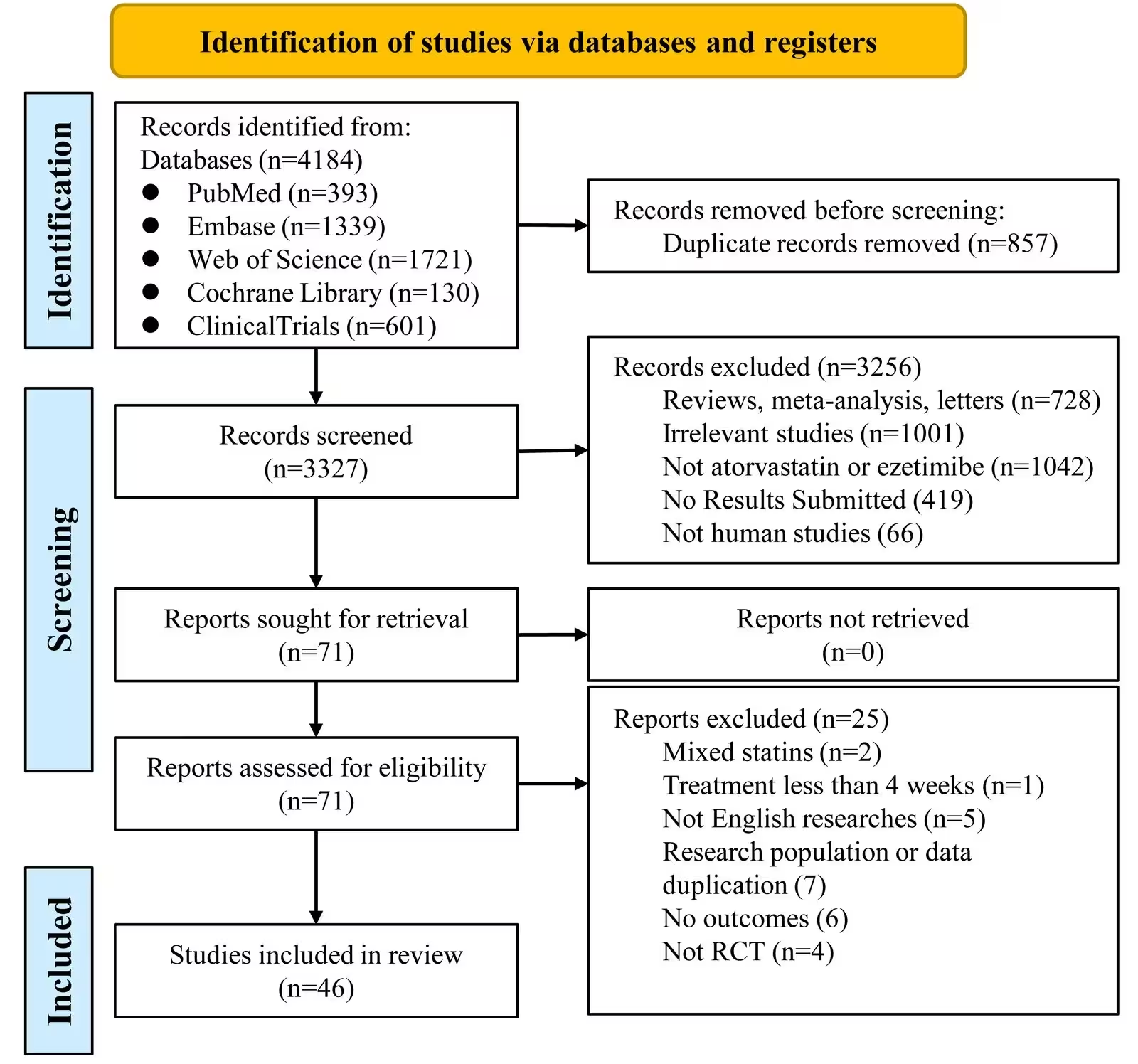
Patients receiving combination therapies were also roughly twice as likely to attain their guideline-recommended low-density lipoprotein cholesterol target levels compared to those on monotherapy. Specifically, free-equivalent combinations yielded a risk ratio of 1.87 for goal attainment, while fixed-dose combinations showed a risk ratio of 1.80 relative to statin monotherapy.
Do Combined Pills Increase Side Effects or Risk of Adverse Events?
A major concern in lipid-lowering therapy is whether adding a second drug elevates toxicity or patient discomfort. The study found no statistically significant differences in adverse drug reactions, overall adverse events, or treatment discontinuation rates between combination regimens and atorvastatin monotherapy. Risk ratios for adverse drug reactions were 1.07 for free-equivalent combinations and 1.30 for fixed-dose combinations compared to monotherapy, neither of which reached statistical significance.
Furthermore, severe adverse events such as muscle-related symptoms and liver function abnormalities showed no increased risk with the combined therapies. In fact, fixed-dose combinations demonstrated favorable safety rankings regarding liver enzyme elevations, providing reassurance for clinicians prescribing intensive cholesterol-lowering regimens.
What Are the Limitations and Next Steps for Clinical Practice?
Despite the robust sample size, the authors noted several limitations in their analysis. Between-study heterogeneity was substantial for cholesterol outcomes, reflecting diverse patient populations, varying baseline characteristics, and different statin dosages utilized across the trials. Furthermore, the included studies focused primarily on intermediate outcomes like cholesterol reduction rather than hard clinical endpoints such as long-term cardiovascular mortality, with most trials lasting 12 months or less.
The researchers emphasize that while fixed-dose combinations do not possess inherently superior pharmacological potency compared to taking separate pills, simplifying the prescription into a single daily tablet may significantly enhance patient adherence in real-world settings. Additional long-term studies are needed to confirm whether this improved convenience translates directly into better cardiovascular outcomes for patients with hypercholesterolemia.
The research was published in PeerJ on January 1, 2026.
This article has been fact checked for accuracy, with information verified against reputable sources. Learn more about us and our editorial process.
Last reviewed on .
Article history
- Latest version
Reference(s)
- Qian, Juying., et al. “Effectiveness and safety of atorvastatin/ ezetimibe fixed-dose combination in hypercholesterolemia: a systematic review and network meta-analysis.” PeerJ, vol. 14, October 21, 2026, pp. e21784 PeerJ, doi: 10.7717/peerj.21784. <https://doi.org/10.7717/peerj.21784>.
Cite this page:
- Posted by Priya Sharma