Why Conservation Scientists Want to Drop a Century-Old Hybrid Term
A review of 67 studies reveals that modern genomic data contradicts long-held assumptions about wild hybrid populations, pointing the way to better conservation tools.
When two distinct animal or plant species interbreed, the resulting offspring can trigger intense alarm among wildlife conservationists, especially if scientists label the blended population with a worrisome catch-all phrase. Researchers increasingly rely on high-throughput DNA sequencing to map these genetic intersections across wild habitats.
However, a comprehensive scientific evaluation published in Ecology and Evolution reveals that this terminology is often applied inconsistently, obscuring what is actually happening in vulnerable ecosystems.
Tracing a Century of Terminology
The phrase in question was originally coined in 1926 to describe a dynamic group of plants displaying intermediate physical traits between parental types. Over the following decades, conservation biologists adopted the label to describe situations where a threatened native species interbreeds with an introduced relative, raising fears of extinction through genetic replacement.
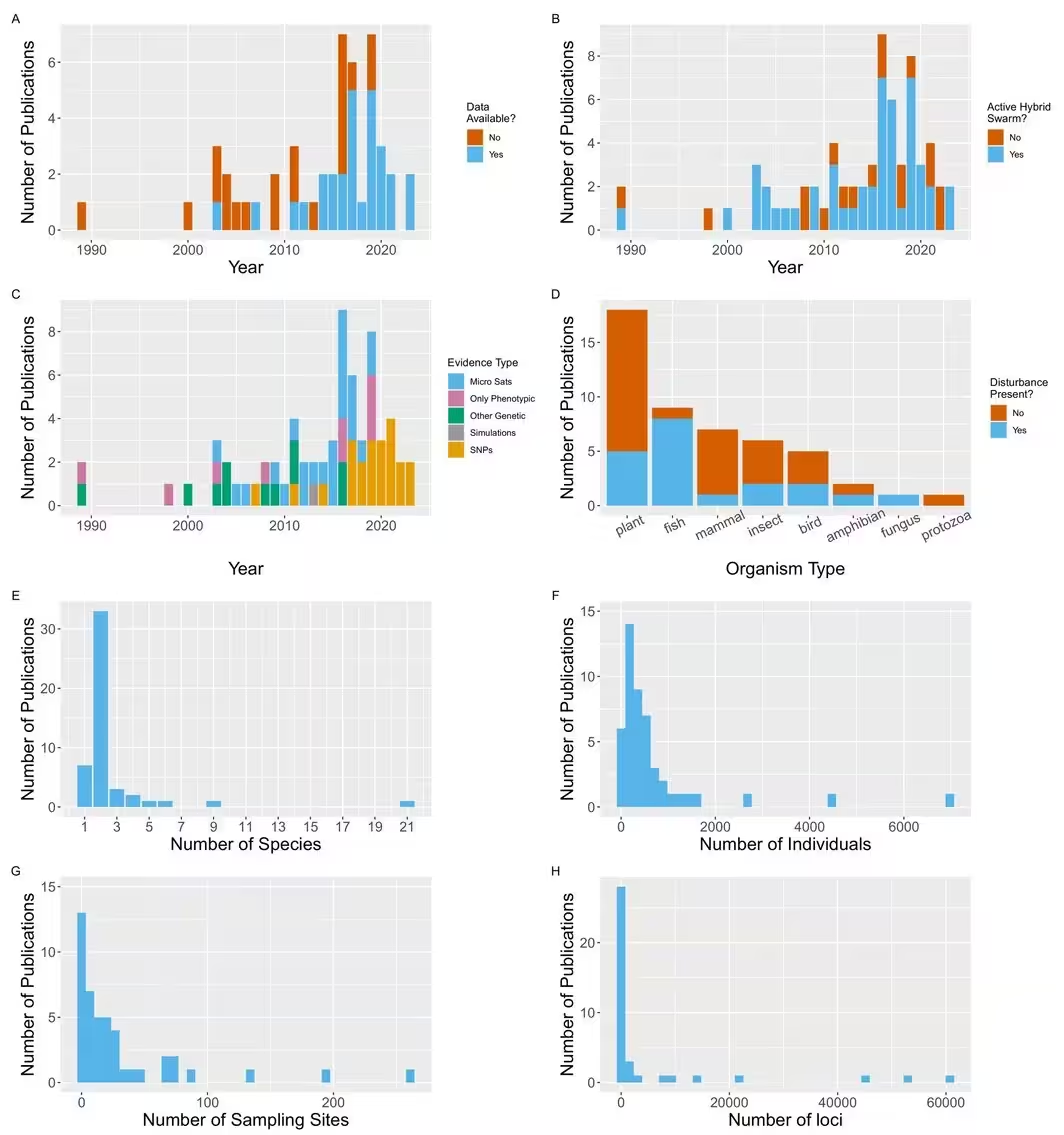
To understand how this label functions in modern science, the research team analyzed 67 representative journal articles spanning several decades of evolutionary biology. The authors tracked various metrics, including the taxonomic groups studied, the types of genetic markers utilized, and the presence of physical disturbances in the habitat.
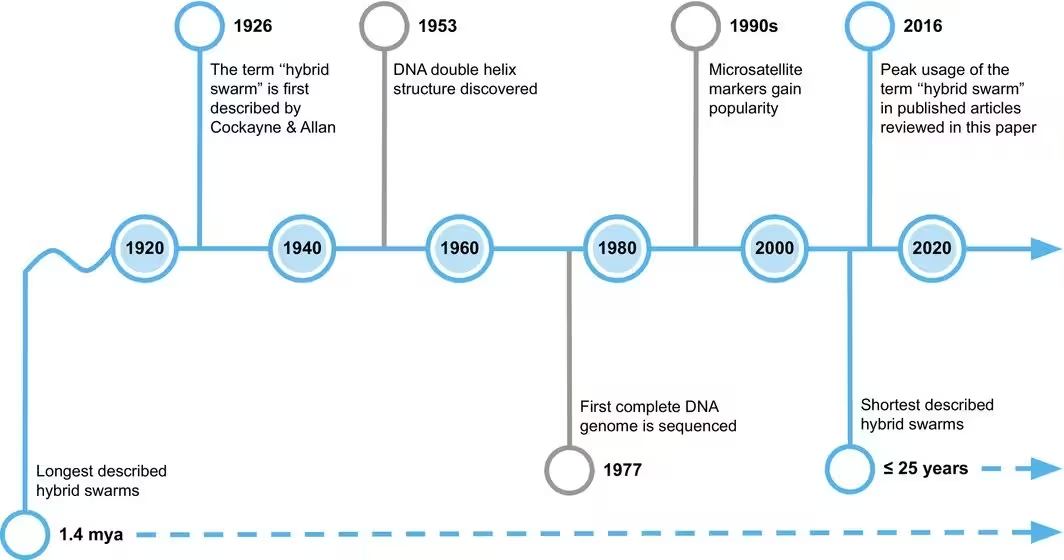
The analysis showed that usage of the term climbed steadily, peaking between 2016 and 2019. This surge coincided with a drop in sequencing costs and a massive rise in studies utilizing single nucleotide polymorphisms, which are precise variations in DNA sequences used to map genetic ancestry.
Challenging Assumptions About Genetic Blending
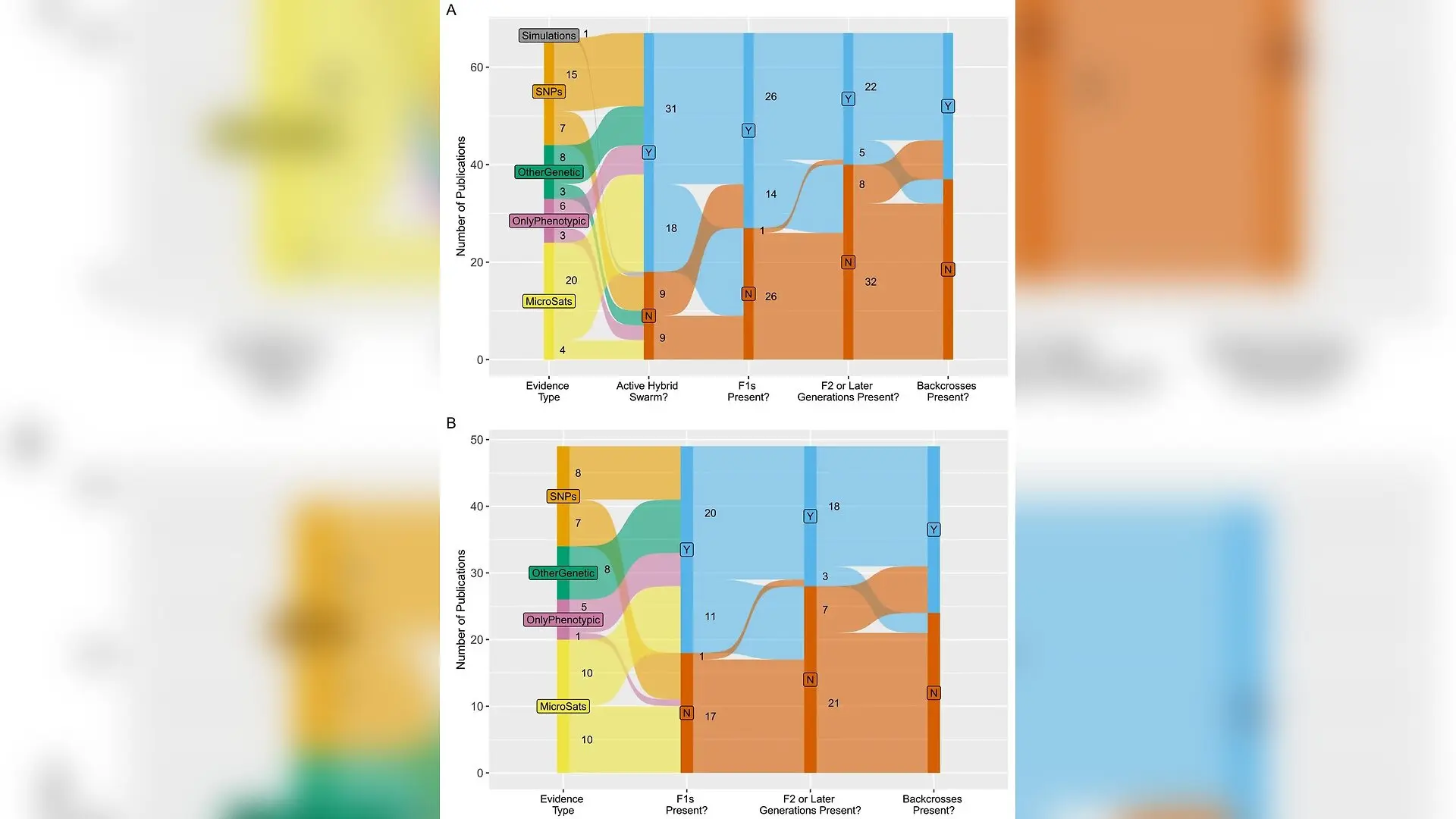
Despite the growing availability of high-resolution genomic data, the literature review uncovered a surprising lack of consensus regarding what constitutes the phenomenon. Many published papers assumed that the presence of backcrosses, meaning hybrids mating back with parental types, was a defining hallmark of the condition.
Yet, the data showed that only about half of the examined studies actually recorded backcrosses in their active systems. Furthermore, approximately one-third of the reviewed papers lacked the necessary resolution to distinguish between different generations of hybrids altogether.
The authors note that past studies frequently relied on the label simply because they lacked the genomic tools to differentiate complex multi-generation crosses. This ambiguity can trigger unnecessary panic or misdirect funding for endangered species management.
Refining Conservation Strategies
To demonstrate the real-world consequences of ambiguous naming, the researchers pointed to past work on western North American fish species. Initial genetic assessments using older methods labeled these fishes with alarming terms, prompting aggressive management interventions.
When the same populations were later sequenced with modern genomic technologies, scientists discovered that the fish were largely first-generation crosses and symmetrical backcrosses, with a long history of natural pre-settlement interbreeding. Clearer data allowed managers to pivot toward more targeted protection of specific spawning tributaries rather than broad eradication efforts.
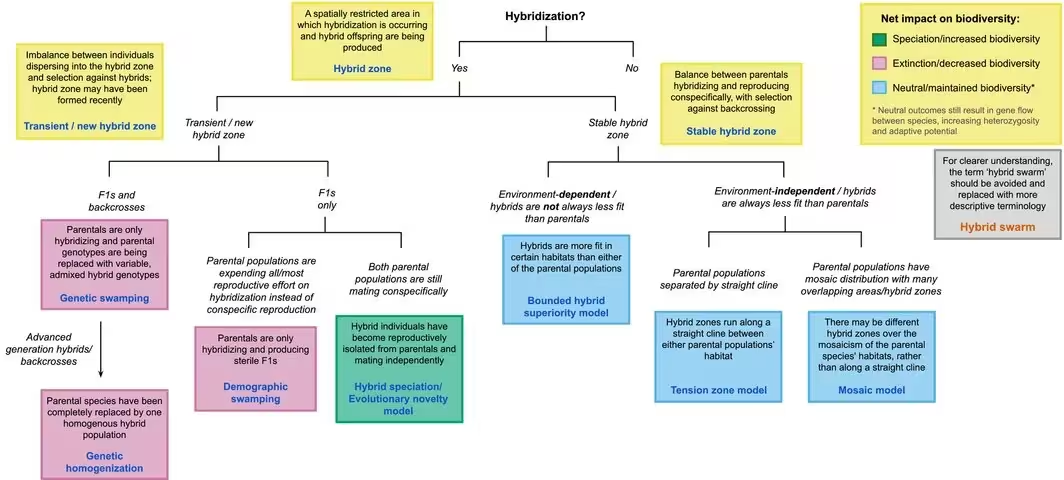
The study authors advocate for abandoning the ambiguous label in favor of precise descriptions, such as specifying the exact abundance of first-generation offspring and backcrosses. Adopting more rigorous terminology helps conservationists distinguish between transient hybridization events that threaten biodiversity and stable hybrid zones that may even foster evolutionary novelty.
The research was published in Ecology and evolution on October 1, 2026.
This article has been fact checked for accuracy, with information verified against reputable sources. Learn more about us and our editorial process.
Last reviewed on .
Article history
- Latest version
Reference(s)
- Campbell, Jillian N.., et al. “Is It a “Hybrid Swarm”? Opportunities for More Informative Terminology in Conservation Genomics.” Ecology and Evolution, vol. 16, no. 10, October 24, 2026 Wiley, doi: 10.1002/ece3.74515. <https://doi.org/10.1002/ece3.74515>.
Cite this page:
- Posted by Priya Sharma