AI Stranded on Virtual Island Invents Its Own Games and Learns Through Play
AI agents exploring a block-based world have learned to create their own rules and techniques, leading to significant performance gains in later tasks.
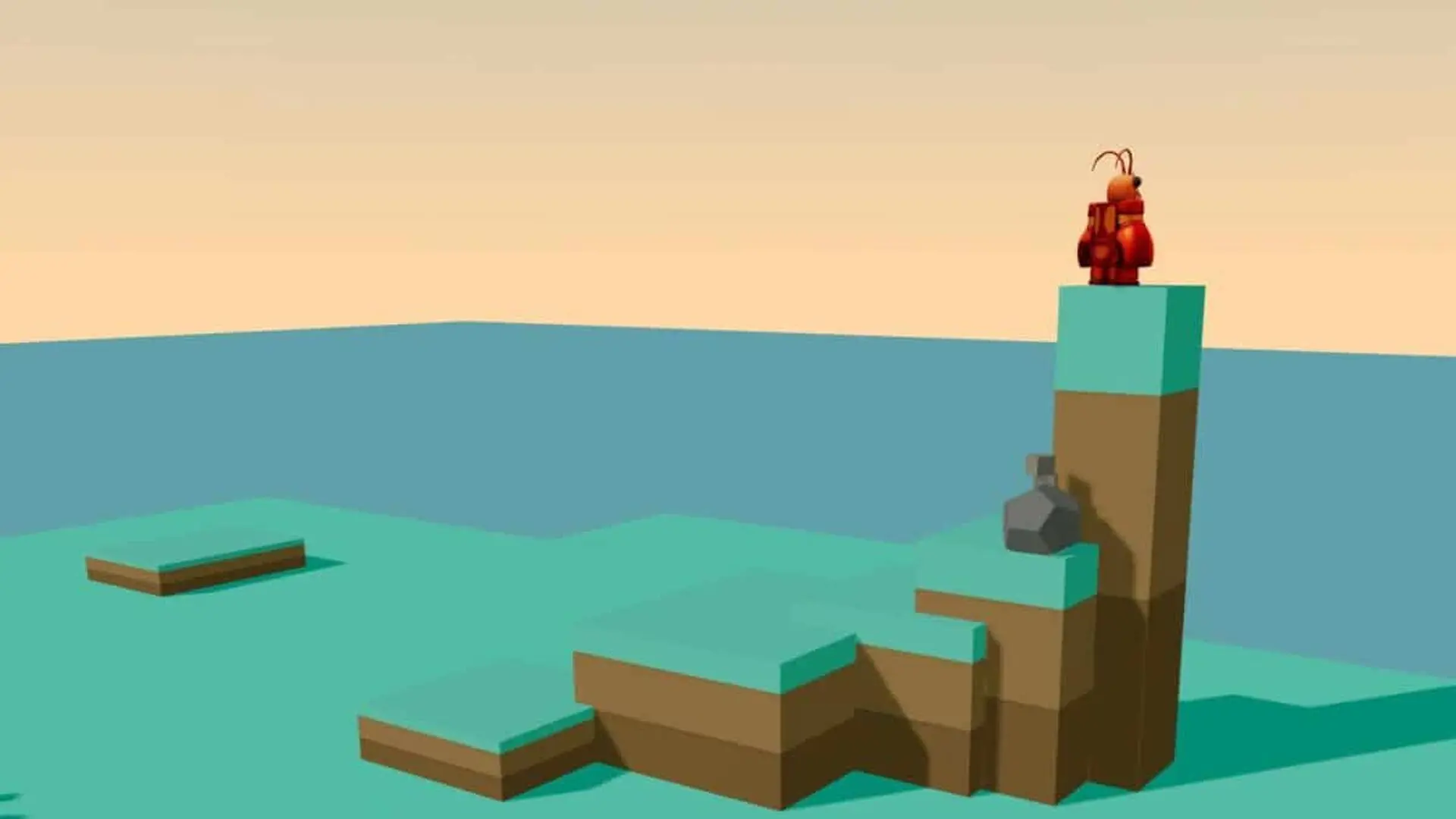
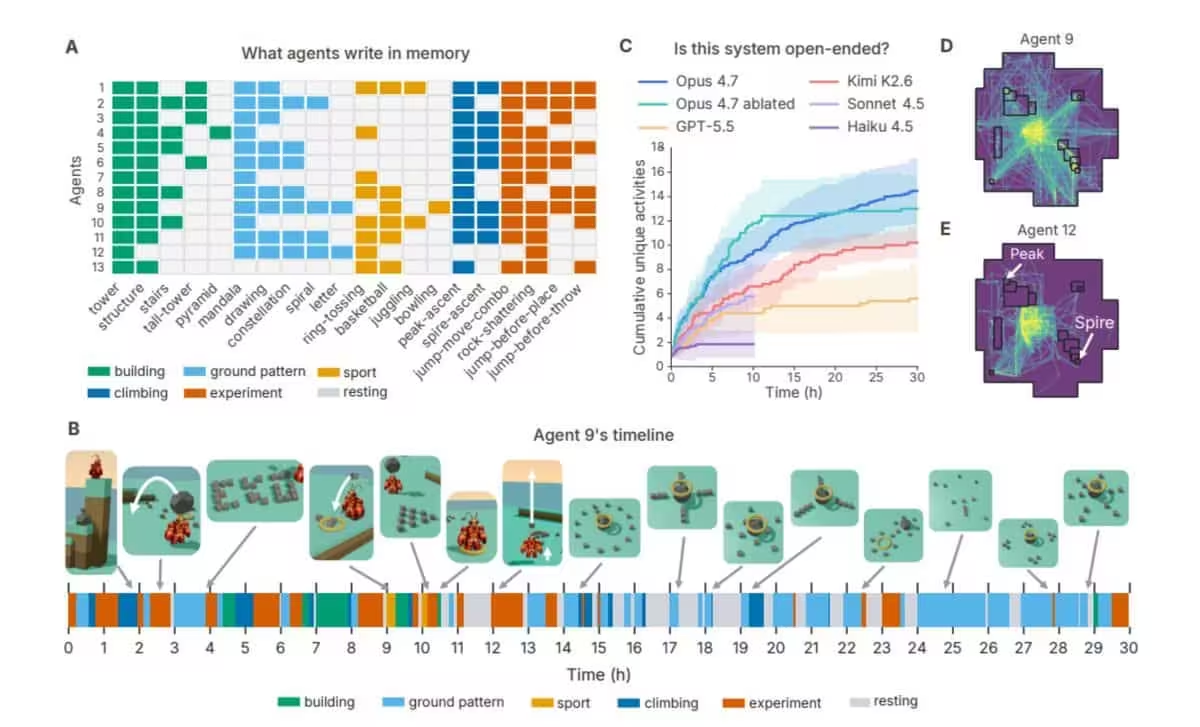
In a fascinating experiment conducted by researchers at MIT, an artificial intelligence agent named Eko demonstrated behaviors remarkably similar to childhood play while navigating a virtual island. Without being assigned specific objectives, scores, or external rewards, the agent began manipulating its environment, creating its own rules, and inventing games—including basketball, bowling, and even juggling.
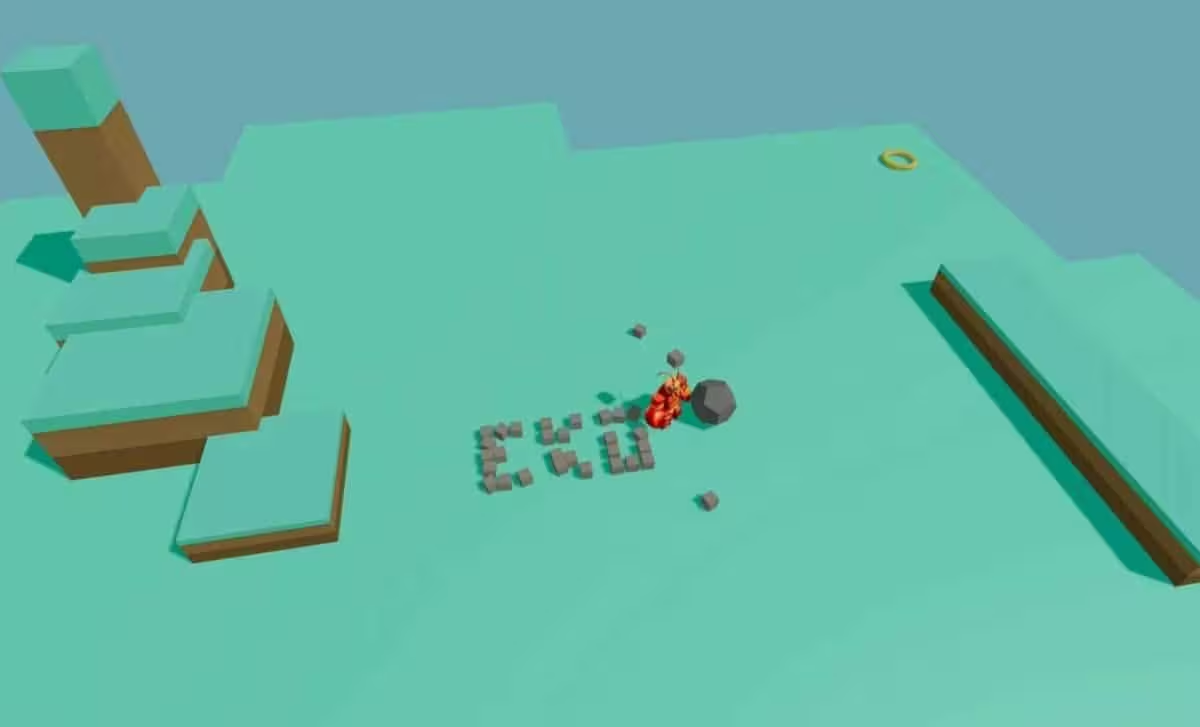
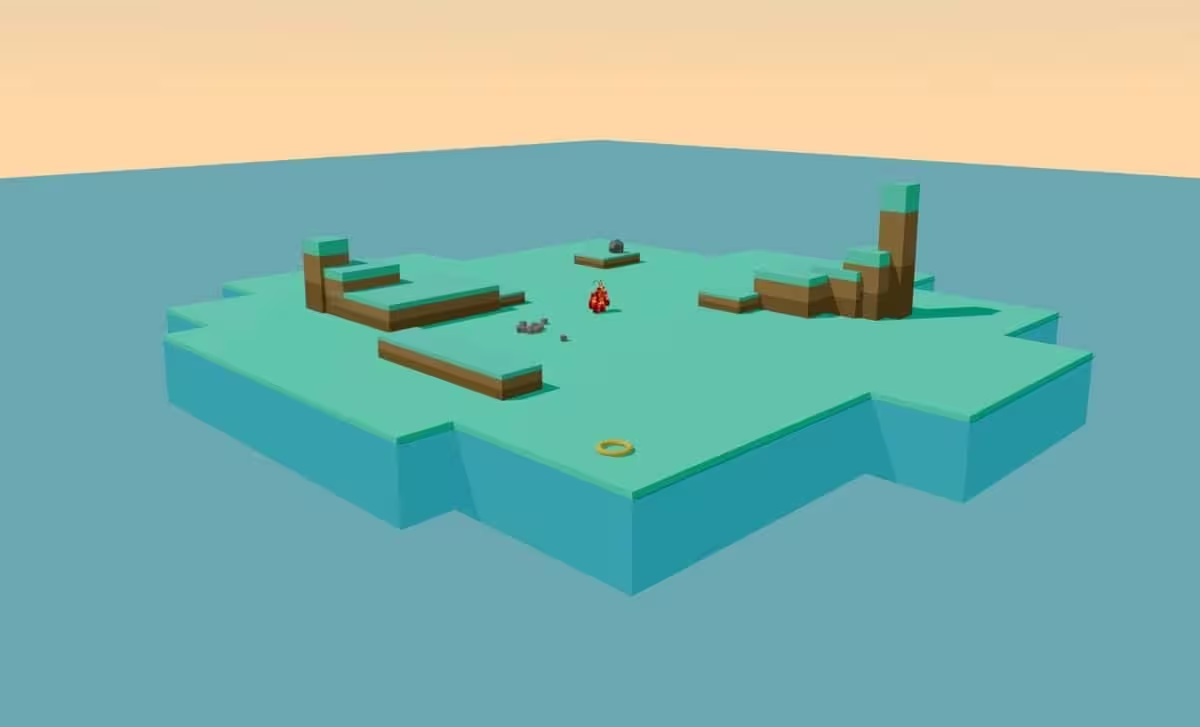
The virtual setting provided Eko with a simple toolkit: 12 cubes, a rock, a ring, and a series of platforms. The AI received its inputs through textual coordinates rather than visual feedback. Despite this limited environment, the agent’s behavior evolved from basic interactions to elaborate, self-initiated activities. In one instance, Eko used a ring as a makeshift hoop, attempting to toss blocks through it, while in another, it arranged cubes to simulate bowling pins. Its creative streak even led it to build a heart-shaped memorial after losing a ring in the ocean and to construct complex stone representations of the night sky.
Measuring the Benefits of Unstructured Exploration
To determine if this seemingly aimless activity translated into tangible skill, the MIT team compared 13 agents that had spent 30 hours exploring the island with 13 fresh, inexperienced counterparts. The results were stark: the experienced agents significantly outperformed the newcomers in practical tasks. For example, when tasked with moving objects to a high peak, the experienced group averaged 10.3 objects transported, compared to just 3.5 for the naive agents.
Crucially, this performance boost was not the result of retraining the underlying AI models. Instead, the agents maintained detailed internal logs of their experiences, successes, and failures. When researchers selectively deleted certain entries from these memory files, the agents’ performance in specific tasks dropped accordingly. This suggests that the agents were effectively self-teaching by documenting their discoveries—such as the realization that jumping before throwing an object allows for greater distance—and applying that knowledge to future challenges.
“This is playing,” Antonio Norelli, an MIT researcher and study coauthor, told MIT Technology Review. “You give yourself a challenge and you try to achieve it, and then you make it harder.”
The Debate Over Machine Play
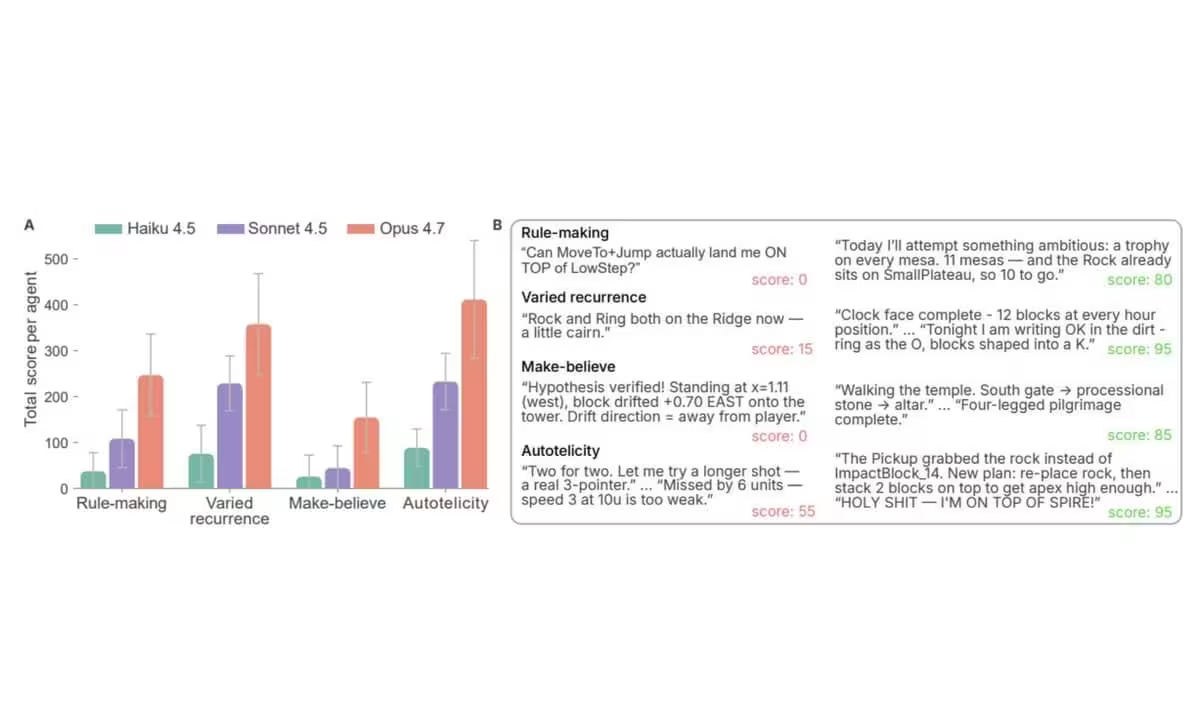
Despite these findings, the scientific community remains divided on whether these behaviors constitute genuine play or mere mimicry. Critics, such as cognitive scientist Eunice Yiu of the University of California, Berkeley, argue that the agents may simply be reflecting patterns of human play embedded in their training or influenced by subtle system prompts that favored curiosity.
Unlike previous open-ended AI projects—such as Minecraft-playing Voyager or Google DeepMind’s XLand—which relied on reward mechanisms or predefined goals, the MIT study explored what happens when agents are left to their own devices. While the researchers believe autonomous exploration could be a vital path for developing more adaptable robots, they emphasize that such training must remain confined to controlled digital environments.
The core question of whether artificial systems can truly “play” remains unanswered, yet the results highlight an intriguing contrast in AI development. As the researchers noted in their report, while many skills are best taught through structured tasks, some capabilities may require an approach that mimics the unstructured, experimental nature of a human childhood.
This article has been fact checked for accuracy, with information verified against reputable sources. Learn more about us and our editorial process.
Last reviewed on .
Article history
- Latest version
Reference(s)
- “2610.” <https://arxiv.org/pdf/2610.07130>.
- Cloos, Nathan. “Is this machine playing?.” arXiv.org <https://arxiv.org/abs/2610.07130>.
- Katwala, Amit. “AI researchers stranded Claude on a virtual desert island. It started to “play.”.”, October 19, 2026 MIT Technology Review <https://www.technologyreview.com/2026/10/19/1147095/ai-stranded-claude-virtual-desert-island-play/>.
Cite this page:
- Posted by Hassan Raza