The Moon Is Shrinking and Scientists Have Found Over 10,000 Faults Across Its Surface
NASA’s lunar orbiter has revealed a hidden side of the Moon’s geological history, uncovering remarkable new details about its evolution.
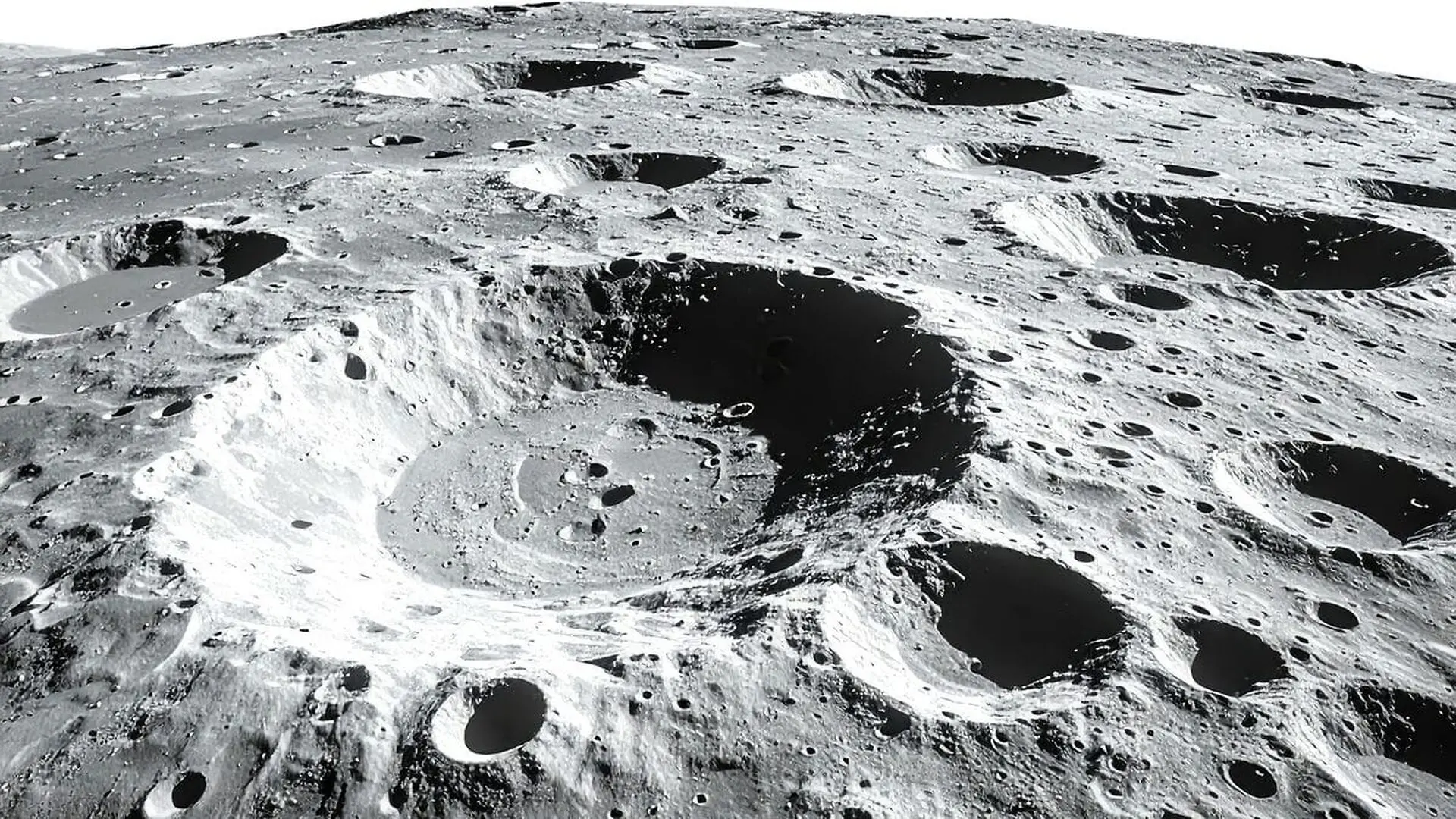
The Moon is steadily shrinking, and researchers have finally quantified the scale of this lunar transformation. According to a new study published in The Planetary Science Journal, the lunar radius has diminished by approximately 148 feet (45 meters) over the last 400 to 800 million years.
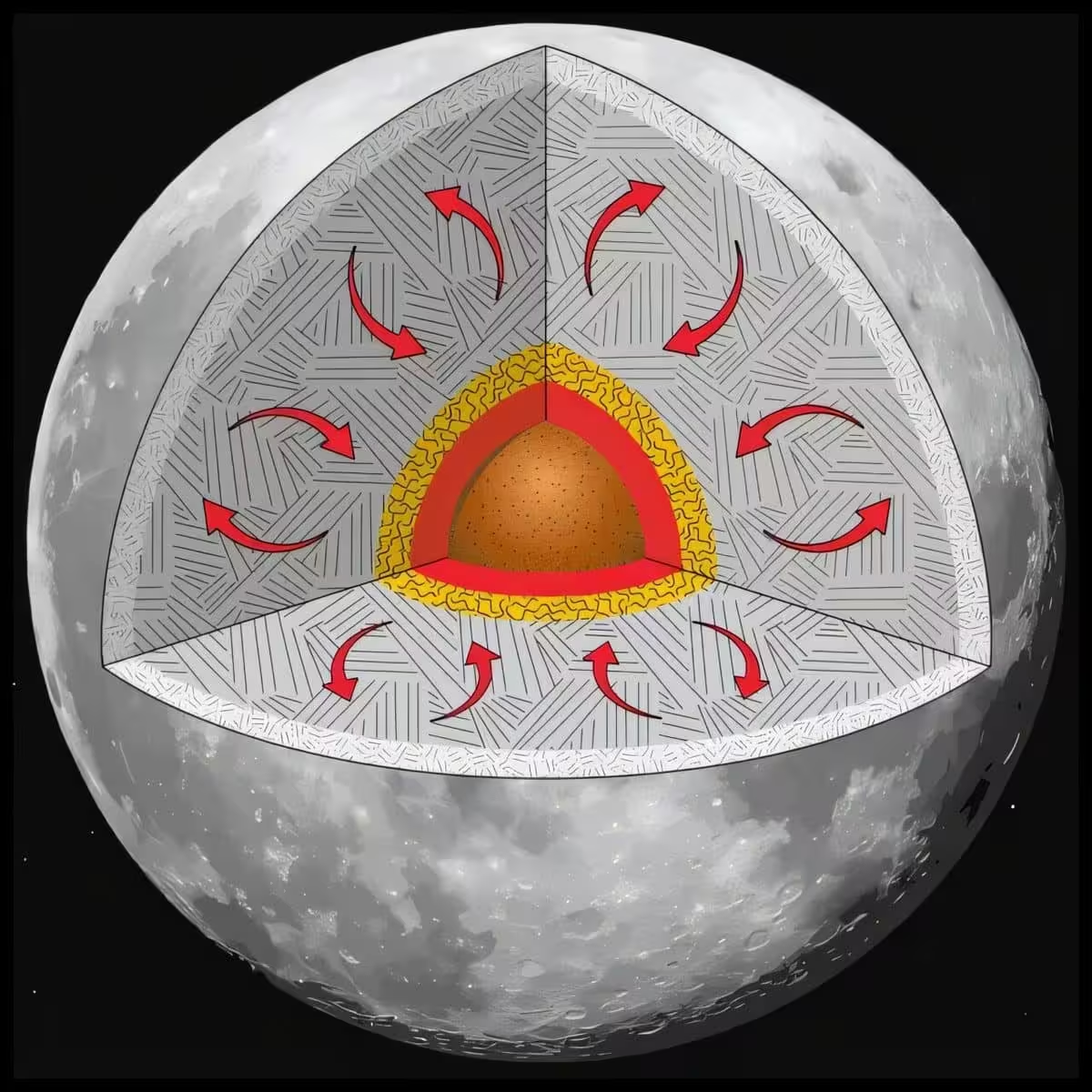
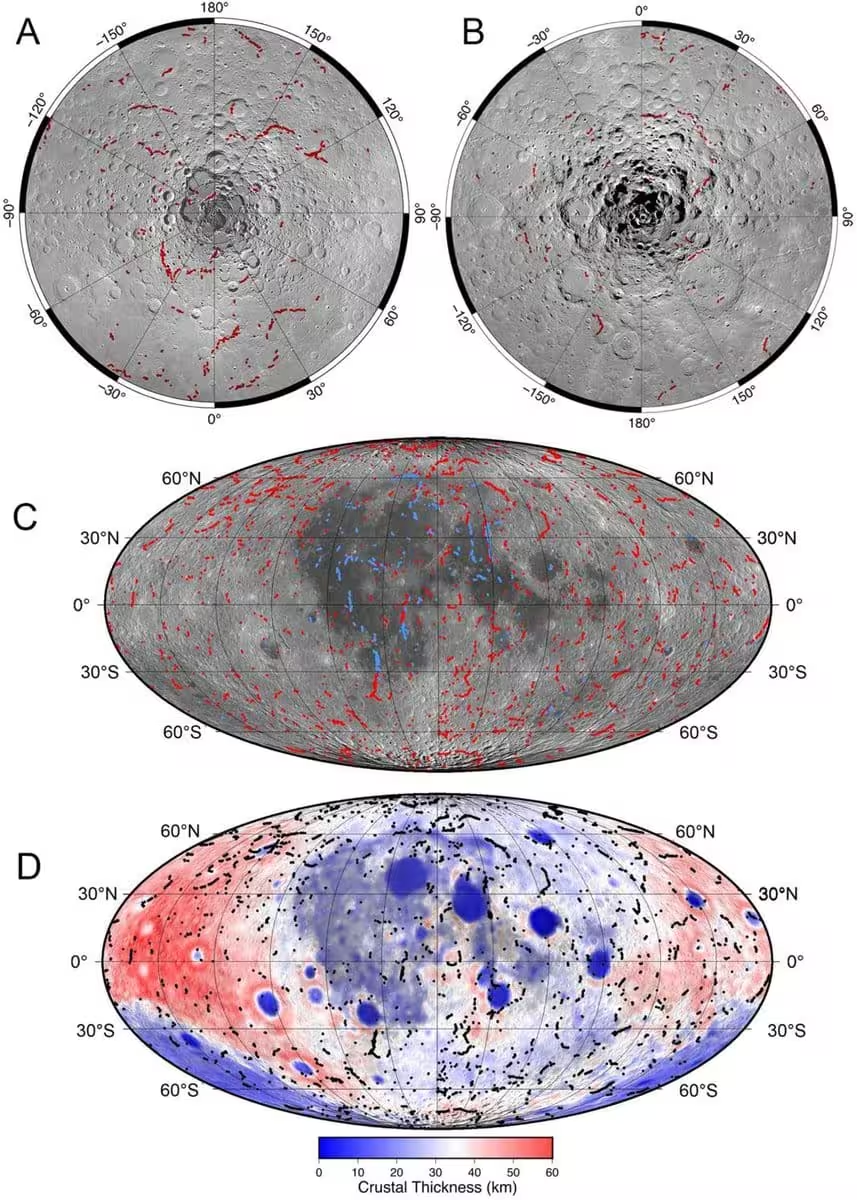
This long-term contraction is driven by the cooling of the Moon’s interior. As the core loses heat, the resulting volume reduction exerts significant pressure on the lunar crust, causing it to buckle and fracture. By analyzing high-resolution images captured by the Lunar Reconnaissance Orbiter Camera (LROC), researchers identified more than 10,000 previously unmapped young faults scattered across the Moon’s highlands and volcanic plains.
A Global Network of Faults
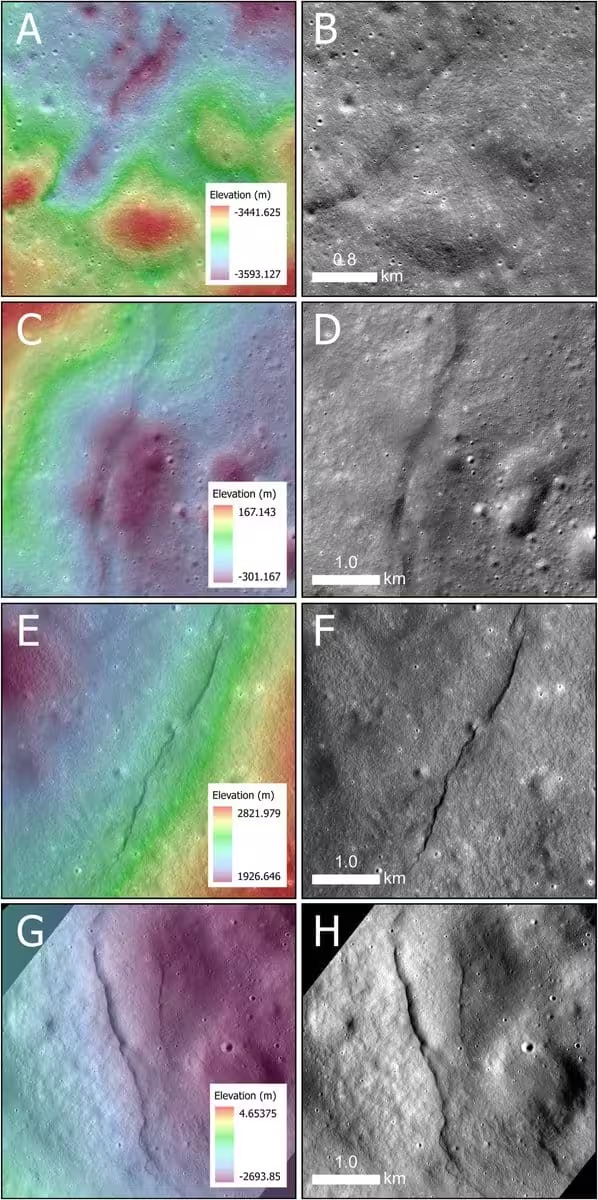
Unlike Earth, which possesses a complex system of over 15 shifting tectonic plates, the Moon is encased in a single, continuous outer shell. This geological difference means that seismic activity on the Moon is not confined to plate boundaries but is instead distributed globally. The study focused on two primary indicators of this contraction: lobate scarps and small mare ridges. By tracking these features, scientists calculated that if the contraction rate remains steady, the Moon continues to shrink by roughly 6 to 11 centimeters every million years.
The research team also noted a clear correlation between crustal thickness and fault density. Regions with the thickest crustal layers appear to have the fewest surface faults, suggesting they are the most geologically stable zones on the satellite.
Thermal Insulation Delayed Lunar Activity
One of the more intriguing findings is why widespread faulting appears to have emerged relatively late in the Moon’s history. According to the Smithsonian’s National Air and Space Museum, the Moon features an exceptionally porous and fractured crust. This layer likely acted as an insulating blanket, trapping heat inside the mantle and delaying the cooling process that triggers global contraction.
Ongoing Seismic Potential
The identification of these faults suggests that the Moon remains a geologically active body. When existing faults slip or new ones propagate through the crust, they trigger “moonquakes.” Because the Moon lacks the plate boundary concentration seen on Earth, these seismic events can occur across virtually any part of the lunar surface.
“The number of these young faults revealed in LROC images is much greater than I ever imagined,” said Thomas R. Watters, scientist emeritus in the Center for Earth and Planetary Studies at the Smithsonian’s National Air and Space Museum.
After 17 years of continuous orbital observation, the Lunar Reconnaissance Orbiter has provided the data necessary to recognize these structures on a massive scale. As Watters and his colleagues conclude, the cooling of the Moon’s interior is an ongoing process, meaning the development of these faults is likely a contemporary phenomenon that continues to reshape the lunar surface today.
This article has been fact checked for accuracy, with information verified against reputable sources. Learn more about us and our editorial process.
Last reviewed on .
Article history
- Latest version
Reference(s)
- Watters, T. R.., et al. “Thrust Faulting and the Late-stage Contraction of the Moon.” The Planetary Science Journal, vol. 7, no. 10, October 14, 2026, pp. 239 American Astronomical Society, doi: 10.3847/psj/ae9eae. <https://dx.doi.org/10.3847/psj/ae9eae>.
- “New Study Reveals How Much the Moon Is Shrinking.”, October 14, 2026 <https://airandspace.si.edu/newsroom/press-releases/new-study-reveals-how-much-moon-shrinking>.
- Barry, Caela. “Lunar Reconnaissance Orbiter - NASA Science.”, November 29, 2017 NASA <https://science.nasa.gov/mission/lro/>.
Cite this page:
- Posted by Karan Das