Stunning New Image Captures the Andromeda Galaxy Rising Over the Australian Horizon
A stunning new image captured in Australia reveals the Andromeda Galaxy glowing clearly above the horizon in a breathtaking display of the night sky.
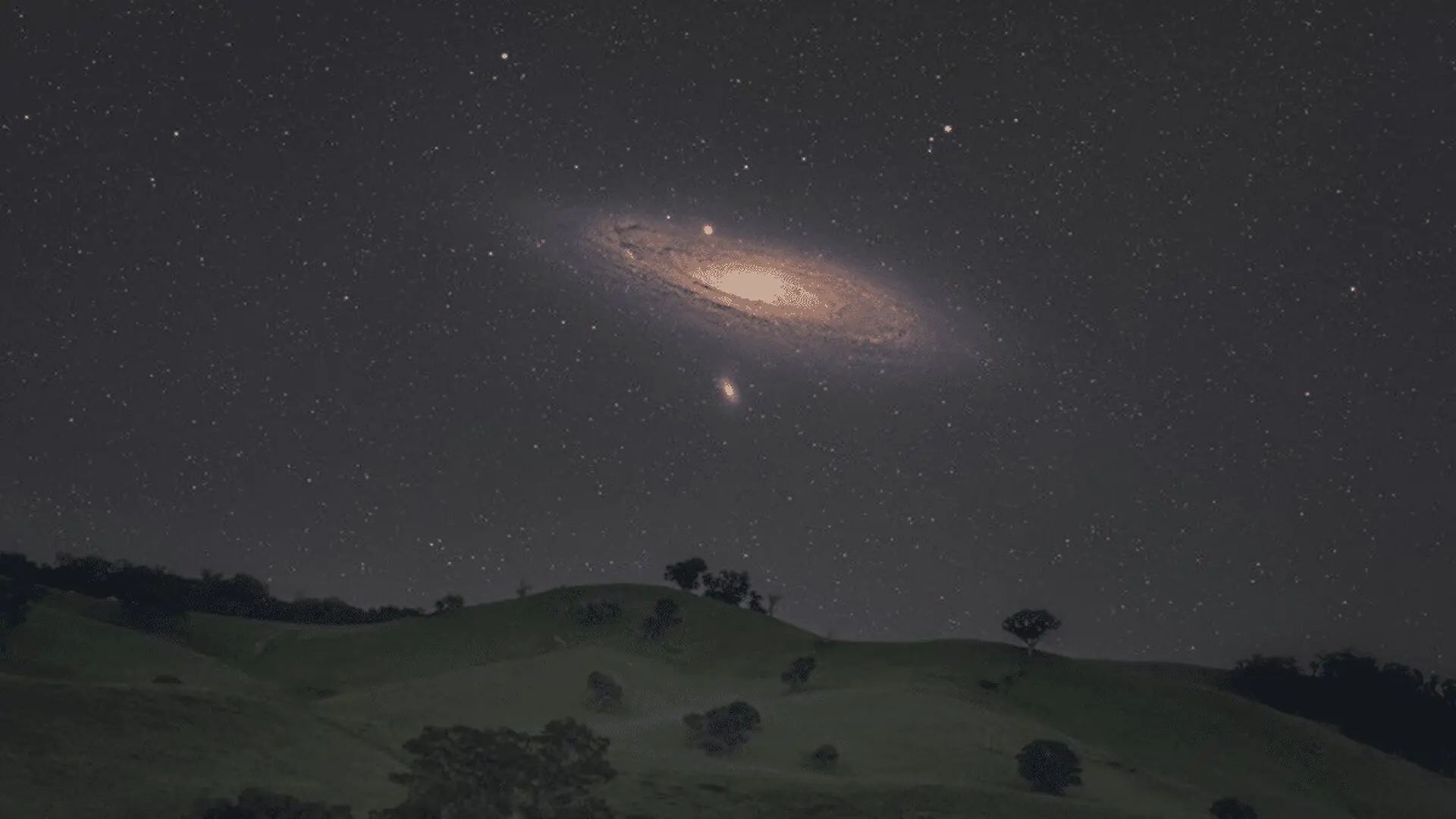
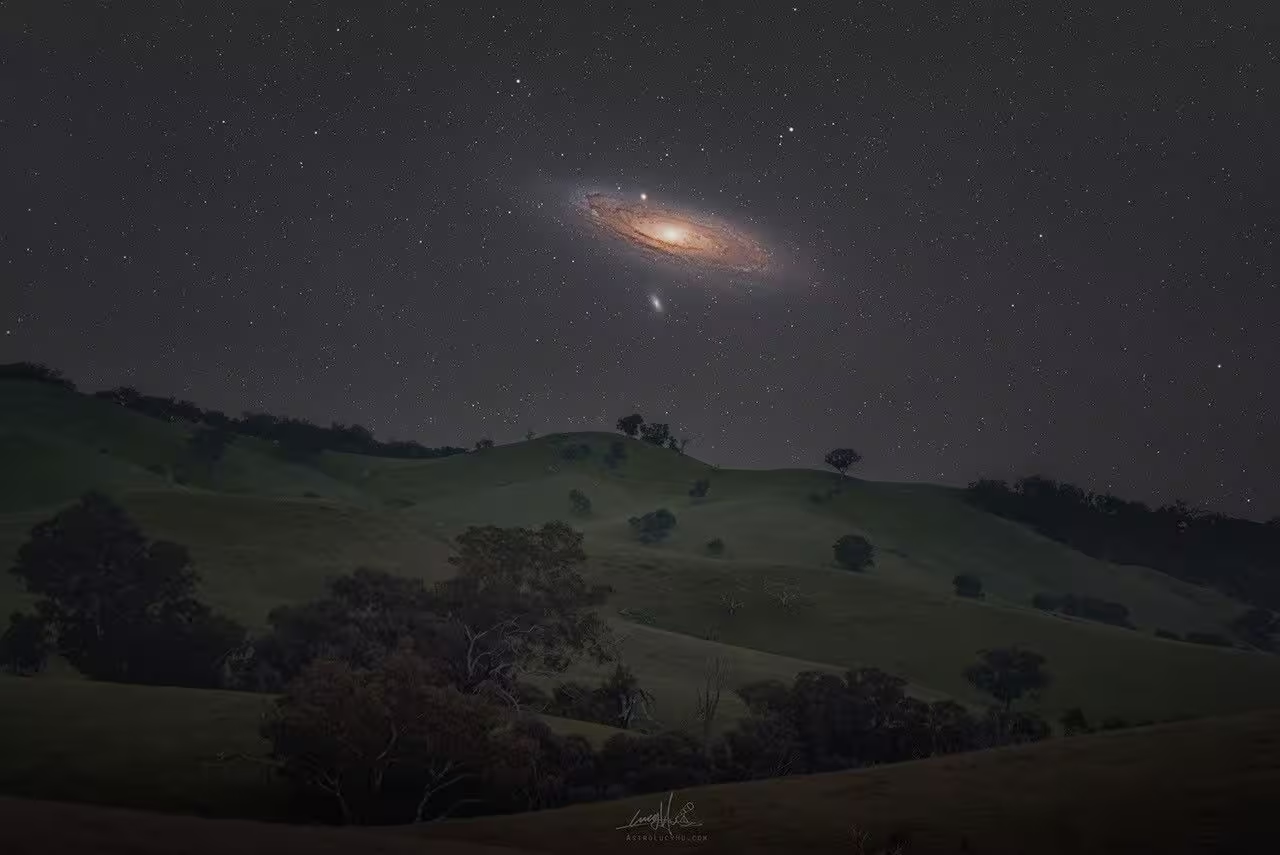
A striking new image captured from the Southern Hemisphere offers a rare glimpse of the Andromeda Galaxy, one of our closest galactic neighbors, hovering just above the horizon. Featured by NASA on October 23, 2026, the photograph highlights the challenges of observing this massive spiral system from southern latitudes, where it typically remains obscured by the thickest layers of our atmosphere.
A Celestial Giant Near the Southern Horizon
The image, taken near Mullion in New South Wales, Australia, during the night of October 10–11, captures the beauty of the Andromeda Galaxy (Messier 31) as it reaches its highest point in the sky during the southern spring. Because of the location, the galaxy barely rises above the northern horizon, forcing light to pass through significant haze and turbulence before reaching the camera lens.
Despite its proximity to Earth—roughly 2.5 million light-years—Andromeda is notoriously elusive to observers in the Southern Hemisphere. It is only during the short window of spring that the galaxy manages to crest the horizon around midnight, providing a fleeting opportunity for astrophotographers to document its position against the landscape.
Beyond the Naked Eye: Understanding Andromeda’s True Scale
While often appearing as a faint, smudge-like patch to the casual observer, the true scale of Andromeda is immense. Spanning nearly 220,000 light-years in diameter, the galaxy contains hundreds of billions of stars. When captured with photographic precision, its visible extent covers an area in the sky roughly six times the width of a full moon.
The vast majority of this structure is far too dim for human eyes to resolve, as our biology is not optimized to detect the faint light traveling from such vast distances. By utilizing advanced imaging techniques, NASA notes that we can finally perceive the full majesty of this spiral system, which shares a similar structure and scale to our own Milky Way.
The Technical Art of Deep-Sky Composites
Capturing such a sharp, detailed view of a target sitting low on the horizon requires a sophisticated approach to photography. The final image is not a single snap, but a complex composite created through multiple exposures.
To produce this result, the photographer employed digital tracking to compensate for the Earth’s rotation, preventing the inevitable star trailing that occurs during long exposures. By stacking multiple frames, the signal-to-noise ratio is drastically improved, pulling the faint details of the galactic spiral arms out of the background noise. A separate exposure was then taken to maintain the sharp details of the Australian hills in the foreground.
This process demonstrates the bridge between modern digital technology and classical astronomy. Through the combination of careful alignment, long-exposure tracking, and image stacking, photographers can translate the invisible structures of the cosmos into clear, tangible visuals, even under some of the most difficult observing conditions on the planet.
This article has been fact checked for accuracy, with information verified against reputable sources. Learn more about us and our editorial process.
Last reviewed on .
Article history
- Latest version
Reference(s)
- Bonnell, Jerry. “APOD: 2026 October 23 – Andromeda in Southern Spring - NASA Science.”, October 23, 2026 NASA <https://science.nasa.gov/image-article/apod-2026-october-23-andromeda-in-southern-spring/>.
Cite this page:
- Posted by Karan Das