Next-Generation Mars Rover Wheels Allow Mars Vehicles To ‘Swim’ Across Dunes
Bio-inspired wheels enable Mars rovers to glide effortlessly through sand, paving the way for safer and more efficient exploration of the Red Planet.
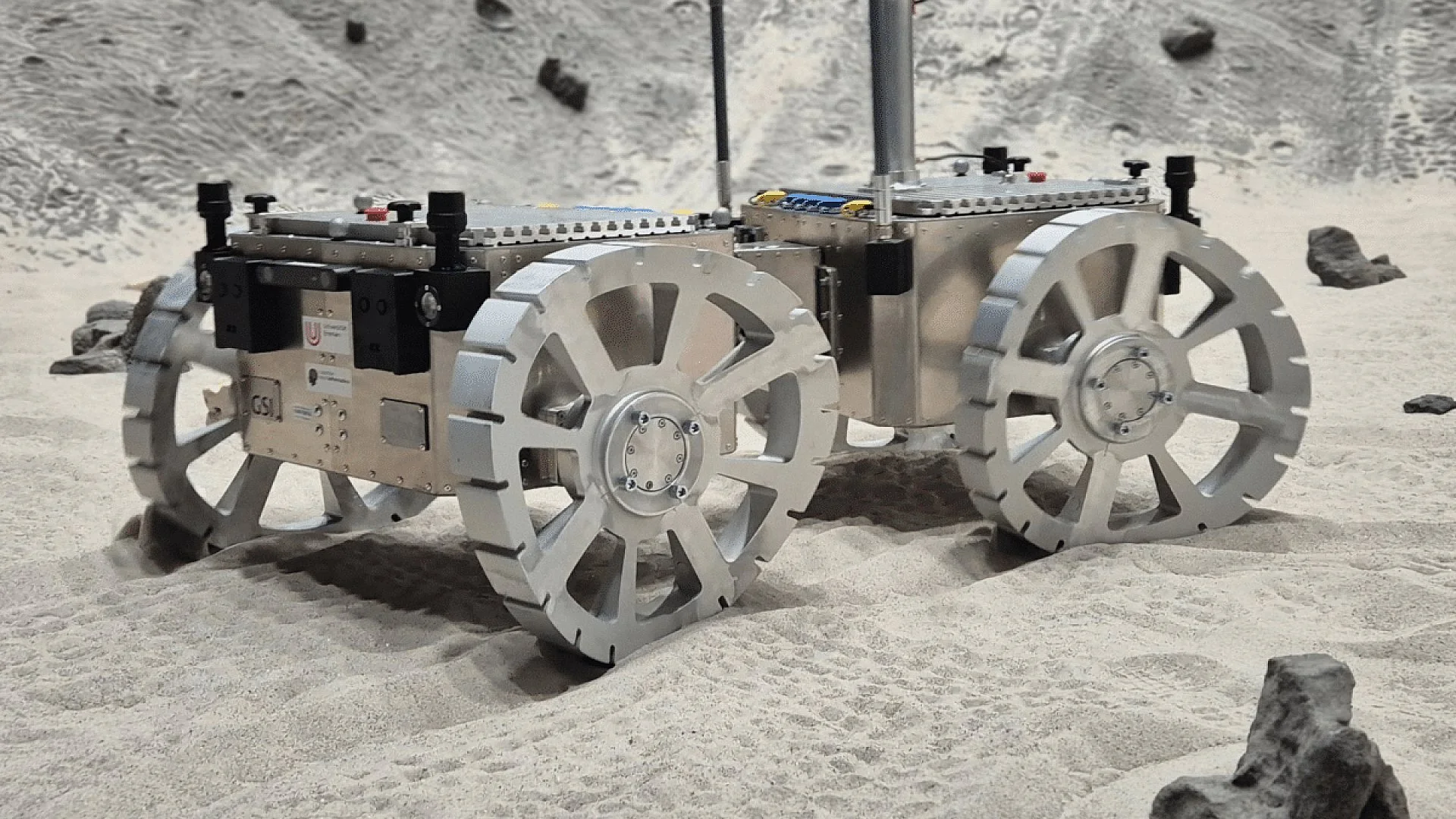
A revolutionary Mars rover design is poised to transform the way we explore the red planet, leveraging the unique locomotion strategy of the sandfish lizard to “swim” through soft sand rather than roll. Researchers at Universität Würzburg have successfully translated a biological adaptation into cutting-edge robotics, offering a glimpse into the next generation of adaptive planetary rovers.
The Sandfish Lizard: A Marvel of Mobility
Navigating the vast, sandy terrain of Mars has long been a significant challenge for rover missions. Conventional wheels can easily slip, sink, or get stuck, limiting mission efficiency and risk management. The team led by Marco Schmidt, Professor for Embedded Systems and Sensors for Earth Observation (ESSEO), drew inspiration from the sandfish lizard, a desert native capable of effortlessly gliding beneath granular surfaces.
“The wheels mimic the animal’s characteristic interaction with the ground, generating both longitudinal and lateral forces. The rover leaves sinusoidal tracks in the sand—this confirms that the intended swimming mechanism has been achieved,” Schmidt explains.
Engineering Breakthrough: The Swimming Wheels
The innovative wheels depart from conventional designs by combining shape, flexibility, and motion patterns that distribute pressure more effectively on soft surfaces. Early tests showed that the wheels could traverse sand while maintaining stability, a problem that has historically hampered wheeled Mars rovers. Researchers carefully adjusted width and mass to reduce ground pressure and prevent sinking, while the wheel surface itself is being refined to improve traction on mixed terrain.
These developments are part of the VaMEx initiative under the German Aerospace Center, and the collaboration with the University of Bremen has been critical for testing in controlled sand fields and open terrain. By mimicking a natural adaptation honed over millennia, engineers have produced a solution that could make Martian exploration safer and more efficient.
Experimental Insights And Continuous Improvement
Extensive field experiments provided both validation and valuable lessons for future iterations. “The experiments also provided us with clear pointers for improvements,” says Schmidt. Initial designs were narrower and heavier than optimal, causing the rover to sink and reducing controllability. Adjustments to width and weight have since enhanced performance, demonstrating the importance of iterative prototyping in translating biological principles into robotics.
Beyond hardware, the team at Universität Würzburg aims to integrate software-controlled mobility, using real-time analysis of slippage, sinking, and terrain interaction. These intelligent control systems are expected to allow rovers to adapt dynamically to complex Martian surfaces, extending operational range and reducing mission risks.
Towards Intelligent, Adaptive Mars Rovers
The ultimate goal is to combine the physical innovation of swimming wheels with advanced software algorithms, creating a rover capable of autonomous navigation in unpredictable environments. By accounting for terrain interactions, slipping, and sinking, the system could adjust wheel motion and power distribution in real-time, mirroring the adaptability seen in desert-dwelling animals.
This breakthrough underscores the potential of bio-inspired design in space exploration, offering solutions that traditional engineering approaches struggle to achieve. As Mars missions expand in scope and ambition, the ability to traverse granular surfaces efficiently could be a defining factor in mission success.
This article has been fact checked for accuracy, with information verified against reputable sources. Learn more about us and our editorial process.
Last reviewed on .
Article history
- Latest version
Reference(s)
- “Planetary research: Innovative Mars rovers ‘swim’ through the sand.”, September 1, 2025 <https://www.uni-wuerzburg.de/en/news-and-events/einblick/single/news/sandfish-mars-rover/>.
Cite this page:
- Posted by Karan Das