Tuna Evolution Unlinked to Dinosaur-Killing Asteroid Study Shows
Study shows tunas developed their large size, rapid speed, and warm‑blooded traits gradually over 50 million years.
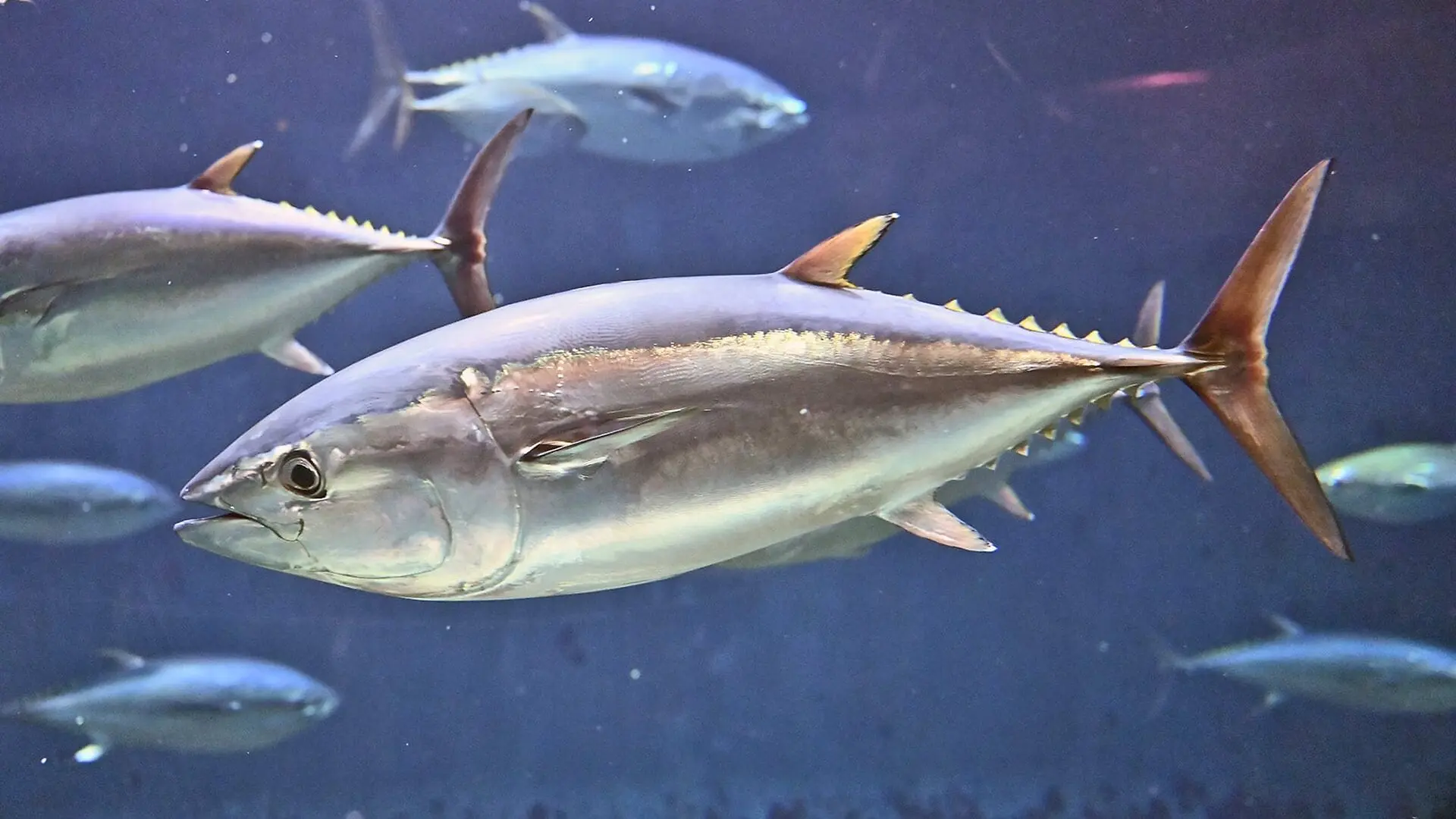
New research from Yale University shows that the iconic size, speed, and warm‑blooded nature of tunas developed gradually over roughly 50 million years, rather than as an immediate response to the asteroid impact that ended the age of dinosaurs.
Rethinking the K‑Pg Trigger Hypothesis
For decades, scientists have argued that the mass extinction 66 million years ago opened ecological niches, prompting rapid evolution among large, fast, endothermic marine predators such as tunas. The new study challenges that view, suggesting the diversification of these fish occurred long after the event.
Comprehensive Evolutionary Timeline
By integrating DNA sequences with fossil records, the team assembled the most detailed time‑calibrated phylogeny for the family Scombridae, which includes tunas, mackerels, and about half of all warm‑blooded ray‑fin fishes. The analysis places the family’s origin near the asteroid strike but indicates that the emergence of large body sizes and endothermy happened independently in multiple lineages well after the K‑Pg boundary.
Key Findings on Endothermy and Size
Lead author Chase Brownstein, a Yale graduate student, notes that “the K‑Pg extinction did not spark the evolution of tunas and related large, endothermic predators.” The research reveals three separate instances of endothermy evolving within Scombridae, with at least two arising 10–15 million years post‑extinction. Moreover, increases in body size appear sporadic rather than tightly coupled with the development of temperature regulation.
Implications for Conservation and Human Health
Understanding the long‑term evolutionary pathways of tunas—a vital source of nutrition worldwide—can aid conservation strategies, especially as Atlantic bluefin tuna populations have sharply declined due to overfishing. Co‑author Thomas Near, a Yale professor and Bingham Oceanographic Curator of Ichthyology, also highlights potential relevance to human metabolic research, noting that “studying how biodiversity has tackled metabolic and thermoregulatory challenges offers insights into conditions such as obesity, diabetes, and metabolic syndrome.”
Collaboration and Funding
The study, published in Proceedings of the Royal Society B, involved researchers from Yale, Virginia Polytechnic Institute and State University, the Santa Barbara Museum of Natural History, the Natural History Museum of Los Angeles County, Purdue University, and the Marine Resources Institute at the South Carolina Department of Natural Resources. Financial support came from the Yale Training Program in Genetics, the Bingham Oceanographic Fund of the Yale Peabody Museum, and the National Science Foundation.
This article has been fact checked for accuracy, with information verified against reputable sources. Learn more about us and our editorial process.
Last reviewed on .
Article history
- Latest version
Reference(s)
- Brownstein, Chase D.., et al. “The prolonged reemergence of megapredatory pelagic fishes.” Proceedings of the Royal Society B: Biological Sciences, vol. 293, no. 2074, July 8, 2026 The Royal Society, doi: 10.1098/rspb.2026.1257. <https://doi.org/10.1098/rspb.2026.1257>.
Cite this page:
- Posted by Linda Wilson